PyTorch Hits 100K Stars: Unpacking the Dominance of the Leading Deep Learning Framework

PyTorch surpasses 100K GitHub stars, solidifying its reign as the world's most popular deep learning framework.
PyTorch has crossed 100,000 GitHub stars, reflecting its dominance in the deep learning world. Built on dynamic computation graphs, deep CUDA integration, and a thriving ecosystem anchored by Hugging Face Transformers, PyTorch has evolved from a research-first tool into the de facto foundation for industrial AI — reinforced by its transition to neutral governance under the Linux Foundation.
PyTorch Enters the 100K Stars Era
The GitHub repository for deep learning framework PyTorch recently crossed the 100,000-star milestone, reaching 101,250 stars alongside 28,228 forks, with roughly 65 new stars added daily. This figure isn't just a testament to community vitality — it marks PyTorch's firm establishment as one of the most beloved tools among deep learning developers worldwide.
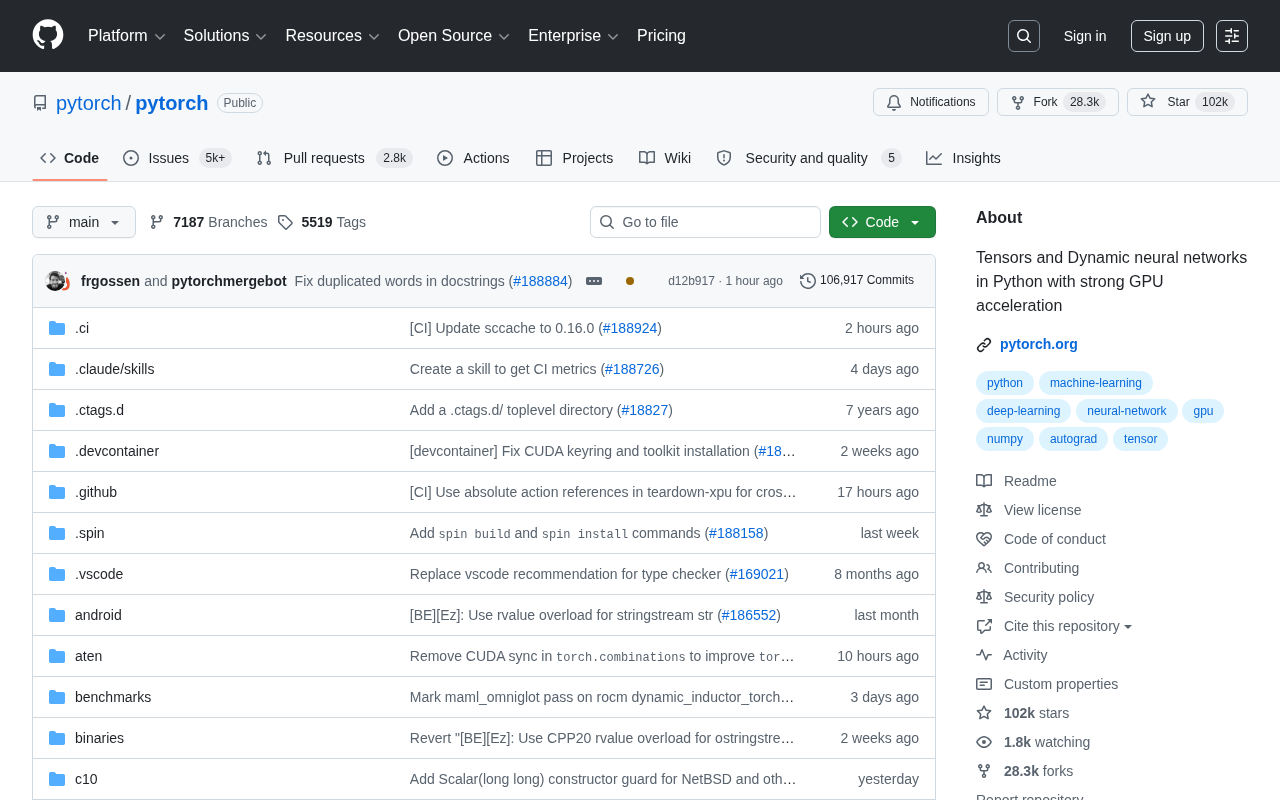
PyTorch was open-sourced in 2016 by Meta (formerly Facebook) AI Research, with a core mission of providing "tensor computation with strong GPU acceleration and dynamic neural networks." Over the years, it has become the gold standard for both academic research and industrial deployment.
Why Developers Prefer PyTorch
Development Flexibility Through Dynamic Computation Graphs
PyTorch initially won over researchers with its "dynamic computation graph" (Define-by-Run) paradigm. Dynamic versus static computation graphs represent a fundamental philosophical divide in deep learning framework design. Static graph (Define-and-Run) frameworks like early TensorFlow 1.x required developers to first describe the complete computation logic using a specialized API, then execute it through a Session — making debugging painful, error messages cryptic, and cognitive overhead heavy. PyTorch's dynamic graph approach, by contrast, treats every forward pass as an immediate Python function call. The computation graph is built on the fly during execution, naturally supporting conditional branches, loops, and other dynamic structures — a critical advantage for variable-length sequence processing in NLP or dynamic environment interactions in reinforcement learning.
This mechanism is powered by PyTorch's core Autograd engine. Whenever a tensor participates in an operation, Autograd instantly constructs a directed acyclic graph (DAG) in the background, precisely recording the order and dependencies of operations to enable gradient computation layer by layer during backpropagation. Because this graph is dynamically generated with each forward pass rather than statically predefined, developers can freely modify network structure at runtime — a natural advantage over static graph frameworks that is especially valuable for recurrent neural networks (RNNs) that must dynamically unroll based on input length, or agents that adjust their policy in real time based on reinforcement learning signals.
This design lets developers build and modify computation graphs on the fly, with a debugging experience indistinguishable from ordinary Python code — including breakpoints and intermediate variable inspection — dramatically lowering the barrier to experimentation. This Pythonic programming experience is nearly decisive for research scenarios that demand rapid iteration and quick validation of new ideas. As a result, the proportion of papers using PyTorch at top academic venues like NeurIPS and CVPR has continued to climb, reinforcing an ever-stronger community network effect.
Exceptional GPU Acceleration and Large-Scale Training Capabilities
PyTorch is deeply integrated with CUDA — NVIDIA's parallel computing platform and programming model introduced in 2006 — enabling developers to harness the thousands of compute cores in a GPU for general-purpose computation. To appreciate the significance of this integration, it helps to understand the architectural difference between GPUs and CPUs: CPUs have a small number of high-clock-speed cores equipped with complex branch prediction and out-of-order execution logic, optimized for low-latency serial tasks; GPUs, on the other hand, have thousands of relatively simple parallel cores arranged in a SIMT (Single Instruction, Multiple Threads) architecture, where thousands of threads can execute the same instruction in the same clock cycle — a natural fit for the computational character of deep learning, where matrix multiplications and convolutions apply identical operations to massive amounts of data.
PyTorch seamlessly translates high-level API calls into optimized CUDA kernels through its ATen tensor library, and further integrates NVIDIA's official optimization libraries such as cuDNN (deep neural network acceleration) and cuBLAS (linear algebra acceleration), giving developers near-hardware-limit performance without needing to write low-level CUDA code. This mechanism maps tensor operations seamlessly to GPU execution, providing a solid performance foundation for large-scale matrix computation.
The framework's robust support for modern training techniques — including distributed training and mixed-precision computation (FP16/BF16, which can further halve memory usage and double throughput) — makes it equally capable of handling small-scale experiments and training large models with hundreds of billions of parameters.
From Research Tool to Industrial Foundation
A Full-Spectrum Ecosystem
A large and mature open-source ecosystem has formed around PyTorch. Official libraries such as TorchVision, TorchText, and TorchAudio cover mainstream domains including computer vision, natural language processing, and speech processing. High-profile third-party libraries like Hugging Face Transformers have further positioned PyTorch at the center of the large model era.
Hugging Face Transformers is the key thread binding the PyTorch ecosystem to the age of large models. The library was initially released in 2018 with PyTorch as a first-class citizen for its BERT implementation, and quickly became the de facto standard in NLP thanks to its unified AutoModel interface, one-line pretrained weight loading (from_pretrained), and full compatibility with native PyTorch objects. The vast majority of the hundreds of thousands of model weights hosted on Hugging Face Hub are stored in PyTorch format, creating a powerful ecosystem lock-in effect. The hottest open-source large language models today — LLaMA, Mistral, Qwen, DeepSeekAd — are all implemented in PyTorch and released natively on the platform, further cementing its central role in the large model development pipeline.
This ecosystem lock-in is what economists call a "network externality": the more developers use the same framework, the richer the tutorials, pretrained weights, toolchains, and community Q&A that accumulate around it, which in turn attracts even more developers, creating a self-reinforcing positive cycle. The PyTorch ecosystem has already accumulated enormous momentum from this flywheel effect, making it extremely difficult for newcomers to challenge its dominant position in the short term.
Rapidly Closing the Production Deployment Gap
Early PyTorch was criticized for lagging behind competitors in production deployment capabilities, but with the successive introduction of TorchScript, torch.compile, and the edge-inference-focused ExecuTorch, this gap has been rapidly closed.
The torch.compile feature introduced in PyTorch 2.0 represents one of the most significant performance leaps in the framework's history. Its core technology stack has three layers: TorchDynamo captures computation graphs at the CPython bytecode level; AOTAutograd traces the backward pass graph ahead of time to enable graph-level optimization during training; and Inductor, the default backend code generator, produces efficient OpenMP code for CPUs and optimized Triton kernels for GPUs. Triton here refers to the GPU programming language open-sourced by OpenAI, which dramatically lowers the barrier to writing high-performance kernels compared to raw CUDA code, while automatically handling low-level optimizations like shared memory management and thread block scheduling — enabling the compiler backend to generate code approaching hand-tuned quality for different GPU architectures. The entire mechanism delivers an average training speedup of 30% to 2x on mainstream models, activated with a single decorator call and no model code changes required, while maintaining full compatibility with eager mode. This compilation acceleration mechanism significantly improves inference and training performance while preserving ease of use, effectively shortening the path from prototype to production.
The Deeper Significance Behind 100K Stars
100,000 stars on GitHub is an extraordinarily rare achievement — only a handful of projects have ever reached this level. For PyTorch, this milestone represents not just broad community recognition, but also a reflection of the entire AI industry's sustained investment in foundational infrastructure.
Notably, PyTorch was transferred in 2022 to the independent PyTorch Foundation (under the Linux Foundation) for governance, freeing it from the limitations of single-company control and transitioning to a more neutral, open, community-driven model. The Linux Foundation is the world's most influential neutral open-source organization, also hosting critical infrastructure projects such as the Linux kernel and Kubernetes. Founding members of the PyTorch Foundation include major technology companies such as AMD, AWS, Google Cloud, Microsoft, NVIDIA, and Meta, forming a multi-stakeholder governance structure: the foundation manages neutral assets like the project brand, domain names, and infrastructure, while technical decisions are led by an independent Technical Advisory Council (TAC) — using a transparent RFC (Request for Comments) process and a diversified committee structure to ensure that commercial interests do not override the genuine needs of the community.
The strategic significance of this governance shift runs deep: decentralizing control eliminates the concern among corporate competitors about "betting their core technology stack on a single tech giant." Competitors of Meta such as Google, AWS, Microsoft, and NVIDIA can now comfortably participate in the PyTorch ecosystem, shifting their competitive focus from the framework layer to upper-level applications and cloud services. This governance restructuring has laid the institutional groundwork for the project's long-term health, and has made more enterprises willing to adopt it as a core part of their technology stack.
Conclusion
PyTorch crossing 100,000 stars is more than an impressive number — it is a microcosm of the evolution of deep learning tooling. From its flexible dynamic computation graph design, to its broad and thriving ecosystem, to its continuously strengthened production deployment capabilities, PyTorch has earned the long-term trust of developers through years of iteration. As the wave of large models sweeps the world, this framework will remain the starting point and cornerstone for the vast majority of AI innovation.
Related articles
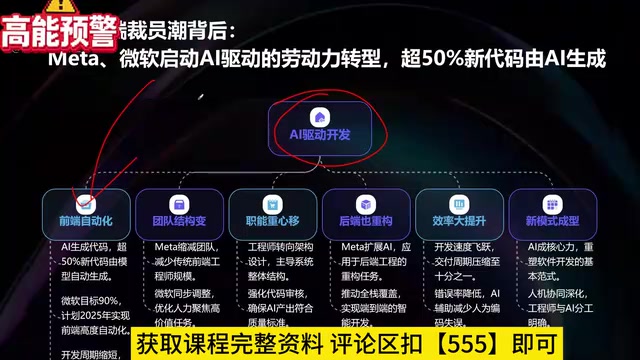
What Is Vibe Coding? The AI Programming Skill Every Developer Needs
What is Vibe Coding? Learn how AI programming is reshaping dev teams, why traditional programmers face displacement, and why Cursor & Claude Code matter.
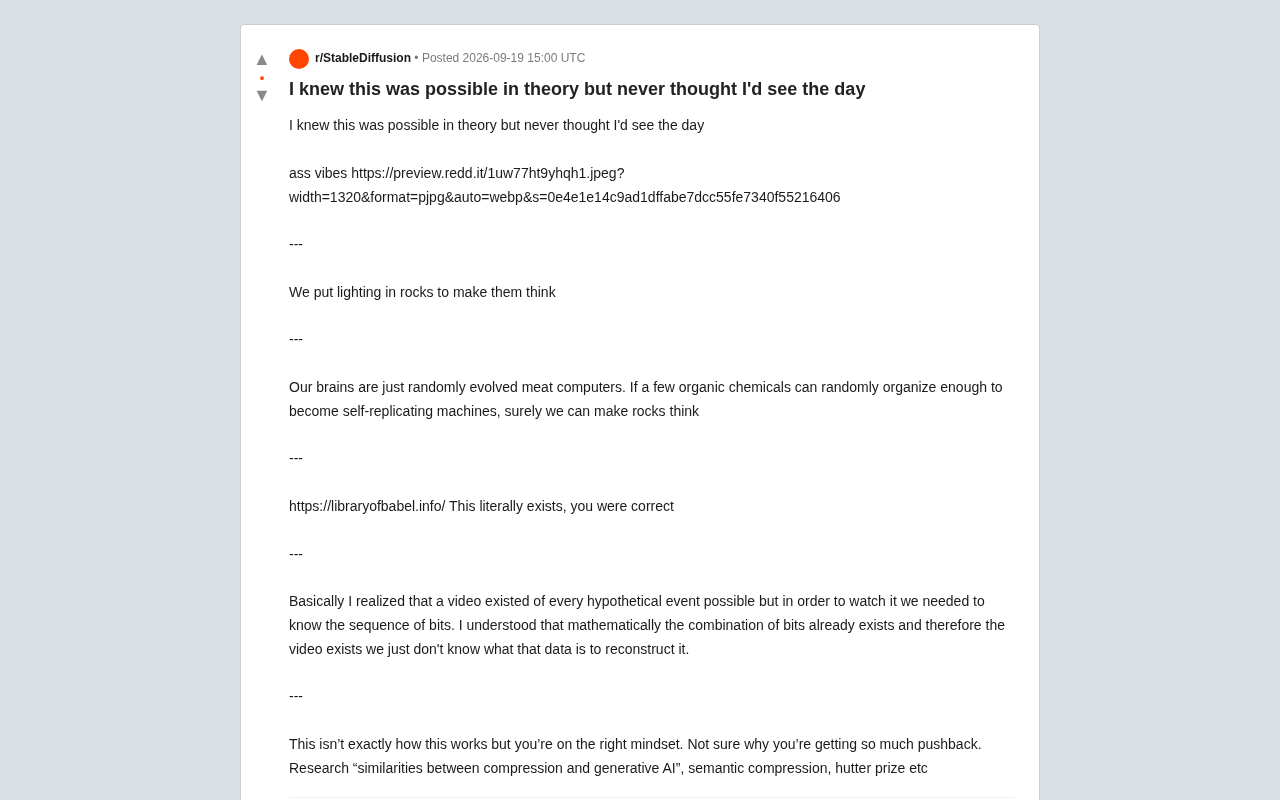
Making Rocks Think: A Philosophical Exploration of Generative AI and Information Compression
From a viral Reddit post to deep AI theory: why compression equals understanding, the Library of Babel thought experiment, semantic compression, and the Hutter Prize.

Irregular Warns: Four AI Lab Security Breaches Traced to the Same Root Cause
Irregular reveals four AI lab security breaches share a single root cause, exposing systemic risks from technology stack homogeneity across the AI industry.