Qwen 3.8 27B Local LLM Review: How a Small Model Rivals Top Closed-Source AI
Qwen 3.8 27B runs on home hardware and nearly rivals top paid AI models — but overthinks everything.
Qwen 3.8 (27B) is a 17GB open-source quantized model that runs locally on hardware like an RTX 3060 Ti or MacBook, yet rivals top-tier cloud models on coding benchmarks like SWE Bench Pro. Community reviews and hands-on tests agree: output quality is impressive, but the model's default maximum reasoning setting causes severe overthinking, consuming 2× more tokens than comparable models and dramatically slowing inference. In two practical tests (invoice generation and a to-do calendar app), Qwen outperformed Gemma 4 but fell short of GPT 5.6/Codex. Its real value isn't beating every top model — it's that these powerful weights can be permanently owned and run locally, marking the true dawn of the sub-30B local AI era.
A 270-billion-parameter model that runs on your home computer yet challenges top-tier models that required paid subscriptions just months ago — that's the impact of Qwen 3.8 (27B parameter version). This article draws on an in-depth hands-on review by a YouTube creator, combined with community feedback from Hacker News and X, to examine what this open-source model actually means.
Why This Is a Milestone
The debate isn't really about whether Qwen 3.8 is actually better than Opus 4.6 Max — it's the fact that we can seriously have that conversation at all. In the past, attempting to run models of this parameter count was often disappointing: they could barely do anything well. Now, a quantized model at just 17GB can run smoothly on everyday hardware like an NVIDIA RTX 3060 Ti (8GB VRAM), a MacBook, or a DGX Spark.
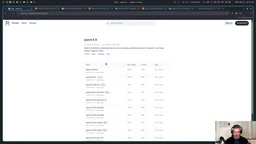
The creator showcased multiple quantization variants of the model on the Ollama page, emphasizing that its core value isn't absolute performance — it's that this level of performance can be achieved at such a small footprint. On agentic coding benchmarks like SWE Bench Pro, Qwen 3.8 reportedly surpasses Opus 4.6 Max on certain tasks; on the Artificial Analysis benchmarks widely discussed on Hacker News, it approaches or even exceeds much larger models such as GLM 5.2 Max, Kimi K3, and GPT 5.6.
Of course, benchmarks can be gamed and aren't the best way to judge a model. That's why the creator prefers hands-on testing and real community feedback.
What is Quantization? Quantization is the key technology that enables large models to run on consumer hardware. Each parameter in a full-precision model is typically stored as a 32-bit or 16-bit floating-point number. Quantization compresses this to 8-bit, 4-bit, or even lower, dramatically reducing model size and memory usage at the cost of slight accuracy loss. Qwen 3.8's 27 billion parameters require roughly 54GB at full precision, but compress to about 17GB with 4-bit quantization — small enough to fit in an 8GB consumer GPU. Ollama, llama.cpp, and LM Studio are the most popular local inference frameworks; they handle loading, scheduling, and inference for quantized models and provide OpenAI-compatible APIs, letting you use local models the same way you'd call cloud-based ones. GGUF is the dominant quantized model format in the llama.cpp ecosystem, with different quantization levels (e.g., Q4_K_M, Q8_0) offering different size-quality tradeoffs.
Community Consensus: Impressive Output, But Serious Overthinking
On Hacker News, multiple users reached remarkably consistent conclusions: the model's output quality is impressive, but its "overthinking" problem is severe.
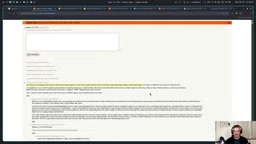
One user with a private benchmark said this was only the second local model capable of correctly reasoning through their test problem — but it consumed five times as many tokens as Gemma 4 and took 12 minutes and 30 seconds to complete. This closely matched the creator's own experience: the model does get things done, which is stunning given its size, but it's extremely slow — on older hardware, you might wait an hour for results.
Prominent developer Simon Willison also wrote that Qwen 3.8 27B is "very impressive, but wildly overthinks by default." The model defaults to the highest reasoning setting (extra high reasoning), which he considers unwise for running on consumer hardware. Interestingly, reducing the thinking process actually degrades output quality.
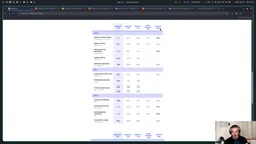
Token consumption data backs this up: according to community posts, it uses roughly 2.3× as many tokens as GPT Luna Max and nearly 2× as many as Kimi K3. Some users have shared alternative chat templates that reportedly mitigate some issues caused by the official template — though these require llama.cpp, LM Studio, or vLLM to apply, as Ollama doesn't currently support template swapping.
Understanding "Overthinking" Overthinking is a classic problem with reasoning-focused LLMs, rooted in how these models are trained to improve accuracy by extending their chain-of-thought. Qwen 3.8 uses a hybrid reasoning architecture that can switch between "thinking mode" (similar to DeepSeek-R1, generating extensive internal reasoning steps before answering, consuming several to dozens of times more tokens) and "non-thinking mode" (skipping reasoning for faster but less accurate responses). The issue is that this model defaults to the highest reasoning setting, triggering lengthy internal monologues even for simple tasks. Token consumption directly determines inference speed — on local hardware, this can stretch wait times from minutes to hours. Balancing reasoning depth against response speed is the most important parameter to manually tune when using models like this.
Test 1: Invoice Automation Tool (High Difficulty)
The creator designed a deliberately challenging task: analyze a real invoice PDF sample, infer template code from it (including extracting the logo), then build a Flask app that accepts input and generates matching PDF invoices — all using UV as the package manager.
This kind of task isn't easy for any model; even Claude Code and Codex required significant iteration. Here's how the results compared:
- Claude Code: As the supposedly top-tier model, the result had minor flaws like blank lines — decent design but not stunning.
- Codex (GPT 5.6, extra high reasoning): Near-perfect, beautiful interface, rated the best overall result.
- GLM 5.2: Took longer, functional but formatting didn't match the sample and the logo was slightly cropped — interestingly still better than Claude's output.
- Qwen 3.8 27B (local, high reasoning): Text didn't fill boxes cleanly, formatting issues present — but for a 27B model that had to analyze a PDF and extract assets from scratch, the creator called this "breathtaking."
- Gemma 4 (~26B, competitor model): Fastest — nearly instant — but completely ignored the specified format, included no logo, and required manual corrections.
The conclusion was clear: Gemma is faster, but Qwen clearly wins on output quality.
A Note on UV and SWE Bench UV is a next-generation Python package manager written in Rust that has rapidly gained traction in the Python community, far outpacing traditional pip and conda in speed. Specifying UV in an AI coding test is an implicit check on the model's knowledge currency — the model needs to know how to use
uv initto initialize a project anduv addto install dependencies, not just fall back topip install. SWE Bench is one of the authoritative benchmarks for AI coding ability, requiring models to solve real issues in actual GitHub open-source repositories — including understanding the codebase, locating the problem, writing patches, and passing existing test suites. It's considered a more realistic measure of software engineering capability than pure code generation benchmarks. SWE Bench Pro is an upgraded version with higher task difficulty and stricter evaluation criteria.
Test 2: To-Do Calendar App (Medium Difficulty)
The second task was simpler: build a minimal to-do app with a calendar view using Flask, supporting title, description, completion checkbox, and an optional due date — with the explicit instruction to "not overthink it, build fast, no tests needed."
Ironically, Qwen completely ignored the "no tests" instruction and ran smoke tests anyway. As it turned out, those tests were actually necessary — it encountered a "no module named flask" error, followed by a 500 server error, and would have failed multiple times without them.
Results compared:
- Qwen (reasoning off): Barely functional, calendar view looked poor.
- Qwen (high reasoning): Took longer but higher quality — usable calendar view, still some minor flaws.
- Codex (GPT 5.6): Noticeably better-looking, professionally clean — a clear winner.
- Gemma 4: Faster, but the calendar view showed no to-do items at all — failed worse than Qwen.
- GLM 5.2: As an open-source model, also produced solid results.
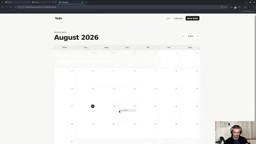
The creator acknowledged frankly: you can't claim this 27B local model comprehensively beats the others or reaches the top tier. But the key point is: when asking "can it compete with top-tier models?" the answer is no longer an obvious "no" — and that alone says a lot.
The Milestone's Significance and Realistic Positioning
The creator sketched the trajectory of large model development through a few "milestone moments": ChatGPT's mainstream breakthrough was the first; Opus 4.5 being the first model you could genuinely trust for agentic coding was the second; Kimi K3 and GLM 5.2 represented the moment open-source caught up to the top tier; and what's arriving now is the era of powerful open-source models with around 10 billion parameters that can actually run locally.
His final verdict was measured: he won't replace Claude Code or Codex as his primary coding tools with Qwen 3.8, and won't even replace GLM 5.2 for occasional daily use, because it needs more polish to be truly practical.
But the excitement lies in this being the current baseline. Every model released after this has to be better, or there's no point. More importantly, this is intelligence that anyone can download to their own hard drive and run on their own hardware: no company can shut down the service, no company can ban you, the weights are just numbers — once you have them, they're yours forever, and they run without a data center.
If you're interested in local AI, this model is worth trying — as long as you can accept the slowness and are willing to do some tuning to curb the overthinking.
Related articles
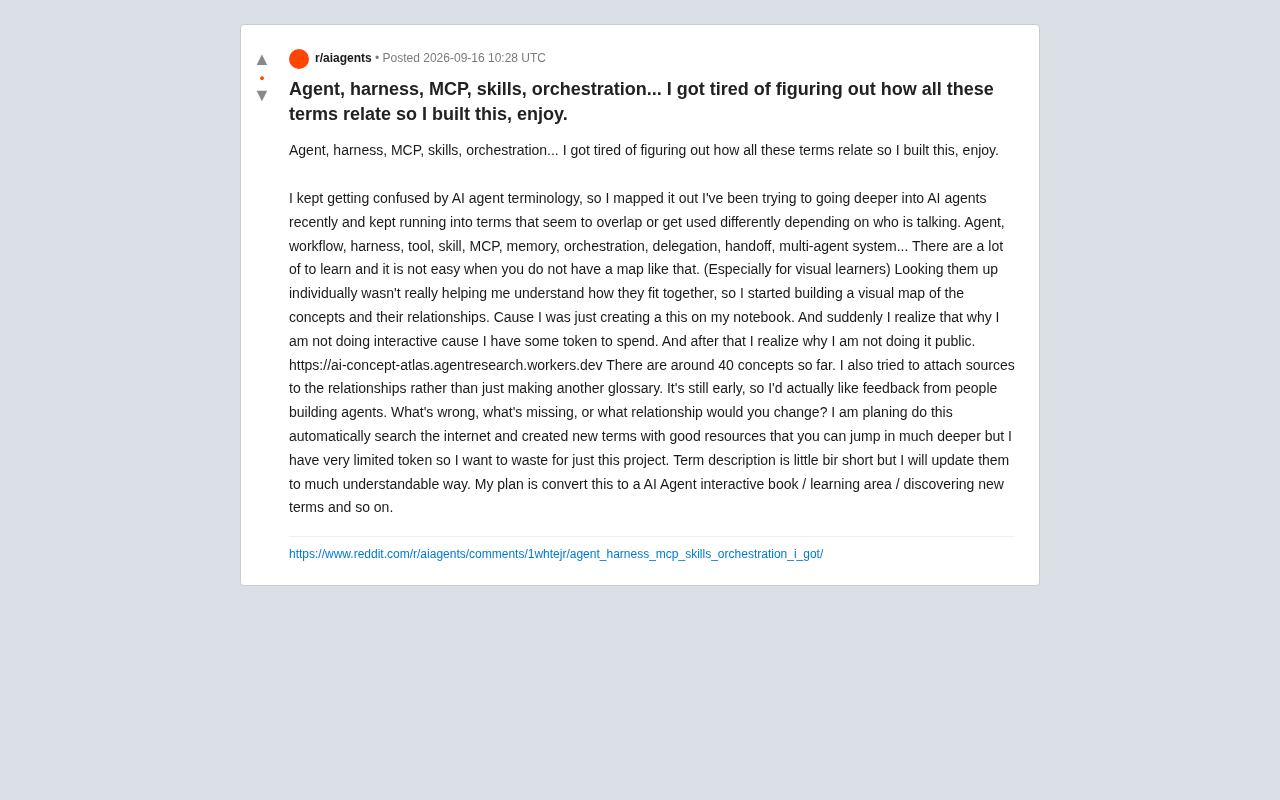
AI Agent Terminology Too Confusing? One Interactive Concept Map to Untangle 40+ Core Terms
Confused by AI Agent terms like MCP, harness, orchestration, and skills? AI Concept Atlas is an interactive map visualizing 40+ concepts and their relationships, with cited sources.
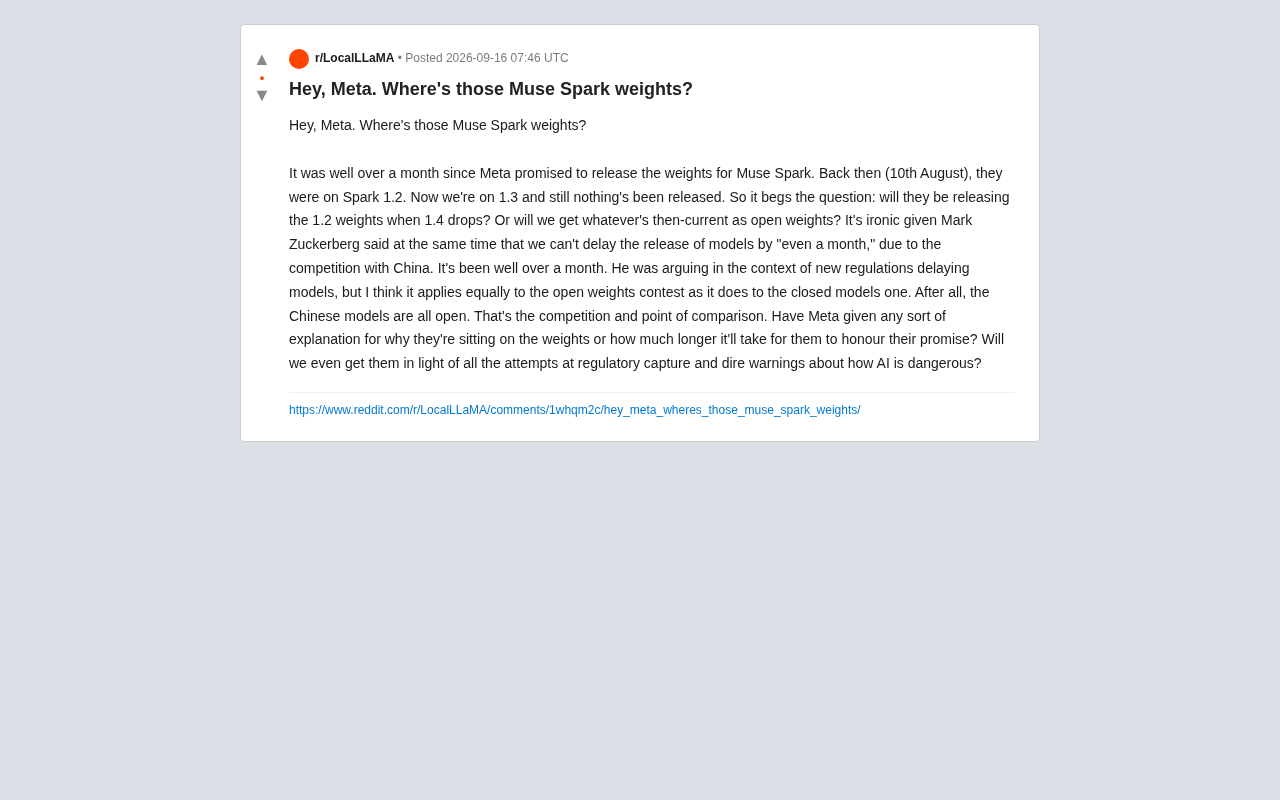
Meta's Broken Promise: Community Demands to Know Where the Muse Spark Weights Are
Meta promised to open-source Muse Spark model weights over a month ago, but still hasn't delivered. The community questions how this squares with Zuckerberg's "can't delay even a month" stance.
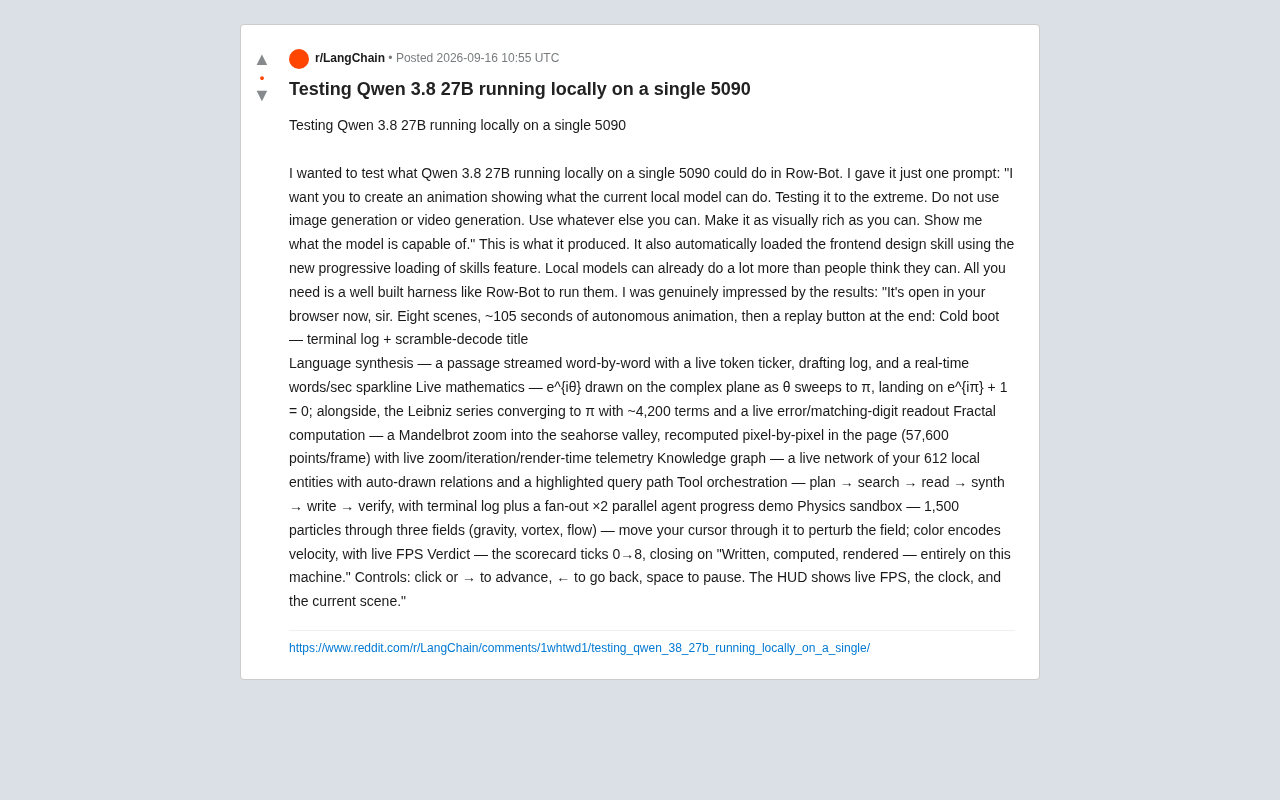
Running Qwen3 27B Locally on a Single RTX 5090: What Can It Actually Do?
A developer runs Qwen3 27B locally on a single RTX 5090 via the Row-Bot Agent framework, generating an 8-scene, 105-second interactive animation from one prompt — including real-time math, fractals, and physics.