Qwen 4 Max Hands-On: China's Frontier Model Takes On Opus 5.5

Qwen 4 Max builds a playable Minecraft in five hours bare, matching top-tier performance at a big cost advantage.
A YouTube tech channel tested Qwen 4 Max by having it build a Minecraft-style game from a single prompt in a bare environment with no skills, extensions, or MCP servers, taking about five hours. It beats Kimi K3 on most benchmarks and rivals Opus 5.5 and GPT 6.1 Sol on some agentic tasks. API pricing is $1.50/M input and $4.50/M output tokens, with third-party discounts up to 86% and a measured 99.8% cache hit rate. The game has full survival, mining, smelting, and crafting loops with praised visuals, but systematic flaws like sideways block textures remain; overall it sits in Carbon's tier, closer to Gemini.
As competition among AI models heats up, a frontier model from China is drawing attention from overseas developers. A YouTube tech channel ran an in-depth hands-on test of Qwen 4 Max, tasking the model with independently building a Minecraft-style game with no skills, extensions, or MCP servers to assist it, in order to gauge its real coding and reasoning abilities.
Benchmark Positioning: Joining the Top Tier
According to the video creator's evaluation data, Qwen 4 Max scores higher than Kimi K3 on most benchmarks while clearly outpacing its predecessor Qwen 3.8. On some test items—especially agentic benchmark tasks—it can even hold its own against Opus 5.5 and GPT 6.1 Sol. The creator also acknowledges that, given newer model variants released around the same time, such cross-generation comparisons warrant caution, but the overall performance remains impressive.
The result sends a clear signal: the gap between Chinese models and the world's top models is narrowing fast. Qwen 4 Max is not a "catch-up" product—it is a contender with frontier-level competitiveness.
Agentic benchmarks refer to test suites that evaluate a model's performance on tasks requiring multi-step planning, tool calling, and environment interaction—typical examples include GAIA, SWE-bench, and AgentBench. Unlike single-turn Q&A, these benchmarks require the model to autonomously break down goals, call external tools, and adjust strategy based on intermediate feedback, making them closer to autonomous coding in real development scenarios. Qwen 4 Max ranking in the same tier as the Opus and GPT series on such tasks shows that its long-chain reasoning and self-correction abilities have reached the frontier—which is also the testing rationale behind the five-hour bare-environment game build described below.
API Pricing: Cost-Effectiveness as a Core Advantage
Qwen 4 Max's official API pricing is roughly $1.50 per million input tokens and $4.50 per million output tokens. For a frontier-class model, this price point is highly competitive among peers—the video creator compares it directly with Fable 5.2, Opus 5.5, and GPT 6.2 Sol.
More notable is the discount room on third-party aggregator platforms. The video mentions Quartzrouter pushing prices down to $0.62 per million input tokens and $0.67 per million output tokens—roughly an 86% discount. For high-frequency usage scenarios, this cost structure translates into order-of-magnitude lower inference overhead.
MCP (Model Context Protocol) is a standardized protocol proposed and open-sourced by Anthropic that lets models connect to external tools, data sources, and skill services in a unified way. Once an MCP server is loaded, the model can call external capabilities such as the file system, databases, and browsers—essentially equipping it with a "plug-in toolbox." The evaluation deliberately loads no MCP servers or extensions in order to rule out performance boosts from tool assistance and purely test the model's own coding, planning, and context-management abilities—this is what the "bare environment" test means.
Hands-On Evaluation: Building a Playable Game in Five Hours
The evaluation method is quite hardcore: only a single unified prompt is provided, with no skills, extensions, or MCP servers loaded, leaving the model to complete the task in a purely bare environment. Qwen 4 Max took about five hours to finish—the second-longest among the models compared, behind only Fable.
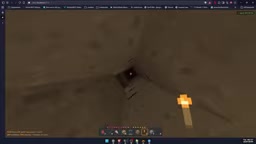
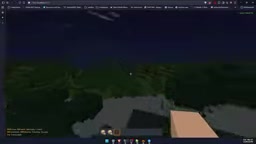
The output includes a complete loop of survival world, biomes, mining, smelting, and crafting. The specific results are noteworthy:
- Core mechanics: Sprinting, crouching, fall damage, torch lighting, and the smelting system all work properly
- Visual presentation: The dusk sky graduating into purple, along with starfield and cloud rendering, earned high praise from the creator
- Terrain generation: Overall terrain quality is excellent, and the swimming animation in water is as smooth as Carbon's

Problems exist as well. All block textures are displayed sideways—crafting tables, furnaces, and iron pickaxes alike; sand does not fall in creative mode; the character cannot free itself from water, a flaw among frontier models otherwise seen only in GPT 6.2 Astra. There are no sword-type weapons in the game, and the combat system is relatively simplified.
Cache hits occur when the context prefix of a request exactly matches a previous call, allowing the server to directly reuse already-computed KV cache and run forward computation only on the new tokens. Major vendors typically charge far less for cache-read tokens than standard input (commonly 10% or even lower). A 99.8% cache-read share means that in multi-turn long conversations or long-chain coding tasks, the vast majority of context is reused at low cost, and the actual bill may be only a fraction of the list price. This also explains why a model with seemingly ordinary list pricing can show order-of-magnitude cost advantages in high-frequency, long-context scenarios.
Side-by-Side Comparison: Running Neck and Neck with Carbon
In the creator's model ranking, Qwen 4 Max sits in the same tier as Carbon, and in some dimensions is even slightly better. It approaches Fable 5.2 in visual atmosphere, but the systematic texture-orientation problem drags down overall completeness. The creator's verdict: Qwen 4 Max's overall performance is "closer to Gemini than to Fable"—solid and usable, but with room for improvement.
Also noteworthy is the extreme cache hit rate—measured at up to 99.8% cache reads, meaning the vast majority of token consumption goes through the low-cost cache channel, further lowering the real cost of use.
Texture coordinates (UV mapping) and block orientation are fundamental engineering issues in voxel game rendering. Each block face needs texture coordinates bound correctly and the right texture selected according to the normal direction. If the model applies a single orientation for texture mapping across the board when generating code, the systematic error of "all block textures displayed sideways" results. Such flaws do not affect logical playability, but they greatly damage visual completeness, and typically require a unified fix at the rendering pipeline level rather than patching block by block—it reflects how deeply the model understands 3D spatial coordinate transforms, and is a typical weakness of current frontier models on graphics programming tasks.
Takeaways for Developers
The Qwen 4 Max hands-on results reveal a trend: the capability boundary of frontier models is shifting from "whether it can complete" to "how finely it completes." The playable game generated in five hours is already playable in terms of core gameplay; the remaining gap is concentrated in engineering details such as texture coordinates and physics rules.
For scenarios requiring long-chain autonomous coding, this model offers an attractive option in the balance of cost and capability—especially under real-world usage patterns with extremely high cache hit rates, where the comprehensive cost per task may be far below what the list price suggests. For projects pursuing ultimate visual completeness, systematic flaws like texture orientation still require human intervention or fixes in later versions.
One-line Summary
Qwen 4 Max builds a playable Minecraft in five hours in a bare environment, matching top-tier performance at a highly advantageous cost.
Paragraph Summary
A YouTube tech channel ran an in-depth hands-on test of Qwen 4 Max, having it independently build a Minecraft-style game from a single prompt in a bare environment with no skills, extensions, or MCP servers, taking about five hours. On benchmarks it beats Kimi K3 on most items, and on some agentic tasks it rivals Opus 5.5 and GPT 6.1 Sol. Official API pricing is $1.50 per million input tokens and $4.50 per million output tokens, with third-party discounts up to 86%; measured cache hit rates reach 99.8%, so real costs are far below list price. The generated game has complete loops of survival, mining, smelting, and crafting, with praised visual atmosphere, but has systematic flaws such as sideways block textures and being unable to escape water. Overall it sits in the same tier as Carbon, closer to Gemini-level performance.
Related articles

Qwen 4 Max vs Gemini 4 Hydrogen: A Hands-On Test of Who's Better at Game Development
Hands-on comparison of Qwen 4 Max Preview, Gemini 4 Hydrogen, and Gemini 4 Argon at game development: from Minecraft clones to 3D shooters and SVG interactivity—the highest-scoring model isn't always the best.
Qwen 4 Max Released: Low Pricing, Mixed Benchmark Results; Google Gemini New Models Leaked
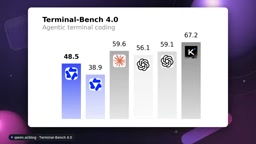
Qwen 4 Max launches: 2.4T-parameter MoE, 1M-token context, sharply cut API prices but lagging on agentic tasks vs Opus. Meanwhile Google's Gemini 4 Oxygen and Krypton leak, and GPT-6.2 Sol may be in canary.
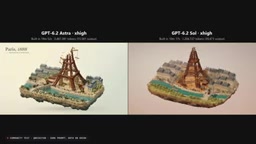
GPT-6.2 Astra Released: Rebuilding Paris, Million-Scale Game Generation, and NVIDIA's Robot Revolution
Weekly AI roundup: OpenAI launches GPT-6.2 Astra and Sol, Google tests Gemini 4 Oxygen and Neon, Alibaba Qwen4Max and Tencent HY4 Flash generate full games at low cost, NVIDIA Groot 2 lets robots learn from demos, and California sues OpenAI.