FBI Warning: How Open-Source AI Pentesting Tool Artex Lowers the Bar for Hackers

Open-source AI pentesting framework Artex used in real attacks, exposing dual challenges of automated attacks and open-source governance.
Artex is an open-source AI-driven penetration testing framework that connects to external LLMs and coordinates specialized AI agents to invoke real security tools, automating reconnaissance and testing from a high-level objective. The FBI found threat actors using it for real intrusions, with some attacks reaching privileged access in under three hours, including a breach affecting about 67,000 people at a South Korean financial institution and a supply chain attack impacting over 2,250 downstream tenants. Although the original developer removed the GitHub repository in October, forks and archives still circulate. The article argues defense should focus on internet-facing apps, authentication, cloud permissions, and third-party integrations, and calls for improving resilience rather than simply banning tools.
When AI Takes Over the Attack Chain: What Is Artex?
Artex is an open-source, AI-driven penetration testing framework that recently drew attention in the security community after an FBI warning. It does not include an AI model of its own; instead, it connects to external large language models (LLMs) and coordinates multiple specialized AI agents working alongside real cybersecurity tools. The operator only needs to provide a high-level objective and a clearly defined scope, and Artex breaks the objective into subtasks, dispatches agents, performs reconnaissance and security testing, and tracks progress through a dashboard.
This design dramatically increases the degree of automation in the attack workflow. Traditional penetration testing relies on security experts operating step by step, whereas Artex hands task decomposition and tool invocation to AI agents, allowing human involvement to become quite limited.
LLM-Driven Agent Orchestration
The core of the architecture Artex adopts is "agent orchestration": a large language model acts as the planner, breaking a high-level objective into subtasks with dependencies and then dispatching them to sub-agents with specific roles (such as reconnaissance, vulnerability validation, and lateral movement) for execution. Each sub-agent does not "think" directly; instead, it interacts with real security tools through tool-calling interfaces (such as command lines, APIs, and script execution) and returns the results to the planner for the next decision. This model differs from earlier LLM applications that could only generate text: it decouples the model's reasoning capability from the execution capability of external tools, thereby overcoming the limitation that the model itself cannot directly operate the system.
Standardized Phases of Penetration Testing
To understand Artex's attack efficiency, it is necessary to understand the phases that penetration testing typically follows: reconnaissance (collecting target information), initial access (gaining an entry point), privilege escalation, lateral movement, persistence, and data exfiltration. Traditionally, each phase requires expert judgment and manual operation, and the transitions between phases are especially time-consuming. Artex's value lies in using AI agents to automatically complete the coordination and tool selection between phases, turning what was originally a serial manual decision-making process into a parallel, fast automated workflow. This is also the technical reason the attack window can be compressed to a few hours.
From Legitimate Testing to Real Attacks: What the FBI Found
Artex was originally designed for authorized security testing, but threat actors have already used it in real cyberattacks. According to FBI observations, some intrusions took less than three hours from initial target identification to obtaining privileged access. The attack activity includes an attack on a South Korean financial institution that resulted in the leakage of personal information of approximately 67,000 people, as well as a supply chain intrusion that affected more than 2,250 downstream tenants.
These figures reveal the potential destructive power of automated attack frameworks: attackers do not need to be proficient in every step, and AI agents can coordinate multiple phases, significantly compressing the attack window.
The Ripple Effects of Supply Chain Intrusions
The phrase "affecting more than 2,250 downstream tenants" mentioned in the article is a typical supply chain attack: attackers do not directly compromise every final target, but first compromise a service provider that many organizations depend on (such as a hosting provider, software vendor, or integration platform) and then spread laterally through trust relationships. This type of attack has a very strong amplifying effect: the compromise of a single entry point can affect a large number of downstream organizations. When automated frameworks are involved, attackers can more quickly enumerate trust connections and privilege inheritance relationships across the supply chain, thereby identifying the entry points with the greatest leverage.
Privileged Access and the Attack Window
The observation that it took "less than three hours from initial target identification to obtaining privileged access" is alarming because privileged access usually means the attacker already has the ability to read sensitive data, modify configurations, or move laterally further. Traditionally, this process often takes days or even weeks and relies on manual probing and experiential judgment. Compressing the time to the hour level means the defender's detection and response window narrows accordingly, and traditional SOC workflows that rely on manual log analysis may not have time to intervene.
The Governance Dilemma of the Open-Source Ecosystem
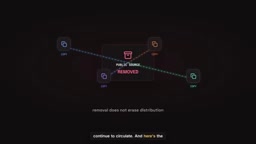
After the malicious use was reported, Artex's original developer removed the public GitHub repository in October. However, independent forks and archived copies are still circulating. This exposes the fundamental contradiction faced by open-source security tools: once code is made public, it is difficult to fully retract. For defenders, this means they cannot rely on "taking the tool down" to eliminate the threat.

The Irreversibility of Forks and Archived Copies
On platforms such as GitHub, a fork is a complete copy of a repository by another user, with its own independent history and address; archived copies may be scattered across various places in the form of compressed packages, mirror sites, or code snippets. Once code is released under an open-source license, deleting the original repository does not invalidate copies that have already been distributed, which is consistent with the original design intent of distributed version control. For security governance, this means that control of dual-use tools cannot rely on the action of "taking them down" but must start from aspects such as detection signatures, behavior monitoring, and defensive hardening.
Defenders' Priorities: From the Perimeter to Identity
Artex did not invent hacking techniques, but it greatly reduces the "manpower" required to coordinate the multiple phases of an intrusion. For defenders, this reinforces the priority of several key areas: internet-facing applications, authentication systems, cloud permissions, and third-party integrations. When attackers use automated frameworks, any exposed surface can become an entry point, and improper permission configurations will accelerate the path from initial access to privilege escalation.
Security teams need to assume that attackers have AI-assisted automation capabilities and review their detection and response strategies accordingly.
The Double-Edged Sword of Autonomous AI Agents
Artex shows what happens when autonomous AI agents are given real-world tools and clear objectives. On the one hand, it can help security teams conduct authorized testing more efficiently; on the other hand, when the same capability is abused, the coordination cost of attacks is greatly reduced. Discussion around such frameworks should not stop at "banning the tool" but should focus on how to improve overall defensive resilience and how to find a balance between open-source collaboration and security governance.
One-line Summary
Open-source AI pentesting framework Artex has been used in real attacks, exposing dual challenges in automated attacks and open-source governance.
Paragraph Summary
Artex is an open-source AI-driven penetration testing framework. It does not include a built-in model; instead, it connects to external large language models and coordinates multiple specialized AI agents to invoke real security tools. The operator only needs to provide a high-level objective to automatically complete reconnaissance and testing. The FBI found that threat actors have used it for real intrusions, with some attacks taking less than three hours from target identification to obtaining privileged access, involving the leakage of information of approximately 67,000 people at a South Korean financial institution and a supply chain attack affecting more than 2,250 downstream tenants. Although the original developer removed the GitHub repository in October, forks and archived copies are still circulating. The article points out that defense should focus on internet applications, authentication systems, cloud permissions, and third-party integrations, and emphasizes that the double-edged sword effect of autonomous AI agents should be addressed by improving defensive resilience rather than simply banning tools.
Related articles
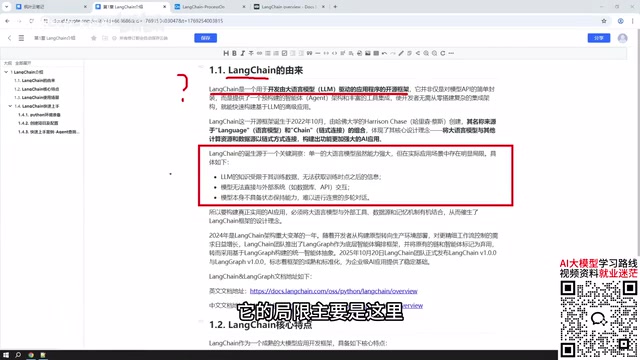
LangChain Beginner's Guide: From LLM Limitations to Agent Development
What is LangChain? This guide covers the three key limitations of LLM APIs — knowledge cutoff, business data disconnect, and no session persistence — plus LangChain's positioning, 1.0 architecture changes with LangGraph, and how to get started.
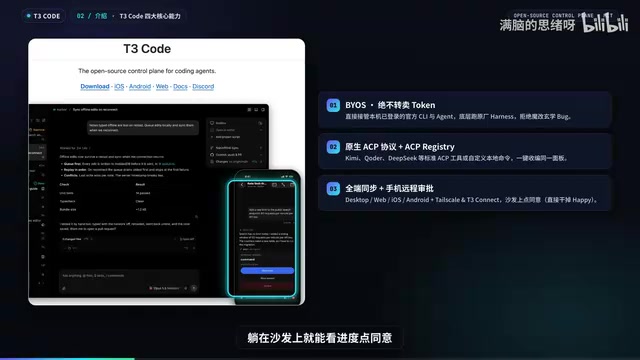
T3 Code Hands-On: An MIT Open-Source Multi-Agent Coding Console
In-depth hands-on with MIT open-source T3 Code: no token reselling, directly takes over local official CLIs, supports ACP protocol and Git Worktree isolation for multi-agent parallel coding, auto review, and mobile remote approval.

Did AI Really Solve a Black Hole Physics Problem? Anthropic's Claim Is Questionable
Anthropic says Claude Fabel 5.2 helped solve two black hole physics problems, but the announcement names no problems and shows no derivation. We break down the claim.