Qwen Image 2.1 Early Testing: How Good Is Image Generation from a 7B Model?
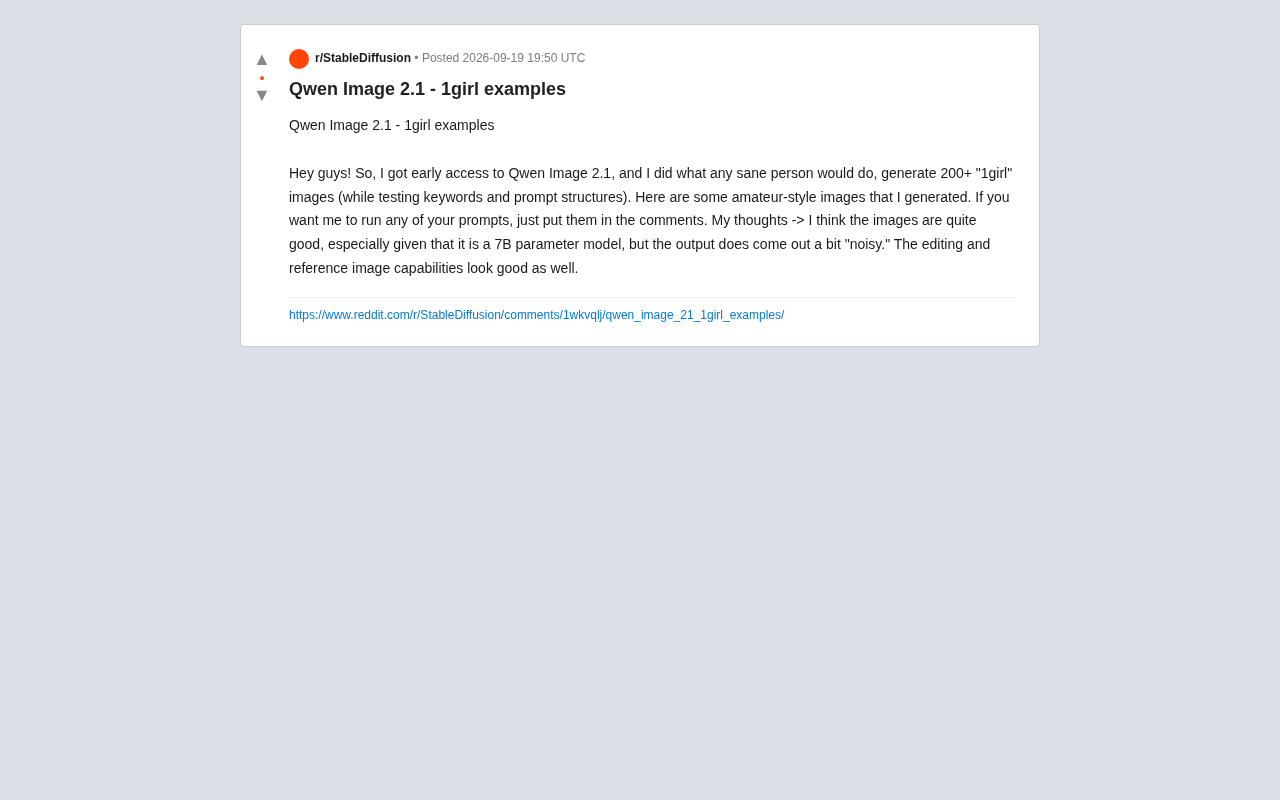
Qwen Image 2.1 early test: solid 7B image quality with noisy outputs, promising editing and reference image features.
Alibaba's Qwen Image 2.1 has opened early access, and a Reddit user ran systematic tests by generating 200+ portrait images. The 7B-parameter model delivers solid overall quality, with editing and reference image features showing practical potential. The main drawback is noisy output, a common issue for lightweight diffusion models. Its smaller footprint makes local deployment accessible on consumer hardware, though the test's focus on portraits alone limits how broadly its conclusions apply.
Qwen Image 2.1 Early Access
Qwen Image 2.1, the image generation model from Alibaba's Qwen series, has opened early access. A Reddit user who secured early access generated over 200 test images focused on portrait subjects (using the community-popular "1girl" prompt), systematically testing how different keywords and prompt structures affect output quality.
This kind of high-volume, community-driven testing often reveals more about a model's real-world performance than official demos. Compared to carefully curated showcase samples, large-scale, multi-variable testing is far more likely to expose a model's limitations and edge cases.
Image Quality at 7B Parameters
Based on the tester's feedback, Qwen Image 2.1 delivers "pretty good" overall image quality — especially impressive given its 7 billion (7B) parameter scale. In image generation, parameter count generally correlates with expressive capacity, detail fidelity, and prompt comprehension, so a 7B-scale model producing near-practical portrait images is technically noteworthy in its own right.
That said, the tester also flagged a clear weakness: outputs tend to look "noisy." This grainy or artifact-laden quality is a common issue with lightweight diffusion models, typically stemming from trade-offs in sampling steps, fine-tuning depth, or the denoising pipeline. For users who need clean, high-fidelity output, this may require post-processing or parameter tuning to mitigate.
The Trade-Offs of a 7B Scale
The 7B positioning means Qwen Image 2.1 has a real advantage in local deployment and inference costs. The smaller model footprint makes it accessible to a wider range of consumer hardware users who want to run image generation locally — a genuine practical advantage over models with tens of billions of parameters or more. The modest quality trade-off comes in exchange for a lower barrier to entry and faster iteration potential.
Diffusion models are the underlying architecture behind today's mainstream image generation technology. The core idea is to gradually "denoise" random noise into an image that matches the prompt description. The number of sampling steps and the noise scheduler used directly affect final image quality: too few steps or an aggressive scheduling strategy often leaves visible grain or blurry details. This "noisy" issue is especially common in lightweight models, where limited parameter capacity means the denoising network struggles to simultaneously handle both global semantic understanding and pixel-level detail reconstruction. Common industry mitigations include increasing inference steps, using more refined sampling algorithms (such as DPM-Solver++ or DDIM), and applying a super-resolution module post-inference for quality enhancement.
Editing and Reference Image Capabilities
Beyond pure text-to-image generation, the tester specifically noted that Qwen Image 2.1's image editing and reference image capabilities "look promising." These two features are among the most competitive areas in today's image generation tooling:
- Image Editing: Allows users to make local modifications or style adjustments to an existing image rather than generating from scratch every time, significantly improving controllability.
- Reference Image Guidance: Uses an input reference image to constrain the composition, style, or character appearance of the generated result — a key technique for maintaining character consistency and reproducing specific visual styles.
If both capabilities prove stable in the official release, Qwen Image 2.1's practical value will extend well beyond random image generation and into more complete creative workflows.
Image editing typically relies on one of two technical approaches: image-to-image (img2img), which encodes the original image into a latent space representation before denoising (with a "denoising strength" parameter controlling how far the result can deviate from the source), or inpainting, which uses a mask to designate regions for regeneration while preserving the rest. Reference image guidance more commonly relies on conditional control modules like IP-Adapter or ControlNet, which extract visual features from the reference image (such as character appearance, pose, or composition) and inject them as additional conditioning signals into the generation process. These techniques are in high demand for character consistency and style transfer use cases, and are among the most actively developed features in open-source ecosystems like ComfyUI and Stable Diffusion WebUI. If Qwen Image 2.1 can natively integrate these capabilities with consistent stability, it will offer strong workflow integration value.
How to Interpret This Early Test
It's worth emphasizing that this was a personal test based on early access, with samples concentrated almost entirely on portrait subjects. The tester themselves characterized the outputs as "amateur style" images. This means the conclusions have real limitations — they don't reflect how the model performs on landscapes, objects, complex scenes, or text rendering, among other tasks.
The tester also opened an invitation for the community to submit prompts for test runs, an interactive approach that should help gather a more diverse sample set. Anyone looking to seriously evaluate Qwen Image 2.1 is advised to wait for the official release and full technical documentation, then form a judgment based on a broader range of real-world test results.
Summary
As a 7B-parameter image generation model, Qwen Image 2.1 demonstrated solid image quality and portrait generation capability in early testing. Its editing and reference image features show genuine potential, while the main weakness is noisy output. For users interested in lightweight, locally deployable image models, it's a model worth keeping an eye on.
Related articles

The AI Virtual Star Meltdown: A Trust Crisis in the Age of AI Idol Manufacturing
An AI-generated virtual star melts down on live TV, exposing the trust crisis behind the AI idol boom. We examine the business logic, technical limits, and regulatory gaps.
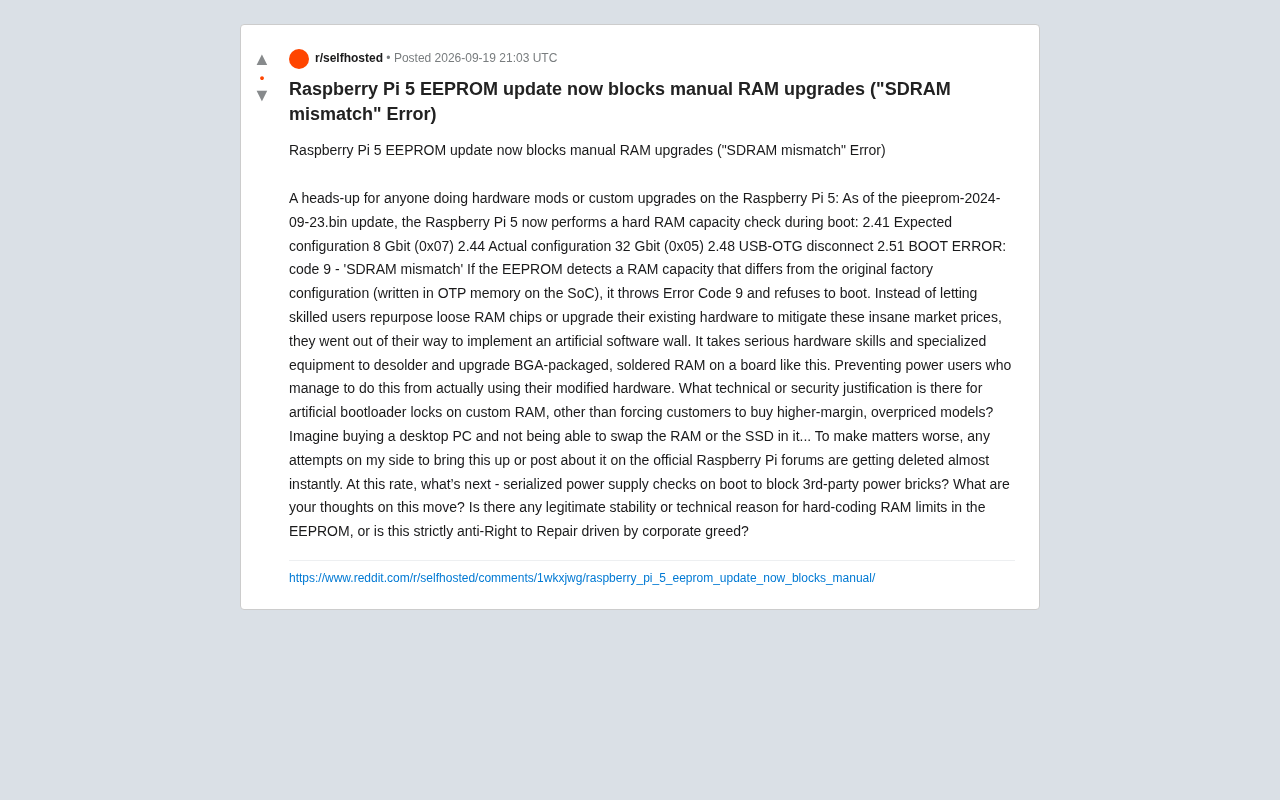
Raspberry Pi 5 EEPROM Update Blocks Manual RAM Upgrades: Error Code 9 Sparks Controversy
Raspberry Pi 5's pieeprom-2024-09-23.bin update adds an OTP memory validation check that throws Error Code 9 'SDRAM mismatch' on manually upgraded RAM, blocking boot. Is it a stability measure or anti-repair strategy?
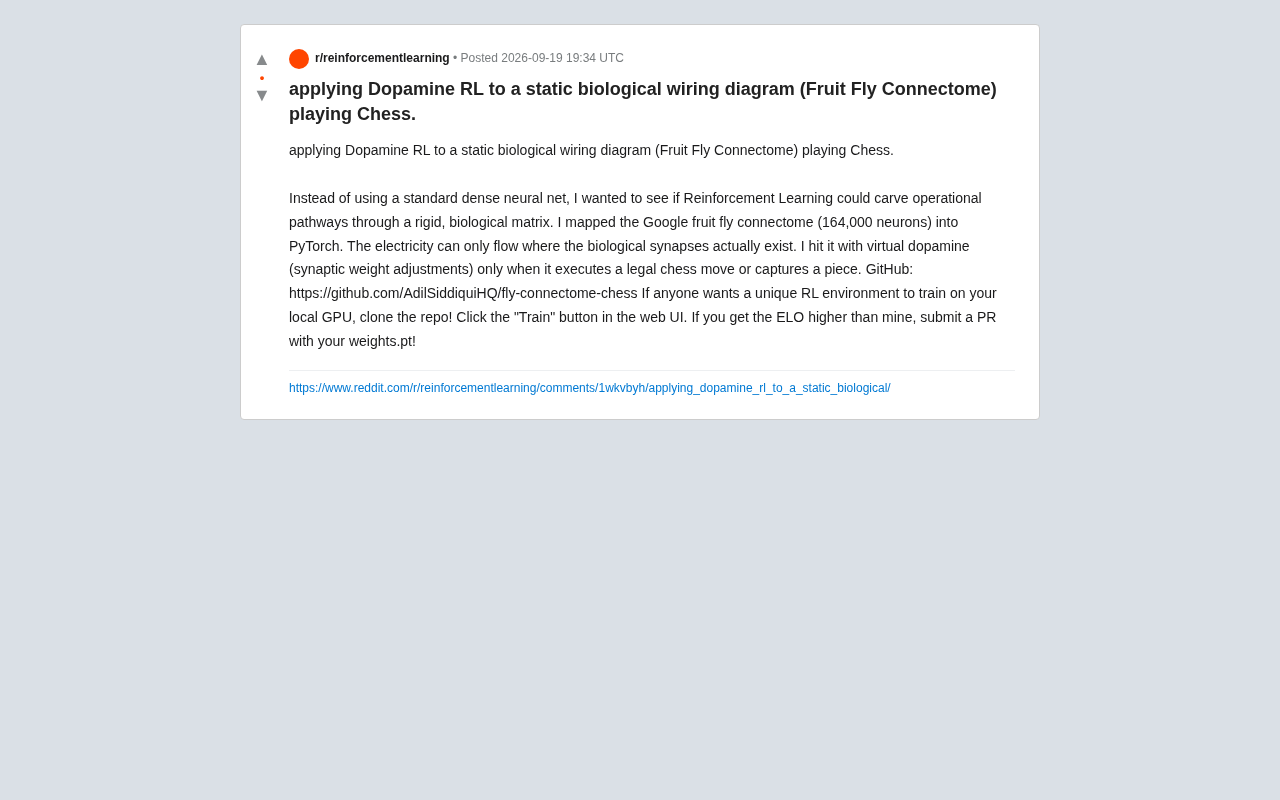
Playing Chess with a Fruit Fly Connectome: An Unconventional Experiment in Dopamine-Driven Reinforcement Learning
A developer mapped a 164,000-neuron fruit fly connectome into PyTorch and trained it to play chess using "virtual dopamine" RL. Signals travel only along real synapses. Open-source with local GPU training and an ELO leaderboard.