Qwen3.8 Deep Dive: How Does a 2.4 Trillion Parameter MoE Model Claim Second Place?

Qwen3.8's MoE architecture activates only a fraction of its 2.4T parameters — here's what that really means.
Alibaba's Qwen3.8 uses a 2.4 trillion parameter MoE architecture that activates only a small subset of experts per inference, enabling frontier-level performance at lower compute cost. It claims to rank second only to Gemini, though that awaits third-party verification. The model follows an API-first, open-source-later release strategy with aggressive pricing, but true self-hosting requires 1.4–1.5 TB of VRAM — far beyond most setups.
China's AI Explosion: Three Major Releases in Quick Succession
China's AI scene is entering an intense release cycle. Within just two weeks, Kimi K3, DeepSeek V4, and Alibaba's Qwen3.8 have all made their debuts. What's most noteworthy isn't the 2.4 trillion parameter scale Alibaba officially announced — it's the model's entirely new way of operating. Think of it like a continuously updated medical encyclopedia that holds tens of thousands of prescriptions but only reaches for a handful of remedies for each patient.
Lining up the timeline: Kimi K3 (approximately 2.8 trillion parameters) launched first, Qwen3.8 (2.4 trillion parameters) followed closely, and then DeepSeek V4 graduated from preview status, with MiniMax M3 Pro (2.5–3 trillion parameters) still on the horizon. Chinese foundation models are collectively entering a period of rapid proliferation.
The most counterintuitive point: Qwen3.8's 2.4 trillion parameters are actually smaller than Kimi K3's 2.8 trillion, yet Alibaba boldly claims it is "the most powerful model except for Gemini (Fable 5)." It's like the student in class who isn't the tallest or the strongest, yet claims to have scored second highest.
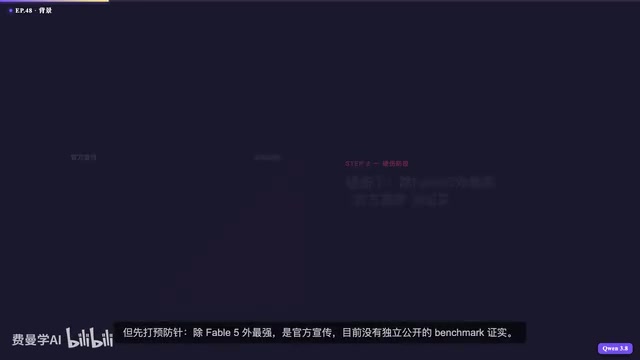
A word of caution: "second only to Gemini" is still an official marketing claim, and no independent public benchmarks have confirmed it yet. The rational approach is to wait for the weights to be released and third-party evaluations to come out before drawing conclusions.
More Parameters ≠ More Powerful: The Core Logic of MoE Architecture
How can 2.4 trillion parameters challenge 2.8 trillion? The answer lies in the MoE (Mixture of Experts) architecture.
The technical origins of MoE: MoE is not a new concept — its theoretical roots trace back to a 1991 paper by Jacobs et al., Adaptive Mixtures of Local Experts. What truly made MoE shine in large language models was Google's Sparsely-Gated MoE proposed in 2017, followed by the engineering-level realization of Switch Transformer (2021). The core mechanism: the model consists of several "expert" sub-networks (Expert Networks) and a "gating network" (Gating Network). During each forward pass, the gating network dynamically selects the Top-K experts based on the features of the input token, while the remaining experts stay silent. This means the model's total parameter count (the sum of all experts) is far greater than the parameters actually activated during a single inference run. In Qwen3.8's case, the parameters activated per inference may be only in the tens of billions — comparable to a medium-sized Dense model.
A Library With Trillions of Books
Having 2.4 trillion parameters doesn't mean all of them are activated on every call. The hallmark of MoE architecture is that only a small subset of "experts" is activated per inference. A more intuitive analogy: Qwen3.8 is like a library holding 2.4 trillion books, but you only open a few of them each time. The total parameter count represents "collection capacity," not "the cost of each reading session."
In other words, you can't judge a model's strength by "total tonnage" alone — what matters is "effective intelligence after activation." Qwen3.8 keeps most of its capacity in reserve, calling only relevant experts into action, thereby achieving higher inference efficiency at a smaller activation footprint. This also explains why MoE models generally outperform Dense models of equivalent parameter size on inference latency and compute cost — but the tradeoff is that they require significantly more VRAM to load all expert weights.
Real-World Productivity Tasks
According to Alibaba's internal evaluations, Qwen3.8 matches world-leading performance on complex multi-Agent long-horizon tasks such as full-stack development, data analysis, and Office workflow automation. These are genuine productivity scenarios, not just benchmark climbing. Compared to its predecessor Qwen3.7 Max, the overall capability represents a significant improvement.
On context length, the Qwen series has always been a strong performer — Qwen3.7 Max already supports million-token context, and Qwen3.8 will very likely match or exceed that.
A Continuously Evolving Model: Like OTA Updates for Your Phone
Another notable feature of Qwen3.8 is that it "continuously evolves on a daily basis." The Qwen3.8 you test today may not be the same model as tomorrow's.

It isn't frozen after training — instead, like an OTA update for a mobile operating system, it continuously refreshes itself with new data and new alignment methods. This creates a practical engineering challenge: Model Drift.
In machine learning, model drift is typically divided into data drift (changes in input distribution) and concept drift (changes in the target function itself). But in Qwen3.8's context, it more closely resembles "model version drift" — the weights behind the same API endpoint are quietly being updated; the external interface stays the same, but the behavioral characteristics have changed. OpenAI's early GPT-4 was observed by users to exhibit similar behavior, and a 2023 Stanford study (Chen et al.) systematically measured this, confirming that GPT-4's mathematical reasoning ability fluctuated significantly over a period of months.
This means that evaluations from last week or deployment configurations from last month may already be stale. For engineering teams, the standard practices for guarding against model drift include: pinning version numbers (e.g., using gpt-4-0613 rather than gpt-4), running regression tests, maintaining baseline comparisons, and adding model behavior testing steps into the CI/CD pipeline. This "living encyclopedia" style of existence is both an advantage for capability iteration and a challenge for engineering maintenance.
Two-Speed Release Strategy and the Business Logic: API First, Open Source Later
Alibaba's release strategy this time is notably shrewd, following a "two-speed" cadence.
Speed One: Max Preview via API
Qwen3.8 Max Preview is now live. Users can access it domestically through the "Bailian / Token Plan" or directly on PC, while international users can access it via platforms like qwen.aliyun.com.
The key is ecosystem compatibility: mainstream developer tools like Cloud Code, Cursor, and Open Code can all route directly through OpenAI and Anthropic protocol endpoints. In other words, you can seamlessly plug Qwen3.8 in as a frontier model alternative without changing your existing workflow.
Speed Two: Full Weights Coming as Open Source
The full weights are "coming soon as open source" — but note: what's available now is only a preview API, not Open Weights. Don't mistake "preview" for "already open-sourced" — it only counts when the weights are actually released.
"API first, then open-source weights" wasn't invented by Alibaba — it's a release paradigm that has gradually taken shape across the foundation model industry. Zhipu AI's GLM series and multiple versions of DeepSeek have followed similar paths: first reach developers via API and validate market reception, while simultaneously collecting real call logs for further alignment optimization (these logs serve as valuable training material for RLHF or DPO), then open up the weights once the model has "matured." This approach also preserves a buffer period for potential safety concerns, avoiding the passive situation of "open-source once, responsible forever." The pattern of "preview to capture users, open-source to lock in the ecosystem" is becoming the new normal for Chinese model releases.
Price War: Subsidies in Exchange for Ecosystem
Pricing has diverged significantly. The domestic Token Plan Lite package starts at ¥35/month, while the international version starts at $6/month. Kimi K3's pricing is approximately ¥100 per million tokens. Alibaba is clearly pursuing a "subsidize for ecosystem" strategy — locking developers into their Token Plan ecosystem, then using open source to solidify long-term users. Kimi K3, by contrast, has raised prices toward frontier-model pricing. For the first time, Chinese foundation models are showing a clear split between "premium" and "inclusive" pricing strategies.
The Reality of Local Deployment: Extremely High Compute Requirements
Open source may sound appealing, but self-hosting Qwen3.8 is not realistic for most.

Understanding why 2.4 trillion parameters requires roughly 1.4–1.5 TB of VRAM requires some basic knowledge of parameter storage. The most direct formula: parameter count × bytes per parameter = VRAM required. Under FP32 full precision, that's approximately 9.6 TB; BF16 half-precision, approximately 4.8 TB; INT8 quantization, approximately 2.4 TB; INT4 quantization, approximately 1.2 TB. The "1.4–1.5 TB" figure mentioned above is a practical estimate under BF16 precision after accounting for KV Cache and activation values — MoE models need to load all expert weights simultaneously (even if only a few experts are activated per inference), making the overall VRAM footprint enormous. An NVIDIA H100 has only 80 GB of VRAM per card; even an 8-card node (640 GB total) falls far short. Apple Silicon's M-series unified memory architecture tops out at 512 GB, which can only cover lightly quantized versions.
Even a 512 GB Mac can't come close to fitting it. To actually run it, you'd need either aggressive quantization (still requiring hundreds of GB) or a multi-GPU cluster with Tensor Parallelism and Pipeline Parallelism strategies.
For this reason, the value of open source for ordinary developers has shifted from "cheaper" to "more controllable." Enterprise compliance and data sovereignty are the real use cases for self-hosting. To summarize in two layers:
- Available now: API access, low price, viable as a frontier model alternative;
- Full private deployment: Wait for weights to be released, and you'll still need substantial compute to back it up.
These two should never be conflated.
Five Criteria to Help You Decide Whether to Integrate
Faced with a crowded field of Chinese foundation models, how do you choose? Here are five practical criteria to consider:
- Task type: Does your workload fall into full-stack development or long-horizon Agent tasks? That's Qwen3.8's core strength.
- Call volume: Is your monthly call volume large enough to translate the low-price advantage into meaningful savings?
- Context requirements: Do you genuinely need million-token context windows?
- Cache optimization: Can you use prompt caching to further reduce input costs?
- Deployment model: Self-hosted or direct API — this determines your time and resource investment.

When it comes to evaluation benchmarks, it's important to understand their inherent limitations. Current mainstream evaluation frameworks fall into two categories: static benchmarks (such as MMLU, HumanEval, MATH, GPQA) and dynamic arenas (such as LMSys Chatbot Arena). Static benchmarks face contamination risk — a model's training data may already include test questions, inflating scores. LMSys Arena uses a human blind-test ELO scoring system, which is theoretically harder to "game," but its user base skews toward English creative writing and may not represent real production needs. Vendor self-reported evaluation data faces even more direct conflicts of interest. Developers are advised to run small-scale A/B tests on their own business datasets and cross-check results on third-party evaluation platforms like OpenCompass — don't just look at overall scores; dig into performance by scenario and sub-task.
A Capability Matrix for Chinese Foundation Models
Each model has a clear positioning and a distinct home turf:
- Qwen3.8: Full-stack development + ecosystem integration + low-price strategy
- Kimi K3: Frontend development + Agent programming
- DeepSeek V4: Cost-efficiency priority + coding capability
- GLM 5.2: General tasks + Chinese language understanding
- Gemini (Fable 5) / GPT series: All-around frontier benchmarks
Three-Sentence Summary
- More parameters ≠ more powerful: MoE architecture only activates a small number of experts per inference. Total parameter count is an upper bound on capability, not an inference cost invoice.
- "Second place" is self-reported — wait for independent evaluations: Gemini and the GPT series remain the recognized top tier. Qwen3.8's true ranking requires third-party validation to be credible.
- Two-speed release is the new normal: API first, weights later. Low pricing makes it a viable frontier alternative today, but private deployment requires both weights and sufficient compute to be in place.
The competition among Chinese foundation models is shifting from "racing on parameters" to "racing on ecosystem, pricing, and whether you can actually put it to use." For developers: small teams should start with the API and not rush to spin up a cluster. For enterprises: wait for the open-source weights to land before evaluating a private deployment plan.
Key Takeaways
Related articles
Ditch the Vector Database: Building a Memory Layer for LangChain Agents with BM25
CogniCore replaces vector databases with BM25 retrieval for LangChain agent memory, outperforming embeddings in small-context benchmarks with zero external dependencies.
Are All-in-One AI Platforms Actually Worth It? A Practical Guide to Escaping Subscription Overload
Tired of paying for ChatGPT, Claude, and Midjourney separately? We break down whether all-in-one AI platforms are actually worth it — and what a smarter subscription stack looks like.
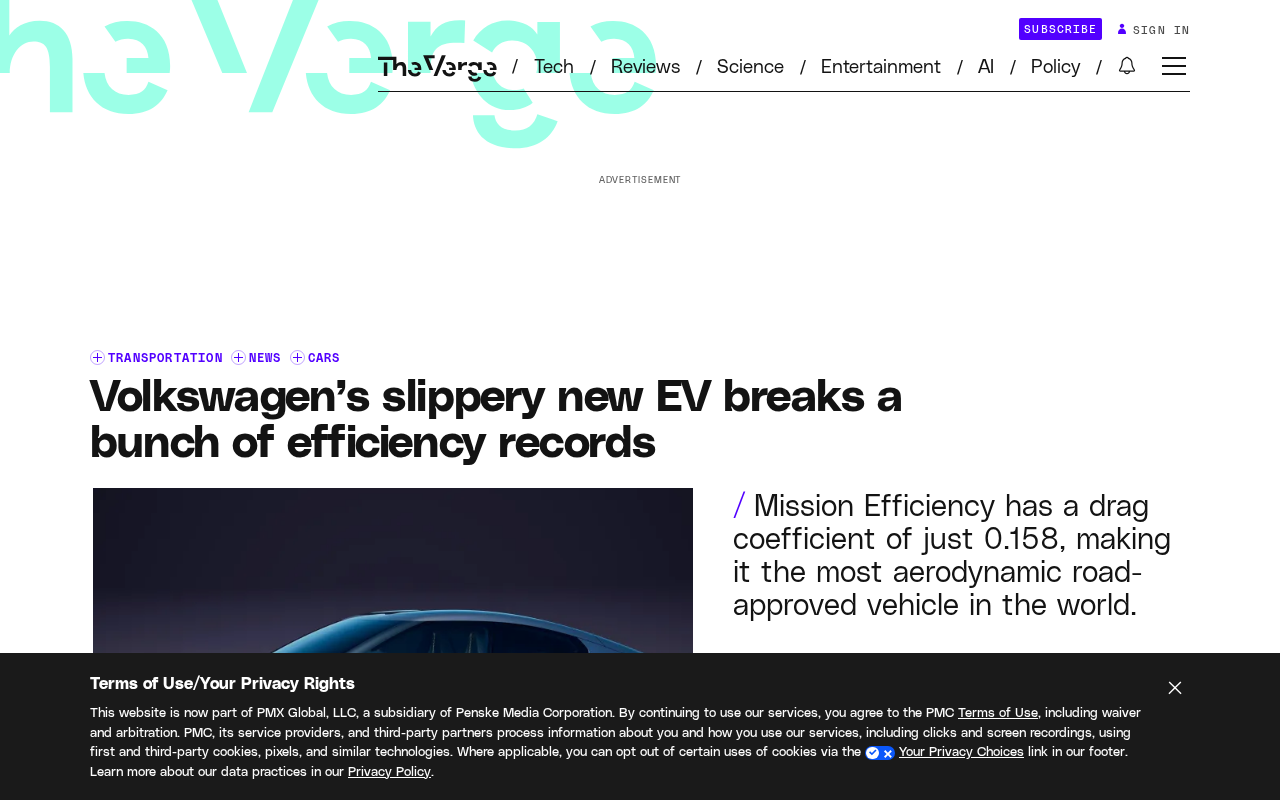
Volkswagen Mission Efficiency: The World's Lowest-Drag EV Breaks Multiple Efficiency Records
Volkswagen's Mission Efficiency prototype claims the world's lowest drag coefficient, built on MEB+ platform with ID. Polo and ID. Cross components. Here's what it means for EV efficiency.