Qwen3.8 Flash Hands-On: Million-Token Context in Three Steps
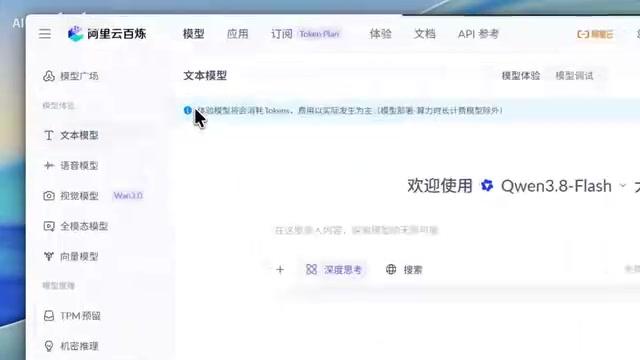
Qwen3.8 Flash brings 125B-parameter MoE multimodal AI with million-token context to everyday users online.
Qwen3.8 Flash Next uses a sparse MoE architecture with 125B total parameters but only ~6B activated per token, balancing large-model knowledge capacity with manageable inference costs. The production version is live on Alibaba Cloud Bailian, supporting text, image, and video input with native million-token context — no local deployment needed. The article offers a three-step testing protocol and recommends evaluating models on three dimensions: recall completeness in long documents, numerical accuracy in images, and output format usability.
Don't Let the Parameters Intimidate You: 125B Total, Only 6B Activated
When people see a large model's parameter count, the knee-jerk reaction is usually: "That has nothing to do with me — you'd need a massive server just to run it." But the next-generation architecture preview from Qwen — Qwen3.8 Flash Next — flips that assumption on its head.
The model has a total of 125 billion parameters, yet only about 6 billion are activated per token during inference. The short version: the model looks enormous on paper, but running it doesn't actually require firing up all those parameters. This is the essence of sparse activation (MoE-style) architecture — trading a large model's knowledge capacity for a small model's inference cost, making top-tier capability accessible to everyday users.
For most people, a more practical question than raw parameters is: what can a regular account actually test? The answer: the production release, Qwen3.8 Flash, is already live in Alibaba Cloud's Model Experience Center (Bailian). You can select and use it directly — no deployment required, no expensive hardware needed.
MoE (Mixture of Experts) is an architecture that divides a model into multiple "expert" sub-networks. During inference, a lightweight router dynamically selects a small number of experts to process each input, while the rest remain silent. This contrasts with traditional dense models, which activate all parameters for every token. The advantage of MoE: the model achieves far greater knowledge capacity than a dense model of the same activated parameter count, at a fraction of the per-inference compute cost. The trade-offs are increased training and scheduling complexity, plus storage requirements that still scale with total parameter count. GPT-4, Mixtral, DeepSeek, and other leading frontier models all use similar approaches. Qwen3.8 Flash Next's 125B total / 6B activated ratio represents one of the more aggressive sparsification designs in the industry today.
Capability Overview: Text, Images, Video Input — With Million-Token Context
Qwen3.8 Flash is a natively multimodal model. On the input side, it accepts text, images, and video; on the output side, it produces text. This means you can have it read a chart or graph, or feed it a video clip for comprehension — all within the same model.
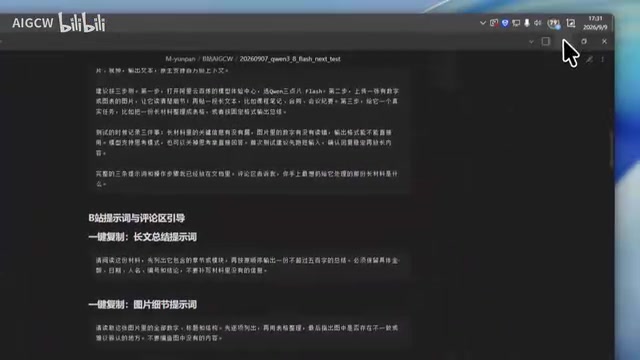
Even more significant is its native support for million-token context. The context window determines how much content a model can "remember" at once. At the million-token scale, you can dump an entire contract, a complete set of course notes, or a full meeting transcript in one shot — letting the model process everything in its complete context rather than working from truncated chunks that lose cross-section coherence.
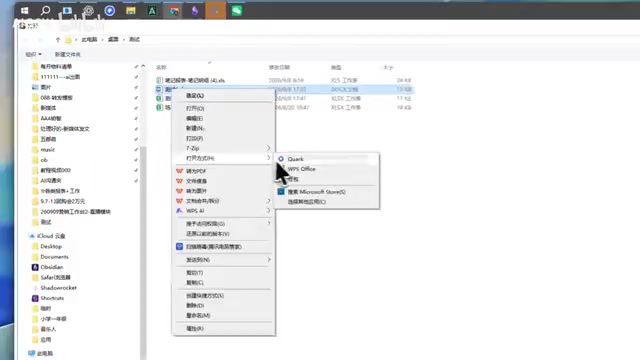
For handling real work materials, this kind of long-context capability has immediate practical value: no more manually splitting long documents, and no more information loss from a model that only saw a fragment before drawing conclusions.
Context window refers to the maximum number of tokens a model can process in a single inference pass — essentially its "working memory" limit. Early mainstream models had context windows of just 4K to 32K tokens (roughly a few thousand to tens of thousands of Chinese characters). Processing longer documents required manual segmentation, which often caused information loss at split points. A million-token context window (approximately 1M tokens, corresponding to hundreds of thousands to millions of characters) means an entire book, a complete legal contract package, or hours of meeting transcripts can be ingested in a single pass. One important caveat: longer context means proportionally higher compute and memory requirements during inference. Whether a model can maintain stable response speed and accurate information retrieval at the million-token scale is a critical benchmark for evaluating this class of models.
A Three-Step Testing Protocol: From Short Samples to Long Documents
To verify whether this model actually delivers, here's a reproducible three-step workflow.
Step 1: Open the Experience Center and Select the Model
Navigate to Alibaba Cloud Bailian's Model Experience Center and choose Qwen3.8 Flash from the model list. No local environment setup is needed — everything runs in the browser.
Step 2: Feed It an Image + a Long Text
Start by uploading an image that contains numbers or charts, and ask the model to extract specific details — this tests its image comprehension accuracy. Then paste in a long text sample: course notes, contract clauses, or a meeting summary work well. This tests how well it digests extended content.
Step 3: Assign a Real Task
Don't just ask it to "summarize this." Give it a specific, verifiable task — for example, organizing a long document into a table, or producing a structured summary in a defined format. Real tasks expose a model's weaknesses in ways that open-ended prompts won't.

Worth noting: the model supports a thinking mode that reasons before responding. If speed matters more, you can turn thinking off and get answers directly. The recommended approach: start with short samples to confirm stable output, then scale up to longer content. This keeps variables simple and helps you isolate issues before they compound.
Three Metrics to Watch During Testing
Just eyeballing whether the answer "looks reasonable" isn't enough. When running tests, pay close attention to three things:
- Are key details missing from long documents? — This is the most direct test of long-context capability.
- Are numbers in images read correctly? — Multimodal models are most error-prone when it comes to numerical recognition in images.
- Is the output format immediately usable? — This determines whether the model can actually integrate into your workflow.
These three criteria form a pragmatic evaluation framework: recall (nothing missed), accuracy (nothing wrong), usability (format is right). If any one of these falls short, the model's real-world value takes a significant hit.
Takeaway: This One Is Worth Testing Yourself
The significance of Qwen3.8 Flash isn't in its raw parameter count — it's that this combination of large parameter base, multimodal input, and million-token context has been made available to ordinary users through an online experience center, with inference costs kept manageable thanks to sparse activation.
For anyone who regularly deals with long contracts, lengthy notes, or data-heavy charts and reports, this type of model addresses a genuine pain point. Rather than getting bogged down in technical terminology, take the three-step workflow above, grab the most frustrating long document on your desk, and run it through. Score it on three criteria: did it miss anything, did it get anything wrong, and can you actually use the output?
Related articles
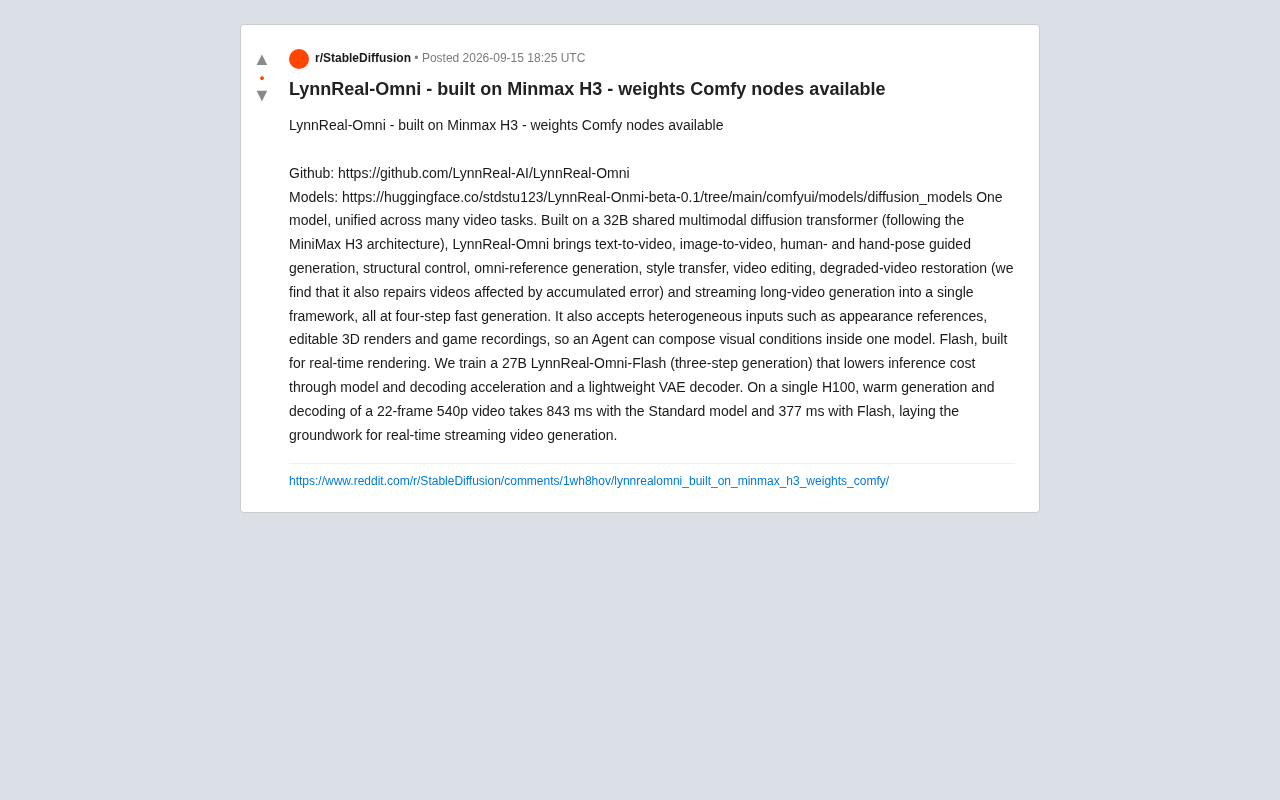
LynnReal-Omni: 32B Unified Video Diffusion Model Goes Open Source with Multi-Task Coverage in Four Steps
LynnReal-Omni is a 32B unified video diffusion model on MiniMax H3, covering text-to-video, pose guidance, style transfer, restoration in 4 steps. Flash version generates 540p video in 377ms on one H100.

Anthropic Co-Founder: AI 'Kill Switch' May Need to Be Mandatory by Law
Anthropic's co-founder tells the BBC that AI 'kill switches' may need to be legally mandated. We analyze the industry logic, technical challenges, and the tension between regulation and innovation.

The AI Data Center Boom Is Colliding With Cities Scarred by Heavy Industry
The AI data center boom is clashing with post-industrial communities. Philadelphia's case reveals structural conflicts between AI growth, energy use, water, and environmental justice.