Rack-Scale AI Deployment: The Facility Interface Questions Behind Giga Computing's Demo

Rack-scale AI procurement success hinges on interface ownership, cooling boundaries, and ops accountability — not peak compute specs.
Using Giga Computing's OCP Global Summit demo of an NVIDIA Vera Rubin NVL72 platform and integrated liquid-cooled OCP ORV3 rack as a starting point, this article systematically examines the engineering and operational details that rack-scale AI procurement teams most commonly overlook: electrical and thermal interface specifications, facility-loop versus equipment-loop boundary ownership, coordinated delivery and service-route planning, and the mapping of management signals to operational roles. Multi-vendor portfolios also require a designated cross-component owner and a maintained supported configuration record with clear change approval processes. The vendor demo makes the breadth of rack-scale procurement visible; the buyer's real work is translating that breadth into a deployable, maintainable engineering plan.
Rack-Scale AI Deployment: The Facility Interface Questions Behind Giga Computing's Demo
Rack-scale AI system procurement is reshaping the planning boundaries of data centers. When a delivery team faces a pre-assembled system, the first question isn't peak compute performance — it's how the system connects to the building, how it gets maintained, and who owns each interface. These seemingly mundane decisions often determine deployment timelines before a single workload is ever assigned.
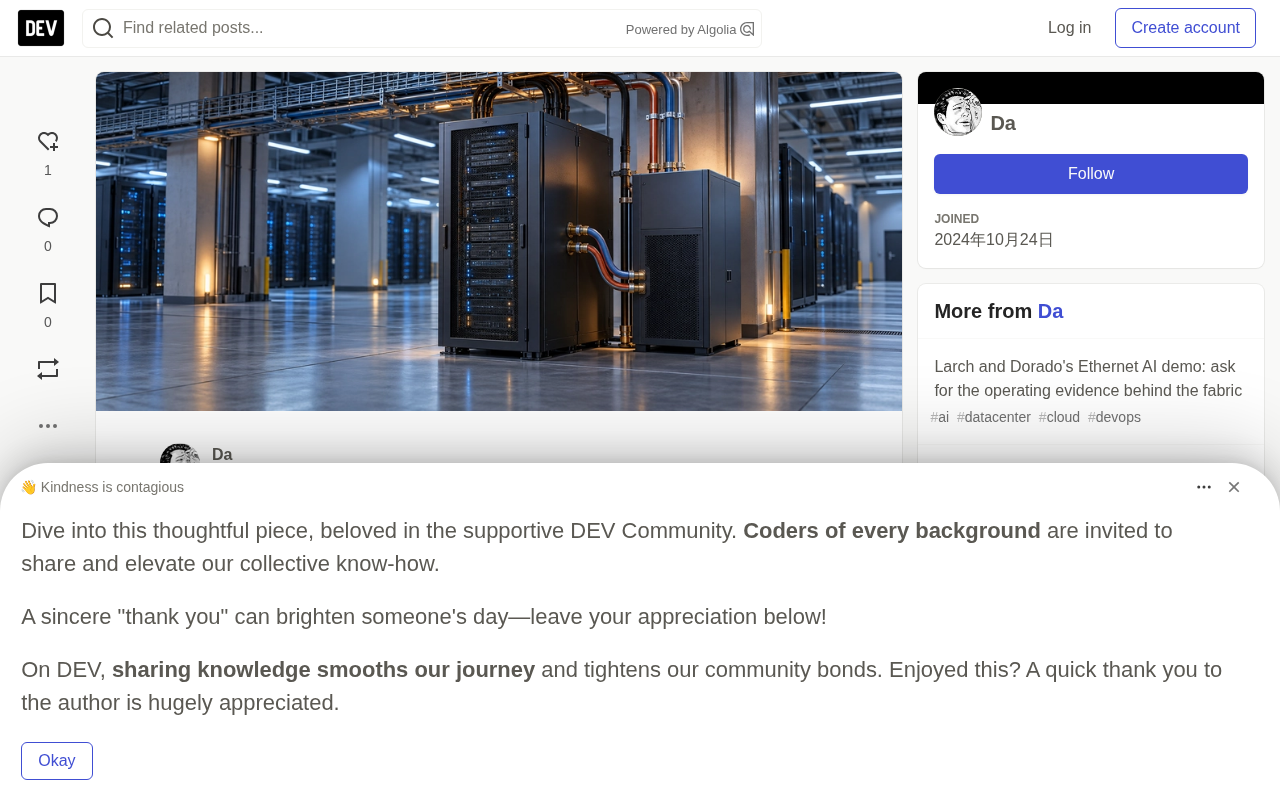
In its October 12 announcement, Giga Computing described what it plans to exhibit at OCP Global Summit: a configured NVIDIA Vera Rubin NVL72 platform, representative Vera CPU and Groq 3 LPX nodes, and an OCP ORV3 rack covering compute, storage, management, and GPU systems. The company states that its OCP server product line integrates direct liquid cooling, and the booth will also feature a cooling distribution unit (CDU) from partner TaiSol Electronics.
A clear-eyed note: this is a trade show announcement. It describes a product portfolio and demonstration concept — not a live commissioning record or independently verified application benchmark. Procurement teams should demand evidence specific to their deployment scenarios before transcribing vendor performance claims into capacity plans or financial models. The most valuable procurement conversations start with a fully documented list of interfaces between the rack and the facility — and this particular demo happens to surface several of those critical conversation points at once.
Define Connectivity Before Reserving Floor Space
A rack position should come with a mutually agreed-upon electrical and thermal specification. Power delivery method, supported load, protection requirements, and the operating envelope within which the system can function — all of these need explicit definition. Equally important: assumptions for maintenance and fault scenarios must be documented alongside normal operating conditions.
On the cooling side, the critical work is clarifying the boundary between the facility loop and the equipment loop. For the actual configuration being procured, teams need to pin down the required temperature and flow conditions, water quality standards, and connection interfaces. Someone also needs to be assigned responsibility for verifying those conditions and responding when parameters drift outside agreed limits.
A compatible fitting is only a small part of the agreement. Facility teams also need to know what happens when cooling flow is interrupted, when power is restored, or when equipment is taken offline for servicing. These operational sequences must be reviewed with the vendor before installation work begins.
The boundary between the facility loop and the equipment loop is the single most common source of ambiguous ownership in liquid-cooled data centers. The facility loop is typically managed by the building M&E team and covers cooling towers, main distribution pipework, heat exchangers, and primary-side pumps. The equipment loop is managed by IT or the server vendor and delivers cooling to individual compute node cold plates or immersion tanks. The two loops exchange heat through the CDU — and if CDU ownership and maintenance responsibility aren't spelled out in the contract, it invariably becomes a blame target when something goes wrong. The OCP ORV3 rack standard defines liquid cooling interfaces on the rack side, but that doesn't automatically mean the facility side has matching water quality, pressure, or flow conditions. Water quality standards are particularly easy to overlook: mixed copper-aluminum cooling loops have different pH and corrosion inhibitor requirements than all-copper systems. Non-compliance leads to leaks or deposits — damage that typically falls outside equipment warranties.
Plan Delivery Routes and Service Routes Together
A system that fits in its final position still has to get there. Procurement teams should ask vendors for delivery configurations, handling requirements, and any prerequisite work that must be completed before an assembled rack enters the machine room. Take the actual equipment dimensions and walk the unloading area, doorways, and corridors.
Then examine maintenance clearances. Confirm which components can be replaced in place and which interventions require draining, isolation, or moving equipment. Tooling, lift access, and temporary staging space for removed components all need to be accounted for in advance.
This assessment should involve the people who will actually do the hands-on work. Facility engineers, server technicians, and cooling contractors each perceive boundaries differently. Resolving those differences on paper is far easier than discovering them during an actual service window.
Route Management Signals Into Facility Decisions
An integrated rack needs an agreed-upon path for reporting operational status to the broader operations team. Clearly distinguish which alerts originate from servers, which come from cooling equipment, and which describe facility power status. Then map how those signals correlate to the workloads running on that rack.
Response ownership must be explicit. Who investigates a warning, who has authority to throttle workloads, who can authorize a shutdown — these need to be written down. Also define how technicians obtain access when the standard management path is unavailable.
When handing over to automation, preserve clear boundaries. Automated responses may be appropriate for narrow, well-defined scenarios, but operators still need a record of what happened and how service was restored. Configuration ownership and change approval processes should live in the same operations documentation.
Management signals from an integrated rack typically originate from multiple heterogeneous systems: server baseboard management controllers (BMCs), cooling unit local controllers, PDU power monitoring modules, and rack-level environmental sensors. These signals often use different protocols — IPMI, Redfish, SNMP, Modbus — and require an adaptation layer before they can be aggregated into a unified operations platform. The more critical problem is semantic alignment of alerts: a "low flow" alert from a CDU means check the pump group to a cooling contractor, reduce compute load to an IT operations engineer, and investigate main distribution pressure to a facilities manager. If these three roles each subscribe to a different alert view, coordinated response time degrades accordingly. Producing an alert-to-role-to-action mapping table before deployment is the most direct engineering measure for avoiding that delay.
Procure a Supported Configuration — Then Maintain It
A portfolio that spans compute, storage, management, and cooling inherently involves multiple vendors. Procurement teams should require a designated owner for cross-component issues, plus a supported configuration record covering delivered hardware, firmware, and management software.
Also define the process for changing that record after handover. Swapping a component or updating firmware should have an approval path and a mechanism for confirming the system remains within its supported operating envelope.
For technically oriented B2B vendors, this is where genuine customer value can be delivered: coordinating interface reviews, documenting responsibility boundaries, and keeping the delivered configuration consistent with the operations record. Giga Computing's demo makes the breadth of rack-scale procurement visible. For buyers, the useful output is a deployment plan that connects that breadth to the physical building and to the team that will maintain it.
The value of a supported configuration record in multi-vendor integration scenarios often becomes apparent only at firmware update time. Single-vendor server update processes are relatively mature, but when an NVIDIA firmware upgrade requires simultaneous compatibility validation against specific HGX substrate firmware, switch firmware, and management software versions, teams without a maintained configuration matrix quickly fall into the "update one thing, break another" cycle. The industry typically treats this record as an operational extension of the BOM — containing validated firmware version combinations, change approval history, and rollback paths. The designated cross-component owner — sometimes called the system integrator or prime contractor — has maintaining the currency of this record as a core responsibility, along with evaluating the impact on the overall configuration whenever any individual component releases an update.
Beyond the Show Floor: Where the Real Work Happens
The conversation around rack-scale AI concentrates on chips and compute numbers. This analysis is a reminder that what determines deployment success is usually the unglamorous detail work: interface ownership, cooling boundaries, delivery routes, alert response. The vendor booth demonstrates capability breadth. The buyer's job is translating that breadth into an engineering plan that can actually be built and maintained. Procuring a system is straightforward. Operating it well is the long-term test.
Related articles

Automate Job Search with AI Agents and Residential Proxies for Precise Matching
Build an AI Agent with MCP and residential proxies to bypass recruitment site anti-scraping and geo-restrictions, scrape thousands of DevOps jobs, then have Claude score and rank each against your resume. Includes proxy comparison experiments, project structure, and cost analysis—filtering only, no auto-submission.

The AI Task Assistant That Knows When to Back Off: A Cure for Activation Struggles
One Small Step is an AI assistant for task initiation struggles, using agentic decisions for guilt-free reminders, timely retreat, and cross-platform task management. The developer shares real test results on 13 tasks and architectural trade-offs.

FastAPI: A High-Performance Python Framework and a Production-Ready API Development Powerhouse
FastAPI is a high-performance web framework based on Python type hints, supporting async and automatic OpenAPI docs. With over 100k GitHub stars, this article analyzes its core strengths, production readiness, and selection advice.