Ramasite: Self-Contained Laravel/Filament/SQLite CMS Debuts on Hacker News
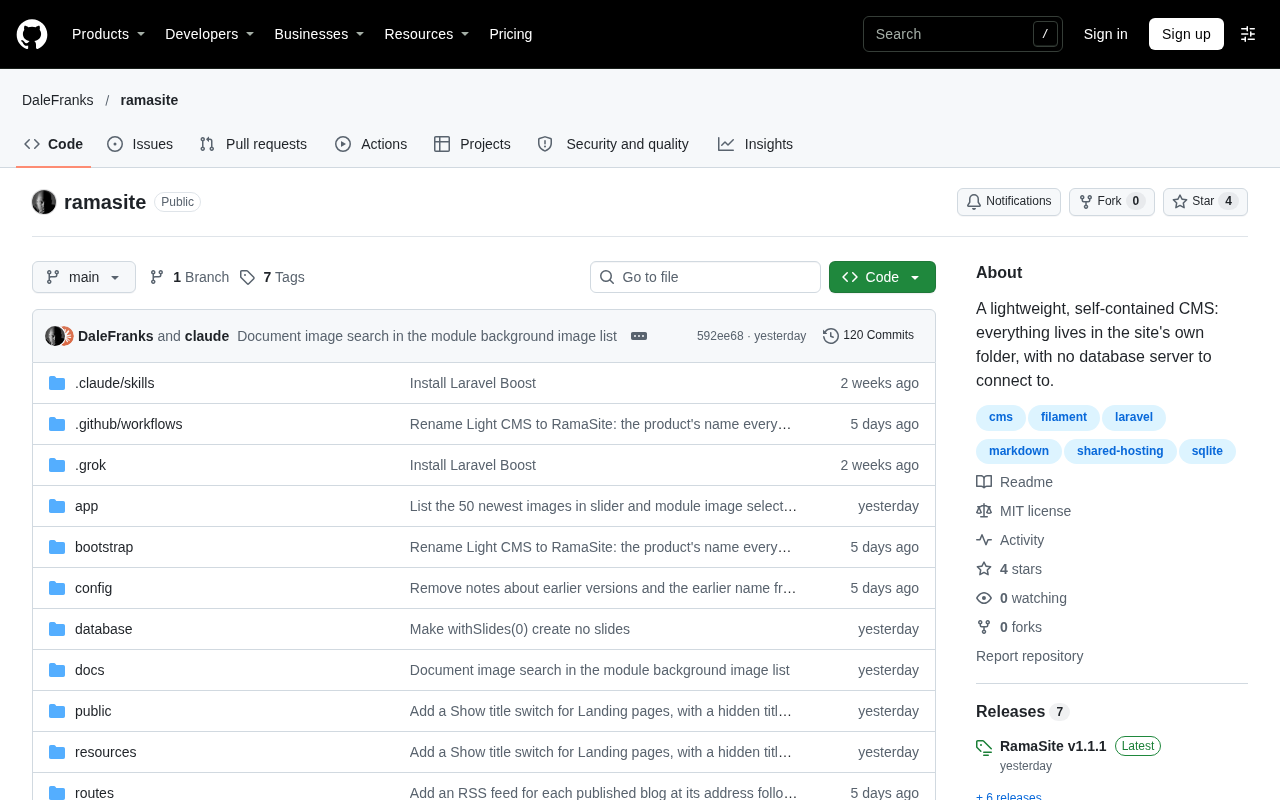
Ramasite is a self-contained CMS built with Laravel, Filament, and SQLite, focused on low-maintenance, easy deployment.
The article introduces Ramasite, a new project debuting on Hacker News Show HN, positioned as a self-contained CMS based on Laravel, Filament, and SQLite. It breaks down the stack: Laravel as the backend framework, Filament for the admin panel, and SQLite storing data as a file, enabling deployment without a separate database service and significantly lowering operational overhead. It also notes the trade-offs—SQLite has limited performance under concurrent writes and high traffic, making it better suited for small sites or prototypes with more reads than writes. Finally, it records the project's early community status of only 6 points and 0 comments, advising developers to assess documentation, update frequency, and issue handling before production adoption.
In the Show HN section of Hacker News, a new project called Ramasite was submitted, positioned as a "self-contained Laravel/Filament/SQLite CMS." This combination itself conveys a clear technical signal: using Laravel as the backend framework, Filament as the admin panel, and SQLite as the database, packaged together into a self-contained content management system.

Tech Stack Breakdown: What Laravel + Filament + SQLite Means
Laravel is a mature full-stack framework in the PHP ecosystem, Filament is an admin panel and form-building tool built on top of Laravel, and SQLite is a lightweight embedded database. The typical advantage of combining these three lies in deployment simplicity: no need to maintain a separate database service, SQLite exists as a file, and Laravel and Filament handle application logic and the backend interface.
The term "self-contained" is worth noting. It suggests the project may package the environment, dependencies, and database required for operation together, lowering the barrier to setting up a CMS from scratch. For small sites, internal tools, or prototype projects, this form factor can significantly reduce operational burden. However, the original material does not disclose the specific packaging method—whether it uses containers, precompiled binaries, or another distribution format—so this cannot be confirmed at present.
Filament is an open-source admin panel and form-building framework for Laravel, implemented on the TALL stack (Tailwind CSS, Alpine.js, Laravel, Livewire). Developers declare resources, forms, tables, and actions through PHP classes rather than writing HTML/JS by hand, enabling rapid generation of CRUD backends. It includes built-in authentication, permissions, notifications, and multi-panel support, and has a rich plugin ecosystem. Compared to commercial solutions like Nova, Filament is fully open source and highly customizable, making it one of the mainstream choices for building CMS backends in the Laravel ecosystem.
SQLite is an in-process embedded relational database where the entire database is stored as a single file, requiring no separate server process. With WAL (write-ahead logging) mode enabled by default, it can support a degree of concurrent reads, but only one write transaction is allowed at a time, so it can easily become a bottleneck in high-concurrency write scenarios. SQLite's advantages include zero configuration, simple backups (just copy the file), and extremely low resource usage, making it very suitable for small-to-medium-scale applications deployed on a single machine.
Applicable Scenarios and Trade-offs of a Self-Contained CMS
The core appeal of a self-contained CMS is "out-of-the-box readiness." Traditional CMSs often require configuring a web server, database, and cache, whereas projects like Ramasite attempt to consolidate complexity into a single package. For individual developers, small content-oriented sites, or scenarios requiring rapid launch, this design can greatly shorten deployment time.
Trade-offs also exist. SQLite's performance under concurrent writes and high-traffic scenarios is generally inferior to standalone database services, so self-contained solutions are better suited for sites with more reads than writes and controllable scale. The backend experience provided by Filament tends to be developer-friendly, and its ease of use for non-technical editors depends on the degree of customization. These judgments are based on the general characteristics of the tech stack; Ramasite's actual performance still needs verification through more user feedback.
Community Signals: Early Stage Behind Low Engagement
As of the material record, the submission received 6 points with 0 comments. This data indicates the project has not yet sparked discussion on Hacker News and is in an early stage of exposure. Show HN submission popularity does not directly equate to project quality, but zero comments means there is a lack of public community scrutiny of technical details, security, and long-term maintainability.
For developers interested in the Laravel ecosystem or looking for lightweight CMS solutions, Ramasite is worth adding to a watchlist, but before adopting it in production, it is advisable to independently assess its documentation completeness, update frequency, and issue handling. The original material does not provide a project repository URL or official website link; further information would need to be obtained from the original Hacker News post.
Show HN is a section of Hacker News specifically for showcasing new work by individuals or teams. Posters typically use the title "Show HN: Project Name," include a demo link, and briefly explain the project's purpose. The community guidelines for this section require posters to participate in discussion, answer technical questions, and accept public scrutiny of implementation details and security. A post's points (upvotes) and comment count reflect community attention rather than project quality itself—many mature projects also went through a zero-comment phase early on, so low engagement is better used as a reference indicator of "exposure level" rather than "quality."
Key Takeaways
- Ramasite is a self-contained CMS built on Laravel, Filament, and SQLite, making its debut in the Show HN section of Hacker News.
- The tech stack combination points to lightweight content management scenarios with low operations overhead and easy deployment, with SQLite's embedded nature being the foundation of "self-contained."
- The project currently has low community engagement (6 points, 0 comments), lacking public discussion and third-party validation.
- Applicable scenarios lean toward small-scale sites with more reads than writes; high-concurrency writes require careful evaluation.
One-line Summary
Ramasite is a self-contained CMS built with Laravel, Filament, and SQLite, focused on low operations overhead and easy deployment.
Paragraph Summary
The article introduces Ramasite, a new project debuting in the Show HN section of Hacker News, positioned as a self-contained content management system based on Laravel, Filament, and SQLite. The article breaks down what this tech stack combination means: Laravel provides the backend framework, Filament handles the admin panel, and SQLite stores data as a file—together enabling deployment without a separate database service and significantly lowering the operations barrier. The article also notes the trade-offs—SQLite has limited performance under concurrent writes and high-traffic scenarios, making it better suited for small sites or prototype projects with more reads than writes and controllable scale. Finally, the article records the project's current early community status of only 6 points and 0 comments, and suggests developers independently assess documentation, update frequency, and issue handling before adopting it in production.
Related articles

Gemini 4 Dual Models Exposed, Genie 4 World Model Launches, AI R&D Self-Accelerates
November 19 AI evening news roundup: DeepMind Gemini 4 Sodium rumors surface, Cursor launches Gemini 4 Neon scoring 63.7% on CursorBench 4.1; Genie 4 world model goes live with real-time editing and native audio; WorkBuddy integrates GPT-6.2 series; OpenAI discloses AI chip design efficiency gains and RSI research metrics.
HY Roundtable: A Local Open-Source Multi-Agent Roundtable Where Multiple LLMs Blind-Review and Challenge Each Other's Papers
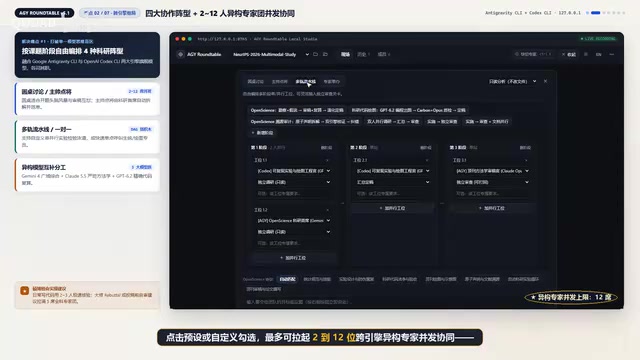
HY Roundtable is a local open-source multi-agent roundtable tool that brings Gemini 4, Claude Opus 5.5, and GPT 6.2 into a local seminar room to blind-review, cross-examine, and recompute code before submission, with built-in Open Science protocols for statistics and figures.
GPT 6.2, Fable 5.2, Gemini 4 Tested: Which Builds the Best Game UI from a Single Image?
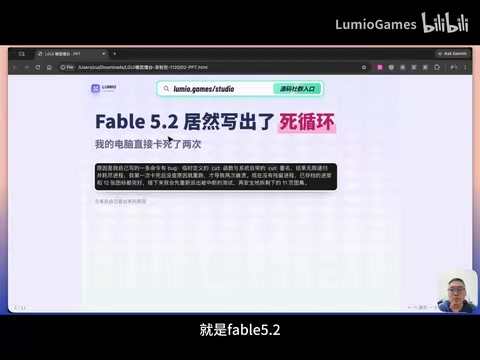
Bilibili creator tests GPT 6.2, Fable 5.2, and Gemini 4 generating full game UI from one image: all work functionally, but fidelity and interaction quality differ sharply. Fable 5.2 looks best but caused infinite-loop crashes; GPT 6.2 is balanced but drifts from icons; Gemini 4 looks cheap. Includes LGUI Agent workflow and engine export details.