REA: Reverse Engineering Any Software with AI Agents
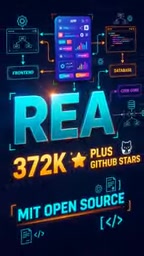
REA is an MCP reverse-engineering skill pack for AI coding agents that makes reverse analysis procedural and local.
REA (Reverse Engineer Anything) is an MCP server and skill pack for AI coding agents, working with Claude Code, Codex, Cursor, and Gemini CLI. It is said to have briefly surpassed 370,000 GitHub stars. It turns reverse engineering into a repeatable process: pick a target feature, identify the stack, label findings as seen/inferred/unknown, then rebuild and test. REA supports JavaScript, Electron, binaries, Android apps, firmware, and websites, and integrates tools like Ghidra. All analysis runs locally, but it cannot perfectly recover original source or see server-side code. The article stresses lawful, authorized use.
What Is REA?
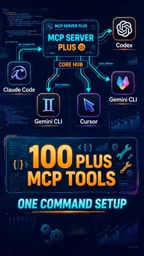
REA stands for Reverse Engineer Anything. It is an MCP server and skill pack designed specifically for AI coding agents, and it works seamlessly with a wide range of mainstream AI coding tools such as Claude Code, Codex, Cursor, and Gemini CLI. According to the YouTube channel Derek AI Decker, REA went viral shortly after release, with its GitHub star count briefly surpassing 370,000, making it a hot topic in the developer community.
The core value of REA is that it gives AI agents the ability to systematically reverse engineer software. Traditional reverse engineering often relies on expert experience and has an extremely high barrier to entry; REA, by contrast, breaks the process down into repeatable, verifiable steps through a structured workflow and a localized toolchain, greatly lowering the technical barrier.
MCP (Model Context Protocol) is an open-source protocol standard proposed by Anthropic for connecting AI models to external tools, data sources, and services in a unified way. You can think of MCP as the "USB interface" of the AI world: the server side exposes a set of capabilities (such as reading files, calling APIs, and querying databases), and the client side (i.e., the AI coding tool) invokes these capabilities according to the standard protocol. Compared with writing a separate plugin for each tool, MCP allows an integration developed once to be reused by different clients such as Claude Code, Cursor, and Gemini CLI. REA is distributed precisely in the form of an MCP server, so it naturally has the characteristics of being cross-tool and plug-and-play.
REA's Workflow
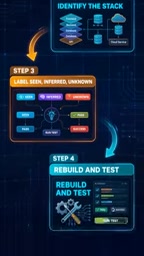
REA's reverse analysis follows a clear methodology: first pick a target feature, then identify its tech stack, next label findings as "seen," "inferred," or "unknown," and finally rebuild and test. This step-by-step approach avoids blind exploration and ensures that the analysis process is grounded in evidence.
"Seen" represents directly observed evidence, "inferred" is a reasonable guess based on clues, and "unknown" is what cannot currently be determined. This classification mechanism helps developers clearly distinguish facts from assumptions and avoid confusing conclusions during analysis. The rebuild and test phase requires putting the reverse-engineering results into practice to verify their accuracy.
Supported Platforms and Tools
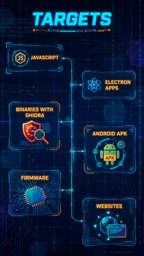
REA's analysis scope is quite broad, covering JavaScript, Electron apps, binaries, Android apps, firmware, websites, and many other targets. It integrates professional reverse-engineering tools such as Ghidra and can handle analysis needs at different levels, from high-level scripts to low-level machine code.
For JavaScript-based targets such as web front ends and Electron, REA can quickly map out code structure and dependencies; for binaries and firmware, it uses Ghidra for disassembly and decompilation. Multi-platform support means developers can apply the same methodology to different types of reverse-engineering tasks, reducing the cost of switching between tools.
Ghidra is a reverse-engineering framework open-sourced by the U.S. National Security Agency (NSA). It supports disassembly, decompilation, debugging, and script extension, and can analyze binaries for a variety of processor architectures. Its core value lies in the decompiler's ability to restore machine code into pseudocode close to C, greatly reducing the burden of reading assembly. Ghidra provides a headless mode and a scripting API, making it easy for other programs to invoke it automatically—this is precisely the technical prerequisite that enables REA to use it as an underlying analysis engine while AI agents orchestrate the analysis workflow.
Local Analysis and Capability Boundaries
All of REA's analysis runs locally, which means code and data never leave the developer's environment, offering advantages in privacy and security. But it must be made clear that REA is not omnipotent: it cannot perfectly recover the original source code, nor can it see server-side code.
Reverse engineering is essentially an "approximate reconstruction." Optimizations, obfuscation, and stripping during compilation lose a great deal of information, and no tool can fully recover it. In addition, client-side analysis can only reach the parts visible locally; server-side logic always remains a black box. Developers should maintain reasonable expectations for REA's output and treat it as a tool to aid understanding rather than a complete restoration of the truth.
Why reverse engineering cannot restore the original source code: The compilation process performs optimizations such as constant folding, inlining, dead code elimination, and register allocation, and variable names, comments, and type information are usually completely discarded; release builds may also undergo obfuscation (such as JavaScript minification and control-flow flattening) or symbol stripping. What decompilation produces is only "semantically approximate" pseudocode, whose structure may differ greatly from the original code. It is necessary to distinguish three levels: disassembly (machine code → assembly), decompilation (assembly → high-level-language-like pseudocode), and source recovery. What REA and similar tools can reliably achieve is the first two.
Legal and Ethical Reminders
REA's creator explicitly emphasizes: use it only within the bounds of the law. Reverse engineering has different legal boundaries in different jurisdictions, involving copyright, trade secrets, and software license agreements. Before using REA to analyze someone else's software, be sure to confirm that your actions comply with local laws and authorization agreements. Technical capability does not equal permission to use—this point is especially important in the field of reverse engineering.
What It Means for Developers
REA represents a new direction in AI-assisted reverse engineering: packaging expert methodology into skills that AI agents can execute, enabling more developers to systematically understand unfamiliar codebases. Whether for learning the design ideas of excellent software, troubleshooting compatibility issues, or conducting security research, REA provides a starting point worth paying attention to. As AI coding agents become more widespread, MCP skills like this are expected to become a standard part of developers' toolboxes.
One-line Summary
REA is an MCP reverse-engineering skill pack for AI coding agents that makes reverse analysis procedural and local.
Paragraph Summary
REA (Reverse Engineer Anything) is an MCP server and skill pack designed for AI coding agents. It works with mainstream AI coding tools such as Claude Code, Codex, Cursor, and Gemini CLI, and is said to have briefly surpassed 370,000 GitHub stars after release. It breaks reverse engineering—traditionally dependent on expert experience—into a repeatable process: pick a target feature, identify the tech stack, label findings as "seen/inferred/unknown," and rebuild and test. REA supports JavaScript, Electron apps, binaries, Android apps, firmware, and websites, and integrates professional tools such as Ghidra. All analysis runs locally, but it cannot perfectly recover the original source code, nor can it see server-side code. The article also emphasizes that reverse engineering must be used within the scope of legal authorization.
Related articles
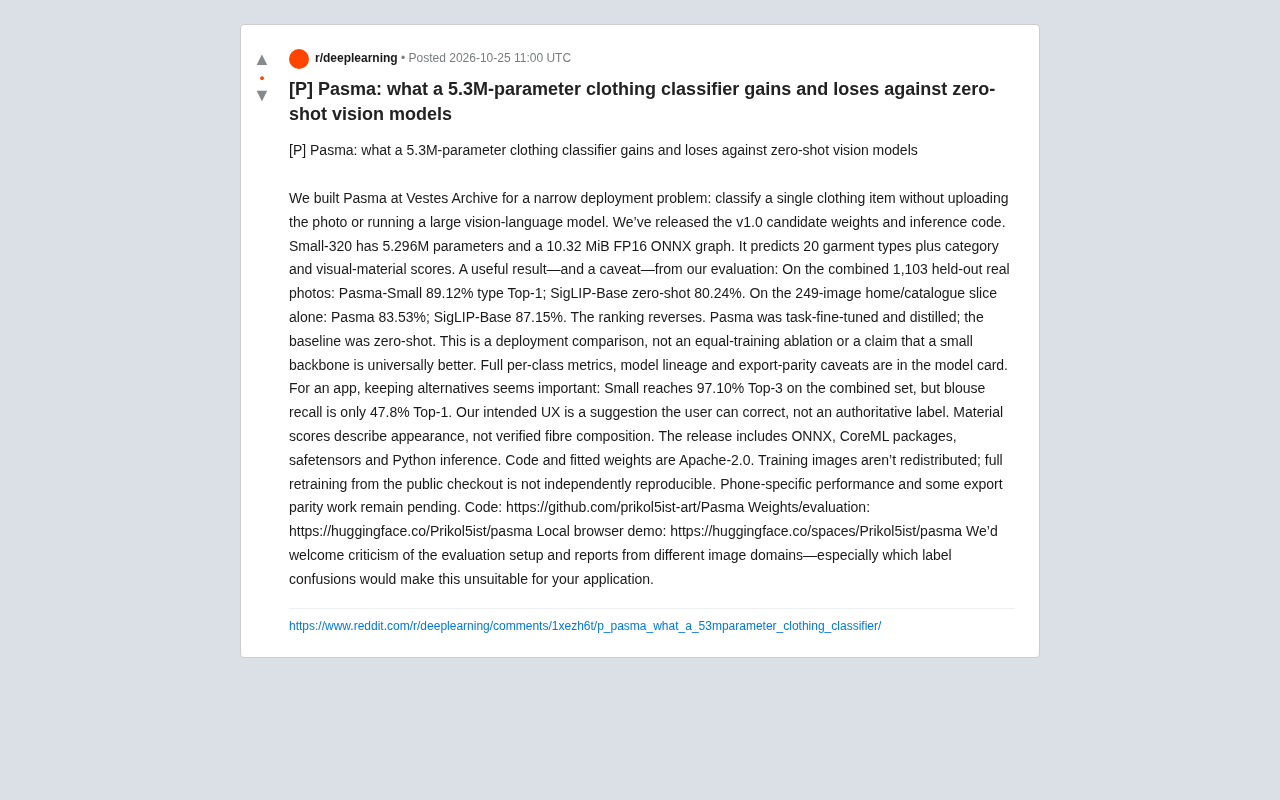
5.3M-Parameter Clothing Classifier Pasma: Small-Model Upset or Scenario-Limited?
Vestes Archive open-sources Pasma, a 5.3M-parameter clothing classifier whose 89.12% combined-set Top-1 beats zero-shot SigLIP-Base, though rankings reverse on the home/catalog subset. We analyze deployment trade-offs, category recall gaps, and reproducibility limits.

Model Suddenly Got Worse? Reddit Discusses the Truth Behind Troubleshooting and How Long It Takes
A Reddit discussion on troubleshooting sudden model performance drops, summarizing common causes like schema changes and feature pipeline failures, with time estimates and practical tips to speed up diagnosis.

Google AI Search Is Reshaping Online Publishing: Traffic Rules and the Challenge to Survive
Google AI Search is changing the traffic rules of online publishing. Summaries generated directly on results pages weaken website clicks, leaving publishers caught between blocking, licensing, or pivoting to direct audiences—and raising long-term concerns for the content ecosystem.