Reading Tracking and Book Discovery: Best App Recommendations

A review of Goodreads, StoryGraph, and Libby to help you choose the right reading tracker.
This article outlines three mainstream reading tracking apps for readers who want to efficiently record reading and discover good books. Goodreads excels in community and reviews, StoryGraph offers granular personalized recommendations, and Libby connects to public libraries for free e-books and audiobooks. It advises choosing based on core needs and combining apps as needed.
Title
Reading Tracking and Book Discovery: Best App Recommendations
Meta Description
Explore the best reading tracking apps, including Goodreads, StoryGraph, and Libby, and learn how to efficiently record reading progress, discover new books, and manage personal reading lists. This article provides feature comparisons and selection advice.
Article Content
Reading enthusiasts often face a dilemma: how to efficiently record the books they have read and discover the next good book worth their time? A large number of reading tracking apps have emerged on the market, promising to solve this pain point. Based on recommendations from multiple sources, this article outlines several tools worth trying to help you restore order and joy to reading in an age of information overload.
Why Do You Need a Reading Tracking App?
The core value of reading tracking apps lies in systematizing scattered reading behavior. They usually provide bookshelf management, reading progress tracking, note excerpts, reading statistics, and other functions, and some apps also incorporate social elements, allowing you to share book lists with friends or participate in reading challenges. For people who want to build a reading habit or improve reading quality, such tools can provide visualized feedback and sustained motivation.
Social reading refers to a model that extends reading from a private experience into public interaction. By marking book status, writing book reviews, and following others' updates, users form a social network centered around books. The value of this model lies in two aspects: on the one hand, others' book reviews and ratings can serve as references for choosing books, reducing the cost of discovering good books; on the other hand, public reading records can create mild accountability and strengthen the motivation to keep reading. Goodreads is a typical representative of social reading, with a massive community, but this also means more information noise, requiring users to actively filter whom to follow. In contrast, emerging platforms such as StoryGraph have weaker social features but place more emphasis on personalized data. The two represent different development directions for reading tracking apps.
Overview of Mainstream Reading Tracking Apps
Goodreads: The Benchmark for Social Reading
Goodreads has a vast book database and an active community. Users can mark books as "want to read," "currently reading," or "read," write book reviews, and follow other readers' updates. Its recommendation algorithm is based on your reading history and ratings and can uncover many lesser-known gems. However, its interface design is relatively outdated, and the mobile experience needs improvement.
StoryGraph: A Rising Star in Personalized Recommendations
StoryGraph is known for more granular book tags and personalized recommendations. It allows users to filter books by dimensions such as mood, pace, and style, and generates recommendation lists based on reading preferences. For readers tired of mainstream bestseller lists, StoryGraph offers a discovery path that better matches personal tastes. Its reading statistics charts are also more intuitive.
The granularity of book tags is key to how StoryGraph differs from traditional book review sites. Traditional platforms mostly rely on user ratings and bestseller lists for recommendations, which can easily lead to homogenized results; StoryGraph, by contrast, allows users to describe books along dimensions such as mood (e.g., "dark," "hopeful"), pace (e.g., "fast-paced," "slow-paced"), and style (e.g., "character-driven," "plot-driven"), and generates recommendations based on these structured tags. The advantage of this approach is that it captures subtle differences in reading preferences. For example, readers who like "slow-paced, character-driven" books will not receive a large number of recommendations for fast-paced bestsellers. For readers seeking personalized discovery, this tag system provides a more precise filtering tool.
Libby: A Convenient Gateway to Library Resources
Libby connects to local libraries, allowing you to borrow e-books and audiobooks for free. Although it does not directly provide reading tracking functions, borrowing records and reading progress sync automatically, making it suitable for readers who are used to using public resources. Used together with other tracking apps, it can greatly reduce reading costs.
Libby's integration with the public library system is its core mechanism. Libby is developed by OverDrive. By linking a local library card, users can access that library's digital collection, including e-books and audiobooks. Borrowing rules (such as loan period and number of renewals) are set by each library, and Libby serves only as an access point. Because libraries have a limited number of e-book copies, popular books may require waiting in line, similar to borrowing print books. Libby itself does not provide independent reading tracking functions, but borrowing records and reading progress are saved in the account, and users can combine it with Goodreads or StoryGraph for unified management. The advantage of this model is zero-cost access to legitimate content, making it suitable for users with limited budgets or a preference for e-reading.
How to Choose the App That Suits You?
When choosing a reading tracking app, consider your core needs: if you value social interaction and book review references, Goodreads is the first choice; if you pursue personalized recommendations and data analysis, StoryGraph is superior; if you mainly read e-books and have a limited budget, Libby is indispensable. Some apps support data export, making it easy to migrate records between platforms.
Future Trends in Reading Tracking
With the penetration of AI technology, future reading apps may analyze your reading habits more intelligently, automatically generate reading summaries, or recommend cross-media content. At the same time, privacy protection and data portability will also become key concerns for users. No matter how tools evolve, the core will always be serving deep reading itself.
According to recommendations from multiple sources, the above apps perform well in both functionality and user reputation. You can combine them according to your own habits to make reading management easier.
One-line Summary
A review of three reading tracking apps—Goodreads, StoryGraph, and Libby—to help you choose according to your needs.
Paragraph Summary
This article addresses readers' need to efficiently record reading and discover good books by outlining three mainstream reading tracking apps. Goodreads stands out for its huge community and book reviews and is suitable for readers who value social interaction, but its interface is outdated; StoryGraph provides personalized recommendations through granular tags such as mood and pace, making it better for users seeking precise discovery; Libby connects to public libraries and offers free borrowing of e-books and audiobooks, making it suitable for those with limited budgets. The article suggests choosing apps based on core needs and using them in combination. Future reading apps may incorporate AI analysis to provide smarter recommendations and summary services, while privacy and data portability will receive more attention.
Related articles
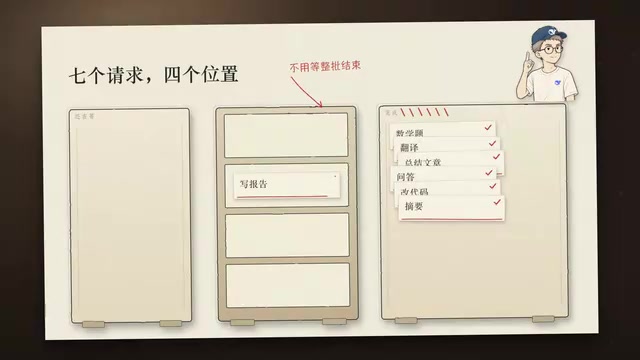
DeepSeek Open-Sources DeepInfer: What Is an Inference Framework Actually For?
DeepSeek open-sources its inference framework DeepInfer under Apache 2.0, supporting DeepSeek V4.1 Flash offline inference. This article explains its request scheduling, FlashMLA/DeepGEMM compute optimization, DSPark speculative verification acceleration, and what it means for developers and ordinary users.
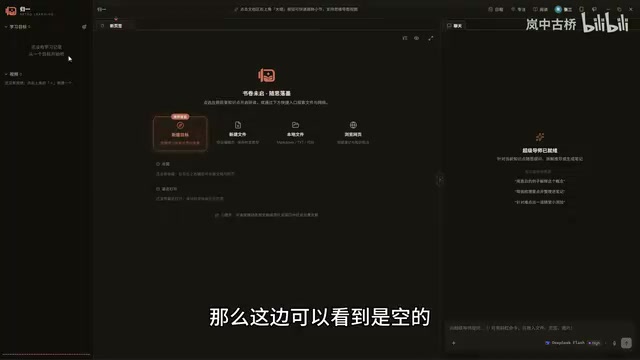
Open-Source AI Learning Agent: A Full Workflow Experience from Topology Graphs to Exam Generation
Explore an open-source AI learning agent: built on DeepSeek API, it constructs knowledge systems via topology graphs, with automatic document generation, notes, super documents, and exams. Learn about its Agent workflow and design highlights.

DeepSeek Whale Girl Open-Source MV Meme: AI Industry Coded Slang About Pivoting to Closed Source
Bilibili's DeepSeek Whale Girl rap MV uses fictional memes to tease the AI open-source vs. closed-source debate, with lyrics full of industry slang. This article explains the meme culture, the Whale Girl symbol, and the open/closed tension.