Real-World Coding Test Across Four AI Models: DeepSeek V4 Flash Unexpectedly Takes the Crown
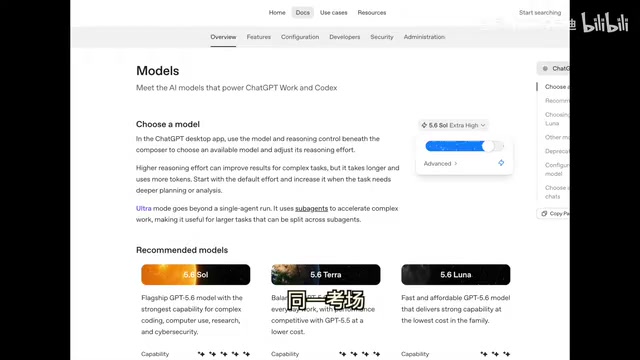
DeepSeek V4 Flash unexpectedly outperforms flagship AI models in a head-to-head coding test.
A same-task coding comparison across four major AI models — including DeepSeek V4 Pro, V4 Flash, and Grok 4.6 — produced a surprising result: the lightweight DeepSeek V4 Flash outperformed flagship models in response speed, code conciseness, and first-pass success rate. The test highlights that model selection should match specific use cases rather than default to the most powerful option, and that Flash-class models offer superior cost-effectiveness for everyday development tasks.
A New Round of AI Model Competition Begins
Recently, the large language model space has seen another wave of intensive updates. Heavyweight models like DeepSeek V4 Pro and Grok 4.6 have debuted in rapid succession, leaving developers and tech enthusiasts struggling to keep up. To more intuitively assess the real-world programming capabilities of these new models, a "same-task development" head-to-head comparison test was conducted — putting four mainstream AI models against identical programming tasks to see which could deliver the best results.
Notably, hands-on comparisons like these often reflect a model's true capabilities better than official benchmarks. Benchmarks are standardized test sets used in the AI field to evaluate model capabilities. Common ones include HumanEval (code generation), MMLU (multi-task language understanding), and GSM8K (mathematical reasoning). These tests quantify model performance through preset questions and standard answers, but they have inherent limitations: models may achieve inflated scores due to "data contamination" from training data containing similar problems, and standardized questions cannot fully simulate the ambiguous requirements, contextual dependencies, and engineering constraints found in real-world development. As a result, differences between models in actual code generation, problem comprehension, and engineering implementation are often surprising. The final results of this test were quite dramatic: it wasn't the flagship Pro version that won, but rather the lightweight and efficient DeepSeek V4 Flash that came out on top.
Why Did the Flash Version Win?
The Optimal Balance Between Speed and Quality
Conventional wisdom suggests that Pro versions with larger parameter counts and higher-end positioning should dominate across all tasks. But in real-world development scenarios, response speed, code conciseness, and first-pass success rate are often the key factors that determine the actual experience.
Lightweight Flash-class models typically employ multiple technical approaches to dramatically reduce inference costs while maintaining core capabilities. Common optimization strategies include: Knowledge Distillation, where a smaller model learns the output distribution of a larger model to approximate its performance with fewer parameters; Pruning, which removes network connections that contribute minimally to final outputs; and Quantization, which compresses model weights from high-precision floating-point numbers to low-precision formats, significantly reducing memory usage and computation. Additionally, the Mixture of Experts (MoE) architecture, widely adopted in today's large model landscape, plays a crucial role — MoE splits a model into multiple "expert" sub-networks, activating only a subset of experts through a gating mechanism during each inference pass. This allows the model to maintain low actual computational costs despite having an enormous total parameter count. The DeepSeek V4 series is a quintessential practitioner of MoE architecture, with total parameters potentially reaching hundreds of billions or even trillions, while the parameters activated per inference are far fewer. For structured programming tasks, the model only needs to activate a handful of code-generation-related experts to produce high-quality output.
These techniques enable V4 Flash to achieve inference speeds several times to tens of times faster on the same hardware, while compressing API call costs to one-tenth or even less of flagship models. When facing development tasks with clear structure and well-defined objectives, V4 Flash can deliver runnable code solutions faster, with less redundant output and fewer wasted iterations. This characteristic translated into a tangible advantage in this same-task test.
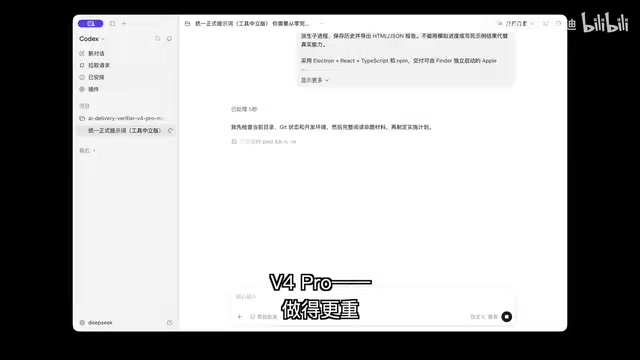
Flagship Models Are Not Universal Champions
V4 Flash's victory also reveals a perspective gaining increasing recognition in the industry: AI model selection should match specific use cases rather than blindly pursuing the most powerful flagship. For the majority of everyday development needs — function writing, script generation, bug fixing, and so on — lightweight models actually offer better cost-effectiveness and responsiveness. Flagship Pro and Ultra-level models demonstrate their value more in complex reasoning, long-context processing, and multi-step planning tasks.
This needs-based selection philosophy parallels product line segmentation in the chip industry. Just as NVIDIA differentiates between consumer and professional GPUs, large model providers are building product systems spanning different performance tiers. Understanding the capability boundaries and optimal use cases for each tier has become an essential skill for developers using AI tools effectively.
The Competitive Landscape of Large Models
DeepSeek Continues to Push Forward
As one of the leading Chinese-developed large models, DeepSeek has built a comprehensive product matrix through its V4 series (spanning Pro, Flash, and other tiers). This tiered strategy is representative of the large model industry — OpenAI pioneered a similar hierarchy with GPT-4, GPT-4o, and GPT-4o mini, while Google covers different scenarios through its Gemini Ultra, Pro, and Flash tiers. The core logic is that different application scenarios have vastly different model capability requirements. Enterprise-grade complex reasoning tasks demand the deep capabilities of flagship models, while high-frequency, low-complexity daily development calls are more sensitive to latency and cost. By offering product combinations with differentiated pricing and performance, DeepSeek can cover the high-end market while also capturing the vast developer community sensitive to cost and speed through its Flash version. The Flash version's impressive showing in this test undoubtedly adds another competitive advantage for DeepSeek.
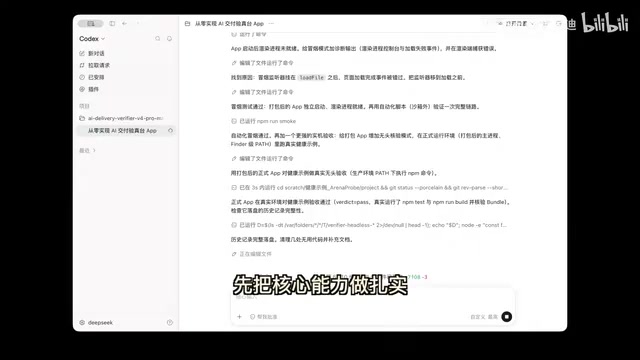
Grok 4.6 Enters the Arena
Meanwhile, Grok — from Elon Musk's xAI — has iterated to version 4.6. As a model deeply integrated with real-time information capabilities, Grok's most distinctive differentiator is its deep fusion with the X (formerly Twitter) platform. Traditional large language models have a knowledge cutoff date, meaning they only possess information available before training was completed. By tapping into X platform's real-time information stream, Grok can answer questions about the latest events and real-time trends, creating a unique advantage in time-sensitive scenarios (such as news analysis and market dynamics tracking). Furthermore, the Grok 4 series has achieved significant improvements in reasoning capabilities, ranking among the top tier in multiple math and coding benchmarks — marking xAI's transformation from a "distinctive challenger" to a "comprehensive competitor." The dense release schedule of multiple heavyweight models indicates that large model competition has entered a white-hot phase, where every version update could reshape the rankings.

Practical Insights for Developers
This AI same-task development test offers several thought-provoking insights:
First, real-world testing trumps benchmarks. While officially published benchmark data has reference value, real development tasks remain the best litmus test for AI models. High benchmark scores don't necessarily translate to excellent performance in actual engineering scenarios — requirement ambiguity, contextual complexity, and code style preferences all affect actual output quality. Developers are advised to conduct small-scale validation with their actual business scenarios during model selection, establishing an evaluation framework tailored to their own needs.
Second, the value of Flash-class lightweight models is underestimated. In the wave of pursuing ultimate performance, lightweight and efficient models are often overlooked. But for the vast majority of everyday development scenarios, these models achieve a better balance between speed, cost, and code quality. From an economic perspective, Flash model API call costs are typically one-tenth to one-fifth of flagship models. In high-volume call scenarios, this cost difference is significantly amplified, directly impacting project feasibility and profit margins.
Third, maintain continuous awareness of new models. With such a high-frequency iteration pace, today's optimal choice might be surpassed within weeks. Building the capability to rapidly evaluate and flexibly switch between models will become one of the core competencies for development teams. In practice, an increasing number of teams are adopting "model routing" strategies — using a middleware layer to automatically dispatch requests to different model tiers based on task complexity, ensuring complex tasks receive deep processing from flagship models while simple tasks enjoy the efficient responses of lightweight models.
Conclusion
The debut of new models like DeepSeek V4 Pro and Grok 4.6, along with V4 Flash's unexpected victory, together paint a picture of today's vibrant and volatile AI large model market. For developers, this is both a happy dilemma — with an ever-growing number of options — and a new skill that must be mastered — learning to find the most suitable model for each specific task amid the abundance of choices. The real winners may not be any single model, but rather the users who skillfully combine and leverage these AI tools. As MoE architectures continue to evolve and model distillation techniques mature further, the capability gap between lightweight and flagship models may narrow even more, meaning the ability to "choose the right model" will become more important than "choosing the most expensive model."
Related articles

Harness Engineering: A Three-Layer Architecture for Production-Ready AI Agents
Explore Harness Engineering's three-layer architecture — Information, Constraint, and Automation layers — for building production-ready AI Agents with stability and control.

The Ethical Boundaries of AI Image Generation: Religious Sensitivity and the Content Moderation Dilemma
Exploring the ethical and technical challenges of AI image generation through the lens of religiously sensitive content, content moderation, and platform responsibility.

Wolf Defender Retraining in Practice: How Hard Negatives Cut False Positive Rate from 33% to 3%
Patronus retrained Wolf Defender v2 using hard negatives, contrastive regularization, and adversarial training, boosting real-world benign specificity from 66.85% to 96.63% while maintaining 97%+ attack detection F1.