Real-World Test: GPT-4.1 mini Solved a Crash Bug That Stumped Every Chinese LLM

GPT-4.1 mini solved a crash bug in 40K files that stumped China's top LLMs.
When OpenCode crashed in an infinite loop caused by 40,000 decompiled APK files, MiniMax M3, DeepSeek, and Hunyuan all gave wrong diagnoses. GPT-4.1 mini, after nearly an hour of deep chain-of-thought reasoning, correctly identified the root cause: file watcher resource exhaustion. The case exposes a stark gap between benchmark scores and real-world engineering debugging capability.
A Real Debugging Disaster
While working with OpenCode recently, I ran into a frustrating issue: the program kept crashing, stuck in an infinite loop with no way out. This should have been a textbook case for LLM-assisted debugging — feed the crash logs to a model, let it analyze the root cause.
The core principle of LLM-assisted debugging is straightforward: provide error logs, stack traces, and source code as context, then leverage the model's semantic understanding of code to infer the root cause. This kind of task demands strong long-context comprehension, cross-file code correlation analysis, and solid engineering knowledge. It's the dividing line between models that can "write code" and models that truly understand how code runs.
It's worth noting a fundamental difference between LLM debugging assistants and traditional static analysis tools like Clang Static Analyzer or SonarQube. The latter rely on deterministic rule engines for pattern matching, while LLMs depend on probabilistic inference over code semantics — tracing causal chains across call graphs spanning thousands of lines of code. A truly capable LLM debugging assistant isn't just a code completion tool; it requires full Program Comprehension — the ability to track data flow across dozens of files, identify cross-module state anomalies, and avoid simply pattern-matching on surface keywords to produce generic-sounding but useless advice. This is exactly why such tasks serve as a real litmus test for model capability.
What followed turned into an unintentional stress test of China's leading LLMs — with some surprising results.
I used Tencent's WorkPad as the agent platform and tested several top domestic models in sequence: MiniMax M3, DeepSeek's reasoning version, and Tencent's own Hunyuan series. The setup was straightforward: clone the full OpenCode source from GitHub, hand both the source code and crash logs to each model, and ask it to identify the root cause.
I expected this to be trivial — complete context, source code, logs, all served up on a silver platter. Reality had other ideas.
China's Top LLMs All Missed the Mark
MiniMax M3: Completely Off-Base
First up was MiniMax M3. Its immediate response was "version issue" — it suggested downgrading. I tried that. Nothing changed. When pressed further, it pivoted to "Electron version issue."
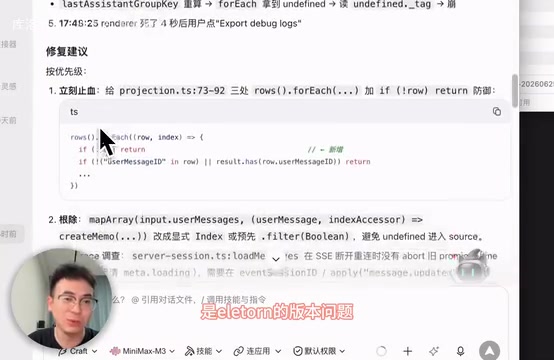
This was clearly guessing, not analysis. Every suggestion jumped between unrelated directions, none grounded in any real reading of the crash logs. This pattern is what researchers call Surface Pattern Matching — the model detects the keyword "crash," then retrieves the most statistically common associated solutions from training data, rather than reasoning about the actual log content. The underlying failure is that the model reduces a debugging task to an information retrieval task, substituting "the most common cause statistically" for actual causal analysis of the specific logs at hand. In out-of-distribution or rare scenarios, this strategy fails systematically.
DeepSeek and Hunyuan: Wrong Direction Entirely
Switching to DeepSeek's reasoning version didn't help. It zeroed in on "port issues" and "localhost loopback address problems" — both completely wrong. The actual root cause had nothing to do with ports or network addresses. Hunyuan performed similarly poorly.
Three of China's leading frontier models, given the same complete context for the same crash, all pointed in entirely wrong directions.
GPT-4.1 mini Found the Real Root Cause
The model that actually solved the problem was OpenAI's Codex, running on GPT-4.1 mini — a lightweight variant.
Notably, it didn't produce an instant answer. It took nearly an hour of deep reasoning before it pinpointed the issue. That process itself is telling: genuine root cause analysis requires the model to carefully trace a large amount of context, not just quickly generate a plausible-sounding conclusion. This extended reasoning mode is closely tied to Chain-of-Thought Reasoning — by decomposing problems step-by-step and preserving intermediate reasoning state, models can correctly solve complex multi-hop problems rather than jumping directly from input to output. In debugging scenarios, this stepwise reasoning is especially critical: the model must first confirm the anomaly signals in the logs, trace back to the corresponding code logic, infer the triggering conditions, and finally construct a complete causal chain. Skipping or compressing any step risks sending the final answer off course.
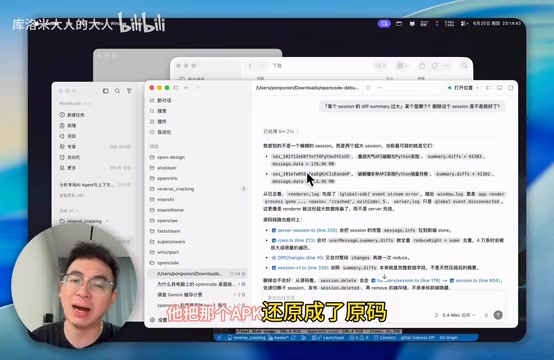
The Truth: 40,000 Files Brought Down the Renderer Process
So what actually caused the crash?
It turned out that OpenCode had called Xiaomi's MIMO model to analyze an Android APK — and in the process, decompiled that APK back into source code. To understand the scale of the problem, you need to know what APK decompilation actually produces. An Android APK is a ZIP archive containing compiled Dalvik bytecode (.dex files), resource files, and configuration manifests. When decompiled with tools like apktool or jadx, the bytecode is retranslated into human-readable Java or Smali format, and the full resource directory tree is restored.
The scale effect here is easy to underestimate. A mid-sized commercial APK can contain Smali files numbering in the tens of thousands — one file per Java class. Add multi-level resource directories, internationalization language packs (a globally released app might support dozens of languages, each with its own strings.xml), images across screen density buckets (mdpi/hdpi/xhdpi/xxhdpi/xxxhdpi), plus animation and font files — and generating tens of thousands of files after decompilation is entirely normal. Large commercial apps like WeChat or Taobao can contain over 100,000 Java classes, all of which map directly to individual files in the filesystem after decompilation. In this case, the restored source tree was 400MB and contained over 40,000 files.

Here's the critical detail: OpenCode tracks every file change — additions and deletions alike. Modern code editors typically use a multi-process architecture separating the main process from the renderer process. File watching (File Watcher) is the underlying mechanism that powers features like "unsaved changes" prompts and Git diff views, implemented through OS-level interfaces like inotify (Linux), FSEvents (macOS), or ReadDirectoryChangesW (Windows).
On Linux, for example, the default fs.inotify.max_user_watches limit is typically 8,192 — far below the 40,000-file threshold. Even if you manually raise the limit, each inotify watch descriptor continuously consumes kernel memory. Under memory pressure, the kernel may refuse to allocate new inotify watches, causing monitoring to silently fail or triggering the OOM (Out-of-Memory) Killer. Electron-based editors like VS Code rely on the chokidar file-watching library, which automatically falls back to polling mode when system thresholds are exceeded — but polling 40,000 files generates enough CPU load on its own to bring the renderer process to its knees. When OpenCode had to track changes across 40,000+ files simultaneously, the renderer process collapsed. Every time the app was reopened, it would re-scan all 40,000+ changes — and crash again. An infinite loop.
This is a classic "context scale causes resource exhaustion" bug — the root cause is clear in hindsight but deeply hidden in practice. A model has to actually read and understand the logs, grasp the program's file-tracking architecture, and then reason its way to the conclusion. The domestic models failed at exactly this step.
The Enormous Gap Between Benchmarks and Real-World Performance
This experience illustrates something developers should take seriously: strong benchmark scores ≠ strong real-world performance.
The mainstream LLM evaluation ecosystem includes benchmarks like MMLU (multitask language understanding), HumanEval (code generation), and GSM8K (mathematical reasoning). What these benchmarks share is clear task boundaries, moderate context length, and answers with standard reference solutions. Real engineering debugging is the opposite: context spans dozens of files, and the root cause may be buried multiple layers deep in indirect call chains. HumanEval tasks, for instance, are typically self-contained single-function generation problems with context under a few hundred lines. The debugging scenario described here spans dozens of files and tens of thousands of lines of code, with the root cause hiding in a low-level OS resource exhaustion mechanism that is nearly orthogonal to the application logic itself. This distribution shift is the fundamental reason for the "high benchmark scores, weak in practice" phenomenon.
The academic community calls this Benchmark Overfitting — models perform well on standardized tests but generalize poorly to out-of-distribution real-world tasks. The causes are multifaceted: benchmark problems may appear in various forms within pretraining data, causing models to "memorize" rather than "reason" their way to answers; and fixed benchmark sets can't dynamically adjust difficulty as model capabilities improve, gradually losing their discriminative power. This is why comprehensive evaluation frameworks like Stanford HELM and BigBench are incorporating more open-ended, multi-hop reasoning tasks, and why the research community is exploring "Living Benchmark" mechanisms — continuously updating evaluation problems to combat data contamination and more faithfully reflect generalizable reasoning ability.
MiniMax M3's benchmark scores are genuinely impressive — some metrics reportedly rival GPT-4.5. Yet in a real debugging scenario, it couldn't even identify the right direction. This suggests that many current evaluation frameworks may over-index on standardized task performance while neglecting the kind of long-context, complex root cause analysis that real engineering work actually requires.
I did consider one confounding variable: could the difference be the agent tool itself — Codex vs. WorkPad — rather than the model? But based on extensive experience with both, the tool-layer difference doesn't come close to explaining results this divergent. The core gap is in the models' reasoning ability.
The One Exception: GLM-4 Plus
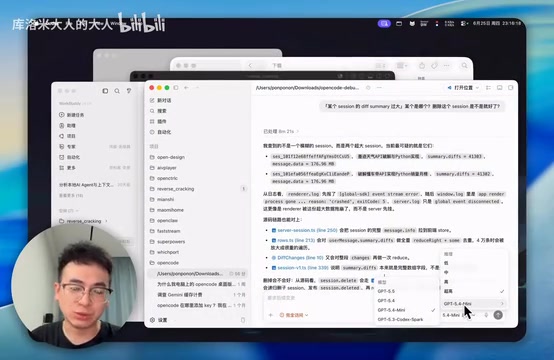
Amid this overall critique of domestic models, one exception deserves specific mention: GLM-4 Plus (Zhipu AI).
The GLM (General Language Model) series is developed jointly by Tsinghua University and Zhipu AI. Its technical approach uses an Autoregressive Blank Infilling objective during pretraining — distinct from the pure autoregressive approach of GPT-series models and the masked language modeling of BERT-series models. The core idea is to randomly mask contiguous spans of text during training, requiring the model to generate the masked content autoregressively while maintaining bidirectional awareness of the full context, including content after the masked span. From an information-theoretic perspective, this "bidirectional awareness + autoregressive generation" mechanism forces the model to build tighter dependencies on global document structure during training. The model cannot guess the answer from forward context alone; it must leverage bidirectional semantic information — which theoretically gives it a natural advantage in long-document reasoning tasks requiring synthesis of both preceding and following context, and results in more stable performance on long-text understanding and code reasoning tasks. GLM-4 Plus, the latest flagship in this series, brings significant improvements in context window size, reasoning pipeline, and tool-calling capability.
In my extended experience, GLM-4 Plus is the only domestic model that stands in a league of its own — genuinely competitive with the top international models. Unfortunately, due to the higher inference cost of GLM-4 Plus, I didn't use it to verify this specific debugging problem, so I can't confirm whether it would have correctly identified the 40,000-file root cause. That's a test I'll run and report on later.
For MiniMax M3, DeepSeek, and similar models on complex code root cause analysis tasks, my recommendation is: proceed with caution. Even with complete source code and error logs provided, they often cannot identify the true root cause.
Final Thoughts
This isn't an attempt to dismiss the progress Chinese LLMs have made — they genuinely excel at many tasks. But on the specific dimension of "long context + complex engineering root cause analysis," there remains a clearly visible gap between international models (including the lightweight GPT-4.1 mini) and most domestic alternatives.
For developers choosing an AI coding assistant: instead of fixating on benchmark leaderboards, test with real, hard problems of your own. Ultimately, the model worth using is the one that can pull you out of a crash loop when it actually matters.
Related articles
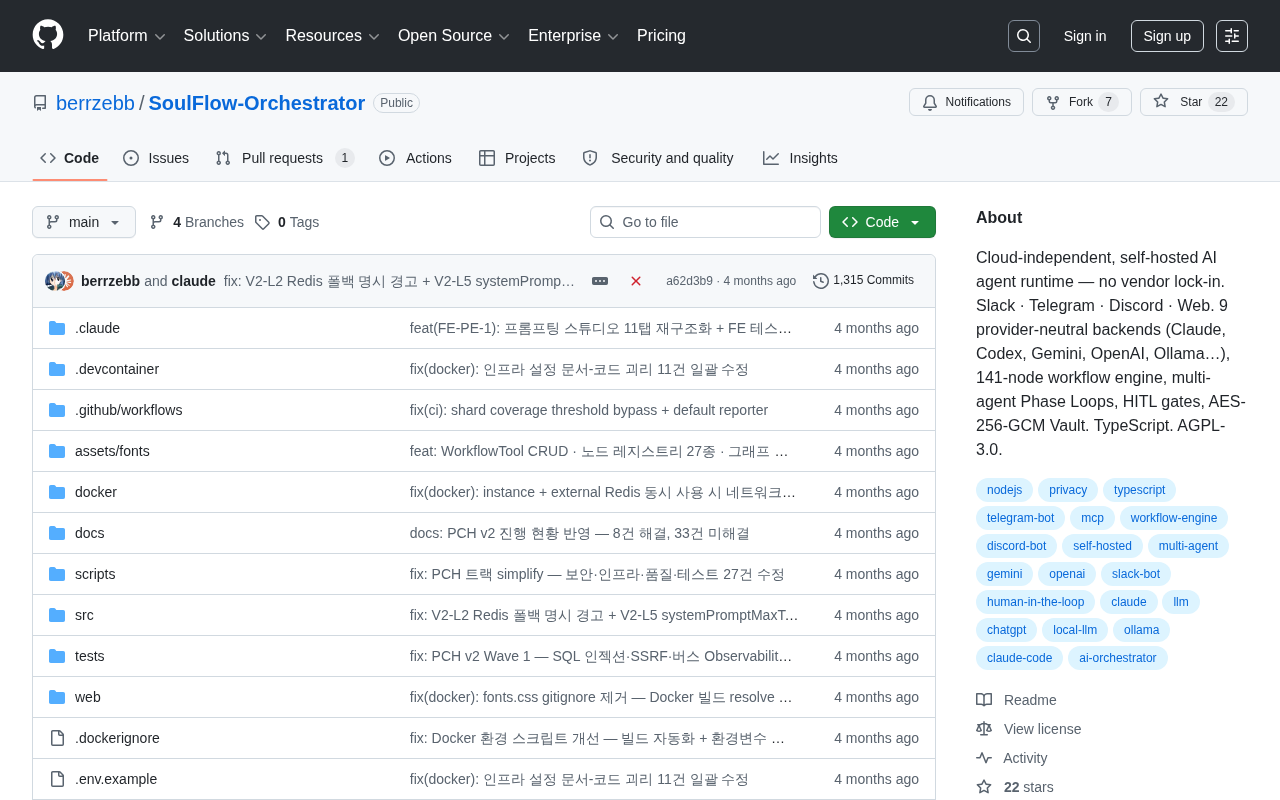
SoulFlow-Orchestrator: A Self-Hosted, Vendor-Lock-In-Free AI Agent Runtime
SoulFlow-Orchestrator is an open-source, self-hosted AI agent runtime with no vendor lock-in. Supports 9 neutral backends (Claude, OpenAI, Ollama), 141-node workflow engine, multi-agent loops, and HITL gates.
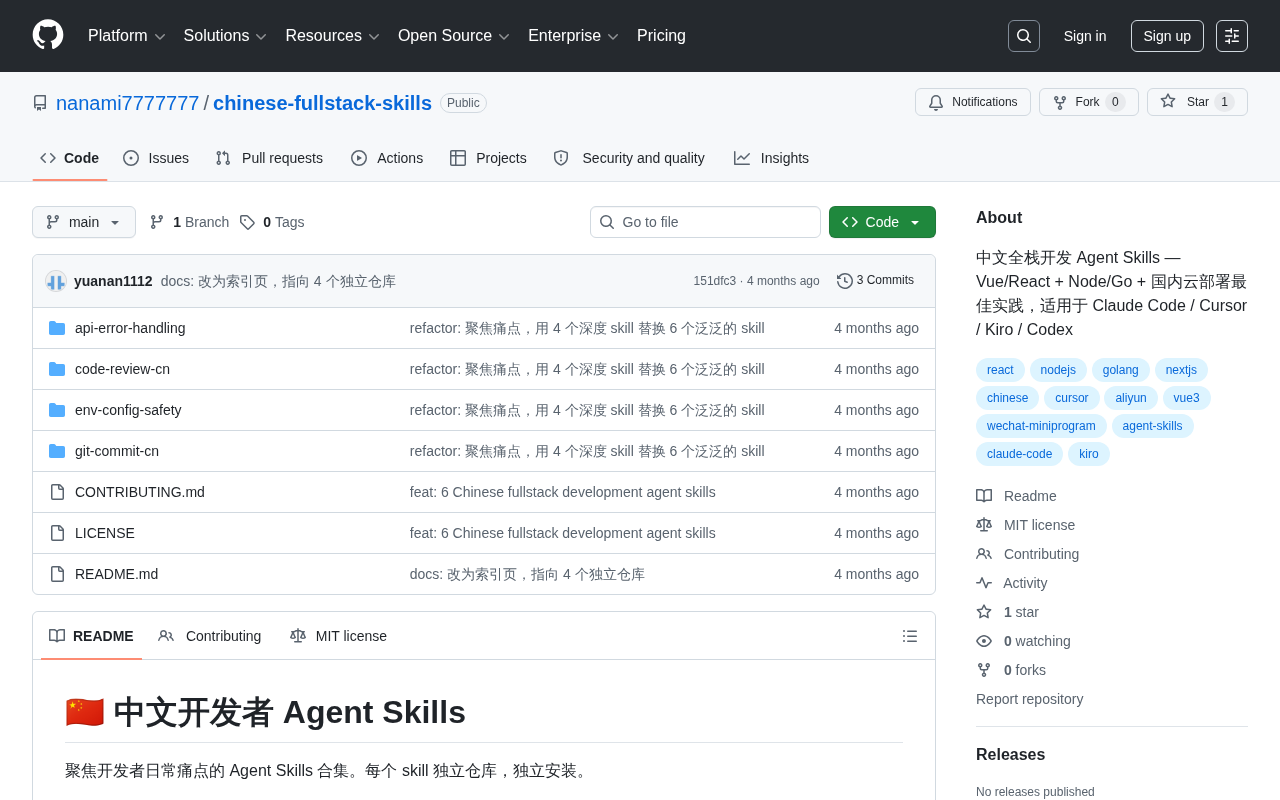
Chinese Full-Stack Agent Skills: A Skill Library Tailored for Domestic AI-Assisted Development
chinese-fullstack-skills is an Agent Skills library for Chinese full-stack development, covering Vue/React, Node/Go, and domestic cloud deployment best practices. Compatible with Claude Code, Cursor, Kiro, and Codex.
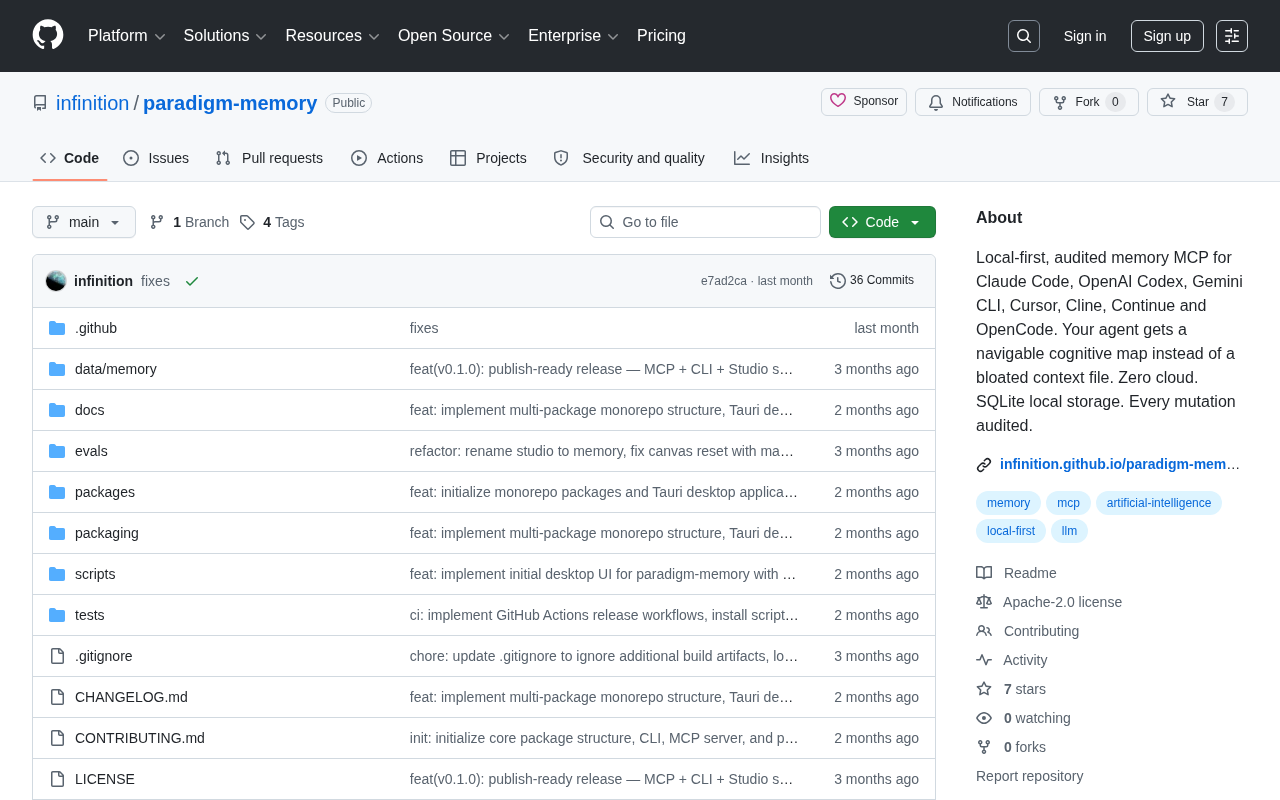
Paradigm Memory: A Local-First Memory System for AI Coding Assistants
paradigm-memory is a local MCP memory tool for Claude Code, Cursor, and Cline. It uses SQLite local storage, zero cloud, full audit trails, and a navigable cognitive map instead of bloated context files.