Real-World Test: Subscribing to ChatGPT Plus/Pro 5x/10x in China — Self-Service Channels and Account Maintenance Guide
Breaking down the process, plan differences, and account maintenance for topping up ChatGPT Plus/Pro via self-service channels in China.
Based on a Bilibili creator's hands-on video, this article introduces a method to pay for ChatGPT Plus or Pro membership directly with Alipay/WeChat through a self-service top-up website (e.g., 23ai.vip). The channel completes the top-up by obtaining the Session of a logged-in account—no password needed—but it essentially authorizes login credentials to a third party, posing security and compliance risks. It compares Go, Plus, and Pro 5x/10x plans, notes the high barriers and ban risks of credit cards and mobile in-app purchases, and stresses that account maintenance—fixed devices and networks, not switching IPs frequently, not sharing accounts—is more important than the top-up itself, while reminding that third-party top-ups may violate terms of service and structural risks cannot be fully eliminated.
For users in China, upgrading to ChatGPT Plus or Pro 5x/10x has always been a technical challenge. A Bilibili creator recently shared a workflow based on a self-service top-up website, claiming you can pay directly with Alipay/WeChat, no password required, and handle everything yourself. Based on the video's hands-on demonstration, this article breaks down the principles behind this method, the logic for choosing plans, and—more importantly—the details of account maintenance.
How the Self-Service Top-Up Channel Works
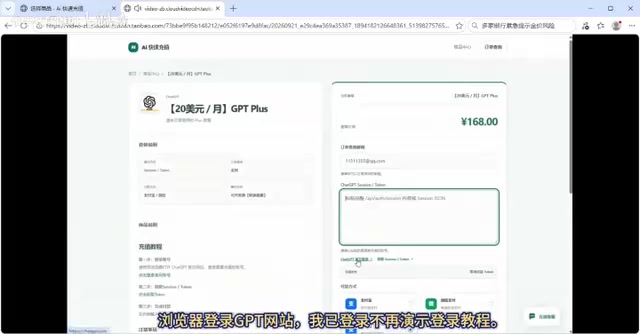
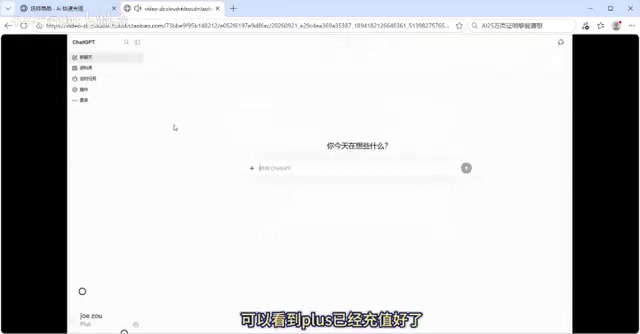
The channel demonstrated in the video (e.g., 23ai.vip) doesn't pay on your behalf directly; instead, it completes the top-up by obtaining the Session information of your already-logged-in GPT account. The workflow is: log in to the ChatGPT official website in your browser → click "Get Session" on the top-up website → copy the entire code (including brackets) and paste it back into the top-up website → confirm the account is correct → select a payment method and submit the order.
The core selling point of this process is "no password"—you don't need to hand your account credentials to a third party, which theoretically reduces the risk of password leakage. But it's important to recognize clearly that a Session is equivalent to a temporary login credential for your account, and handing it to any third-party website carries the possibility of abuse. The video emphasizes "do everything yourself," but the essence of the operation is still authorizing your login state to an external system, and this cannot be ignored in a security assessment.
According to the creator, this channel relies on the iOS system for automated top-ups, with the advantages of speed and a relatively high success rate. This kind of automation essentially simulates a real user completing an in-app purchase within the App, so it has certain requirements for the account environment—which also explains why "maintenance" is emphasized later.
What is a Session? In web applications, a Session is a mechanism used by the server to identify a user's login state. When you successfully log in to the ChatGPT official website, the server generates a unique session identifier (usually in the form of a Cookie or similar token), and the browser carries it with every subsequent request, allowing the server to confirm "who you are." Therefore, a Session is essentially a temporary credential representing your identity; anyone who possesses it can access the account as you within its validity period without re-entering the password. This is why the video's emphasis on "no password" does not equal "no risk"—handing over a Session is equivalent to handing over temporary control of the account. Sessions typically expire after a period of time, and may also become invalid when the user actively logs out or changes the password.
How to Choose a Plan: The Positioning Differences Between Go, Plus, and 5x/10x
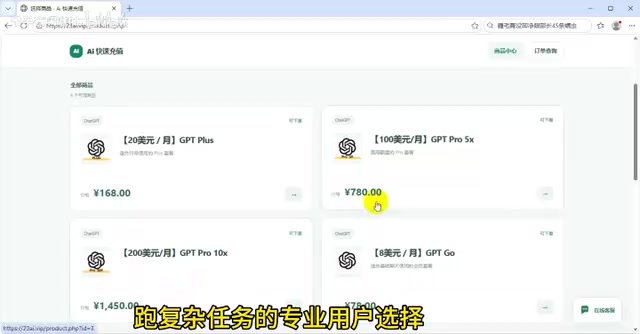
The video provides a plain-language distinction between the tiers. Go is an entry-level, low-priced option with significantly more quota than the free version, but it lacks deep reasoning capabilities, making it suitable for light daily use. Plus is the choice for most people, with web browsing and all basic features. Pro 5x and Pro 10x are functionally identical to Plus; the only difference is quota, aimed at professional users doing heavy research or running complex tasks.
This tiering logic basically matches OpenAI's official positioning of Plus/Pro: Plus covers mainstream needs, while the Pro tiers serve high-frequency, heavy-use scenarios with higher quotas. The creator also mentioned that if you encounter problems during the top-up or need an invoice, you can handle it through the online customer service at the bottom right of the website—this is a convenience of third-party channels compared to "individual top-up agents," but the quality of customer service and after-sales support still depends on the site itself and should not be assumed to be equivalent to official support.
Credit Cards and Mobile In-App Purchases: Why the Barrier Is Higher
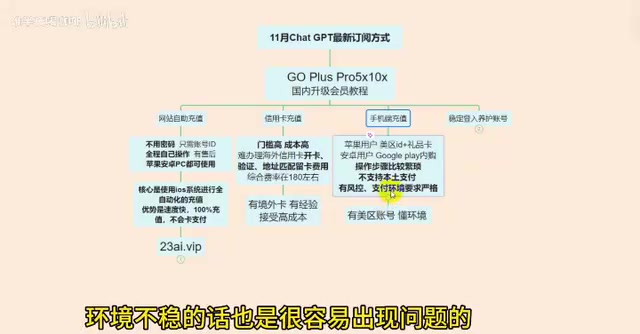
The video is fairly direct in its assessment of the other two paths. The credit card option requires an overseas compliant credit card, which is difficult for users in China to obtain, and also involves a series of hassles such as card activation verification, address matching, and card maintenance. The overall fee rate is described as "around 180," which is on the high side, and it is only recommended for those who already have an overseas card or can accept the high cost.
Mobile in-app purchases split into two lines: Apple requires a US region ID plus gift cards, while Android goes through Google Play in-app purchases. The creator points out many pitfalls—cumbersome processes, no support for local payments, high risk of account restrictions, and strict requirements for the payment environment; an unstable environment easily leads to problems. This type of method is more suitable for users who already have a US region account and understand environment configuration. By comparison, the appeal of the self-service channel mainly comes from "direct Alipay/WeChat payment" and simplified operations, but the cost is Session authorization and third-party dependence.
iOS In-App Purchases and the US Region Account Ecosystem: Apple App Store in-app purchases require the payment method to be bound to the region of the Apple ID. If users in China want to use the US App Store to complete a subscription, they usually need to register a US Apple ID and top up the account by purchasing US gift cards, because credit cards issued in China mostly cannot be directly bound to a US account. On Android, Google Play in-app purchases similarly require the Google account region to match the payment method, and Google Play has risk control detection for the payment environment (such as IP address and device fingerprint). These restrictions make mobile in-app purchase processes cumbersome and prone to payment failures or account risk control due to environment inconsistencies—which is why the video calls them "full of pitfalls."
Account Maintenance: The Part More Worth Valuing Than Top-Up
The latter half of the video repeatedly emphasizes "maintaining the account and reducing the probability of being banned," and this information has more long-term value than the top-up tutorial itself. The creator gives five habits: use a fixed device, use a fixed network environment, don't switch IPs frequently, don't share the account with others, and use AI features normally.
The underlying logic of these suggestions is to make the account's behavior trajectory resemble that of a real user. A large number of requests in a short period, frantically switching accounts within a day, and frequent IP jumps can easily trigger risk control even for old accounts. For accounts topped up through third-party channels, environmental stability is especially critical—because the top-up process itself has already introduced an interaction through an unofficial path, and any abnormal behavior during subsequent use will accumulate risk.
It should be noted that no matter which channel you use, third-party top-ups and Session authorization may violate OpenAI's terms of service, and the account carries the risk of being restricted. The "maintenance" methods given in the video can reduce the probability but cannot eliminate this structural risk. If the account contains important conversation data or work dependencies, it is advisable to prioritize evaluating compliant subscription methods in officially supported regions, or to back up data locally.
How Do Risk Control Systems Work? Large online services typically deploy risk control systems based on behavioral analysis, collecting multi-dimensional data such as device fingerprints (browser type, operating system, screen resolution, etc.), network characteristics (IP address, ASN, time zone), and operation rhythm (request frequency, click intervals) to establish a user behavior baseline. Once an abnormal pattern deviating from the baseline is detected—for example, logging in from multiple different IPs within a short period, request frequency far exceeding normal users, or frequent changes in device fingerprints—the system triggers secondary verification, restricts functions, or even bans the account. For accounts topped up through unofficial channels, because the top-up process itself may leave abnormal records (such as a payment source inconsistent with the account history), any environmental fluctuation during subsequent use may be amplified by the risk control system's correlation, so the core of "maintenance" is to maintain continuity and consistency in the behavior trajectory.
Conclusion
The value of this self-service channel lies in reducing the friction between "domestic payment" and "ChatGPT subscription" to a relatively low level, and the plan tiers are explained clearly. But its convenience is built on Session authorization, and the security and compliance costs need to be weighed by the user. What really determines how long an account survives is often not the moment of top-up, but the device, network, and usage rhythm of every subsequent login. Developing good maintenance habits is more meaningful than repeatedly researching which channel is cheaper.
One-line Summary
Breaking down the process, plan differences, and account maintenance essentials for users in China topping up ChatGPT Plus/Pro through self-service channels.
Paragraph Summary
Based on a hands-on video from a Bilibili creator, this article introduces a method for paying directly with Alipay/WeChat for ChatGPT Plus or Pro membership through a self-service top-up website (e.g., 23ai.vip). This channel completes the top-up by obtaining the Session information of a user's logged-in account, requiring no password, but it essentially authorizes login credentials to a third party, carrying security and compliance risks. The article compares the positioning of Go, Plus, and Pro 5x/10x plans, pointing out that credit cards and mobile in-app purchases have high barriers and high risk of account restrictions. Finally, it emphasizes that account maintenance is more important than top-up, including habits such as using a fixed device and network, not switching IPs frequently, and not sharing accounts, and reminds that third-party top-ups may violate the terms of service, with structural risks that cannot be completely eliminated.
Related articles

ChatGPT Plus Subscription Pitfall Guide: Go/Plus/Pro Tier Comparison and Quick Activation
A complete ChatGPT Plus subscription guide based on a Bilibili tutorial: from registering an account, comparing Go/Plus/Pro tiers, to the practical steps for quickly completing your subscription.

GPT-6.2 Sol/Astra Released! A Step-by-Step ChatGPT Plus Subscription Guide and Tier Comparison
GPT-6.2 Sol/Astra is out—here's a ChatGPT Plus subscription guide: register an account, compare Go/Plus/Pro tiers, and subscribe in a minute.

Comparing Three Channels for Subscribing to GPT Plus in China: Is Website Top-Up the Easiest?
How to subscribe to GPT Plus in China? This article compares website top-up, credit card, and mobile top-up channels—process, cost, and risk—with steps and tips to help you choose wisely.