Recreating Meta Muse Charm with a $40 ESP32: A DIY AI Pendant Hands-On

With a $50 ESP32S3 and Claude, he DIY'd a Muse Charm alternative that can chat and control smart home devices.
The Verge's video host used a roughly $40 Waveshare ESP32S3 dev board and Claude to recreate Meta Muse Charm at home: voice chat to Meta servers, chat history, games, a remote shutter, a virtual pet, and Wi-Fi control of a WLED strip, with the 1.75-inch OLED doubling as a camera viewfinder. He stresses these features aren't out of the box but the result of days of work and heavy token use, and he isolated the device on a guest network out of distrust for Meta and AI-generated code.
When an AI Pendant Becomes Something You Can Have at Home
Meta's Muse Charm is one of those gadgets that makes you want one — a voice-capable AI pendant with a screen and a bit of personality. But The Verge's video host found another way: using a Waveshare ESP32S3 dev board, with Claude helping write the code, he cobbled together a close-enough alternative in his living room.
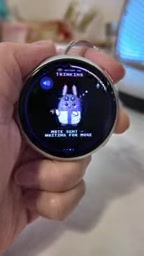
His opening line comes with a bit of self-deprecation: "We have Muse Charm at home." Jolly, Agrippa, Cooper, Euler, and that purple rabbit appear on the screen in turn. Press the call button and ask "What's my next appointment," and the AI voice replies, "Your next appointment is tea with the queen." That answer isn't generated locally — it's really communicating with Meta's Muse servers.
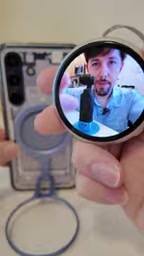
The key point: this roughly $40 ESP32S3 is an officially recognized Muse device. The 1.75-inch OLED screen normally serves as a remote viewfinder for a camera, and it can also play video clips or run some basic mini-games.
Officially Certified Hardware, DIY Features
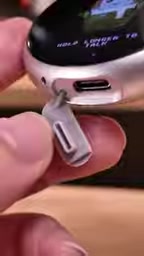
The board charges and programs over USB-C. The author bought the complete version with a small battery for $50. There's no mystery in the hardware itself — the mystery is in the software layer: Meta provides Muse connectivity, but most of the genuinely useful features don't come with the device.
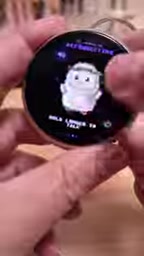
According to the author, voice replies, chat history, games, a remote shutter button, and extra avatars didn't exist until he put in days of work and burned through a lot of Claude tokens. Claude even helped him "vibe-code" the device into a virtual pet: you can feed it, bathe it, and the pet gets dirty.
This development experience reflects a reality: what manufacturers open up is often just the connection protocol and basic APIs, and the real product feel has to be filled in by developers themselves. For people who can code, that's freedom; for ordinary consumers, that's a barrier.
ESP32S3 and the Dev Board Ecosystem
ESP32S3 is a low-power, highly integrated microcontroller from Espressif, with built-in Wi-Fi and Bluetooth, a dual-core Xtensa LX7 processor clocked up to 240MHz, and vector instruction acceleration. Manufacturers like Waveshare turn it into dev board kits with screens, batteries, and enclosures aimed at makers and prototyping. These boards typically support multiple development frameworks such as Arduino, MicroPython, and ESP-IDF, and the USB-C port handles both power and flashing. Unlike single-board computers like Raspberry Pi, the ESP32S3 has no full operating system — programs run directly on bare metal or a lightweight RTOS, so power consumption is low and boot is fast, but memory and compute are limited, making it suitable for sensor nodes, wearables, and small interactive terminals.
What Does "Vibe-coded" Mean?
"Vibe-coded" is slang that became popular around 2025, referring to relying mainly on natural-language descriptions of intent and letting large models (like Claude or Cursor) generate the code, with the developer acting more as a "vibe director" than a line-by-line writer. This mode can dramatically speed up prototyping, especially for personal projects, weekend hackathons, and hardware exploration. But the cost is that code structure may be loose, dependencies opaque, and edge cases incompletely handled, so security and maintainability need extra scrutiny. When the author calls the device a "vibe-coded virtual pet," it's both a jab at the development approach and a hint that this kind of code shouldn't be trusted outright.
Guest Network Isolation
A guest network is a separate SSID provided by the router, usually isolated from the main network, so devices can't reach each other or access resources on the LAN such as NAS, printers, and smart home hubs. Putting experimental IoT devices on a guest network is a widely accepted low-cost security practice: even if a device is compromised or has vulnerabilities, the attack surface is limited to the public internet exit, making it hard to move laterally to personal computers and phones. For DIY devices you assembled yourself with code of uncertain provenance, this step is especially worth taking.
Smart Home Control and Remote Viewfinder
Beyond conversation and pet games, this DIY pendant can also control smart home devices over Wi-Fi — the video demonstrates a WLED light strip. Using the 1.75-inch screen as a remote camera viewfinder is also quite practical — turning a cheap dev board into a shooting accessory is a nice bonus.
That said, the author has reservations about the "slippery AI pocket watch" form factor itself. The hardware feel, how you wear it, and everyday use cases aren't yet at the point of must-buy. His attitude is more that of an excited maker than a consumer recommendation.
Security Concerns: Locking the DIY Device in the Guest Network
The author states plainly that he doesn't fully trust Meta, nor vibe-coded software, especially when it comes to connecting them to his home network. So the device sits on guest Wi-Fi, "so it can't do much damage."
This detail is worth noting for anyone considering a similar project: AI-generated code can quickly pile up features, but engineering concerns like security boundaries, permission management, and network isolation won't resolve themselves just because the code "runs." Isolating experimental devices on a separate network is the lowest-cost protection.
How Far Can Cheap Hardware Plus Claude Go?
The real value of this project isn't that it recreates Muse Charm, but that it validates a path: a dev board costing a few dozen dollars, paired with a coding assistant like Claude, can produce an interactive device with voice, screen, and connectivity in just a few days. The author's closing question is whether the real Muse Charm will be this flexible too.
From a DIY perspective, flexibility is a given — because every line of code is your own. From a product perspective, flexibility and ease of use often pull against each other. This ESP32 project is more a reproducible sample of "AI hardware democratization" than a Muse Charm substitute. For people willing to tinker, the $50 ticket isn't expensive; for people who just want to unbox and use it, it's still far from a finished product.
One-line Summary
With a $50 ESP32S3 dev board and Claude, he DIY'd a Muse Charm alternative that can converse and control home devices.
Paragraph Summary
The Verge's video host used a roughly $40 Waveshare ESP32S3 dev board, with Claude writing the code, to recreate the core Meta Muse Charm experience at home: voice chat connected directly to Meta servers, chat history, games, a remote shutter, a virtual pet, plus Wi-Fi control of a WLED light strip, with the 1.75-inch OLED screen doubling as a camera viewfinder. The author stresses these features aren't available out of the box but are the result of days of development and heavy token consumption, and — distrusting Meta and AI-generated code — he isolated the device on a guest network. The project proves cheap hardware plus an AI coding assistant can quickly produce an interactive device, but it's still far from a consumer-grade product.
Related articles

AI Can Read Neural Network Weights Directly: Do Models Already Exceed Expectations?
A Reddit developer experiment shows language models can directly read neural network weights and infer their function. Astra, Opus 5.5, and Muse Spark 1.3 all passed the test, sparking discussion on model generalization and training sources.

India's Microdrama Market Explodes: EloElo Secures $80M Investment from NBCUniversal
EloElo secures $80M from NBCUniversal to boost StoryTV, its microdrama platform with over 33M monthly active users, as India's microdrama market draws global capital.

Acoustic Detection of Multi-Rotor UAVs: Fusing Handcrafted Features with Pre-Trained Embeddings
Study reveals data leakage from random splits in UAV acoustic detection, proposes source-disjoint protocol with stacked ensemble of handcrafted features and YAMNet embeddings, achieving 95.29% accuracy for low-cost drone detection.