Recurrent Looped Transformers: A New Architecture That Teaches Models to "Think Again"
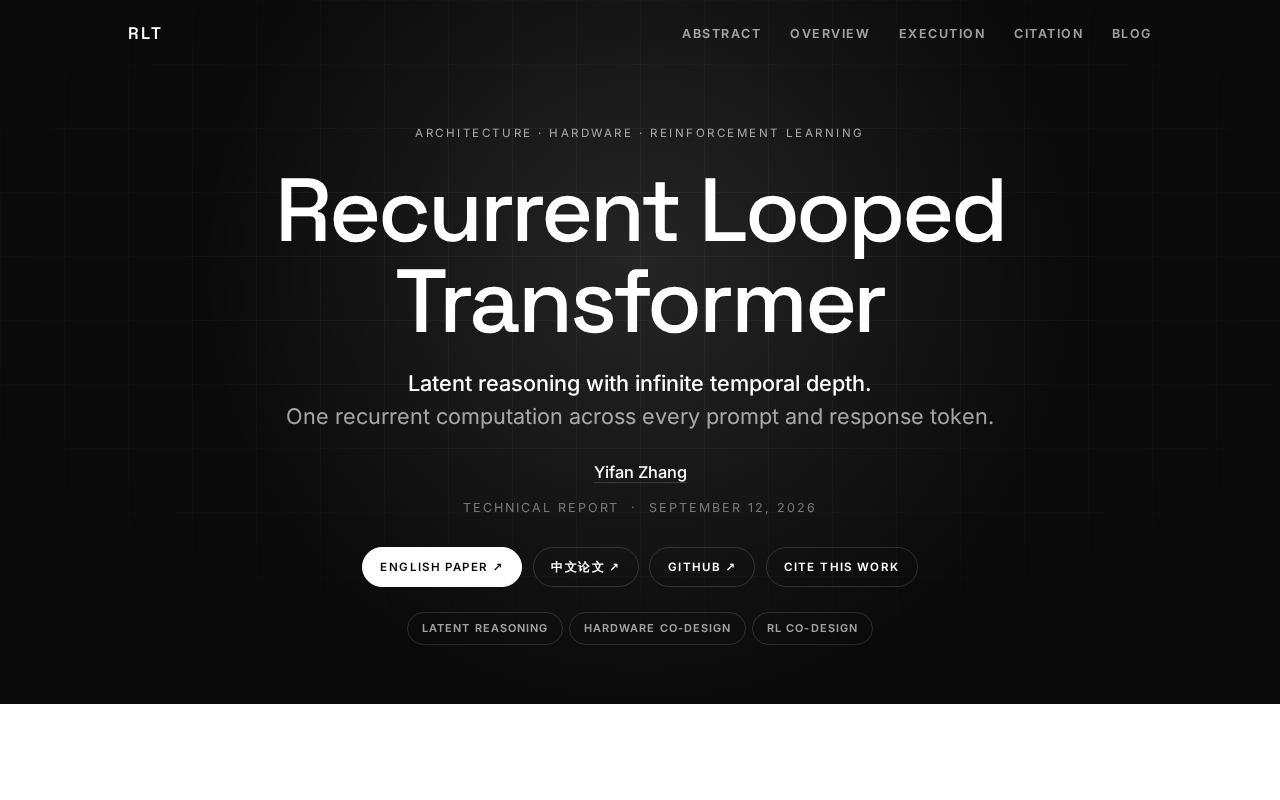
Recurrent Looped Transformers reuse the same layer weights iteratively to enable variable reasoning depth without adding parameters.
The Recurrent Looped Transformer breaks the traditional paradigm where depth equals layer count, by repeatedly applying the same set of weights at inference time to achieve variable compute depth without increasing parameters. This aligns with the test-time compute trend, theoretically allowing models to allocate compute dynamically by task difficulty and replace explicit chain-of-thought with latent-space iteration, eliminating intermediate token decoding overhead. Key engineering challenges include training stability (gradient issues across iterations), adaptive determination of loop count, and compatibility with existing inference ecosystems. The approach remains in early exploration — a snapshot of the broader search for smarter compute utilization as pure scaling hits diminishing returns.
What Is a Recurrent Looped Transformer
Standard Transformer inference is a one-shot process: input passes through a fixed stack of layers and produces output, with each layer used exactly once. The Recurrent Looped Transformer — which recently sparked discussion on HackerNews — proposes a different approach: having part of the model's layer structure invoked repeatedly in a loop, giving the model variable "thinking depth" without increasing its parameter count.
The core idea is to decouple layer stacking from looping. In traditional architectures, depth equals the number of layers, and more layers means more parameters. A recurrent design, by contrast, allows the same set of weights to be applied iteratively — similar to how a classic RNN (Recurrent Neural Network) unfolds across time steps, except here what loops is the Transformer block itself.
Why It Deserves Attention
The biggest appeal of this type of architecture is decoupling compute from parameters. A recurrent block can dynamically determine the number of iterations based on task difficulty — fewer loops for simple problems, more for complex ones. This aligns closely with the current trend in large model research around test-time compute: rather than blindly scaling parameters, let the model invest more computation at inference time to "think deeper."
From a representational capacity perspective, recurrent structures can theoretically express iterative algorithms. Many reasoning tasks — such as multi-step math, graph search, and state updates — are inherently iterative in nature. Fixed-depth feedforward networks struggle to naturally express these computations, whereas architectures with loops can approximate such algorithmic behavior by repeatedly applying the same transformation.
Key Technical Challenges
While the concept is elegant, deploying Recurrent Looped Transformers in practice faces several real obstacles:
Training Stability
Repeatedly applying the same set of weights can cause gradients to explode or vanish across multiple iterations — similar to the gradient problems that plagued early RNNs. Carefully designing residual connections, normalization schemes, and iteration scheduling is a prerequisite for stable training convergence.
Determining the Number of Loops
How does the model know when to stop looping? One approach is to fix the number of iterations. A more interesting direction is to introduce an adaptive halting mechanism (similar to Adaptive Computation Time), letting the model decide for itself when it has "figured things out." The latter offers efficiency advantages but also increases training complexity.
Compatibility with the Existing Ecosystem
Current inference frameworks, KV caching mechanisms, and parallelization strategies are all optimized around standard feedforward Transformers. A recurrent structure changes the shape of the computation graph, and inference engines may need corresponding adjustments to realize the architecture's efficiency potential.
Relationship to Mainstream Research Directions
It's worth noting that recurrence is not an isolated idea — it resonates with several recent research directions. The Universal Transformer explored cross-layer weight sharing long ago. Today's popular Chain-of-Thought (CoT) reasoning is essentially an "explicit loop" at the token-sequence level. The Recurrent Looped Transformer attempts to internalize this iterative capacity into the network structure itself, so that "thinking again" happens in latent space rather than in text space.
If this path proves viable, it could enable more efficient inference — because iteration in latent space doesn't require generating intermediate tokens, eliminating substantial decoding overhead. However, it comes at the cost of reduced interpretability: explicit chain-of-thought reasoning is human-readable, while latent-space looping is a black-box internal computation.
Current Status and Positioning
To be objective: this remains an exploratory architectural direction. Community interest is limited (the original post received only 11 upvotes and sparse comments), and there is still a significant distance to go before validating its effectiveness at scale. It represents more of a microcosm of a broader research trend: as pure scaling encounters diminishing returns, researchers are looking to the architecture level to find ways for models to "use compute more intelligently."
For practitioners tracking the evolution of model architectures, Recurrent Looped Transformers are worth adding to your watchlist — but for now, they are better suited as a source of conceptual inspiration than as a ready-to-deploy engineering solution.
Related articles
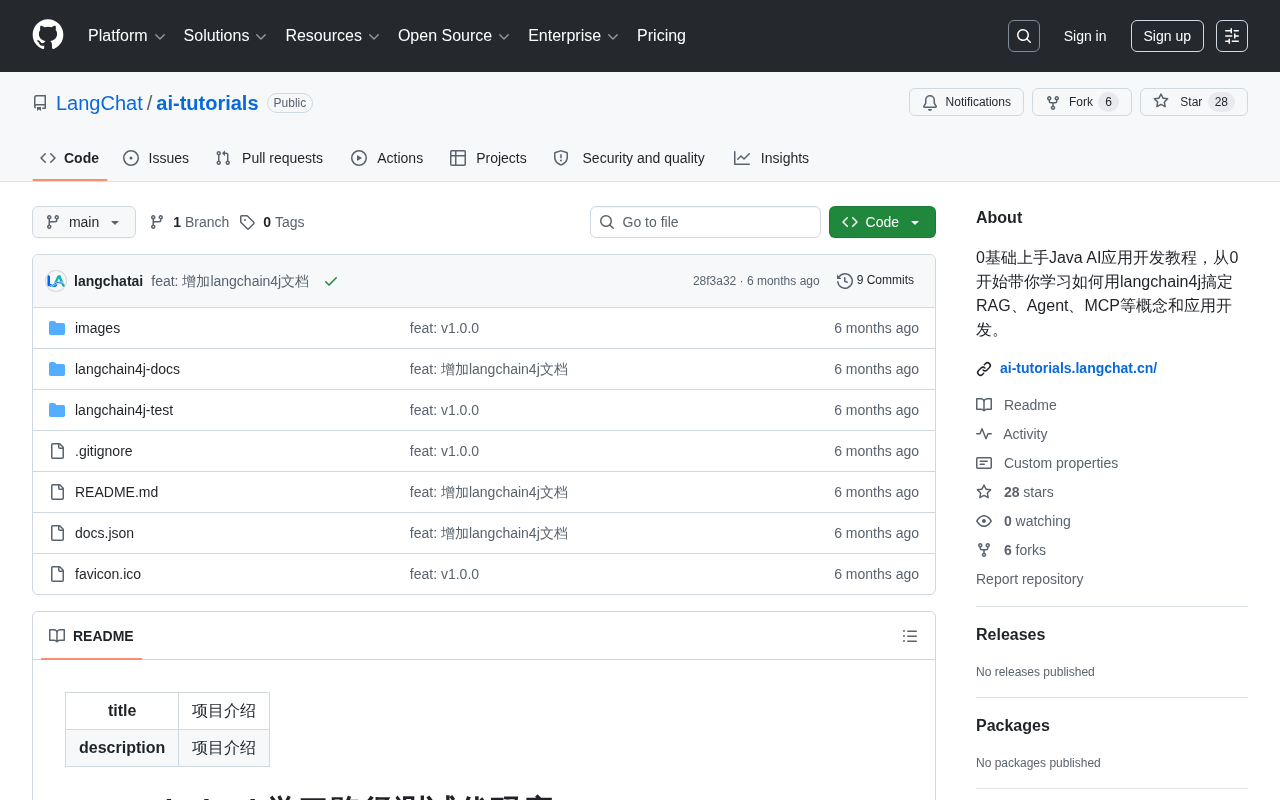
LangChat ai-tutorials: A Beginner's Guide to AI App Development for Java Developers
LangChat ai-tutorials is a beginner-friendly Java AI tutorial series built on langchain4j, covering RAG, Agent, and MCP for Java developers entering AI development.
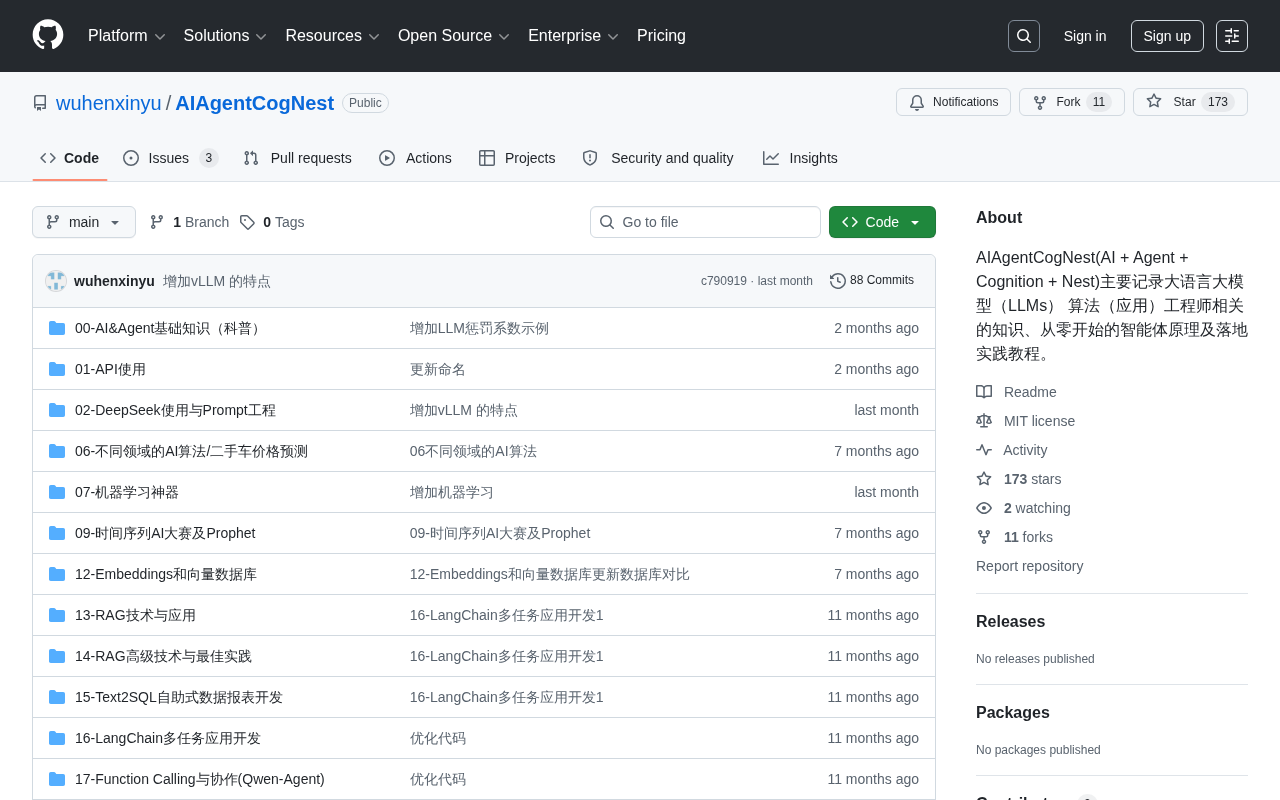
AIAgentCogNest: An Open-Source AI Agent Knowledge Incubation & Development Tutorial Project
AIAgentCogNest is an open-source AI Agent knowledge incubation project offering structured LLM application development tutorials for developers, engineers, and teams transitioning to AI.
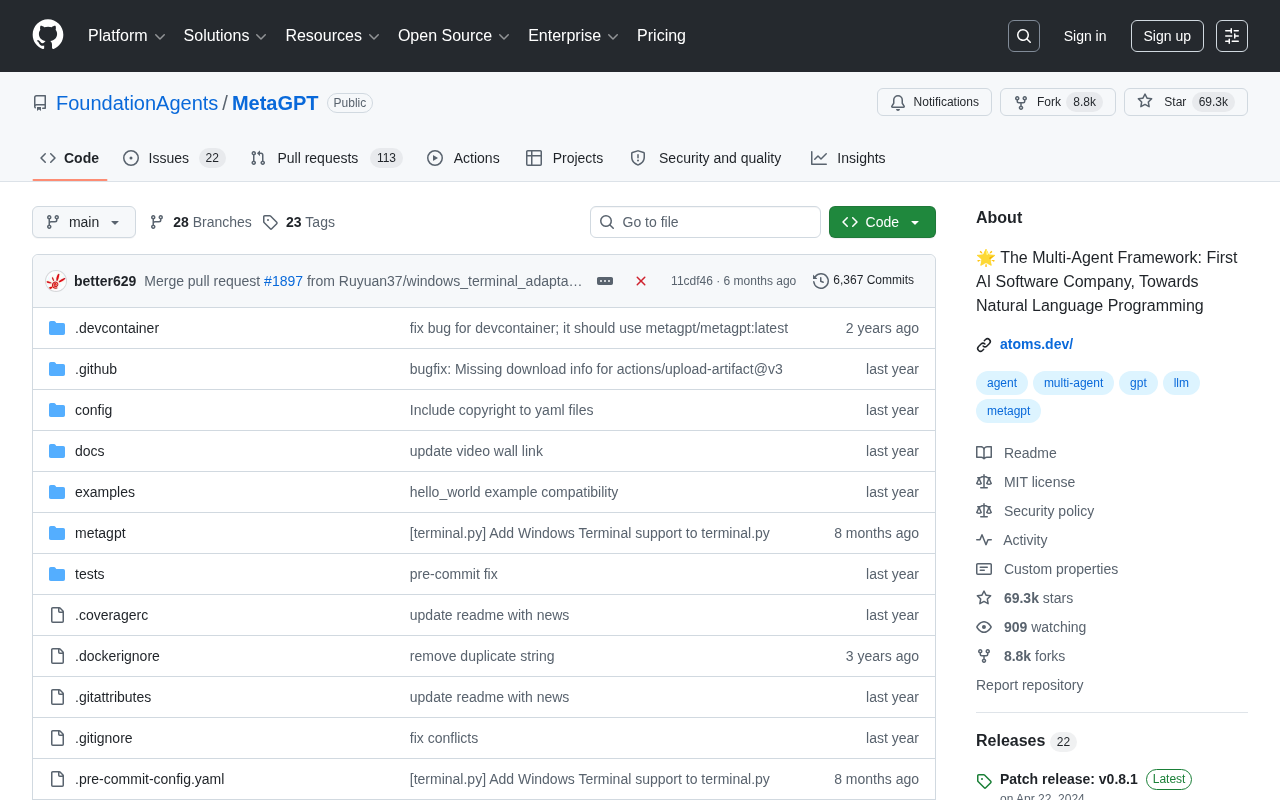
MetaGPT Explained: Building the First AI Software Company with a Multi-Agent Framework
MetaGPT is an open-source multi-agent framework with 67K+ GitHub stars that simulates a full AI software company — with PM, architect, and engineer agents — to enable natural language programming.