Reddit Discussion: Have You Fully Handed Off the Most Boring Tasks to LLMs?

A Reddit discussion reveals that LLMs are moving from high-value scenarios into boring everyday tasks, becoming the default option.
Starting from a Reddit thread, this article explores which boring everyday tasks users have fully handed off to LLMs. The author argues that whether a tool truly integrates into life isn't about demo performance but about usage inertia. When users hand off intellectually unchallenging work like formatting text, rewriting emails, and summarizing group chats to LLMs, it shows the model's reliability has crossed the trust threshold and the interaction method has become muscle memory. The most frequently mentioned tasks fall into three categories: text formatting and rewriting, information summarization and extraction, and repetitive content generation. The article points out that user behavior is shifting from "asking LLMs when hitting a tough problem" to "skipping yourself when a boring task comes up," and the tasks truly fully handed off are always those with simple input, high output fault tolerance, and low rework cost. For AI application developers, this means: automation of boring tasks is an underestimated product opportunity, and reducing rework costs can accelerate the transition from "trying it out" to "using it by default."
Title
Reddit Discussion: Have You Fully Handed Off the Most Boring Tasks to LLMs?
Meta Description
Reddit discussion: Which boring everyday tasks have you fully handed off to an LLM? This article analyzes users' behavioral shift from "assisted use" to "default outsourcing" and what it means for AI application development.
Article Content
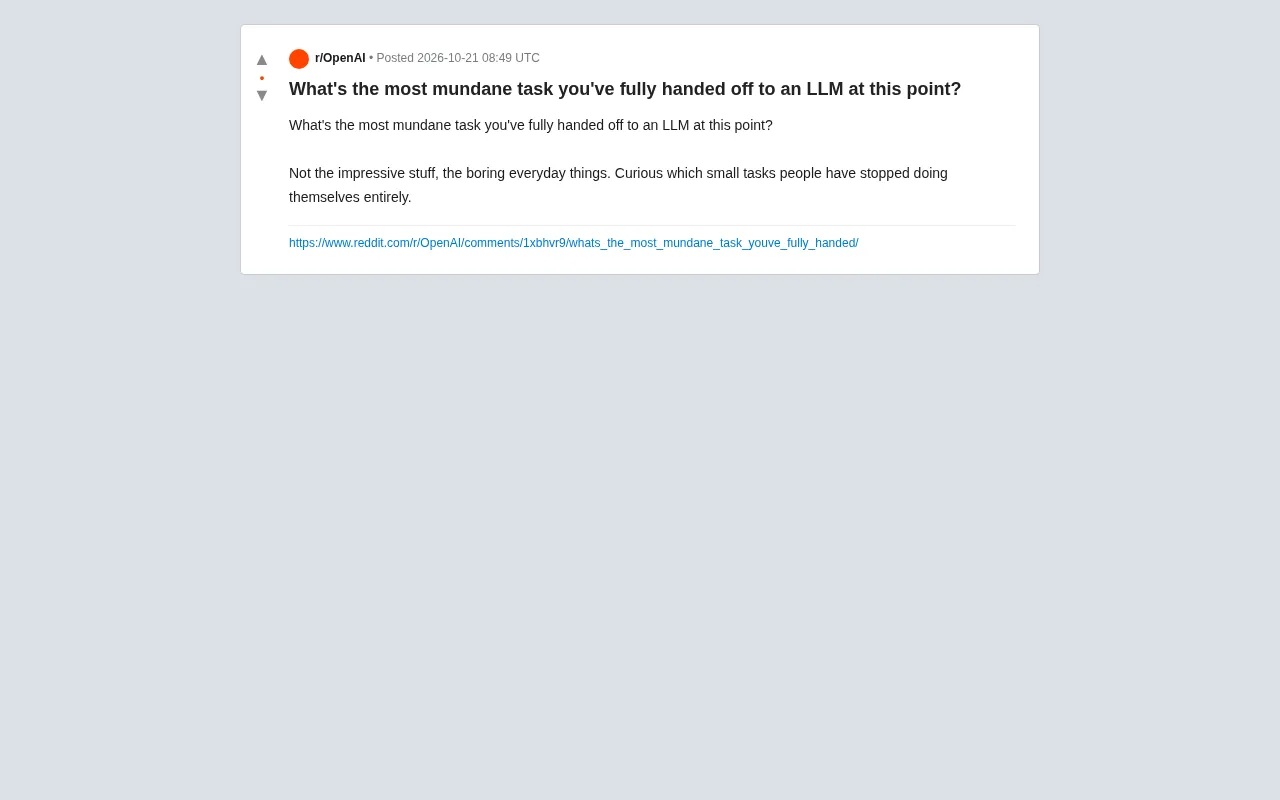
When people discuss large language models, the focus tends to be on "high-value" scenarios like programming, writing, and data analysis. But what may truly change daily life are those trivial little things you can no longer be bothered to do yourself. A recent Reddit thread posed a blunt question: What's the most mundane task you've fully handed off to an LLM at this point? The post specifically emphasized "not the impressive stuff, but the boring everyday little things," and it struck a chord with many.
Why "Boring Tasks" Are the Real Signal of LLM Adoption
Whether a tool has truly become part of your life isn't measured by how impressive it looks in a demo video, but by whether you've unconsciously become unable to live without it. What makes this Reddit thread interesting is that it shifts the lens from "the upper limit of capability" back to "usage inertia."
When users start handing off work with zero intellectual challenge—formatting text, rewriting emails, summarizing group chat logs—to LLMs, it means two things: first, the model's reliability on these tasks has crossed the "trustworthy" threshold; second, users' familiarity with the interaction method is enough to form muscle memory. That says more than any benchmark test.
This discussion doesn't provide specific statistics, but it reveals a trend: LLMs are shifting from "a novelty tool you use occasionally" to "the default option in daily workflows." This shift is silent, yet more convincing than any product launch event.
The "Boring Tasks" Mentioned in the Community
Although the original post is an open-ended question, based on commonalities across similar discussions, the "fully handed off" tasks mentioned most frequently tend to fall into a few categories:
Text Formatting and Rewriting
Turning a colloquial draft into a formal email, organizing meeting notes into bullet points, compressing a lengthy reply into three sentences—these tasks require no creativity but consume attention. Users no longer do them by hand; they just toss them to an LLM.
Text formatting and rewriting are particularly well-suited to LLMs because of the structure of these tasks. Formatting is essentially style transfer: keeping the semantic content unchanged while altering tone, length, or structure. LLMs have seen vast amounts of formal emails, meeting minutes, and colloquial text during pretraining, so they can handle this "same meaning, different form" conversion fairly well. By contrast, fact-checking or externally binding commitment tasks require the model to have reliable knowledge boundaries and calibration capabilities, which currently make it hard to fully let go. This also confirms a judgment in the article: the prerequisite for a task to be fully handed off is that the model only needs to handle "expression" rather than "judgment."
Information Summarization and Extraction
For long articles, long email threads, and group chat logs, users no longer read word by word but have the model produce a first-pass summary. This has become a pre-filtering habit: look at the LLM's summary first, then decide whether to read the original.
Repetitive Content Generation
Weekly report templates, fixed-format replies, routine notifications—these writing tasks have fixed patterns but require minor tweaks each time, and more and more people are outsourcing them entirely to models.
It should be noted that the above categories are a reasonable generalization based on the discussion topic; the original post itself did not list specific answers one by one.
From "Assisted" to "Default": An Underestimated Shift
The most valuable insight from this discussion isn't the specific task list, but the behavioral pattern shift it implies. In the past, people used LLMs by "asking when they hit a tough problem"; now it's "skipping yourself entirely when a boring task comes up."
This shift has direct implications for product design: what users need isn't a stronger demonstration of reasoning ability, but lower startup costs. If handing a task to an LLM requires writing a long prompt and repeatedly adjusting the format, then it isn't "boring-friendly" enough. The tasks that truly get fully handed off are always those scenarios with simple input, high output fault tolerance, and low rework cost.
This also explains why "formatting" and "summarization" tasks are the easiest to fully let go of—if it's wrong, the impact is minimal, and redoing it is quick. By contrast, for content involving fact-checking or external commitments, users still keep a human review step.
The judgment that tasks with simple input, high output fault tolerance, and low rework cost are the easiest to hand off corresponds to two core variables in the Technology Acceptance Model (TAM): perceived ease of use and perceived usefulness. TAM holds that whether users adopt a technology depends mainly on how easy and how useful they find it. In everyday LLM usage scenarios, "simple input" corresponds to perceived ease of use, while "low cost of errors" reduces perceived risk—together they drive users from occasional experimentation to habitual use. This also explains why formatting and summarization tasks are the first to be fully outsourced: their perceived risk is extremely low and their perceived ease of use is extremely high, requiring almost no learning cost from users.
What This Means for AI Application Developers
For those building AI applications, the value of this Reddit thread lies in pointing to a neglected product opportunity: automation of boring tasks.
Most product teams compete for "high-value scenarios," but the things users actually use most frequently in daily life are precisely those small matters not worth putting on a marketing page. A tool that reliably handles "make this sound more formal" may have more stickiness than a model that can solve math competition problems.
Another insight is how trust is built. Users are willing to hand off boring tasks not because the model performs perfectly on them, but because the cost of errors is low enough. If product design can further reduce rework costs—such as one-click retry, multi-version comparison, and partial edits—it can accelerate the transition from "trying it out" to "using it by default."
This Reddit thread doesn't provide a standard answer, but it raises a question every AI user should ask themselves: When was the last time you fully completed a boring little task manually? The answer to that question may reflect the true penetration of LLMs better than any model evaluation leaderboard.
One-line Summary
A Reddit discussion reveals that LLMs are moving from high-value scenarios into boring everyday tasks, becoming the default option.
Paragraph Summary
Starting from a Reddit thread, this article explores which boring everyday tasks users have fully handed off to LLMs. The author argues that whether a tool truly integrates into life isn't about demo performance but about usage inertia. When users hand off intellectually unchallenging work like formatting text, rewriting emails, and summarizing group chats to LLMs, it shows the model's reliability has crossed the trust threshold and the interaction method has become muscle memory. The most frequently mentioned tasks fall into three categories: text formatting and rewriting, information summarization and extraction, and repetitive content generation. The article points out that user behavior is shifting from "asking LLMs when hitting a tough problem" to "skipping yourself when a boring task comes up," and the tasks truly fully handed off are always those with simple input, high output fault tolerance, and low rework cost. For AI application developers, this means: automation of boring tasks is an underestimated product opportunity, and reducing rework costs can accelerate the transition from "trying it out" to "using it by default."
Related articles
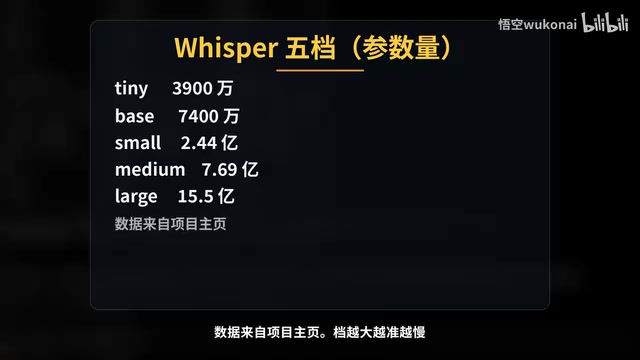
Claude Code in Practice: Building a Zero-Code Clip Factory That Turns Long Videos into Vertical Shorts Automatically
Bilibili creator Wukong uses Claude Code to build a zero-code clip factory, automatically turning a 35-minute long video into 10 vertical shorts. Full workflow from Plan Mode, Whisper transcription, claude.md rules, hook QA to subagent review and plugin distribution, with real measured data.
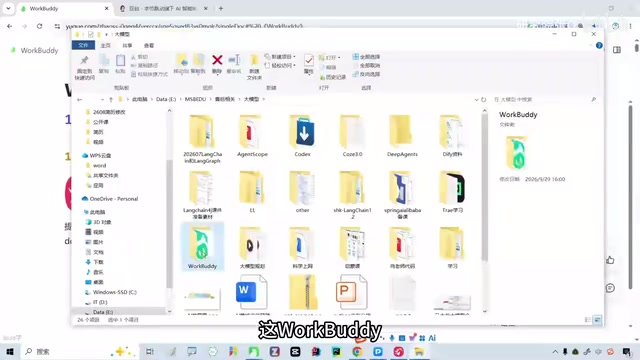
WorkBuddy Complete Guide: How AI Agents Automate File Conversion for You
WorkBuddy hands-on guide: from Doubao giving only plans to AI agents that actually execute—batch-convert PDFs and archive them in three minutes. Includes installation, points system, Codex comparison, and getting-started tips.
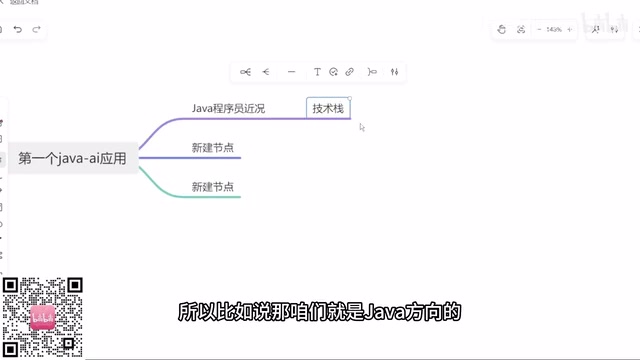
Zero to One: Java + DeepSeek in Practice — A Programmer's Guide to Transitioning into AI Large Model Development
Based on a Bilibili livestream tutorial, this article explains how Java programmers can transition into AI large model development from zero, covering skill paths, building your first Java AI app, resume packaging, and job-hunting strategies to help you seize opportunities in the large model era.