Zero to One: Java + DeepSeek in Practice — A Programmer's Guide to Transitioning into AI Large Model Development
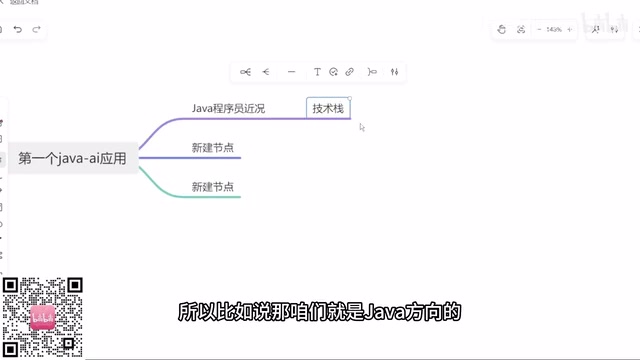
Java programmers need to embrace large model skills—it's shifting from a bonus to a job requirement.
The article points out that Java job postings increasingly require large model-related experience, and AI application development has shifted from a bonus to a required skill. Java developers can extend their existing microservices foundation with large model capabilities, mastering core concepts such as Ollama local deployment, Spring AI/LangChain4j integration, streaming output, RAG, MCP, and Tool Calling. By adding features like intelligent customer service and document Q&A to existing Java projects (e.g., e-commerce, OA systems), developers can quickly build a "Java + Large Model" hybrid resume. Zero-basis learners can get started with 1-2 months of focused systematic study, and are advised to use spare time for continuous practice while monitoring hiring demands.
Why Do Java Programmers Need to Embrace Large Models?
Over the past few years, Java developers could land good jobs simply by mastering middleware stacks like Spring Cloud, Redis, and message queues. But the job market is quietly changing—more and more Java positions now require large-model-related experience. According to observations shared by a Bilibili creator in a livestream tutorial, many Java job postings now explicitly list requirements such as "familiar with mainstream large model development platforms" and "experience in AI application development" as bonus qualifications.
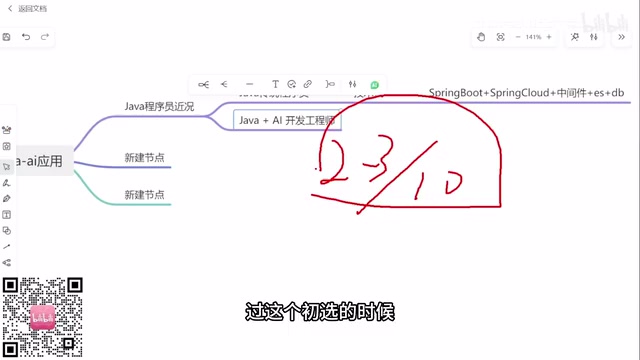
The creator showed a Java job posting during the livestream that explicitly mentioned requirements for LLM-related technologies. This is not an isolated case but a microcosm of an industry trend. When two or three out of ten interview candidates possess large model skills, it shifts from a bonus to a standard requirement. As the creator put it, this is "no longer a multiple-choice question but a mandatory one."
Skill Advancement Path for Java Programmers
Limitations of the Traditional Tech Stack
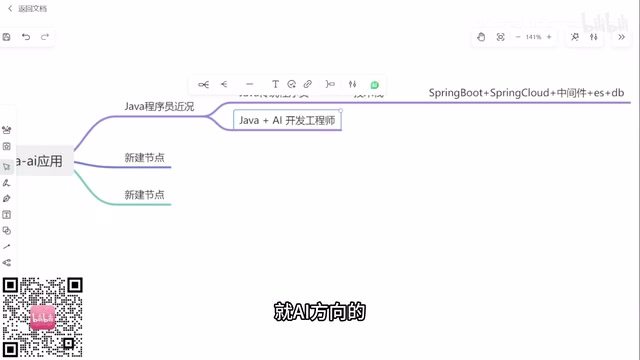
Traditional Java backend development revolves primarily around microservices architecture, including Nginx, gateways, Nexus, distributed tracing, Redis, Elasticsearch, databases, and more. Mastering these technologies was sufficient for conventional development needs over the past many years, and containerized deployment could even boost competitiveness. But these alone are no longer enough in today's job market.

During the livestream, the creator searched multiple Java job postings and found that many now include AI tech stack requirements. This reflects that enterprises are integrating large model capabilities into existing business lines, and Java—as the primary language for enterprise-level development—naturally requires developers to have corresponding AI integration capabilities.
Core Skills for the Large Model Direction
For Java developers, the transition doesn't start from scratch. Building on existing microservices foundations, extending into large model-related skills is relatively straightforward. The skills to master include:
- Local large model deployment: For example, deploying open-source models using Ollama
- Calling large model APIs: Integrating large model capabilities through frameworks like Spring AI or LangChain4j
- Understanding key concepts: Streaming output, memory caching, prompt engineering, vector databases, RAG (Retrieval-Augmented Generation), MCP (Model Context Protocol), Tool Calling, and more
The creator mentioned that one student used their four weekly gym sessions to study large model technology and added it to their resume, which became a great highlight. For zero-basis learners, one to two months of focused, systematic study is enough to master these skills and apply them to projects.
RAG (Retrieval-Augmented Generation) is a technical paradigm that combines external knowledge bases with large language models. Its core workflow: documents are first chunked and vectorized into a vector database; when a user asks a question, the system retrieves the most relevant fragments from the database and feeds them as context alongside the question to the large model for answer generation. RAG effectively mitigates issues such as model hallucination, outdated knowledge, and invisibility of private data, making it the most common implementation form for enterprise-level AI applications.
MCP (Model Context Protocol) is an open protocol proposed by Anthropic, aimed at standardizing how large models connect to external tools and data sources. It's analogous to a "USB interface" in the AI world, enabling models to call resources such as file systems, databases, and APIs in a unified format, reducing integration costs. For Java developers, understanding MCP helps build extensible Agent applications.
Tool Calling refers to the ability of large models to autonomously decide to call external functions or APIs based on user intent. For example, if a user asks "What's the weather tomorrow?" the model can call a weather API to get real-time data. In Java, tools can be defined through Spring AI's @Tool annotation or LangChain4j's ToolSpecification; after the model returns a call request, the framework executes it and sends back the result.
Hands-On: Building Your First Java AI Application
From Concept to Code
The core goal of the livestream course is to guide zero-basis students in building their first Java AI program. Although the original text doesn't show specific code, based on the tech stack mentioned by the creator, a typical implementation path includes:
- Setting up a basic project with Spring Boot
- Adding Spring AI or LangChain4j dependencies
- Configuring a large model API (such as DeepSeekAd, OpenAI, etc.)
- Writing a Controller to implement a simple chat interface
- Gradually adding features like streaming output and memory management
Spring AI is an AI application development framework officially launched by Spring, designed to integrate large models into the Spring ecosystem. It provides unified abstract interfaces, supports multiple model providers such as OpenAI, DeepSeek, and Ollama, and encapsulates capabilities like prompt templates, streaming output, memory management, and vector database integration. Java developers can quickly integrate large models through dependency injection and configuration, just like using Spring Data.
LangChain4j is the Java port of LangChain, offering richer advanced features such as chain calls, Agents, and RAG. The two have different focuses: Spring AI is more tightly integrated with Spring Boot projects, while LangChain4j is more comprehensive in functionality. Beginners can start with Spring AI since it seamlessly connects with the existing Java tech stack.
Common Interview Questions
During the livestream, the creator simulated an interview scenario and mentioned that interviewers might ask: "What is a vector database?" "How does RAG mount a knowledge base?" "What is MCP?" These questions are precisely the core concepts that Java programmers must understand when transitioning into AI development. According to the creator's observations, these topics are rarely covered in traditional Java interviews but have now become must-ask questions for large model-oriented positions.
Vector databases are databases specifically designed for storing and retrieving high-dimensional vector data. In AI applications, unstructured data such as text and images are converted into vectors by embedding models and then stored; during queries, the most similar content is found by calculating cosine similarity between vectors. Common products include Milvus, Pinecone, Chroma, Redis (vector search module), and others. Java developers can operate vector databases through Spring AI's VectorStore abstraction or LangChain4j's EmbeddingStore interface without needing to delve into low-level details.
How to Integrate AI Skills into Resumes and Projects
Packaging Project Experience
The creator suggests that during the learning process, you can add large model features to existing Java projects (such as e-commerce or OA systems), for example, intelligent customer service, document Q&A, code generation, and more. This demonstrates both Java fundamentals and AI application capabilities. The creator's course provides nearly 20 projects, and students can select two of them for large model transformation to create a "Java + Large Model" hybrid resume.
The Reality of Resume Screening
In a highly competitive job market, if your resume lacks large-model-related projects, it may very well be screened out at the initial stage. The creator emphasizes that as more and more candidates possess AI skills, companies will assume this is a required capability.
Learning Advice and Resources
For zero-basis learners, the creator recommends:
- Maintain continuous learning: Use spare time to systematically study large model fundamentals—don't wait until you're fully ready to act
- Hands-on practice: Start with calling APIs, then gradually dive into advanced topics like RAG and Agents
- Follow hiring demands: Regularly check the JDs of target positions and supplement skills accordingly
Although the livestream didn't recommend specific books or courses, the creator emphasized that their course system covers the complete path from traditional Java to AI large models, suitable for developers at different stages.
Conclusion
The combination of Java and AI large models has become an irreversible trend. For Java programmers, mastering large model development skills as early as possible not only enhances workplace competitiveness but also opens up broader career development space. As the creator said: "Change is the only constant." Only by actively embracing change can you remain invincible in this rapidly evolving era.
Related articles
Claude Code in Practice: Building a Zero-Code Clip Factory That Turns Long Videos into Vertical Shorts Automatically
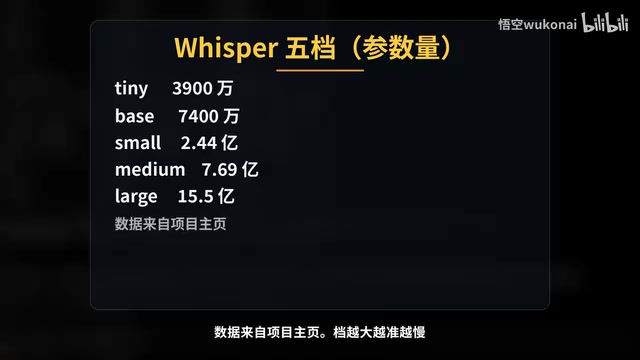
Bilibili creator Wukong uses Claude Code to build a zero-code clip factory, automatically turning a 35-minute long video into 10 vertical shorts. Full workflow from Plan Mode, Whisper transcription, claude.md rules, hook QA to subagent review and plugin distribution, with real measured data.

WorkBuddy Complete Guide: How AI Agents Automate File Conversion for You
WorkBuddy hands-on guide: from Doubao giving only plans to AI agents that actually execute—batch-convert PDFs and archive them in three minutes. Includes installation, points system, Codex comparison, and getting-started tips.
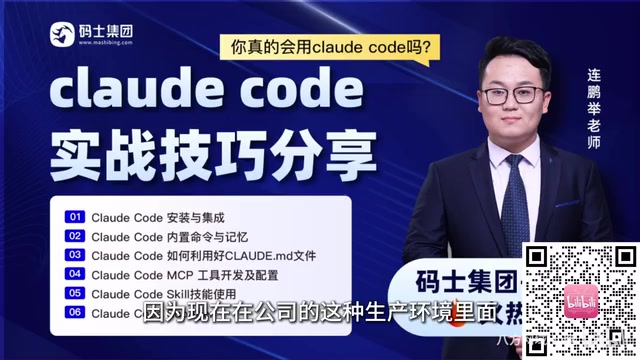
Claude Code in China: A Practical Guide from Installation to Real-World Coding
A Bilibili live class explains Claude Code in China: installation and integration, built-in commands, MCP configuration, SQL skills, and the DRMD file, plus a stable login workaround to avoid account bans and help developers avoid pitfalls.