Reddit Users Confused: Is It a Free Year Extension or Just a Student Discount?
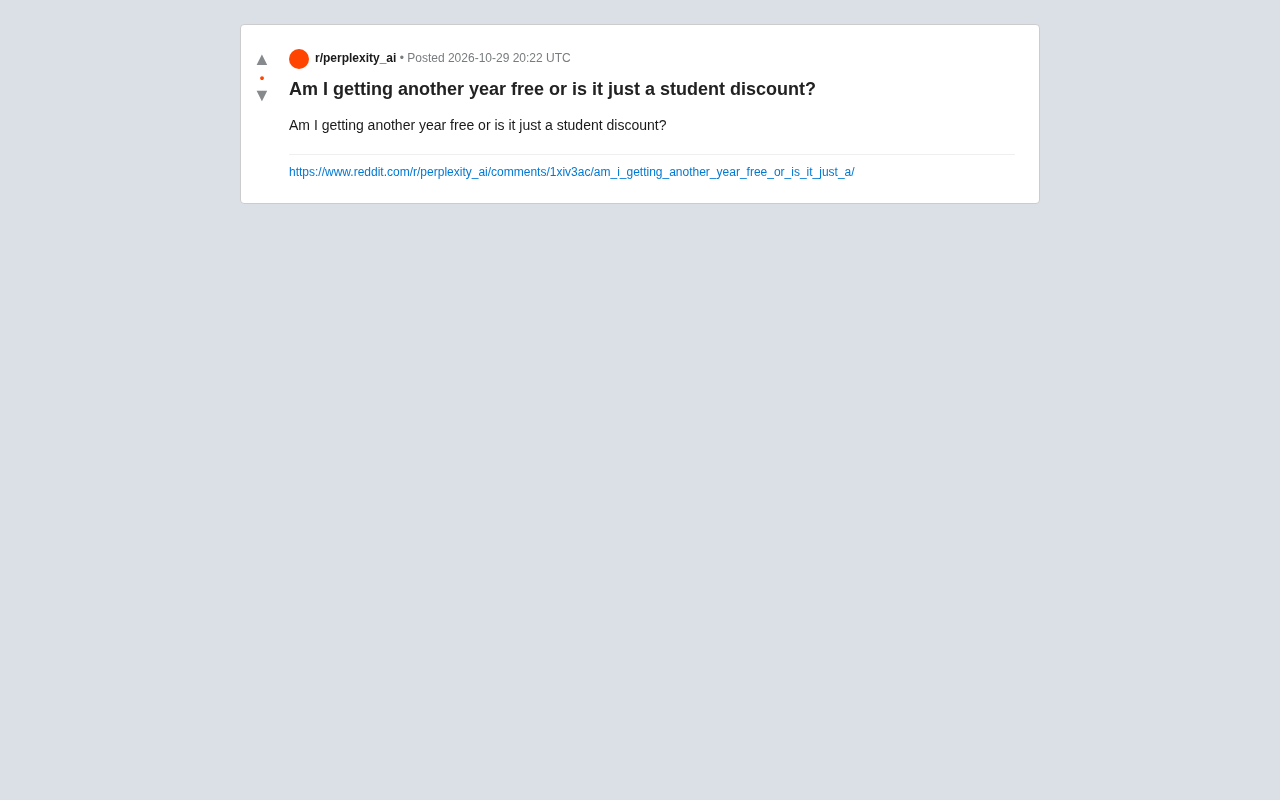
Reddit users are confused about whether an offer is a free year extension or a student discount, reflecting the industry pain point of vague promotional information.
This article discusses a Reddit post about whether an offer is a free year extension or just a student discount, outlining how vague promotional information in subscription services causes user confusion. It notes that providers often emphasize both "free" and "student discount" without clarifying their relationship, while opaque student verification and unclear stacking rules worsen the confusion. Such issues are widespread across streaming, software subscription, and online course platforms. The article offers practical advice: read the terms carefully, confirm with customer service before paying, and check community reviews.
Introduction
Recently, a noteworthy post appeared on Reddit titled "Am I getting another year free or is it just a student discount?" The post quickly sparked discussion among community users, many of whom said they had encountered similar confusion.
Core Issue: Vague Promotional Promises Cause User Confusion
Judging from the post title and content, this is likely related to a promotional campaign for a subscription service. The user received some kind of offer information but could not determine whether it was a "free year" benefit or a discount for student status. This ambiguity led the user to question the actual value of the offer.
According to discussions in the Reddit community, common situations include:
- Service providers emphasize both "free" and "student discount" in their promotions but do not clearly explain the relationship between the two.
- Users may have already completed student verification, but the promotional information does not specify whether the offers stack.
- Some users reported that customer service explanations differed from the promotional page.
Promotional offer in subscription-based services usually refers to limited-time price discounts, free time, or additional benefits provided by service providers to attract new users or retain existing ones. Common forms include first-month/first-year discounts, free trial periods, student-exclusive discounts, and bundled gifts. Promotional rules are often composed of multiple stacked conditions. For example, a "new user first-year discounted price" and a "student verification discount" may be mutually exclusive or stackable, but promotional pages often front-load the core selling points and back-load the restrictions to improve conversion rates. This way of presenting information easily creates expectation gaps for users: when users see "free for a year," they tend to interpret it as an unconditional gift, while the actual terms may require identity verification, automatic renewal, or a specified payment method. In the subscription economy, promotional transparency has become an important topic in consumer rights discussions.
Multi-Source Verification: Shared Experiences Among Community Users
To fully understand this issue, we looked at multiple sources. According to Reddit user feedback, similar confusion between "free" and "student discount" is fairly common on streaming, software subscription, and online course platforms. For example, some users mentioned that when purchasing a certain music service, the page displayed "one year free," but at checkout they were prompted to verify student status to enjoy the offer.
Another discussion thread from Reddit also pointed out that the student discount for some services is actually "free for the first year, then half price," but the promotional wording may be simplified to "free for students for one year," causing users to misunderstand.
One detail worth noting is that these discussions did not point to the same specific service but reflected a common industry phenomenon: promotional rules are complex, and users find it difficult to distinguish them quickly.
Deeper Reasons for User Confusion
Why do such problems recur? From Reddit users' discussions, we can summarize several key factors:
- Ambiguity in marketing copy: To attract clicks, service providers may use words such as "free" and "discount" but fail to explain the restrictions in a prominent place.
- Opaque student verification process: Some platforms require students to verify through third parties, but the verification process is cumbersome or not clearly communicated, leading users to question their eligibility for the offer.
- Unclear stacking rules: When multiple offers exist at the same time (such as a new-user offer plus a student discount), users find it difficult to determine whether they can enjoy both.
Student verification is the process by which service providers verify a user's student status in order to grant exclusive discounts. It is usually completed through third-party identity verification platforms (such as SheerID, UNiDAYS, etc.), requiring users to submit a school email, proof of enrollment, or student registration information. The opacity of the verification process is reflected in multiple stages: verification periods vary in length, required materials are not listed in advance, appeal channels after failed verification are unclear, and the rules linking verification status to promotional campaigns are not explained. Some users still receive prompts to verify again even after completing verification, or cannot determine whether the verification discount can be stacked with new-user offers, leading them to doubt their own eligibility. The verification experience directly affects users' judgment of the credibility of promotional campaigns.
How to Avoid Similar Confusion?
In response to such issues, Reddit users offered some practical suggestions:
- Read the terms and conditions carefully: especially the fine print, which usually contains the full conditions of the offer.
- Contact customer service to confirm: before paying, clarify the details of the offer through online chat or email support.
- Check community reviews: search platforms such as Reddit for other users' experiences to avoid pitfalls.
Terms and conditions are the legal and rule-based载体 of promotional campaigns, usually containing key information such as the offer's validity period, eligible audience, stacking rules, automatic renewal clauses, and cancellation methods. In subscription services, the terms are often presented in collapsed panels or small-print links, which users tend to overlook. When reading the terms, focus on whether the offer automatically converts to renewal at the regular price, the refund policy, identity verification requirements, and whether there are exclusionary conditions such as "new users only." In addition, the auto-renewal mechanism means that after the free period ends, charges will be made at the standard price, so users should pay attention to the cancellation deadline. Keeping screenshots of promotional pages and records of customer service communication can also help serve as evidence in the event of a dispute.
Conclusion
Although the Reddit post is brief, it reflects a common user pain point in the subscription economy: the ambiguity of promotional information. For service providers, clear and transparent communication is key to building trust; for users, proactively verifying the details of offers can help avoid misunderstandings. In the future, as subscription models become more widespread, such issues may require more standardized solutions.
One-line Summary
Reddit users posted about confusion over whether an offer was a free year extension or a student discount, reflecting the industry pain point of vague promotional information.
Paragraph Summary
This article centers on a Reddit post about "a free year extension or just a student discount" and outlines the common phenomenon in which vague promotional information for subscription services causes user confusion. The article points out that service providers often emphasize both "free" and "student discount" in their promotions without clearly explaining the relationship between the two, and that opaque student verification processes and unclear offer-stacking rules further aggravate the confusion. Community discussions show that such problems are widespread on streaming, software subscription, and online course platforms. The article concludes with practical suggestions: read the terms and conditions carefully, contact customer service to confirm before paying, and check community reviews, while calling on service providers to build user trust through clear and transparent communication.
Related articles

Mistral Large 4 Open-Sources a Trillion Parameters, Microsoft Offers Voluntary Severance to 60,000 Employees
Mistral Large 4 open-sources a trillion-parameter multimodal model with a coding agent score of 48; SanDisk earnings show AI inference reshaping NAND demand; Google Gemini adds in-app file editing, OpenAI raises Codex quotas, and Microsoft offers voluntary severance to 60,000 employees.
Mistral Large 4 Opens Its Weights: AI Morning Brief Roundup of Models and Ecosystem Trends
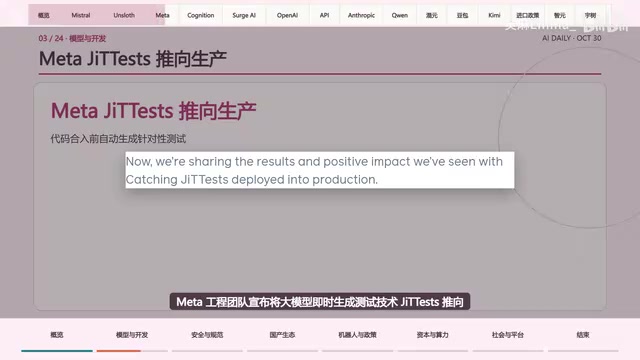
Mistral Large 4 opens its weights, a 1-trillion-parameter MoE architecture that can run locally on MacStudio; Meta's test-generation technology enters production; top tax benchmark pass rate only 10.8%; Canadian government takes a stake in Cohere; Doubao Work opens third-party model calls. This AI Morning Brief rounds up model, ecosystem, capital, and policy developments.
Mistral Large 4 Goes Open Source: A 1T-Parameter European Qwen Challenging DeepSeek
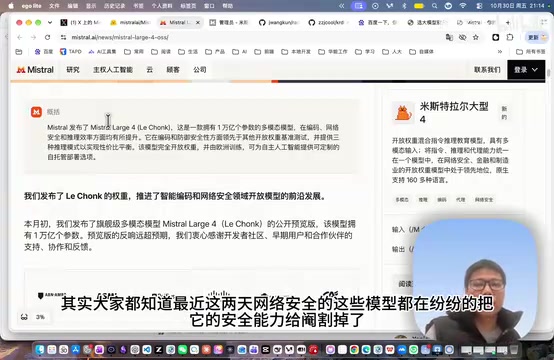
Mistral Large 4 is now open source: 1T total parameters, 52B activated, focused on coding and cybersecurity, with ~610G NVFP4 weights. We analyze its comparison with DeepSeek V4 Flash, API pricing, demo realism, and local deployment value.