Redefining Long-Term Memory in AI Agents: From Retrieval to State Management
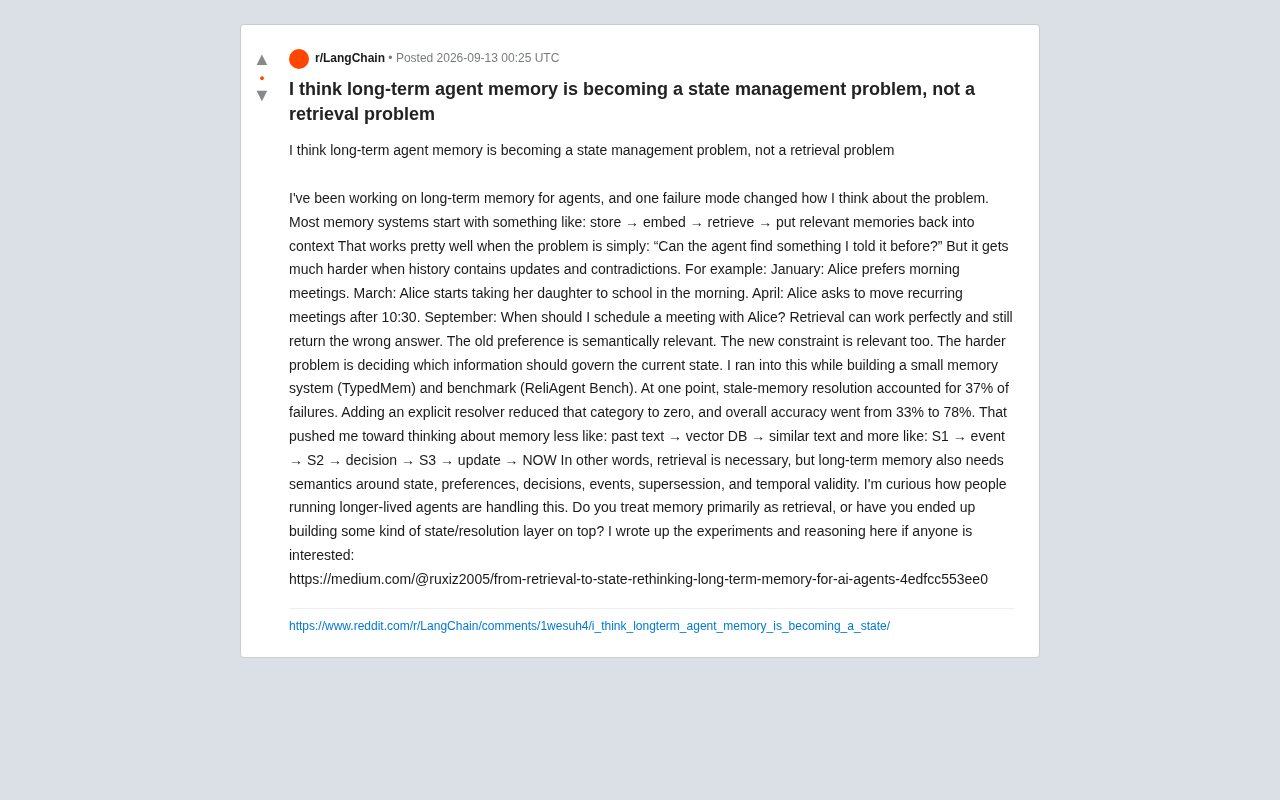
Long-term agent memory is a state management problem, not just a retrieval problem.
A developer building a long-term memory system for AI agents discovered a fundamental blind spot in the mainstream store→embed→retrieve paradigm: when history contains updates and contradictions, semantically correct retrieval still produces wrong answers because the system can't determine which information is outdated. His experiments showed stale-memory resolution caused 37% of all failures; adding an explicit resolver for information supersession pushed overall accuracy from 33% to 78%. He argues long-term memory should shift from a "text retrieval" model to a "state evolution" model — with semantics built around state, supersession, and temporal validity rather than isolated text fragments.
A Failure Pattern Nobody's Talking About
Long-term memory in AI agents has largely been treated as a retrieval problem. Most memory systems follow a straightforward pipeline: store → embed → retrieve → inject relevant memories into context. When the task is simply "can the agent find what I told it before," this approach works reasonably well.
But one developer's experience building a long-term memory system — and a specific failure case he encountered along the way — fundamentally changed how he thinks about the whole problem. He found that when the history contains updates and contradictions, pure retrieval completely breaks down. Even when retrieval itself is perfect, the returned answer can still be wrong.
When "Correct" Retrieval Produces Wrong Answers
The developer illustrated the problem with a scheduling example:
- January: Alice prefers morning meetings
- March: Alice starts dropping her daughter off at school every morning
- April: Alice asks to move recurring meetings to after 10:30
- September: "When should I schedule a meeting with Alice?"
In this scenario, the retrieval system will surface both pieces of information: the old "prefers morning meetings" entry is semantically highly relevant, and so is the new "after 10:30" constraint. Both are "correct" at the retrieval level — but the genuinely hard question is which piece of information should govern the current state.
This is exactly the blind spot of the retrieval paradigm. Vector similarity measures semantic proximity, not temporal validity or whether a piece of information has been superseded. Both the old preference and the new constraint sit close to the query in vector space, leaving the system with no way to determine which one is outdated.
The Numbers: What a State Resolution Layer Actually Does
While building his own memory system, TypedMem, and an evaluation benchmark called ReliAgent Bench, the developer quantified how serious this problem really is. He found that across all failure cases, stale-memory resolution accounted for 37%.
When he introduced an explicit resolver to handle information supersession, that category of failures dropped to zero, and overall accuracy jumped from 33% to 78%. These numbers make a compelling case: state management isn't a nice-to-have optimization — it's a critical bottleneck for long-term memory reliability.
From "Text Retrieval" to "State Evolution"
Based on these experiments, the developer proposed a fundamentally different way to model memory. The traditional approach treats memory as:
Past text → Vector DB → Similar text
A more accurate model is a state evolution chain:
S1 → event → S2 → decision → S3 → update → current state
In other words, retrieval is still necessary — but long-term memory also needs semantics built around state, preferences, decisions, events, supersession, and temporal validity. Memory is no longer a collection of isolated text fragments; it's a state machine that evolves over time with explicit supersession logic.
Why This Is a State Management Problem
This shift in perspective is genuinely illuminating. In traditional software engineering, state management is a mature discipline — we know how to handle versioning, how to let new writes override old values, and how to maintain consistency. By contrast, most current memory systems dump all historical information into a vector store as equals, effectively discarding the temporal structure of state.
Framing long-term memory as a state management problem means the system needs to actively answer questions like: Does this new piece of information supplement the old one, or replace it? Over what time window is a given preference valid? When two conflicting records exist, which one wins? These are semantic decisions that retrieval simply cannot make.
What This Means for Agent Developers
For developers building longer-lived agents, this discussion raises an important architectural question worth reflecting on: Are you treating memory primarily as a retrieval problem, or have you built some kind of state/resolution layer on top of it?
As agents need to maintain coherence over months or longer, users' preferences, decisions, and constraints will continuously change and contradict each other. Architectures that rely solely on "store + retrieve" will steadily accumulate errors in these scenarios. Introducing explicit supersession and temporal validity mechanisms does add system complexity — but the jump from 33% to 78% accuracy suggests the investment is well worth it.
It's worth noting that the observations and data in this article come from a single developer's post on Reddit, and the ReliAgent Bench benchmark has not yet been independently validated at scale. That said, the "retrieval vs. state management" framework he proposes offers a clear and practical lens for thinking about agent memory architecture.
Related articles

Spotit: Turn Every Mac App into a Real-Time Interactive Tutorial
Spotit is an AI-powered interactive tutorial tool for Mac. Press a shortcut, ask in plain language, and it highlights exactly where to click next — guiding you through any Mac app as you learn by doing.
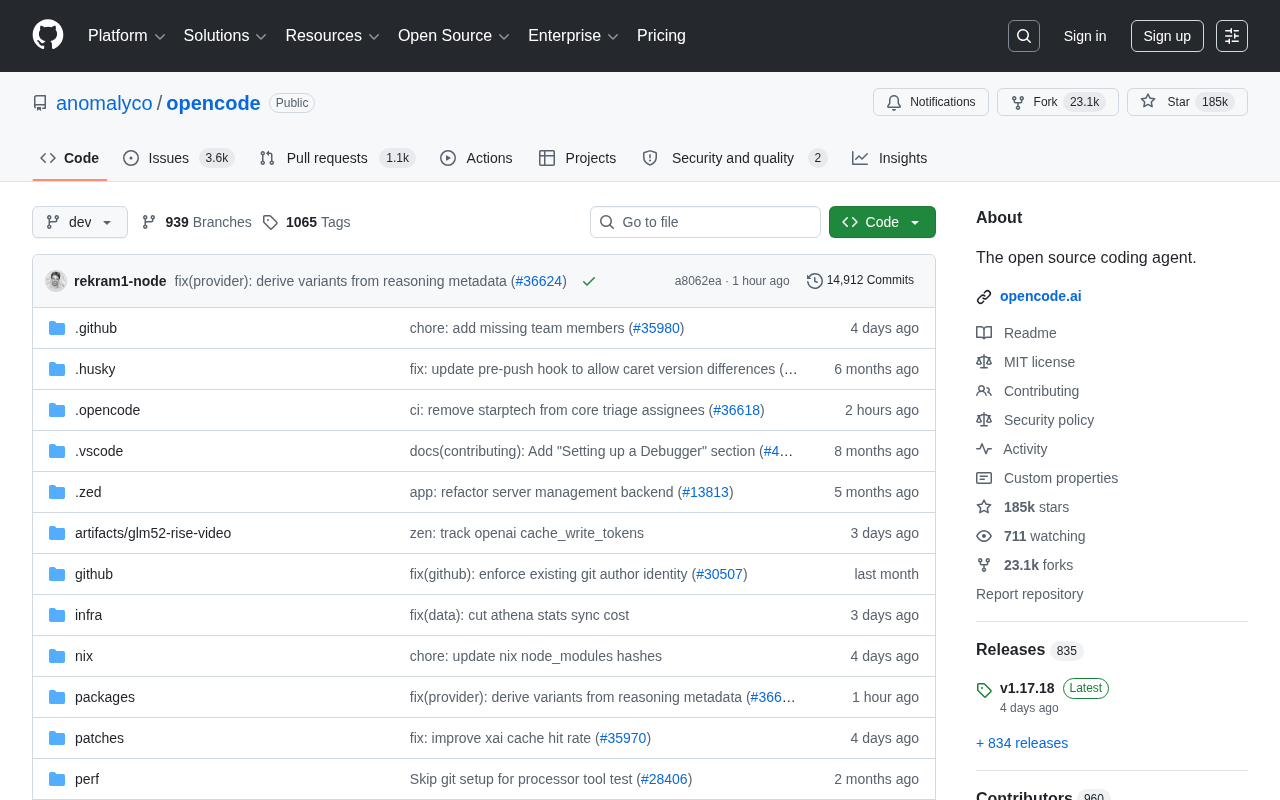
OpenCode: The Open-Source Coding Agent That Hit 150K GitHub Stars
OpenCode is an open-source TypeScript coding agent with 150K+ GitHub stars. Learn about its features, advantages, and use cases for AI-powered development.

Learning AI Agent Development from Scratch: An Open-Source Tutorial Worth Bookmarking
Haozhe-Xing/agent_learning is a systematic, hands-on open-source tutorial for learning AI Agent development from scratch, with daily arXiv paper tracking built in.