ReelRoom: An Android Video Editor Powered by a 1M Token Context Window

ReelRoom uses a 1M token context multimodal model to auto-categorize thousands of clips and cut them into publishable videos.
ReelRoom is an Android project that attempts to rebuild the video editing workflow with multimodal large models. Based on Gemini 4 Neon's 1M token context window, it scans thousands of clips in a creator's camera roll in one pass, analyzing visuals, voiceover transcription, scene transitions, lighting cues, and story beats. It categorizes footage into B-roll, talking head, cinematic, food and morning, and LA Street, then selects the best moments to stitch into a ready-to-post video. The article argues this marks long-context multimodal models crossing from "can see" to "can understand and orchestrate," shifting the editing starting point from a blank timeline to an AI-organized library and rough cut.
When There Are 1,000 Clips in Your Camera Roll, Where Do You Even Start Editing?
How much footage does an ordinary creator shoot in a month? The answer: a thousand clips. These clips are scattered across your phone's camera roll—casual B-roll, talking-head segments, cinematic empty shots, breakfast routines, and street snapshots. Faced with this volume, the traditional editing workflow practically collapses: you have to open each clip one by one, categorize it, tag it, and then manually drag it onto the timeline.
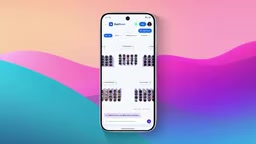
A project called ReelRoom has appeared on YouTube, attempting to completely rebuild this workflow with multimodal large models. Its core premise is simple: let AI scan your entire camera roll, automatically categorize clips by scene and content, and then directly cut a publishable video.

The project's technical foundation is the Gemini 4 Neon model, and the key number is its 1M token context window. This means the model can "watch" the entire camera roll in one pass—including visuals, voiceover, and metadata—without needing to process it in segments. For video understanding tasks, this is a qualitative shift: cross-clip narrative threads, recurring scenes, and even continuity of lighting and color tone can all be captured with a global view.
From Scanning to Categorization: How AI Understands Your Footage Library
ReelRoom's first step is a "full scan." It doesn't just read filenames or durations; it simultaneously analyzes visual content, transcribed voiceover text, scene transition points, lighting cues, and story beats. The original description states that the system will "scan all 1,000 clips and voiceovers to spot every scene, lighting cue, and story beat."

The logic behind this is that a publishable video's footage often comes from shoots at different times and locations. Traditional tools rely on manual tagging, whereas multimodal models can infer semantics directly from pixels and audio. For example, a shot of a kitchen in the early morning and a shot of walking down the street have no visual connection, but the voiceover might tie them together into the theme of "life changes after moving."
The categorization results are grouped into five categories: B-roll, talking head, cinematic, food and morning, LA Street. This taxonomy isn't a preset template; it emerges from the content distribution of the footage itself—reflecting the creator's actual shooting habits and life trajectory.
Multimodal large models refer to large-scale neural networks capable of processing multiple input modalities such as text, images, audio, and video simultaneously. Unlike language models that only handle text, multimodal models typically include a visual encoder (such as ViT) that maps images or video frames into vectors, which are then aligned with text tokens in a shared semantic space. In video understanding tasks, the model needs to perform spatiotemporal modeling of frame sequences and combine voiceover transcript text for cross-modal reasoning. ReelRoom relies on exactly this capability: it doesn't need humans to tag each clip, but instead infers semantic categories like "this is B-roll" or "this is a talking head" directly from pixels and audio. The classification accuracy of multimodal models is limited by the coverage of their training data, and misjudgments may occur for niche shooting styles—which is one reason automatic editing tools still require human review in practice.
Automatic Assembly: From Categorization to Narrative
Categorization is only an intermediate step. ReelRoom's ultimate goal is to directly output a ready-to-post video. The system "pulls the best moments" from the five categories and stitches them together into a finished piece following narrative logic.
The voiceover in the demo video goes something like this: "Moving to LA was a blur at first. Then I started making Sunday breakfast at 7 a.m., slowing down, and finally feeling at home." The footage for this narrative line spans street shots, kitchen routines, and personal narration—if done manually from a thousand clips, it would take at least several hours. The model, however, completed theme identification, emotional arc arrangement, and shot selection within its global context.

A technical detail worth noting here is the practical value of the 1M token context. Video understanding differs from text: every frame consumes a large number of tokens. To process a thousand clips in one pass, the model must efficiently compress visual information while retaining narrative-relevant features. Gemini 4 Neon's performance in this scenario suggests that long-context multimodal models have crossed the threshold from "can see" to "can understand and orchestrate."
Context window refers to the total number of tokens a model can process simultaneously in a single inference. Traditional model windows are typically thousands to hundreds of thousands of tokens, and processing long videos requires feeding them in segments, losing cross-segment associations. A 1M token window means the model can "watch" the entire footage library in one pass. But video consumes an extremely high number of tokens: each image frame produces a large number of visual tokens after passing through the visual encoder, so to process a thousand clips, the model must perform efficient internal compression—for example, reducing the sampling frame rate, aggregating similar frames, or retaining key features through pooling. The real value of long context isn't just "fitting it all in," but that the attention mechanism can establish cross-clip associations on a global scale, thereby identifying recurring scenes, narrative threads, and emotional arcs. The trade-off is that inference costs rise significantly with context length, which is why such tools currently rely mostly on cloud inference.
Implications for the Creator Tool Ecosystem
What ReelRoom demonstrates isn't just an Android app, but a new interaction paradigm: creators no longer start from a blank timeline, but from an AI-organized footage library and a rough cut. This shifts the focus of editing from "operation" to "judgment"—you only need to decide whether the AI's selected segments match your expressive intent.
From an industry perspective, such tools depend on the maturation of three conditions: falling costs of long-context multimodal models, optimized inference latency on-device or in the cloud, and efficient access to large numbers of media files on the Android platform. ReelRoom's choice of Android as its vehicle also hints at the scale of the mobile creator demographic—their footage is almost entirely produced on phones, so editing returning to the phone is a natural path.
Of course, the quality ceiling of automatic assembly still depends on the model's understanding of "story." Whether the category labels are accurate, whether the selected segments capture emotional high points, and how well the voiceover matches the visuals all need to be verified through actual use. But the direction is clear: when a model can read through all your footage in one pass, the starting point of editing is completely rewritten.
The trade-off between on-device and cloud inference is a core engineering problem for mobile AI tools. On-device inference (running the model locally on the phone) has low latency and good privacy, but is limited by phone compute and memory, making it difficult to support 1M-token-level multimodal inference. Cloud inference can leverage large-scale GPU clusters, but requires uploading all footage, bringing bandwidth overhead and privacy concerns. ReelRoom chooses Android as its vehicle while relying on Gemini 4 Neon's cloud capabilities, effectively adopting a hybrid approach: enumeration of media files, thumbnail generation, and preliminary screening can be done on-device, while global semantic understanding and narrative orchestration are handled in the cloud. This division of labor determines the tool's response speed and the upper limit of usable footage scale, and is also a key dimension for evaluating the actual experience of such products.
One-line Summary
ReelRoom uses a 1M token context multimodal model to automatically categorize thousands of clips and cut them into publishable videos.
Paragraph Summary
ReelRoom is an Android project that attempts to rebuild the video editing workflow with multimodal large models. Based on Gemini 4 Neon's 1M token context window, it scans thousands of clips in a creator's camera roll in one pass, simultaneously analyzing visual content, voiceover transcription, scene transitions, lighting cues, and story beats. The system automatically categorizes footage into five types—B-roll, talking head, cinematic, food and morning, LA Street—and selects the best moments to stitch together into a ready-to-post video following narrative logic. The article argues that this marks long-context multimodal models crossing from "can see" to "can understand and orchestrate," with the starting point of editing shifting from a blank timeline to an AI-organized footage library and rough cut, and the creator's focus turning to judgment and selection.
Related articles

Sanders Talks AI: Billionaire Tax, Superintelligence Ban, and the Democracy Crisis
Bernie Sanders discusses the democracy crisis, a 5% annual billionaire tax, Medicare reform, and his support for banning superintelligence development.

Super-Hot Rock Geothermal: A New Solution to Data Centers' Energy Woes
Super-hot rock geothermal startups target data center power demand, claiming terawatt-scale delivery almost anywhere. We analyze the technology, its fit with data centers, and real-world challenges like drilling costs and regulation.
Replit Agent Comes to Microsoft Teams: Conversation Becomes Development
Replit Agent is now integrated into Microsoft Teams, letting users handle projects, ask questions, and turn team conversations into action directly in chat. This article analyzes the impact on dev workflows, team collaboration, and the AI coding tool competitive landscape.