Reflective Recovery: Teaching LLMs to Self-Correct by Learning from Mistakes
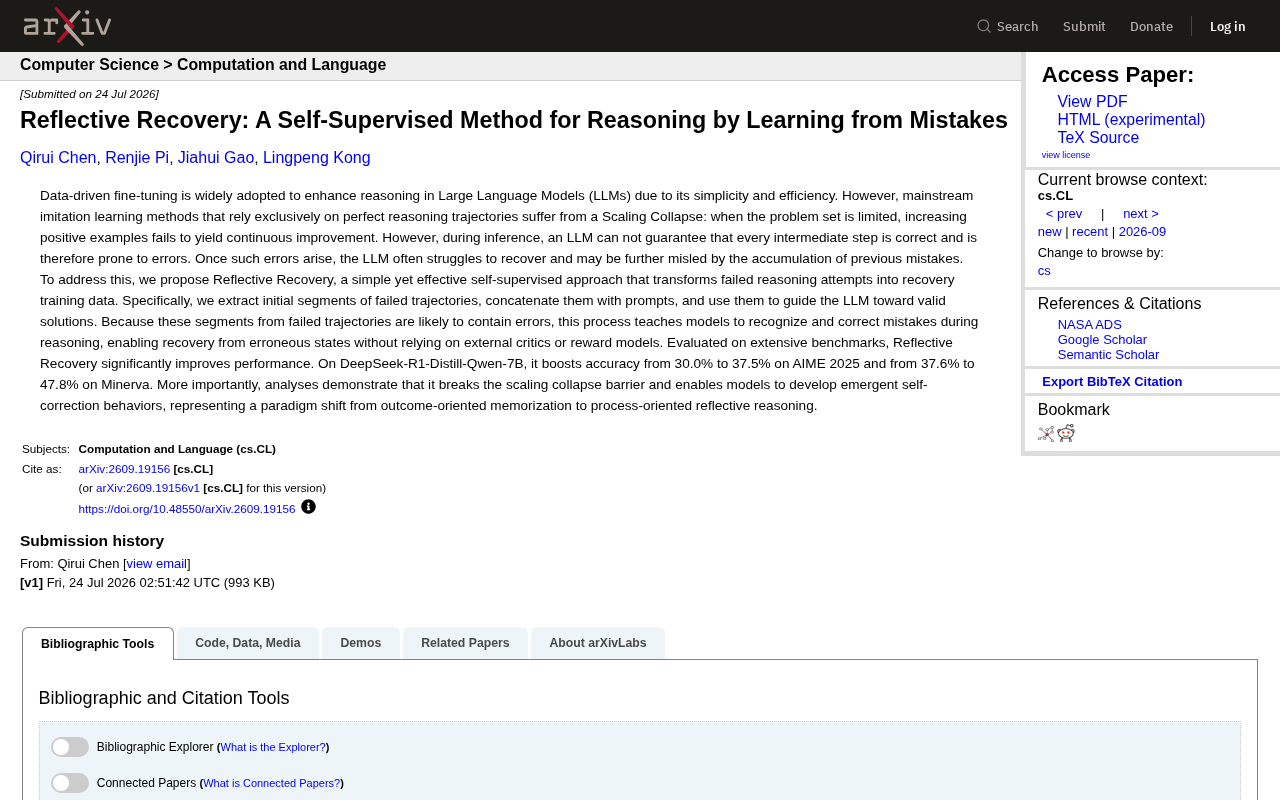
Reflective Recovery turns LLM failure traces into self-supervised training data to break Scaling Collapse and enable emergent self-correction.
Mainstream LLM reasoning fine-tuning relies on imitation learning with perfect reasoning traces, but when the training problem set is limited, piling on correct examples leads to Scaling Collapse — rapidly diminishing performance gains. Reflective Recovery takes a different approach: it extracts initial segments from failed reasoning traces, concatenates them with prompts, and guides the model toward correct solutions, forcing it to learn to identify and recover from errors. Fully self-supervised with no critic models or RL framework required, the method boosted DeepSeek-R1-Distill-Qwen-7B by 7.5 points on AIME 2025 and 10.2 points on Minerva, while eliciting emergent self-correction behavior — marking a shift from memorizing correct outcomes to understanding errors within the reasoning process.
The Hidden Bottleneck in Data Fine-Tuning: Scaling Collapse
Using data-driven fine-tuning to enhance the reasoning capabilities of large language models (LLMs) has become one of the most widely adopted approaches in the field — it's straightforward and effective. Feed a model enough high-quality reasoning traces, and it seems to get smarter. But this path is not without its ceiling.
A recent arXiv paper (arXiv:2609.19156) identifies a phenomenon called Scaling Collapse: when the training problem set is fixed, simply adding more correct reasoning examples (positive examples) fails to deliver sustained performance gains. In other words, training a model purely on "perfect answers" quickly hits the point of diminishing returns.
Most imitation learning approaches are built on the assumption of "learning only from perfect reasoning traces." The problem is that during real inference, a model can't guarantee every intermediate step will be correct. When errors occur, the model often struggles to recover on its own — and can even be led further astray by accumulated mistakes, causing the entire reasoning chain to go off the rails.
Scaling Collapse is fundamentally a data diversity exhaustion problem. When the training problem set is fixed, the model quickly saturates its "correct solution space" for those problems — adding more examples of the same kind only reinforces existing patterns rather than developing new reasoning capabilities. This is closely tied to the broader deep learning discussion around "data efficiency": the marginal value of high-quality data diminishes as quantity increases. Correspondingly, negative or "failure" samples — which reveal exactly where the model tends to go wrong and carry unique diagnostic value — are often left underutilized. The existence of Scaling Collapse demonstrates that simply scaling up correct examples is not a sustainable path to better reasoning; the quality and diversity of data matter far more than raw quantity.
Core Idea: Turning Failed Reasoning into Training Fuel
To address this pain point, the authors propose Reflective Recovery, a simple yet effective self-supervised method. Its core logic is intuitive: rather than training only on perfect answers, convert the model's failed reasoning attempts into "recovery training data."
The approach works in a few steps: extract initial segments from failed reasoning traces, concatenate these segments with prompts, and use them to guide the model toward correct solutions. Since these segments from failed traces likely contain errors, the model is forced to learn to identify and correct mistakes within the reasoning process.
The most elegant aspect of this design is that it teaches the model to recover from erroneous states without relying on external critic or reward models. The entire process is self-supervised, requiring no additional human annotation or complex reinforcement learning frameworks — significantly lowering the barrier to implementation.
Imitation Learning in LLM reasoning fine-tuning typically involves collecting complete, correct reasoning chains generated by powerful models (such as GPT-4 or DeepSeek-R1) and training weaker models to replicate their reasoning style and step structure. Representative methods include STaR (Self-Taught Reasoner) and various "distillation" approaches. Their fundamental limitation: every state in the training data is a "success state," meaning the model never sees how to course-correct mid-error. During real inference, the moment something goes wrong, the model has no experience with "turning back" and simply continues down the wrong path. Reflective Recovery's approach has a conceptual parallel in reinforcement learning — it resembles off-policy learning using failure trajectories — but its self-supervised implementation avoids the complexity of a full RL framework, making it much easier to deploy directly in fine-tuning scenarios.
Experimental Results: Significant Gains and Breaking the Collapse
The paper validates Reflective Recovery across multiple benchmarks with impressive results. Taking DeepSeek-R1-Distill-Qwen-7B as an example:
- On AIME 2025 (competition-level mathematical reasoning), accuracy improved from 30.0% to 37.5%;
- On Minerva (a science and math reasoning benchmark), accuracy jumped substantially from 37.6% to 47.8%.
Gains of nearly 10 percentage points are quite remarkable for a method that only repurposes failure data and introduces no external supervision signals.
More importantly, the analysis shows that this method breaks through the Scaling Collapse barrier. The model is no longer trapped in the "more correct examples, fewer gains" dilemma — instead, it can continuously extract new learning signals from its mistakes.
A Paradigm Shift: From "Memorizing Outcomes" to "Reflecting on Process"
The significance of Reflective Recovery goes beyond score improvements. The paper observes that models trained this way begin to exhibit emergent self-correction behavior — they can actively recognize deviations during reasoning and correct course, rather than mechanically following an error chain to its conclusion.
The authors frame this shift as moving from outcome-oriented memorization to process-oriented reflective reasoning.
This is a direction worth paying attention to. Traditional fine-tuning essentially trains models to "memorize" paths to correct answers, whereas Reflective Recovery tries to teach models to understand "where things go wrong and how to backtrack." For next-generation models aiming for stronger reasoning robustness, this approach — building error-correction capabilities at the process level — may prove more sustainable than simply scaling up high-quality datasets.
Emergent Self-Correction has been a hot and contested topic in recent LLM research. Several prior studies (e.g., Huang et al., 2023) noted that without external feedback, LLM "self-correction" is often illusory — models change correct answers to wrong ones, or revise responses repeatedly without substantive justification. Reflective Recovery's contribution lies in explicitly encoding the "error segment → correct recovery" structure into training data, providing the model with genuine correction examples rather than relying on the model to spontaneously generate corrective behavior during inference. This gives the observed self-correction a more reliable training foundation — not just a prompting engineering effect — and offers a data-level viable answer to the question of "how to genuinely cultivate a model's error-correction capability."
Summary
Reflective Recovery offers a counterintuitive yet genuinely insightful perspective: a model's failures are not wasted data — they are precisely the valuable resource needed to train self-correction capabilities. At a time when high-quality reasoning data is increasingly scarce and imitation learning is hitting its ceiling, finding better ways to leverage "imperfect" reasoning traces may be an important path toward stronger LLM reasoning. Of course, this work remains an academic preprint, and its generalizability to larger-scale models and broader task domains still awaits validation through follow-up research.
Related articles

Three Stages of AI LLM Testing: A Practical Guide from Core Concepts to API Calls
A learning path for testers covering LLM fundamentals, prompt engineering, OpenAI SDK calls, API Key vs Token differences, streaming output, RAG, and Agent systems.
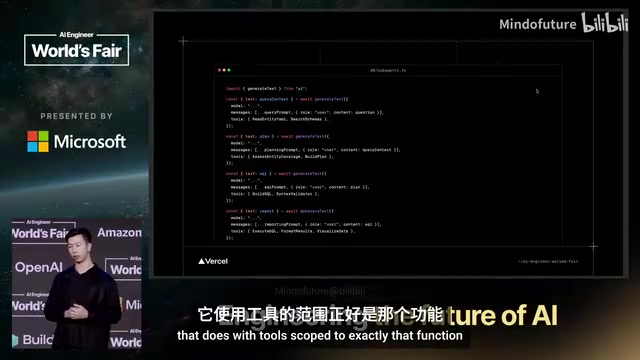
Vercel's Chief of Software Looks Back: The Evolution of Agent Building — From Multi-Agent Chains to File System Agents
Vercel's Chief of Software Andrew recaps the agent-building journey at AI Engineer: from giant prompts to multi-agent chains, monolithic memory, file system agents, and the open-source EVE framework.
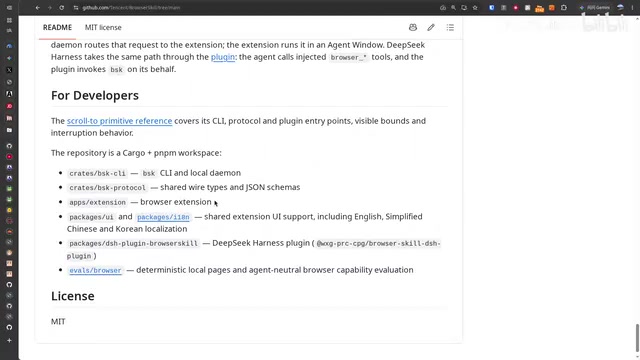
Tencent's Open-Source BSK in Action: Letting AI Take Over Your Already-Logged-In Browser
Tencent's open-source BSK (Browser Skill Kit) lets AI take over your real, logged-in Chrome via WebSocket. We break down the architecture, setup, and three key pitfalls from real-world testing.