Republican Candidate Bo French Sparks Backlash: How Social Media Amplifies Political Fringe Voices

Texas GOP candidate calls student photo "foreigners replacing Americans," sparking party pushback and algorithm debates.
Beau French, a Texas GOP candidate for Railroad Commissioner, posted a UT student group photo captioned "social media is revealing how many Americans are being replaced by foreigners," sparking outrage. The student is a native Texan, making the "foreigner" claim especially jarring. French has made similar remarks before. Karl Rove said he'll vote Democratic in the race, calling the party infiltrated by "bigots" and Nick Fuentes a "Nazi." The show also cited Lindsey Graham's "Hitler sucks" wing comment, satirizing the party's internal distancing. The article notes algorithms amplify emotional political speech, giving fringe voices outsized reach, while packaging prejudice as "questions" becomes routine.
A Photo Sparks a Firestorm
Beau French, a Republican candidate for Texas Railroad Commissioner, recently posted a group photo of University of Texas students on social media, captioned: "Social media is revealing how many Americans are being replaced by foreigners," adding that "this is more serious and more widespread than any of us imagined." According to the YouTube program Last Week Tonight, one of the students in the photo is a UT junior from Flower Mound. In an interview, she said: "Seeing someone running for a position of power say something like this—it made me feel like I never even thought this was possible."
The remark went viral because the students in the photo practically checked every box of Texas identity: wearing cowboy hats after a football game, throwing up the "Hook 'em Horns" sign. The host quipped that unless they lost at the Alamo, it's hard to imagine anyone being more "Texas" than this. Precisely because the image was so quintessentially Texan, French's leap to calling the students "foreigners" felt especially jarring.
A Pattern, Not an Isolated Incident
This was not the first time French made controversial remarks. He had previously stated publicly that "I will not rest until every Muslim leaves." This background makes the photo incident read as part of a sustained pattern of expression rather than a slip-up.
More notable is the pushback from within the Republican Party. According to the program, Karl Rove—who orchestrated George W. Bush's presidential campaigns—announced he will vote for the Democratic candidate in French's race this year, explaining: "My party is being infiltrated by people like Beau French." The program also mentioned that Nick Fuentes traveled to Dallas to meet with a group of Republican leaders, to which Rove commented: "This guy is going to go to prison. This guy is a Nazi."
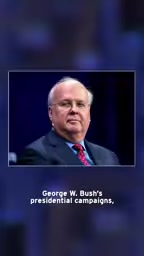
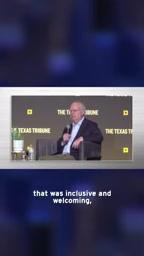
Rove further stated that the conservative party he helped build was supposed to be inclusive and open—"it didn't care who you were or where you came from; what mattered was your heart and your faith"—and that he did not want to see it "taken over by a bunch of bigots." The host joked that when you lose the moral high ground to Karl Rove—a man who once publicly said he was "proud of waterboarding"—things have clearly gone off the rails.
Karl Rove is a veteran American Republican political strategist who served as Senior Advisor to President George W. Bush and orchestrated Bush's 2000 and 2004 presidential campaigns. He is widely regarded as one of the key architects of the modern Republican campaign machine, known especially for precision mobilization of conservative voters and shaping national-level issues. Rove holds enormous symbolic standing within the party, so when he publicly announces he will cross party lines to vote for a Democratic candidate, the signal carries far more weight than an ordinary party member's statement. This also explains why the program framed it as a marker of internal Republican pushback against fringe rhetoric, rather than a simple difference of personal opinion.
The Awkwardness of Internal Distancing: Starting with "Hitler Sucks"
The program also cited the late Senator Lindsey Graham's remarks at a Republican Jewish Coalition event: "I want to be clear—I belong to the 'Hitler sucks' wing of the Republican Party. That's Hitler stuff." The host commented that when a party's members need to clarify they're "not the pro-Hitler wing," that itself says a lot about how serious the problem is.

The host capped off the analogy with a biting comparison: it's like seeing a sign in a cinnamon roll shop that says "This establishment believes in washing hands"—reassuring, yes, but it also makes you wonder more broadly about the shop's overall hygiene standards.
Nick Fuentes is an American far-right political commentator and livestreamer known for white nationalist, anti-immigrant, and antisemitic rhetoric, and has been banned from multiple mainstream social platforms. His "America First Political Action Conference" (AFPAC) has attracted some young conservatives but has been widely condemned by mainstream Republicans. The program's mention of his trip to Dallas to meet with a group of Republican leaders comes at a time of fierce internal Republican debate over how to handle extremist voices. Rove's remark that "this guy is going to go to prison. This guy is a Nazi" reflects the establishment's wariness of Fuentes's influence and highlights the tension between fringe figures and the party brand.
The Political Amplification Effect in the Social Media Era
The core tension in this episode is that social media's distribution mechanisms are changing both the visibility and the consequences of political speech. French's post gained rapid attention not because it represented mainstream Republican views, but because algorithms tend to amplify content with strong emotion and identity-based conflict.
The host also reminded viewers not to naively accept the narrative of "how inclusive the Republican Party used to be," and directly addressed Rove with "citation needed." This simultaneous scrutiny of both parties' narratives is precisely what points to the complexity of the problem: fringe voices being amplified is both a technological outcome of social media and a product of the soil of political polarization.
For the student, the impact of the photo was more direct. She had simply appeared in a celebratory group photo after a football game, yet because of the candidate's caption she was dragged into a national discussion. That sense of powerlessness at being "spoken for" may illustrate the predicament of contemporary public discourse better than any political commentary.
Algorithmic amplification effect refers to how social media platforms' content recommendation systems tend to prioritize posts that generate high engagement (such as anger, surprise, or agreement), allowing emotionally charged, identity-driven content to reach far beyond its actual representativeness. This mechanism is not neutral: it can cause fringe political speech to reach a national audience within a short time and create the illusion that "everyone is talking about it." In Bo French's case, the post went viral not because its views represent mainstream Republicans, but because the algorithm latched onto identity conflict and emotional tension. Understanding this mechanism helps distinguish "amplified voices" from "actual public opinion distribution" and is a key entry point for analyzing how platforms shape political narratives.
Conclusion: When "Asking Questions" Becomes a Weapon
The program noted a rhetorical pattern: "We're just asking questions about Jewish people." This strategy of packaging prejudice as "questions" is becoming a standard attention-grabbing tactic for some politicians. The Bo French photo incident is not an isolated farce; it reflects the increasingly tense relationship among party brands, social media algorithms, and voter sentiment. For those interested in the intersection of technology and public discourse, this case offers a window: how platform mechanisms shape political narratives, and whether institutional correction mechanisms remain effective when candidates actively embrace fringe rhetoric.
One-line Summary
A Texas Republican candidate called a student group photo "foreigners replacing Americans," triggering internal party pushback and debate over algorithmic amplification.
Paragraph Summary
Beau French, a Republican candidate for Texas Railroad Commissioner, posted a group photo of University of Texas students on social media with a caption saying "social media is revealing how many Americans are being replaced by foreigners," sparking a firestorm. The student in the photo is a native Texas junior, and her quintessentially Texan identity markers made the "foreigner" accusation especially jarring. The incident is not isolated: French had previously made controversial remarks such as "until every Muslim leaves." The program revealed that Karl Rove announced he will vote Democratic in the race, saying the Republican Party is being infiltrated by "bigots" and calling Nick Fuentes a "Nazi." It also cited Lindsey Graham's "Hitler sucks" wing remark, satirizing the party's awkward internal distancing. The article notes that social media algorithms amplify emotionally charged political speech, giving fringe voices reach beyond their representativeness, while the tactic of packaging prejudice as "questions" is becoming routine.
Related articles

Lightpanda: A Headless Browser Built for AI and Automation
Lightpanda is a headless browser built from scratch in Zig for AI and automation, with 37,852 GitHub stars. This analysis covers its technical approach, design choices, and use cases.
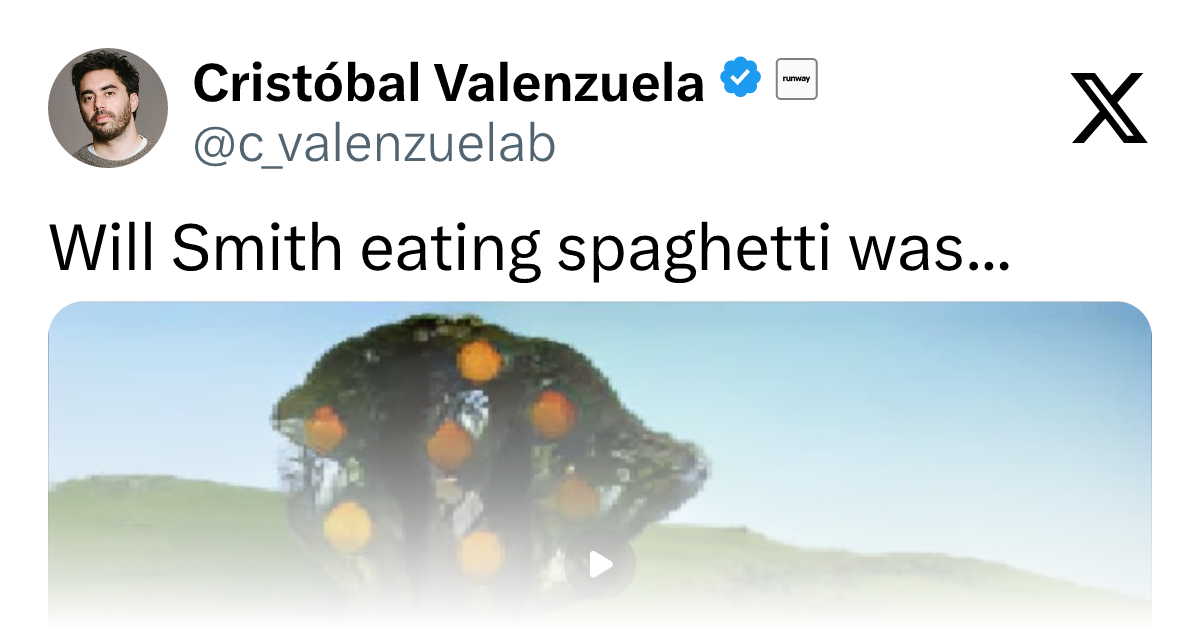
From Will Smith Eating Spaghetti to AI Short Films: The Astonishing Pace of AI Video Evolution
Tracing AI video's evolution: from Runway's 2019 short film *The Orange* to the Will Smith spaghetti video, a Twitter comparison reveals the astonishing pace of technological progress in just a few years.

Opus 4.6 Chat Experience: Why Do Older Models Feel More "Human"?
A Reddit user shares a late-night chat with Opus 4.6, noting older models feel more personable. We analyze the causes of model personality differences and the balance between capability and experience.