Rethinking Search in AI Coding Workflows: A Look at baoer_signal_grep 1.6.0
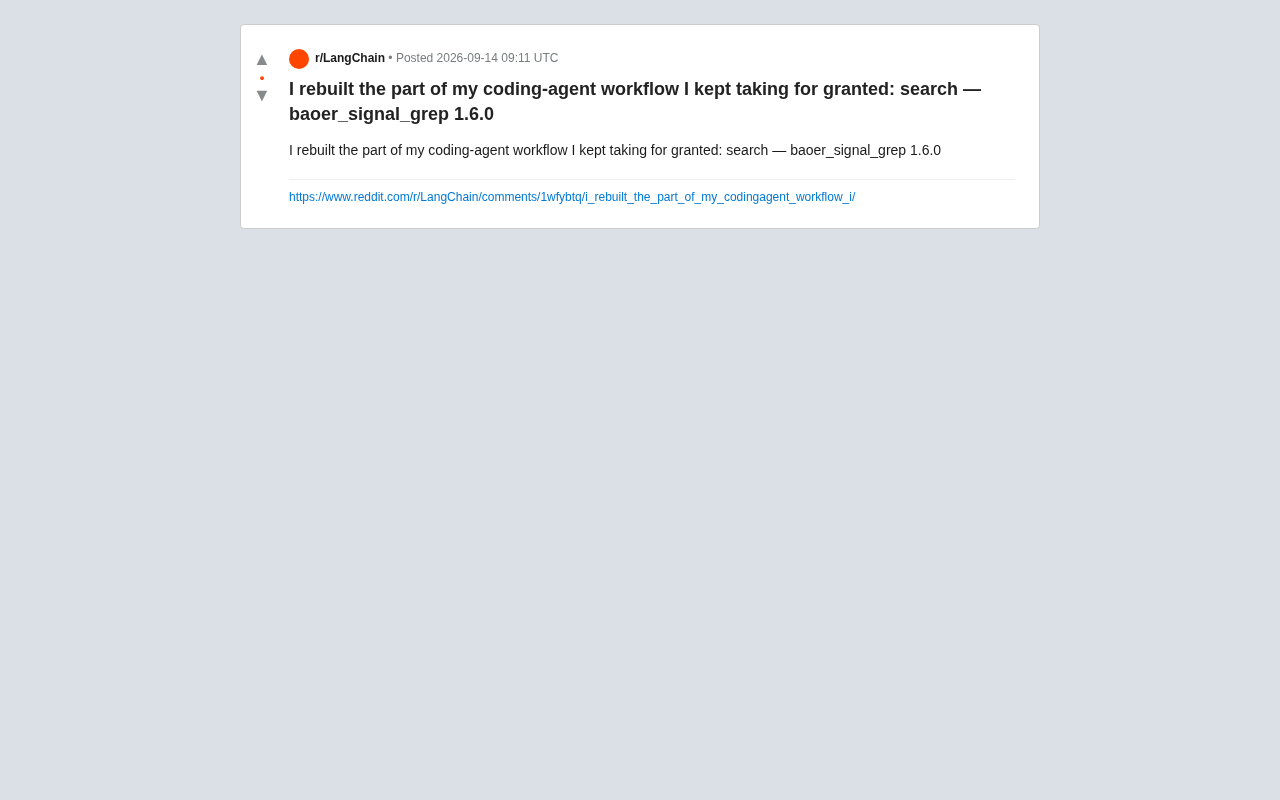
Developer releases baoer_signal_grep to fix the overlooked search bottleneck in AI coding agent workflows.
A developer shared on Reddit how they improved their AI coding agent workflow by refactoring its most taken-for-granted component — search — and releasing `baoer_signal_grep 1.6.0`. Traditional grep tools return text matches without ranking relevance, flooding agents with noisy context and degrading code generation quality. The tool introduces a "signal" filtering layer to surface high-value results, aligning with retrieval-augmented generation (RAG) principles. Now at version 1.6.0, it reflects iterative refinement driven by real-world use. The key takeaway: optimizing AI coding workflows means auditing every component, not just the obvious ones.
The Overlooked Search Step: The Hidden Bottleneck in AI Coding Workflows
As AI coding agents become increasingly mainstream, developers tend to focus on model capabilities, prompt engineering, or code generation quality — while easily overlooking a fundamental yet critical component: search. A developer recently shared their experience on Reddit about refactoring the part of their coding agent workflow they had always taken for granted — search — and released a tool called baoer_signal_grep, now at version 1.6.0.
Behind this seemingly simple topic lies a genuine pain point in AI-assisted programming. When a coding agent needs to locate relevant context within a large codebase, the quality of search directly determines the accuracy of subsequent generated output. Imprecise search means the agent receives noisy context, and the results suffer accordingly.
Why Search Deserves a Second Look
Traditional code search mostly relies on tools like grep, which are based on text pattern matching. They're fast and reliable, but face structural limitations when it comes to the needs of AI agents: grep can only return matching lines of text — it has no way of judging which results are truly valuable for the current task. For a human developer, a quick visual scan is enough to filter results. But for an automated coding agent, a flood of low-relevance matches dilutes the genuinely useful signal.
The word "signal" in the tool's name hints at its core philosophy: baoer_signal_grep builds on traditional grep by introducing the concept of "signal" — relevance ranking or filtering of search results, so the agent can prioritize high-value context. This aligns with the broader trend of applying retrieval-augmented approaches to code: search is no longer just about "finding" something, but "finding the most relevant" thing.
What Version 1.x Iteration Tells Us About Maturity
The tool has already reached version 1.6.0, which suggests the author didn't treat this as a one-off experiment — they've been iterating through real-world use. Continuous version updates typically mean the developer has been discovering and fixing issues through actual usage. Open-source tools like this, driven by genuine needs rather than grand design ambitions, often end up being more practical for everyday workflows.
For developers following AI programming toolchains, the value of projects like this lies in their focus on a niche component that mainstream tools have ignored. While the industry chases larger models and flashier features, building a solid foundation at the "search" layer can deliver surprisingly tangible workflow improvements.
Lessons for AI Coding Practice
This case offers a valuable perspective for coding agent users: don't only optimize the most visible parts. A complete AI coding workflow is a chain of components — context retrieval, code generation, validation, and iteration. A weak link at any stage becomes a bottleneck for the whole system. The author's act of "refactoring the part that was always taken for granted" is itself an engineering mindset worth emulating.
It's worth noting that due to limited information in the original source material, the specific implementation mechanisms, performance benchmarks, and usage details of baoer_signal_grep remain unclear. Interested developers can follow the project's open-source repository to learn more about its technical details and integration options.
Summary
The release of baoer_signal_grep 1.6.0 is a reminder that improvements in AI coding efficiency come not only from more powerful models, but also from continuously refining the foundational layers. Search, as the bridge between a codebase and a coding agent, is often underestimated. When building your own AI coding workflow, it's worth examining the components you've been taking for granted — they may well be your next breakthrough for efficiency gains.
Related articles
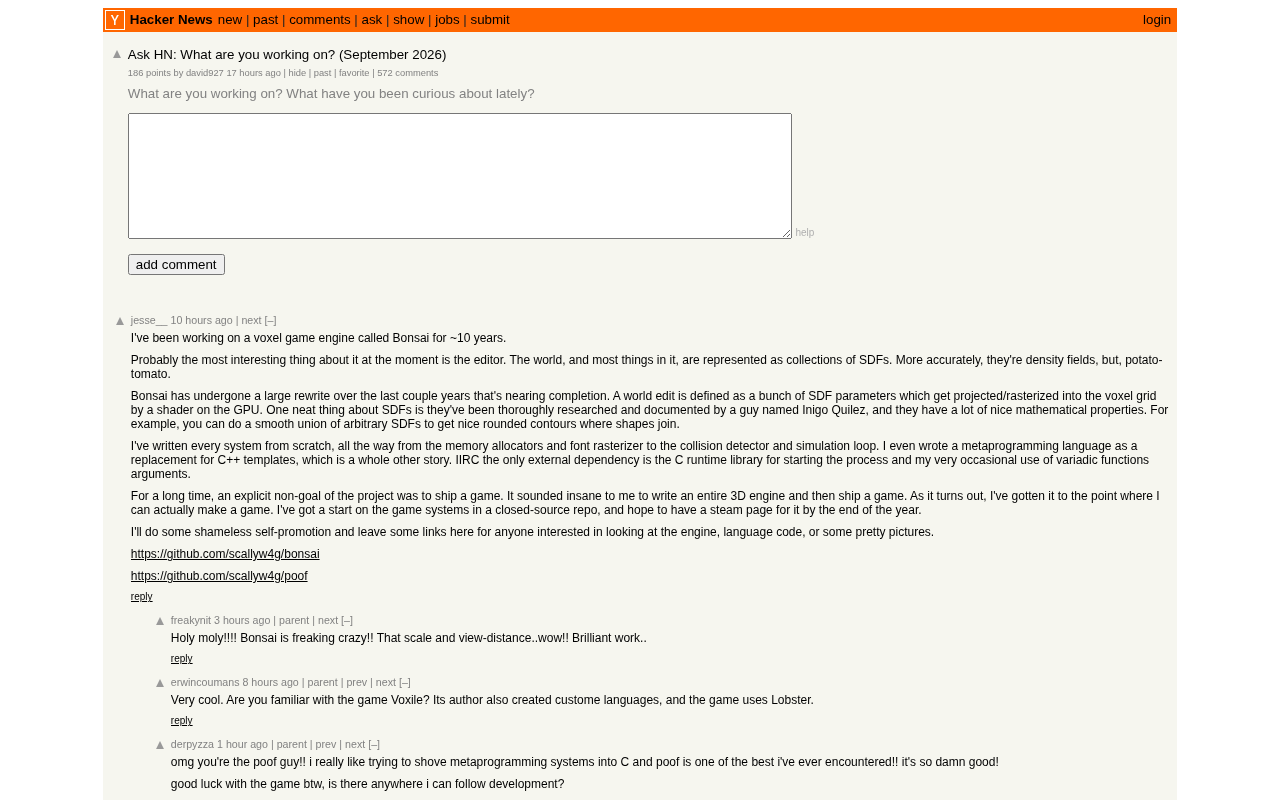
Hacker News Monthly 'What Are You Working On?' Thread: A Window Into the Developer Community
Hacker News's monthly 'What are you working on?' thread drew 180 upvotes and 558 comments. We explore why this community ritual persists and what it reveals about developer trends.

After Towns Cancel Flock Contracts: The Lingering Fallout of AI License Plate Recognition Cameras
Towns across the US are canceling Flock AI license plate camera contracts amid public backlash, but terminating contracts doesn't erase collected data. A look at the data retention risks that persist.
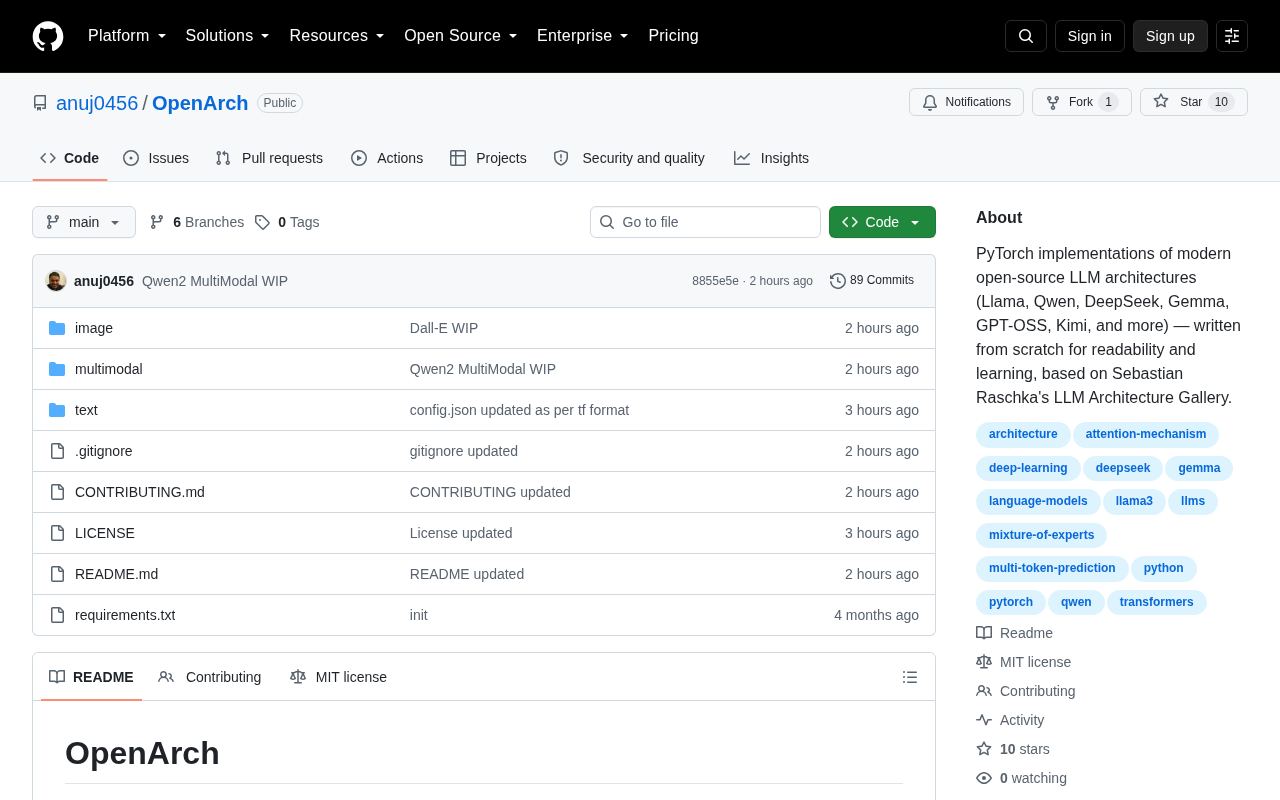
OpenArch: An Open-Source Project Reimplementing Modern LLM Architectures in PyTorch
OpenArch is an open-source PyTorch project reimplementing modern LLM architectures with a focus on clean, readable code. Learn about its value for learners and researchers.