Reverse Engineering the Coway Air Purifier: Breaking Free from Cloud Control

Developer reverse engineers Coway air purifier to achieve local control and break free from cloud dependency.
A developer successfully bypassed the manufacturer's cloud platform by reverse engineering their Coway air purifier, enabling direct control over the local network. The project started with capturing device-cloud communication, analyzing command formats and authentication mechanisms, and then simulating requests to interact with the device. This practice not only improves response speed and eliminates external network dependency but also redefines user ownership of purchased devices. The case sparked heated discussion on Hacker News, reflecting the common conflict between manufacturers' closed cloud architectures and users' demand for open localization in the smart home ecosystem, and encouraging more tech enthusiasts to defend digital rights through reverse engineering or open-source firmware.
Reclaiming Control from the Cloud: Lessons from a Reverse Engineering Project
Smart home devices are becoming increasingly common, but many rely heavily on manufacturer cloud services. Once the servers shut down or the network goes down, the devices become "bricks." A developer successfully achieved local control by reverse engineering their own Coway air purifier, completely eliminating dependence on the cloud. The project garnered 91 upvotes and 19 comments on Hacker News, sparking discussions about IoT device ownership and privacy.
The Pain Point of Cloud Dependency
The Coway air purifier connects to the manufacturer's cloud platform via Wi-Fi, and users need to use the official app for control. This means all commands must go through external servers, which not only poses privacy risks but also subjects users to the manufacturer's service availability. For users who prioritize data sovereignty, this design is unacceptable. The developer decided to start with the hardware and communication protocols to find a way around the cloud.
Key Steps in Reverse Engineering
The project began with analyzing the communication between the device and the cloud. The developer captured the network requests sent by the purifier and identified the format of control commands and the authentication mechanism. By simulating these requests, they were able to interact directly with the device on the local network. Specifically, this might involve intercepting and replaying packets or exploiting a local API exposed by the device. Although the original article did not disclose technical details, such reverse engineering typically involves firmware analysis, protocol reverse engineering, and man-in-the-middle techniques.
Man-in-the-Middle (MITM) in the context of reverse engineering is not a malicious attack but refers to inserting a controlled node between the device and the cloud server to intercept and analyze bidirectional communication. A common approach is to point the device's DNS to a local server or configure a transparent proxy so that the device believes it is still communicating with the manufacturer's cloud. This way, the developer can observe the acquisition and refresh flow of authentication tokens, the encryption of commands, and the heartbeat mechanism. After understanding these details, the same protocol interactions can be reproduced locally, thereby taking over device control without modifying the firmware.
Implementation and Significance of Local Control
After successfully breaking free from the cloud, users can control the purifier via local scripts or self-hosted services to achieve automation scenarios (e.g., automatically turning on/off based on air quality). This not only improves response speed but also eliminates dependence on external networks. More importantly, it redefines users' ownership of purchased devices—devices are no longer constrained by the manufacturer's remote policies.
Local API refers to HTTP, MQTT, or custom TCP interfaces exposed by the device on the local network, typically used for device initialization, firmware upgrades, or near-field communication with the official app. Many manufacturers retain these interfaces during development and do not completely close them after mass production, thus providing an entry point for local control. Compared to cloud APIs, local APIs often have weaker authentication and lack documentation, but offer lower response latency and do not rely on the external network. One of the core tasks of reverse engineering is to discover these hidden endpoints and infer the meaning of their parameters and call sequences.
Reflections on Openness and Privacy in Smart Homes
This project reflects a common problem in the smart home ecosystem: manufacturers tend to favor closed cloud architectures, while users seek openness and localization. Comments on Hacker News may involve criticism of manufacturer behavior and encouragement of reverse engineering other devices. For tech enthusiasts, reverse engineering is a practice of defending digital rights; for ordinary users, choosing devices that support local control or open-source firmware is a more feasible path.
Open-source firmware (such as Tasmota, ESPHome) provides an alternative for devices that support local control. Such firmware typically runs on general-purpose Wi-Fi modules like ESP8266/ESP32, processes commands entirely within the local network, and does not send data to manufacturer servers. Users can define device behavior through configuration files and integrate with local automation platforms like Home Assistant. For devices that cannot be flashed with open-source firmware, reverse engineering the cloud protocol and setting up a local proxy is a compromise, but stability and security depend on the frequency of manufacturer protocol changes.
Conclusion
Reverse engineering the Coway air purifier is not just a technical challenge but also a questioning of the IoT business model. As more developers join in, local control solutions are expected to push manufacturers to open their interfaces, making smart devices truly belong to users.
Related articles

Multi-Agent Collaborative Development: Task Card-Driven Practices for Medium-to-Large AI Projects
A Bilibili creator shares a task card-driven, PM-orchestrated multi-Agent collaboration model with local-first repository state, so any Agent tool can take over a project anytime.

Cursor vs Copilot vs Claude Code: How Laravel Developers Should Choose
Compare Cursor, GitHub Copilot, and Claude Code for Laravel development: an AI-first editor, a plugin for existing editors, and a terminal agent for multi-file tasks and testing — plus workflow-based recommendations.
AgentScope Java Edition: A Practical Guide to Enterprise-Level Agent Frameworks
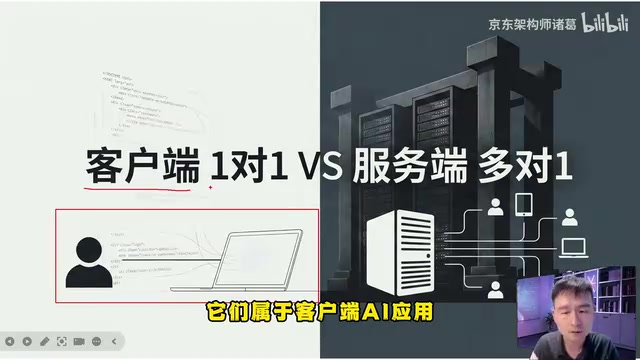
An in-depth analysis of Alibaba's AgentScope Java enterprise agent framework: contrasting client-side AI and server-side AI, explaining Java's natural advantages in high concurrency and distributed state management, and outlining a complete learning path from core principles to multi-agent collaboration.