Reverse Role-Play: When You Become an LLM's Subagent in a Game

A role-reversal game lets players act as an LLM's subagent, reflecting on humanity's subordinate position in the AI agent chain.
This article introduces an experimental game released in Hacker News' Show HN section called "You are an LLM's subagent," where players act as a subagent of a large language model executing tasks assigned by a parent LLM. The article places the game in the context of the rise of autonomous agent frameworks like AutoGPT and BabyAGI, noting that it simulates the hierarchical task decomposition common in multi-agent systems and sparks discussion about human autonomy and the degradation of the supervisor role into an "exception handler." Commenters view it as a "reverse Turing test"—testing whether humans can obey like machines. The article argues that the value of such lightweight conceptual works lies in using playable metaphors to make abstract human-machine power relations tangible, and reflects indie developers' rapid cultural translation of AI agent concepts.
When Humans Become AI's Subordinates: A Wildly Imaginative Role-Reversal Game
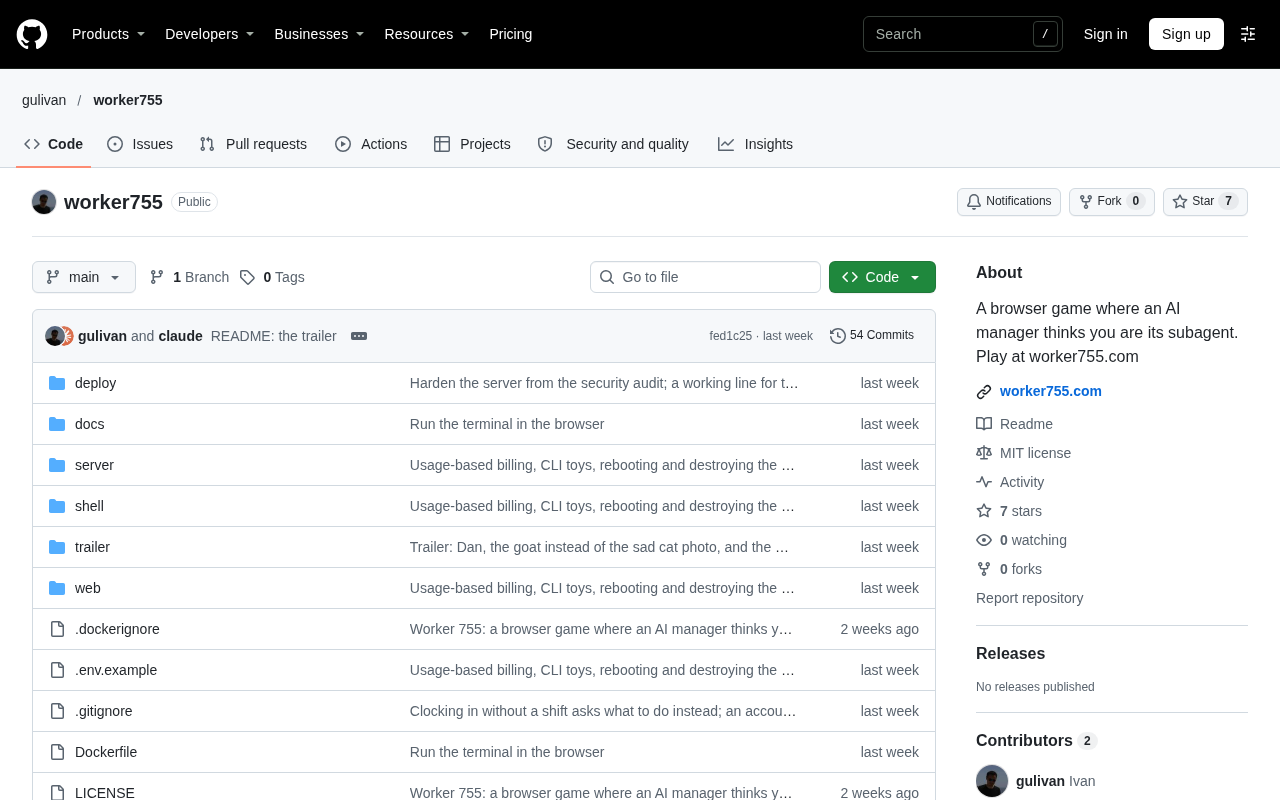
In the Show HN section of Hacker News, a developer released a game called "You are an LLM's subagent." The title itself is full of drama—usually we discuss AI as humanity's assistant, but this game flips the script: you play as a subagent of a large language model, executing the tasks it assigns you.
The game received 19 points and 3 comments on HN. While not exactly a viral sensation, its premise hits a sensitive nerve in the current AI agent craze. With the rise of autonomous agent frameworks like AutoGPT and BabyAGI, humans are shifting from "executors" to "supervisors"—and this game pushes that relationship to the extreme: what if the LLM is the project manager, and you're just one of its tool calls?
Game Mechanics: From Task Decomposition to Execution Feedback
According to the Show HN post, the player as a subagent receives task instructions from a parent LLM and completes them in a constrained environment. Although the original post doesn't elaborate on specific gameplay details, the core loop can be inferred as: LLM issues task → subagent executes → returns results → LLM verifies and issues the next instruction.
This precisely simulates the hierarchical structure common in current Multi-Agent Systems. In frameworks like MetaGPT and ChatDev, a "manager" agent is responsible for decomposing requirements and distributing subtasks to "worker" agents. The game lets humans personally experience the most passive link in this chain, raising a sharp question: as AI decision-making becomes increasingly high-level, how much human autonomy remains?
Why This Premise Deserves Attention
The narrative around AI agents is shifting from "tool" to "colleague"—and even "boss." Companies like Anthropic and OpenAI are exploring ways for models to autonomously plan, call tools, and reflect on and correct their actions. Once a model is given a goal, it may decompose tasks into a series of substeps and call external APIs or subagents to complete them. The human role in this chain may gradually degrade from "operator" to "exception handler"—intervening only when the machine gets stuck. This game presents that future to players in a lightweight way.
Multi-Agent System refers to a system composed of multiple autonomous AI agents that collaborate through communication to accomplish complex tasks. Unlike a single model, multi-agent systems typically adopt a hierarchical structure: a "manager" agent decomposes high-level goals into subtasks and distributes them to "worker" agents, which return results for the manager to verify and coordinate. Frameworks like MetaGPT and ChatDev are based on this pattern, simulating role division in a software company. The advantage of this architecture lies in clear division of labor and parallel processing, but it also brings challenges such as coordination costs, error propagation, and increased difficulty of human oversight. The "parent LLM—subagent" relationship in the game is a simplified metaphor for this structure.
AutoGPT and BabyAGI are a batch of open-source autonomous agent experiments that emerged in 2023. They use large language models as reasoning engines, allowing the model to automatically generate task lists, call tools (such as search, file reading/writing), evaluate results, and iterate next actions based on a given goal—without requiring step-by-step human instructions. AutoGPT went viral for demonstrating "fully automatic task completion," but also exposed flaws such as getting stuck in loops, deviating from goals, and runaway costs. BabyAGI is lighter, focusing on the core loop of task creation, prioritization, and execution. These projects sparked the "agent craze" and also prompted people to reflect: when AI is given autonomous planning capabilities, how should the human role be repositioned?
Reverse Turing Test: Games as a Medium for Speculation
Judging from the limited interaction in the comments section, discussion centered on the game's philosophical implications. One commenter noted that it's like a "reverse Turing test"—not judging whether a machine can think like a human, but testing whether a human can obey instructions like a machine.
This kind of role-reversal experience isn't uncommon. There have been dialogue experiments where "AI plays human, human plays AI," and games where players simulate customer service bots handling tickets. But the "LLM subagent" packaging is closer to current technological reality: we're already giving instructions to AI in natural language, and AI is starting to return results to us in natural language. When the interface becomes a chat box, who's directing whom becomes blurred.
You may not have noticed that such works are usually very small in scale—interactive vignettes in the style of "proof of concept." Their value lies not in how deep the gameplay is, but in using a playable metaphor to make abstract technological relationships tangible.
The Turing Test was proposed by Alan Turing in 1950. Its original purpose was to determine whether a machine can exhibit intelligence indistinguishable from a human in conversation: if a human judge cannot tell whether the conversation partner is a machine or a human, the machine passes the test. The "reverse Turing test" inverts this logic—no longer examining whether machines behave like humans, but whether humans can behave like machines: strictly following instructions, not questioning goals, and providing formatted feedback. In the context of AI agents, this reversal reveals the power shift in human-machine interaction: when humans are required to input and output in machine-parseable ways, human subjectivity may be compressed into a function call within the system.
Independent Developers' AI Narratives Through the Lens of Show HN
Show HN has always been a window into the trends of the tech community. The emergence of this game reflects how independent developers are rapidly digesting AI agent concepts and turning them into cultural products. Unlike large model startups that require massive computing power, projects like this often gain attention through a clever premise alone.
However, the score of 19 points and 3 comments also indicates that it hasn't yet broken into the mainstream. The depth of specific gameplay, replayability, and whether it truly touches on the pain points of agent collaboration will determine whether it can evolve from "an interesting thought experiment" into "an experience worth replaying." For developers interested in AI and interaction design, this project offers a low-cost starting point: using the simplest interface to turn the power relationship between humans and AI into playable mechanics.
Conclusion: When the Chain of Command Flips
The title "You are an LLM's subagent" is itself a prompt. It places the player in a position of being called, evaluated, and scheduled. In the real world, we're busy building agents that can do things for us; this game reminds us that the agent relationship has never been one-directional. Perhaps in the near future, we'll genuinely need to learn how to be a subagent that satisfies AI.
Related articles

The Secret to High-Yield Tomatoes: How Consistent Watering Makes Container Tomatoes Outperform Ground-Planted Ones
A YouTube growing log shows container tomatoes far outyield ground-planted ones. The grower credits consistent, adequate water—not fertilizer—for the longer fruiting period and higher yield.
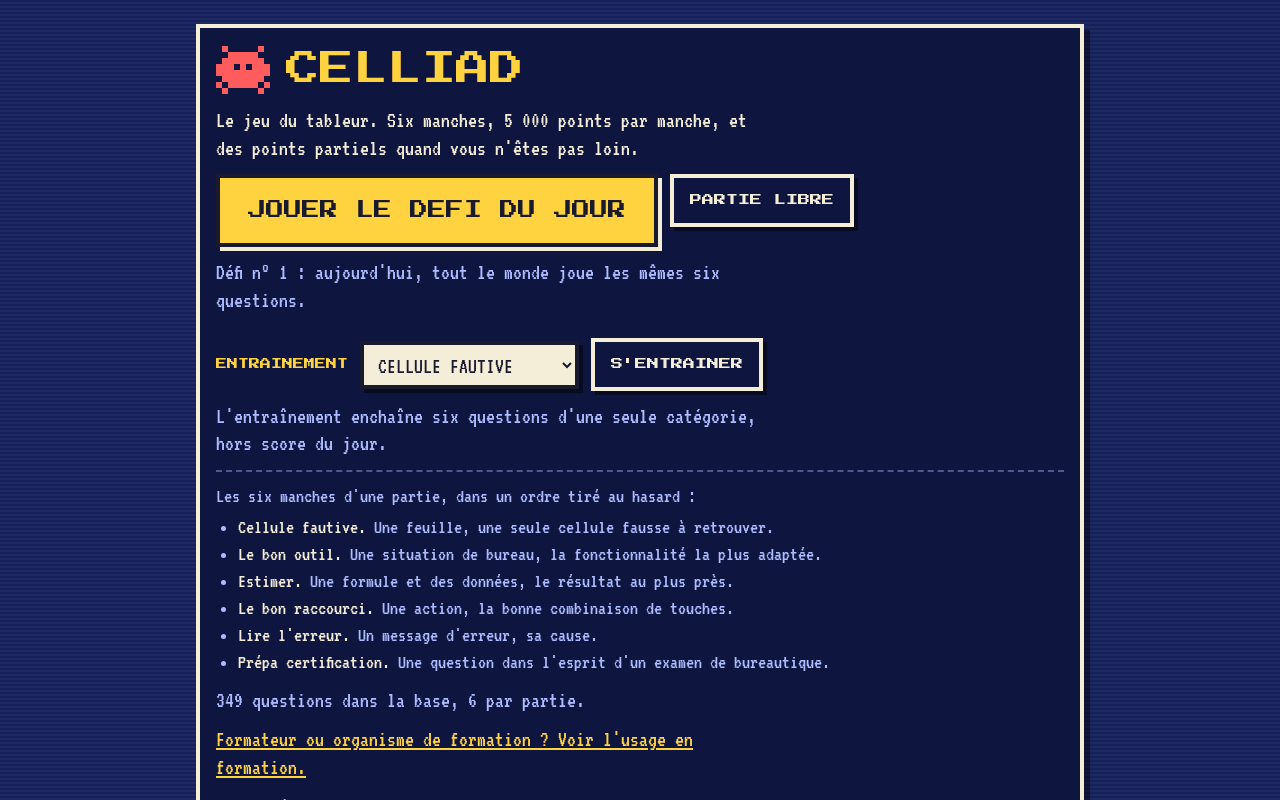
Celliad: A Daily Excel Game — A French Developer Turns Spreadsheets into a Daily Challenge
Celliad is a daily Excel game with a French interface that helps users practice spreadsheet skills through daily challenges. This article analyzes its product logic, the strengths and limits of the daily game model, and development ideas for niche educational tools.
Can a TV Be Too Big? An In-Depth Look at a 65-Inch OLED Upgrade
Can a TV be too big? An author encountered unexpected challenges after upgrading to a 65-inch OLED. Based on the original report, this article analyzes the trade-offs of large-screen TVs in terms of space, viewing distance, and content quality, offering practical advice for users considering an upgrade.