The Secret to High-Yield Tomatoes: How Consistent Watering Makes Container Tomatoes Outperform Ground-Planted Ones

High-yield container tomatoes come from consistent, adequate water—not fertilizer.
A grower shows a container tomato far outyielding ground-planted ones in the main garden, surprising even his family. He credits consistent, adequate water—not too much, not too little. The article explains that tomatoes are sensitive to moisture swings, and steady watering prevents poor fruit set and uneven development, while container controllability is underestimated. But it's a single-plant case without container size, substrate, or watering frequency—worth borrowing but needs verification. The core advice: check water management first, not fertilizer.
A Tomato Container That Surprised Even a Seasoned Grower
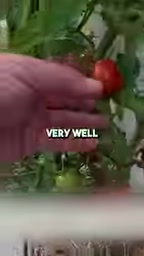
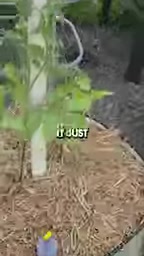
Three weeks after shooting the first video, this grower returns to the camera in the persona of his "future self" to show the tomato plant growing in a container. The plant in the footage is still thriving—even as the weather heats up, the branches are still loaded with developing fruit.
What surprised him most wasn't that the plant was alive, but its yield. In his own words, this tomato plant "far exceeded" the performance of the ordinary tomatoes in the main garden. Even his wife Nina—who has been helping harvest these tomatoes—couldn't help but ask: what on earth is going on with that tomato in the container? She'd never seen a single tomato plant set so much fruit.
The Key to High Yield Isn't Fertilizer—It's Water
Faced with such performance, the grower's explanation is quite plain: this tomato plant keeps setting fruit because it "consistently receives the right amount of water—not too much, not too little." It's this steady water supply that's supporting the plant and producing a longer fruiting period.
This claim is worth pondering. Ground-planted tomato roots have to seek out water on their own, and uneven rainfall easily leads to dramatic wet-dry swings; whereas container growing, if managed properly, can actually keep moisture within a relatively constant range. For a crop like tomatoes that suffers from both waterlogging and drought, consistency is often more important than "more."
Why "Consistent Watering" Is More Valuable Than "Watering More"
Moisture Fluctuations Disrupt Continuous Fruit Development
Tomatoes are highly sensitive to moisture changes during flowering, fruit set, and fruit enlargement. When the soil swings between dry and wet, the plant's growth rhythm is disrupted, leading to poor fruit set and uneven fruit development. Although a container environment has limited buffering capacity, as long as the supply rhythm is steady, the roots can continuously access available water and allocate more energy to fruiting.
There's a physiological mechanism behind tomatoes' sensitivity to moisture fluctuations. When soil moisture changes dramatically, root water uptake rates fluctuate accordingly, causing unstable cell turgor pressure in the fruit. During the fruit enlargement stage, alternating wet and dry conditions easily cause fruit cracking, because the flesh cells rapidly absorb water and expand while the skin growth can't keep up. In addition, water stress prompts the plant to synthesize abscisic acid (ABA), causing stomatal closure, reduced photosynthetic efficiency, and even flower and fruit drop. A steady water supply, by contrast, maintains continuous nutrient uptake by the roots and ensures even distribution of photosynthates to the fruit, thereby reducing physiological disorders and extending the fruiting period.
The "Controllability" of Container Growing Is Underestimated
Many people treat container growing as a fallback choice, but judging from this footage, containers actually become an advantage: water volume can be precisely controlled—no waterlogging from a heavy rain, and no complete drying out from days of blazing sun. This controllability is exactly what's difficult to achieve with ground planting in the main garden.

Container substrates and ground soil differ significantly in water-holding characteristics. Container substrates are typically based on peat, coco coir, perlite, etc., with water-holding capacity and aeration that can be adjusted artificially, but with limited buffering capacity and fast evaporation, requiring more frequent monitoring and replenishment. Although ground soil has strong buffering capacity, it is heavily influenced by rainfall and groundwater and is difficult to regulate precisely. The advantage of container growing is that precise irrigation can be targeted to the tomato root distribution (mainly concentrated in the top 20–30 cm), avoiding deep percolation and nutrient loss, while adjusting substrate composition and mulching to slow moisture fluctuations.
From a Single Case to a Method: Can This Experience Be Replicated?
It should be noted that this footage only shows the performance of a single tomato plant and doesn't provide container size, substrate recipe, or specific watering frequency, so it cannot be treated as a complete growing plan. But the direction it points to is clear: if you want a longer fruiting period and more stable yields from your tomatoes, check your water management first rather than rushing to add fertilizer.
For home growers, a useful approach to borrow is: replace "how often do I water" with "is the soil moisture staying within a stable range," and observe whether the plant shows signs of alternating wet and dry conditions. The performance of that tomato plant in the footage at least shows that when water supply is steady, the yield potential of a single tomato plant may far exceed expectations.
Tomato yield potential is jointly influenced by genetics, environment, and cultivation management. Commercial greenhouse tomatoes, through precise integrated water-fertilizer management, environmental control, and pruning management, can achieve yields far higher than open-field cultivation. In home growing, container size, substrate aeration, light conditions, variety selection (such as indeterminate or determinate types), and pest and disease management all significantly affect final output. Consistent watering is one of the foundational conditions for realizing yield potential, but it is not the only factor. When replicating this experience, it's advisable to record container volume, substrate formula, watering frequency, and plant growth indicators so you can optimize gradually.
One-line Summary
High-yield container tomatoes stem from consistent, adequate water supply—not fertilizer.
Paragraph Summary
A grower shows that a container-grown tomato far outyields ground-planted ones in the main garden—even surprising his family. He attributes the high yield to consistently receiving the right amount of water—not too much, not too little. The article analyzes that tomatoes are sensitive to moisture fluctuations, and steady watering can prevent poor fruit set and uneven fruit development, while the controllability of container growing is underestimated. However, the footage is only a single-plant case without container size, substrate recipe, or watering frequency, so the method is worth borrowing but needs self-verification. The core advice is to check water management first rather than adding fertilizer.
Related articles

Beagle Brigade: From Fruit to GHB — Guarding the Border
How does the Beagle Brigade guard U.S. borders? Based on To Catch A Smuggler, this article shows detector dogs finding fruit and meat, and agencies tracking GHB and cocaine smuggling.

Reverse Role-Play: When You Become an LLM's Subagent in a Game
A reverse role-play game appears on Hacker News where players act as an LLM's subagent. This article analyzes its game mechanics, the philosophical implications amid the AI agent boom, and how indie developers use lightweight interaction to explore human-machine power relations.

Celliad: A Daily Excel Game — A French Developer Turns Spreadsheets into a Daily Challenge
Celliad is a daily Excel game with a French interface that helps users practice spreadsheet skills through daily challenges. This article analyzes its product logic, the strengths and limits of the daily game model, and development ideas for niche educational tools.