Rhem Labs Desktop Robot: A 'Second Pair of Eyes' Watching Over Your Parents' Health at Home

Rhem is a desktop robot that monitors seniors' daily routines to enable early health warnings for aging-in-place care.
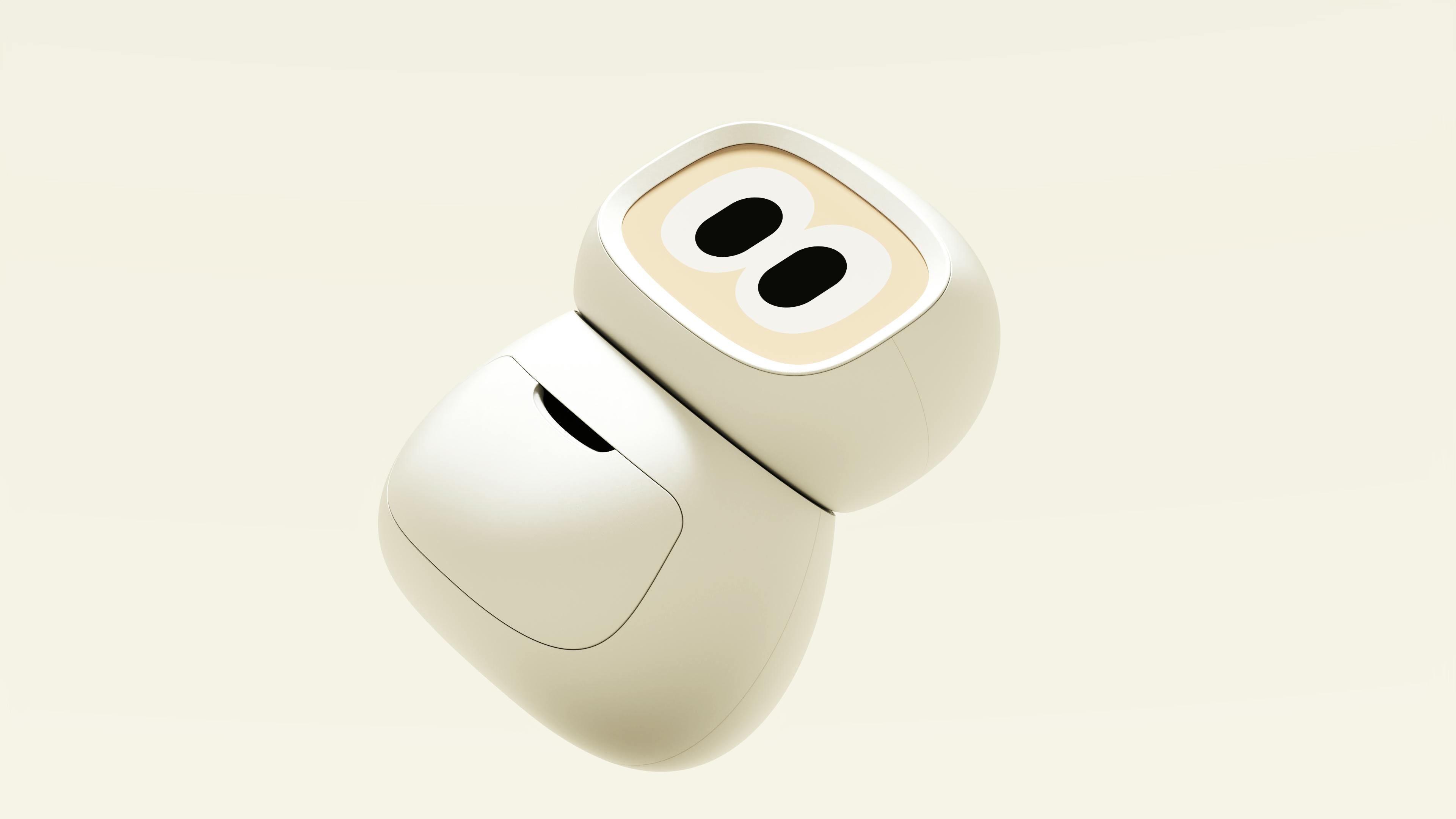
Rhem Labs' tabletop health assistant robot, Rhem, addresses the long-overlooked 'visibility problem' in aging-in-place care — subtle health changes in seniors can quietly accumulate for weeks or months before a crisis emerges. By observing daily routines over time, Rhem aims to catch early warning signals and shift the caregiving model from reactive response to proactive intervention. It balances the need for remote peace of mind among adult children with seniors' desire for independent living. The product received 71 upvotes on Product Hunt, but privacy protection, detection accuracy, and senior acceptance remain significant hurdles, and key technical details and pricing have yet to be disclosed.
The 'Visibility Problem' in Aging in Place
As global populations age, more and more seniors are choosing to spend their later years at home rather than moving into care facilities. But this "aging in place" model comes with a long-overlooked pain point: subtle changes in health can be nearly impossible to catch in time.
Rhem Labs raised a sharp observation on Product Hunt — aging in place has a "visibility problem." Small shifts in daily routines and physical function can quietly accumulate over weeks or even months. By the time obvious symptoms appear, a serious health event has often already occurred. For adult children scattered across different cities who can't be there every day, this information blind spot is a constant source of anxiety.
What Is Rhem: A Desktop Robot That "Watches"
Rhem is a tabletop health assistant robot created by founder Jacob Shen. Its core positioning isn't as a cold surveillance device, but as a tool that helps families "see changes earlier."
The product's design logic operates on two levels:
- For family members, Rhem acts as an "extra pair of eyes," continuously sensing unusual signals in a senior's daily state and routine — so adult children can notice something is off while it's still in early stages, rather than waiting for a crisis to unfold.
- For the seniors themselves, Rhem provides the companionship and daily support needed to maintain independent living, helping them stay in their own homes longer.
According to the official description, Rhem was designed primarily for aging parents, but its use case isn't limited to them — anyone who wants a "daily helper" and "status monitor" at home can use it.
Shifting from "Reactive Response" to "Early Warning"
What makes Rhem genuinely worth paying attention to is its attempt to change the underlying logic of home health care.
Traditional home monitoring has largely been reactive — call for help after a fall, go to the hospital when things get serious. Rhem emphasizes trend awareness and early intervention: by observing a senior's routine over time, it picks up on changes that seem trivial in isolation but carry significant predictive value when accumulated. This shift from "reacting after the fact" to "warning in advance" addresses one of the deepest anxieties around aging in place.
This approach aligns with the broader trend in digital health — healthcare management is moving from hospital settings into the home, and from treatment-focused to prevention-focused. As a form factor, a desktop robot occupies a subtle sweet spot: it avoids the compliance burden of wearables while offering more interactivity and companionship than a surveillance camera.
This prevention-oriented logic also has a foundation in medical research. Geriatrics has long focused on "early signals of functional decline," and studies show that subtle indicators — slowing gait speed, changes in sleep rhythms, reduced daily activity levels — can appear weeks or even months before a patient reports symptoms. By passively and continuously collecting behavioral data and establishing a personal baseline, algorithms can identify deviations from normal patterns. This approach, known as Passive Behavioral Monitoring, has accumulated meaningful academic traction in early dementia screening and fall-risk prediction. Rhem's described "trend awareness" aligns closely with this research direction — though the engineering and clinical validation hurdles between an academic prototype and a reliable consumer product are considerable.
Market Reception and Practical Considerations
On Product Hunt, Rhem Labs received 71 upvotes and ranked 19th (across the Health & Fitness, Robots, and Hardware categories), indicating a degree of community interest — though engagement is still early-stage, with only one comment posted.
As a hardware product, Rhem also faces some very real challenges:
- Privacy boundaries: Continuously "watching" a senior's daily life raises unavoidable ethical questions about where health monitoring ends and privacy invasion begins.
- Accuracy and false positives: The product's ability to reliably detect meaningful health changes is central to its value proposition — too many false alarms will quickly erode family trust.
- User acceptance: Some seniors may feel uncomfortable having a robot that "watches them" in their home. The warmth of the product's interaction design will be critical.
Publicly available product details remain limited — the specific sensing technology, data processing methods, and pricing have not been disclosed, all of which will be key to evaluating its real-world viability.
The home health hardware space is far from empty, and Rhem enters a competitive landscape where the market has been somewhat educated but core pain points remain unsolved. Amazon's Echo lineup has introduced fall detection features; Best Buy's Lively (formerly GreatCall) offers wearable emergency call devices; and startups like CaringBots are exploring companion robot form factors focused on dementia care. Compared to wearables, desktop robots have the advantage of not requiring seniors to actively wear anything — improving compliance. The downside is that sensing range is limited by physical placement, and hardware costs are harder to control. Finding a differentiated value anchor among these existing solutions will be the central commercial challenge for Rhem.
Conclusion
Rhem Labs represents a clear and meaningful direction: using technology to fill the information blind spots in aging-in-place care, giving distant adult children greater peace of mind and giving seniors greater independence. The "visibility problem" it targets is a genuine pain point for countless families in an aging society.
That said, the journey from an appealing concept to a truly trusted member of the household will require Rhem to deliver convincing answers on sensing accuracy, privacy protection, and user acceptance. For professionals and families tracking the senior tech and health hardware space, this is a product well worth following.
Related articles

uGAP: An AI Platform Unifying 100+ African Geospatial Datasets
uGAP is an African geospatial AI platform by a University of Cape Town team, unifying 120+ African datasets with a Python SDK for discovery, processing, and model training, already used in cyclone flood mapping.

Cursor Can Now Control Your Computer: AI Agents Can Drive Desktop Apps for Testing
Cursor adds desktop control: AI agents can drive desktop apps like the iOS Simulator to test their own features. We analyze the impact on dev workflows, possible technical approaches, and reliability concerns.

Vibecoding a Custom Inference Engine: High Hopes, Harsh Reality
A Reddit developer shares the real experience of vibecoding a custom inference engine: running GGUF Q4 models in the browser with WebGL2 and GLSL, only to fall into tokenizer debugging hell. This article analyzes the engineering challenges of browser-side LLM inference and why cloning llama.cpp is the more rational choice.