Robots Replacing Humans: Capable of 74% of Jobs, Why Are Only 0.3% Automated?

Anthropic estimates robots can perform 74% of physical work, but only 0.3% is economically feasible.
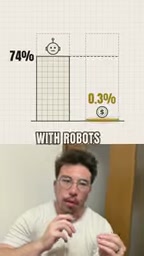
Using the Claude model, Anthropic estimated that existing robotics technology can perform 74% of physical work in the US, but across all jobs, only 0.3% are cheaper on paper to replace human labor with robots. The huge gap reveals the core reason robots have been slow to spread: a gulf between technical and economic feasibility. Buying the machine is only part of the total cost; installation, maintenance, electricity, workplace renovation, and all-day reliability all drive up actual costs. Social media demonstrations show the upper limit of capability, while commercial deployment depends on the bill and stability. For physical workers, true replacement happens when robots can reliably complete an entire shift and employers actually save money—a day that has not yet arrived for most jobs.
We constantly see videos of robots smoothly completing tasks, as if replacing human workers is just around the corner. But the reality is that robots have not entered factories, warehouses, and restaurants at scale. Where is the problem? An estimate from Anthropic offers two intriguing numbers: robots are already capable of performing 74% of physical work in the United States—at least under certain conditions; but across all jobs, only 0.3% of work is currently cheaper to do with robots.
74% vs 0.3%: The Gap Behind Two Numbers
According to analysis by a YouTube channel, Anthropic researchers conducted this estimate using the Claude model. They did not actually install robots in every workplace to check the bills, so these numbers are the result of model inference and will change as costs change—and costs are very likely changing.
The 74% figure measures "technical feasibility": the proportion of tasks that existing robotics technology can perform under the right conditions. The 0.3% figure measures "economic feasibility": the proportion of all jobs where replacing human labor with robots is cheaper on paper. The huge gap between the two is the core reason robots have been slow to spread.

Buying the Machine Is Only the First Line of the Bill
Many people assume the cost of automation is just the purchase price of the machine itself. In reality, buying the equipment is only part of the total cost. Installation, maintenance, electricity consumption, and sometimes redesigning the entire workplace around the robot—all of these must be factored in.
According to the video analysis, a impressive video of a robot completing a task does not tell you whether anyone can afford to "hire" it. The video shows the upper limit of capability, while the bill determines the commercial lower limit.
Why Hidden Costs Are Hard to Amortize
For physical work, there is an even more practical problem: can the robot reliably complete an entire shift? There is a huge engineering gap between a single demonstration and stable all-day operation. Failure rates, maintenance downtime, and exception-handling capability all drive up the actual cost of use. When these factors stack up, a replacement solution that originally looked cost-effective may become uneconomical.

Total Cost of Ownership (TCO) is a financial framework commonly used when evaluating automation investments. It requires companies to consider all expenses over the equipment's entire lifecycle, rather than just the purchase price. Typical components include: capital expenditure (the robot itself, end effectors, safety fencing, sensors), installation and integration costs, software licensing and upgrades, energy consumption, preventive maintenance and spare parts, operator training, and lost capacity due to downtime. TCO directly determines the payback period, and the payback period is the core basis on which companies judge whether "using a robot is cheaper than using a person." Many automation projects perform brilliantly in the demonstration stage but fail in TCO calculations, often because integration and operations costs far exceed expectations.
Payback Period refers to the time required for the cumulative labor cost savings from automation equipment to offset the initial investment. Companies typically require a payback period of within 1 to 3 years before considering deployment, while robot projects with complex integration often see payback periods stretched beyond 5 years, making the "cheaper" claim on paper difficult to sustain.
The Gap Between Video Demonstrations and Real Deployments
Social media is full of short videos of robots folding clothes, moving boxes, and making coffee. This content easily creates the illusion that "replacement has already happened." But demonstration environments are usually carefully designed, with single tasks, minimal distractions, and staff on standby. Real workplaces are full of variables: irregularly placed items, frequent task switching, and constant unexpected situations.
It is worth noting that the researchers did not pretend to have checked every bill. Their estimate provides directional reference, not a precise deployment roadmap.

MTBF (Mean Time Between Failures) and MTTR (Mean Time To Repair) are two key metrics for measuring robot reliability. The longer the MTBF and the shorter the MTTR, the higher the equipment's availability during a full shift. Demonstration videos usually show only the one successful attempt, while real deployment requires the robot to maintain a stable success rate (for example, above 99%) over thousands of hours of continuous operation. In addition, exception-handling capability—whether the robot can recover autonomously when it encounters grasp failures, misplaced items, or sudden obstacles—is a major shortcoming of current technology, often requiring manual intervention and thereby diluting the cost advantage of automation.
The Real Question for Physical Workers
If you work with your hands, the key question missing from those robot videos is: can it reliably complete your entire shift? Can your boss actually save money by replacing you?
These two questions correspond to reliability and economics, respectively, and most robot demonstrations currently answer only half of the first question—completing a single task under ideal conditions. True replacement happens when both answers are "yes." The gap from 74% to 0.3% shows that for the vast majority of jobs, that moment has not yet arrived.
This also explains why progress in robotics looks fast, but actual changes in the job market are slow. The gap between technical feasibility and economic feasibility is filled by installation, maintenance, electricity, workplace renovation, and reliability. Crossing this gap requires not only smarter robots, but also lower total cost of ownership and higher operational stability.
One-line Summary
Anthropic estimates robots can perform 74% of physical work, but only 0.3% is economically feasible.
Paragraph Summary
Using the Claude model, Anthropic estimated that existing robotics technology can perform 74% of physical work in the United States, but across all jobs, only 0.3% are cheaper on paper to replace human labor with robots. The huge gap between the two numbers reveals the core reason robots have been slow to spread: there is a gulf between technical feasibility and economic feasibility. Buying the machine is only part of the total cost; installation, maintenance, electricity, workplace renovation, and the reliability of all-day operation all drive up the actual cost of use. Impressive demonstrations on social media show the upper limit of capability, while commercial deployment depends on the bill and stability. For physical workers, true replacement happens when robots can reliably complete an entire shift and employers can actually save money—and that day has not yet arrived for the vast majority of jobs.
Related articles

Open-Source AI Assistant Showdown: Claude Code, OpenClaw, Hermes, and Grok Bot Tested
A power user tests Claude Code, OpenClaw, Hermes, and Grok Bot, comparing open-source customizability vs. managed convenience, plus token costs, stability, and privacy trade-offs.
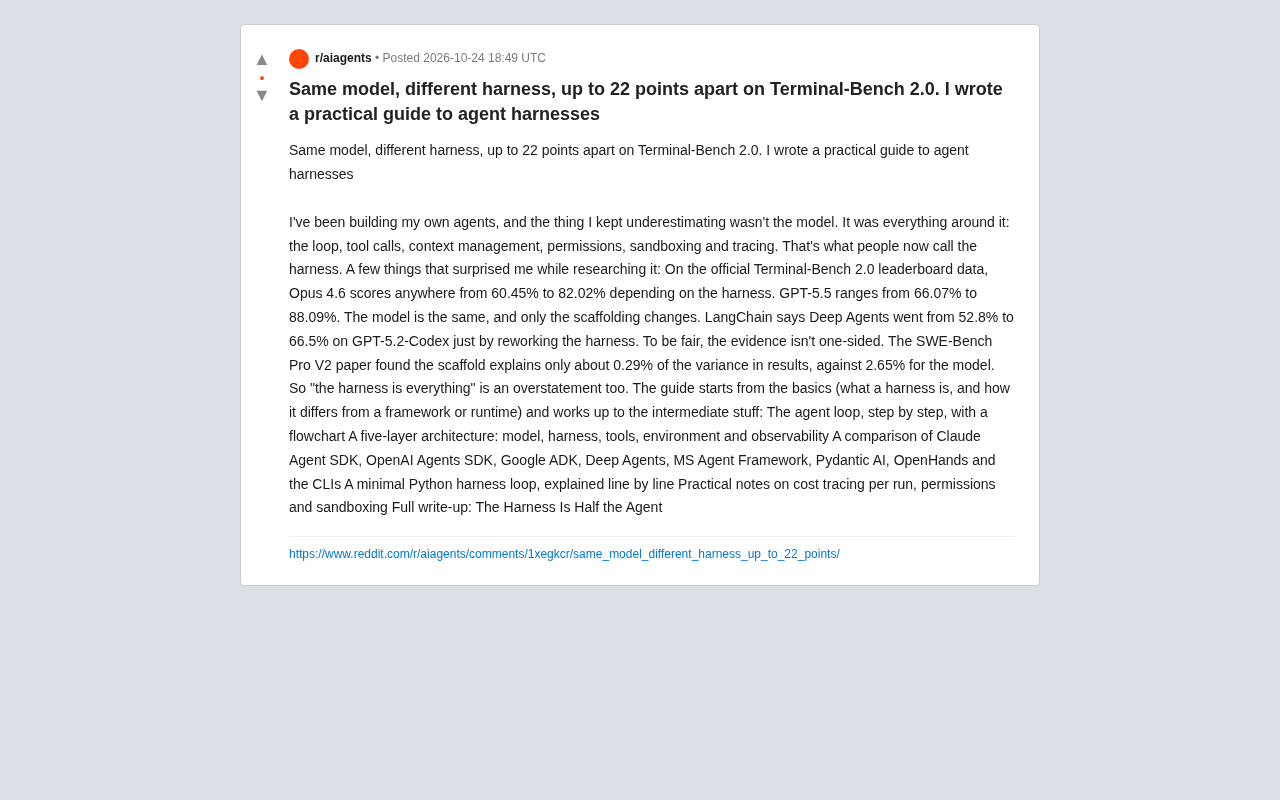
Same Model, 22-Point Score Gap: Agent Harness Is the Key Variable
Same model, different harness: Terminal-Bench 2.0 scores differ by 22 points—Opus 4.6 from 60.45% to 82.02%, GPT-5.5 from 66.07% to 88.09%. A look at agent harness architecture, SDKs, and a minimal Python loop.

Pennsylvania Signs AI Advertising Disclosure Bill, Requiring Labels on Generated Content
Pennsylvania signs the AI Deceptive Advertising Act, requiring labels on AI-generated or significantly modified ads across images, video, audio, and text. This article explains key provisions, industry impact, and regulatory trends.