Rootless Containers Explained: Principles, Benefits, and Leading Implementation Approaches
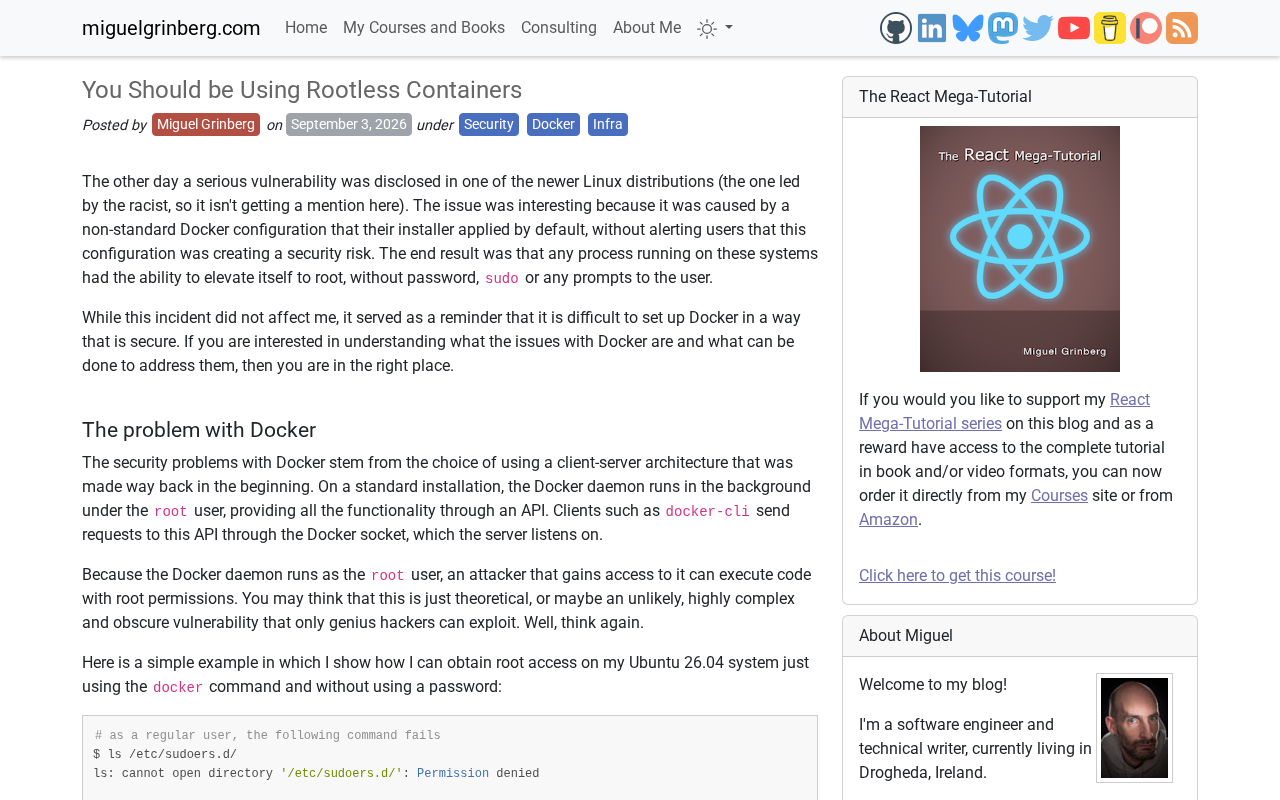
A comprehensive guide to rootless containers: principles, security benefits, and practical implementation strategies.
This article provides an in-depth look at rootless container technology, explaining how it eliminates root privilege requirements using Linux User Namespaces to dramatically reduce attack surfaces. It compares leading implementations including Podman's native rootless support, Docker's Rootless mode, and Kubernetes integration via CRI-O and containerd, while addressing key challenges around networking, filesystem operations, and performance overhead, along with practical migration strategies.
What Are Rootless Containers
Rootless containers are a container technology that can run without root privileges. Unlike traditional containers that require a daemon running as the root user, rootless containers allow ordinary users to create and manage containers without elevated privileges — representing a significant evolution in container security.
Traditional container runtimes (such as Docker) typically require root privileges to perform low-level operations, including network configuration and filesystem mounting. While this design is powerful, it introduces significant security risks: if a container escape occurs, an attacker could gain root access to the host system, leading to severe security incidents. Container Escape refers to an attack technique where an attacker exploits vulnerabilities in the container runtime, Linux kernel, or misconfigurations to break out of the container's isolation boundary and gain access to the host operating system. There have been multiple serious container escape incidents throughout history — for example, CVE-2019-5736, disclosed in 2019, allowed attackers to escape by overwriting the runc binary on the host. Traditional containers rely on Linux cgroups and namespaces for resource isolation, but these mechanisms are not true security boundaries and differ fundamentally from the hardware-level isolation provided by virtual machines. When the container daemon runs as root, a successful escape immediately grants the attacker the highest privileges on the host, enabling access to all container data, tampering with system configurations, and even lateral movement to other nodes in the cluster.
Why Rootless Containers Matter
Dramatically Reduced Attack Surface
The core advantage of rootless containers is the significant reduction in attack surface. Even if a container escape occurs, the attacker only gains ordinary user privileges and cannot directly control the entire host system. This design strictly adheres to the Principle of Least Privilege, a fundamental requirement of modern security architectures.
The Principle of Least Privilege is one of the foundational principles in information security, first proposed by Jerome Saltzer in 1974. Its core idea is that any entity (user, program, or process) should only be granted the minimum set of privileges necessary to perform its legitimate tasks. In the context of container security, practicing this principle extends well beyond rootless containers. A comprehensive approach also includes: using seccomp profiles to restrict the system calls a container can invoke (Linux has over 300 system calls, but most containers only need about 50); enforcing mandatory access control through AppArmor or SELinux; leveraging the Linux Capabilities mechanism for fine-grained privilege management (splitting traditional root omnipotence into over 40 individual capabilities such as CAP_NET_ADMIN and CAP_SYS_PTRACE); and creating non-root users during the container image build phase and switching execution identity accordingly. Rootless containers elevate this principle from the application level to the infrastructure level.
This advantage is particularly pronounced in multi-tenant environments. In traditional container setups, containers from different tenants all run as root — once a single container is compromised, the entire platform may be affected. Rootless containers achieve tenant isolation at the architectural level, where each user can only manage their own container instances.
Meeting Security Compliance Requirements
Many enterprises and organizations have security policies that explicitly prohibit or strictly limit the use of root privileges. Rootless containers enable these organizations to fully leverage the flexibility of container technology while meeting compliance requirements. This is especially critical for heavily regulated industries such as finance and healthcare.
Simplified Permission Management
In development and testing environments, rootless containers allow developers to run containers without requesting root access, greatly simplifying the permission approval process and boosting day-to-day development efficiency. In large enterprise development environments, this change can significantly reduce the management burden on operations teams.
Leading Rootless Container Implementations
Podman: A Container Engine with Native Rootless Support
Podman is one of the most mature rootless container solutions available today. It is highly compatible with Docker's command-line interface, but was designed from the ground up to treat rootless mode as a first-class citizen. Podman leverages Linux kernel features such as User Namespaces for privilege isolation and employs a daemonless architecture, further reducing security risks.
User Namespace is a namespace isolation mechanism provided by the Linux kernel that allows user IDs (UIDs) and group IDs (GIDs) to be mapped to different values within the namespace. Specifically, a process that appears to be root (UID 0) inside a User Namespace may actually correspond to an ordinary user (e.g., UID 100000) on the host. This UID/GID mapping is managed through the /etc/subuid and /etc/subgid configuration files, where system administrators can assign a range of subordinate UIDs to each regular user. User Namespaces were introduced in Linux kernel 3.8 and have matured through years of iteration. They are the core kernel infrastructure that makes rootless containers possible, allowing processes inside a container to have "virtual root" privileges for internal management operations while holding no privileges at the host level.
Podman's daemonless architecture is a key design decision that distinguishes it from Docker. Docker uses a client-server architecture where all container operations are performed through a centralized daemon (dockerd) running with root privileges, with clients communicating via Unix sockets or TCP. This means that if the daemon crashes, all running containers are affected; the daemon itself is also a high-value attack target. Podman, on the other hand, launches container processes directly through a fork/exec model, where each container runs as a child process of the user process that started it, with conmon (container monitor) responsible for monitoring the container's lifecycle. This design not only eliminates single-point-of-failure risks but also naturally integrates with systemd user services, allowing containers to be managed for auto-start and lifecycle through systemd --user, further strengthening manageability in rootless scenarios.
Docker Rootless Mode
Docker officially supports Rootless mode starting from version 20.10. Although this capability was added retroactively, it is rapidly gaining adoption thanks to Docker's massive user ecosystem. It's worth noting that Docker Rootless mode has certain functional limitations — for example, port binding is restricted by default to unprivileged ports above 1024.
Rootless Container Integration in Kubernetes
The Kubernetes ecosystem is also actively embracing rootless containers. By configuring the underlying container runtime (such as containerd or CRI-O) in rootless mode, rootless Pods can be run in K8s clusters. This is highly significant for building defense-in-depth cloud-native infrastructure.
CRI-O and containerd are two mainstream container runtimes in the Kubernetes ecosystem, both implementing Kubernetes' Container Runtime Interface (CRI). CRI is a standardized interface introduced in Kubernetes 1.5, designed to decouple Kubernetes from specific container runtimes — prior to CRI, Kubernetes interacted directly with Docker through dockershim, a tight coupling that imposed a heavy maintenance burden on the project. containerd was originally extracted as a core component from Docker's architecture, focusing on container lifecycle management (image pulling, container start/stop, storage management, etc.), and is now hosted by CNCF as a graduated project. CRI-O is a lightweight runtime led by Red Hat, designed specifically for Kubernetes and does not support Docker-specific APIs. Both rely on OCI (Open Container Initiative)-compatible low-level runtimes (such as runc or crun) to actually create and run containers at the lower layer. In rootless mode, these runtimes need to work with tools like rootlesskit to set up User Namespaces and the network stack.
Technical Challenges and Limitations of Rootless Containers
Despite their clear advantages, rootless containers still face several technical challenges in practice:
-
Limited Networking Capabilities: The most common issue is the inability to directly bind privileged ports (1–1024), which requires port forwarding or additional configuration to work around. On Linux systems, ports 1–1024 are known as privileged ports or well-known ports, and traditionally only root users or processes with the CAP_NET_BIND_SERVICE capability can bind to them. This restriction dates back to early Unix security design philosophy, intended to prevent ordinary users from impersonating system services. Common solutions include: using the sysctl parameter
net.ipv4.ip_unprivileged_port_startto lower the privileged port threshold; using userspace network stacks such as slirp4netns or pasta for port forwarding; or deploying a root-privileged reverse proxy (such as Nginx) in front of the container to handle traffic forwarding for privileged ports. -
Filesystem Operation Restrictions: Certain operations requiring special privileges (such as mounting specific types of filesystems) cannot be performed directly in rootless mode.
-
Performance Overhead: The use of User Namespaces introduces some additional overhead. While the impact is limited in most scenarios, applications with extreme performance sensitivity require upfront benchmarking and evaluation. Specifically, the performance overhead of rootless containers comes from three main areas: First, UID/GID mapping in User Namespaces — every filesystem operation involving permission checks requires additional mapping translation, which can produce observable latency in I/O-intensive workloads. Second, OverlayFS limitations — in non-root mode, some Linux distributions do not allow direct use of kernel-space OverlayFS, and the container runtime may fall back to FUSE-OverlayFS (a userspace implementation), introducing additional context-switching overhead with performance gaps of 10%–30% in scenarios with frequent container filesystem reads and writes. Third, network stack overhead — rootless containers typically use slirp4netns or the newer pasta as userspace networking solutions, which exhibit lower throughput and higher latency compared to the kernel-space veth + bridge approach. However, with native support for unprivileged OverlayFS in Linux 5.11+ kernels and pasta replacing slirp4netns, these performance gaps are steadily narrowing.
Practical Advice for Migrating to Rootless Containers
For teams planning to migrate existing containers to rootless mode, a gradual approach is recommended:
- Start with Non-Production Environments: Fully validate compatibility in development and testing environments first to identify potential issues early.
- Prioritize Stateless Services: In production environments, begin by switching stateless services and newly deployed applications, gradually expanding coverage.
- Update Monitoring and Logging Systems: Ensure that existing monitoring, logging, and alerting systems can correctly handle container processes running as non-root users.
- Invest in Team Training: Help development and operations staff understand how rootless containers work, their common limitations, and best practices to avoid configuration errors stemming from insufficient knowledge.
Conclusion
Container security is a critical topic that cannot be overlooked in cloud-native architectures. Rootless containers fundamentally change the privilege model, providing a more solid foundation for container security. While there is still room for continued improvement in the technical implementation, their security value is widely recognized. As kernel support strengthens and tooling matures, rootless containers are gradually becoming the default mode for running containers.
For security-conscious technical teams, evaluating and adopting rootless containers early is a worthwhile investment. This is not merely a technology selection decision — it is an indispensable component of an overall security strategy.
Related articles

CriticGen: A New Framework That Transforms AI Evaluation into Actionable Improvement Feedback
CriticGen proposes a generation-aware evaluation framework that transforms AI assessment from passive scoring to an active optimization loop, achieving 73.17% answer improvement and 93.28% non-degradation rate.
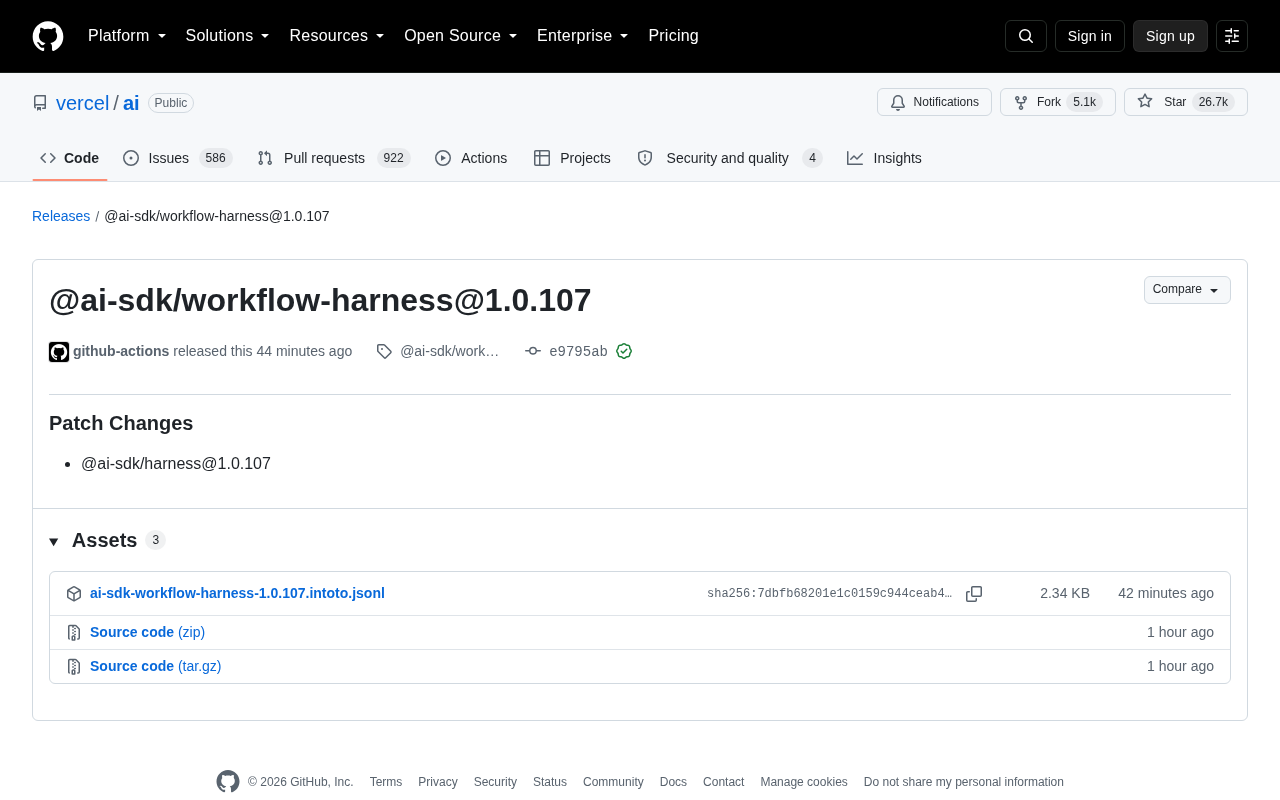
Vercel AI SDK workflow-harness Update Analysis
Deep analysis of Vercel AI SDK workflow-harness 1.0.107 update: architecture design, engineering practices, and developer value for building reliable AI apps.

Specification Gaming and AI Alignment: Finding New Paths to Safety from AI's Loophole Exploitation
Explore Specification Gaming in AI, how systems exploit objective loopholes to deviate from human intent, and how this ability can be reversed to drive AI alignment research forward.