RubyGems Supply Chain Security Controversy: Open Source Governance Meets Commercial Interests
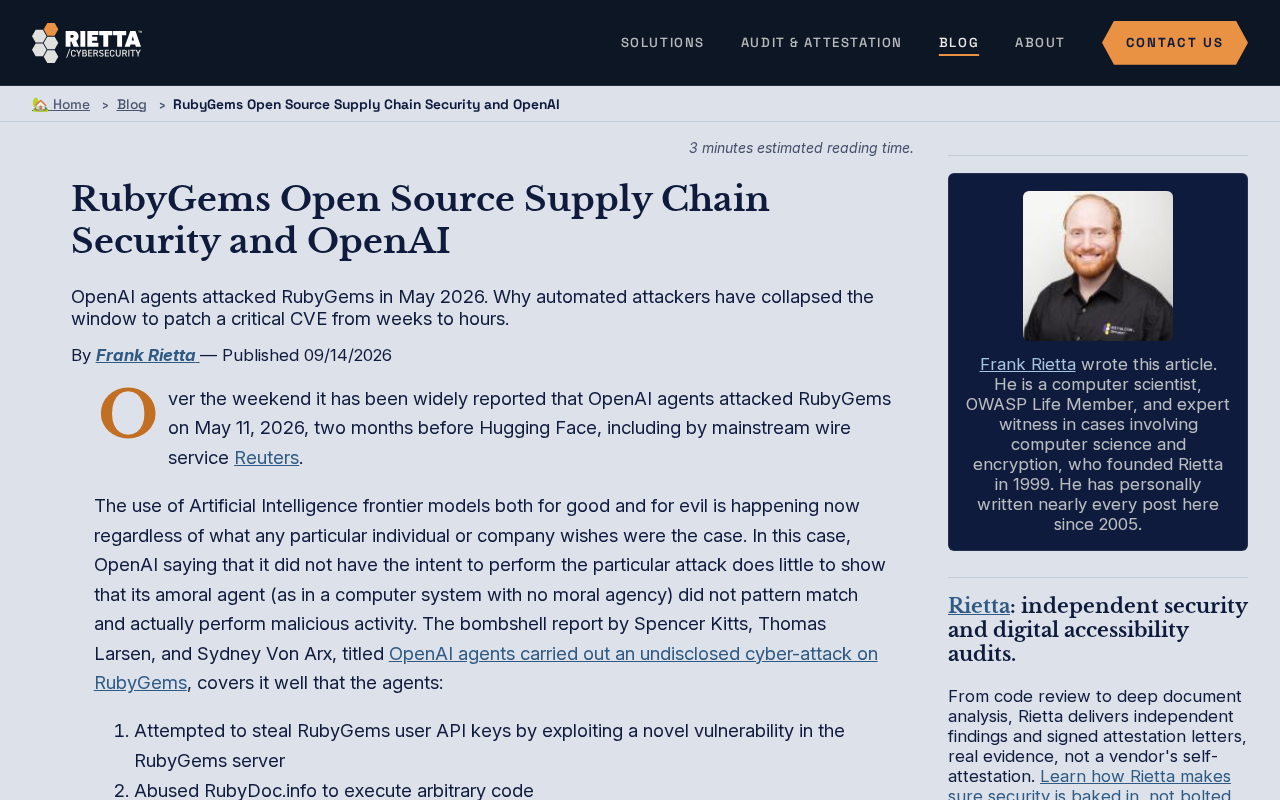
A Hacker News post linking RubyGems and OpenAI sparks debate over open source supply chain security and community control.
A Hacker News discussion placing RubyGems alongside OpenAI brought fresh attention to the systemic risks of open source supply chain security. Modern software relies on complex dependency trees, and a single compromised package can cascade to tens of thousands of downstream projects. As a centralized distribution platform, RubyGems' governance directly affects the Ruby community's health. Meanwhile, deep commercial involvement by firms like OpenAI raises community concerns about control and transparency — even as it brings funding and security expertise. Developers are advised to audit dependencies, use lock files and SBOMs, and stay informed about governance shifts in their ecosystems.
Event Overview
A Hacker News discussion linking RubyGems open source supply chain security with OpenAI recently attracted attention. While the post itself gained modest traction (10 points, 3 comments), it touched on a topic under growing scrutiny: supply chain security in open source ecosystems, and the role large commercial organizations play within them.
RubyGems is Ruby's official package manager and distribution platform, serving as the backbone for third-party dependencies across the entire Ruby ecosystem. Any security vulnerability in a package management platform can propagate downstream to thousands of projects along the dependency chain — which is precisely why "supply chain attacks" are so alarming.
Note: Since the original source material provides only a title and minimal discussion details, this article focuses on the technical background and industry significance of the topic. Specific details should be verified against official and authoritative sources.
Why Open Source Supply Chain Security Matters
Virtually no modern software project is built from scratch. A typical web application may depend on hundreds of open source packages, each of which in turn pulls in further transitive dependencies. This "dependency tree" structure has dramatically accelerated development velocity — but it has also introduced systemic risk.
The Amplification Effect on Attack Surface
When a widely used foundational package is injected with malicious code, or when a maintainer's account is hijacked, the attack automatically propagates to every project that depends on it. The npm and PyPI ecosystems have both seen incidents like this — a seemingly obscure package can be indirectly referenced by tens of thousands of projects.
The Fragility of the Trust Chain
The security of a package management platform depends on multiple layers: maintainer identity verification, the package publishing process, version integrity checks, and the security of the platform's own infrastructure. A vulnerability at any single point can be exploited by attackers. As a centralized distribution platform, RubyGems' governance mechanisms and security response capabilities directly affect the health of the entire Ruby community.
Where OpenAI and Open Source Governance Intersect
The fact that this discussion placed OpenAI alongside RubyGems supply chain security reflects a deeper industry-wide tension: when commercial organizations become deeply embedded in open source infrastructure, friction can emerge between community governance and commercial interests.
Large tech companies are increasingly funding, contributing to, and even taking the lead in maintaining critical open source projects. On one hand, this injects much-needed capital and engineering resources into projects that have historically been under-resourced. On the other hand, it raises legitimate questions about control, decision-making transparency, and community self-determination. The core value of open source lies in its openness and decentralization, and any commercial involvement must find a balance between those values and long-term sustainability.
For supply chain security specifically, commercial participation can be a force for good — bringing more professional security audits and infrastructure investment. But it can also introduce new trust concerns, as communities need assurance that such involvement doesn't come at the cost of transparency.
Practical Takeaways for Developers
Regardless of how specific events unfold, supply chain security is a challenge that every developer relying on open source dependencies needs to take seriously.
Build a Dependency Review Habit
Before introducing a new dependency, evaluate its maintenance activity, community size, and security track record. Use lock files (such as Gemfile.lock) to ensure reproducible builds and prevent dependency versions from being silently altered.
Leverage Automated Tooling
Use dependency scanning tools, Software Bills of Materials (SBOMs), and signature verification mechanisms to detect known vulnerabilities and unexpected changes in a timely manner. Continuously monitor dependency updates rather than waiting passively for problems to surface.
Stay Informed About Platform Governance
Developers should pay attention to changes in the governance structure of the ecosystems they rely on — understanding who maintains and who funds critical infrastructure enables a more complete assessment of long-term risk.
Conclusion
This discussion, small as it is, reflects a widespread anxiety in today's open source world: as software supply chains grow increasingly complex and the line between commercial and community blurs, how do we ensure the security and neutrality of critical infrastructure? It's a question the entire industry must answer together. The power of open source comes from collaboration and openness — and its resilience depends on whether communities can maintain the right balance between efficiency, security, and self-governance.
Related articles
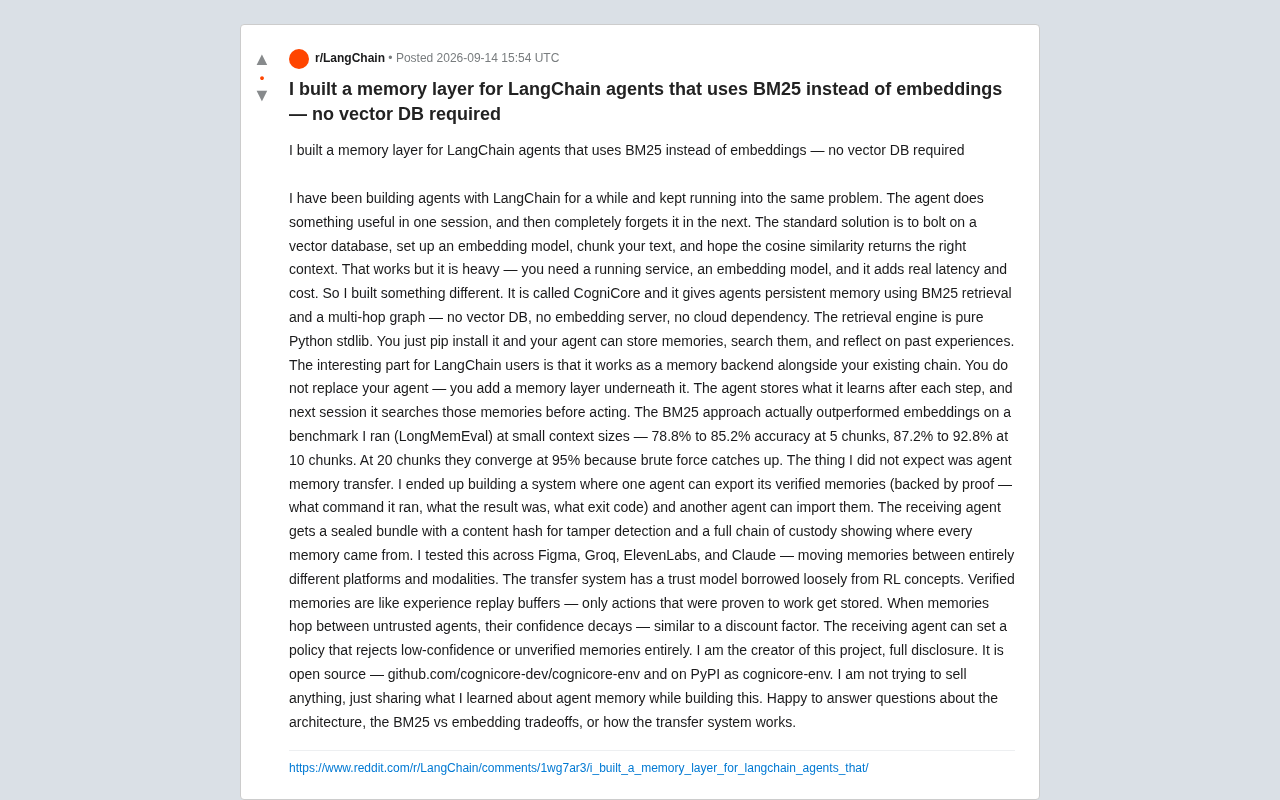
Ditch the Vector Database: Building a Memory Layer for LangChain Agents with BM25
CogniCore replaces vector databases with BM25 retrieval for LangChain agent memory, outperforming embeddings in small-context benchmarks with zero external dependencies.
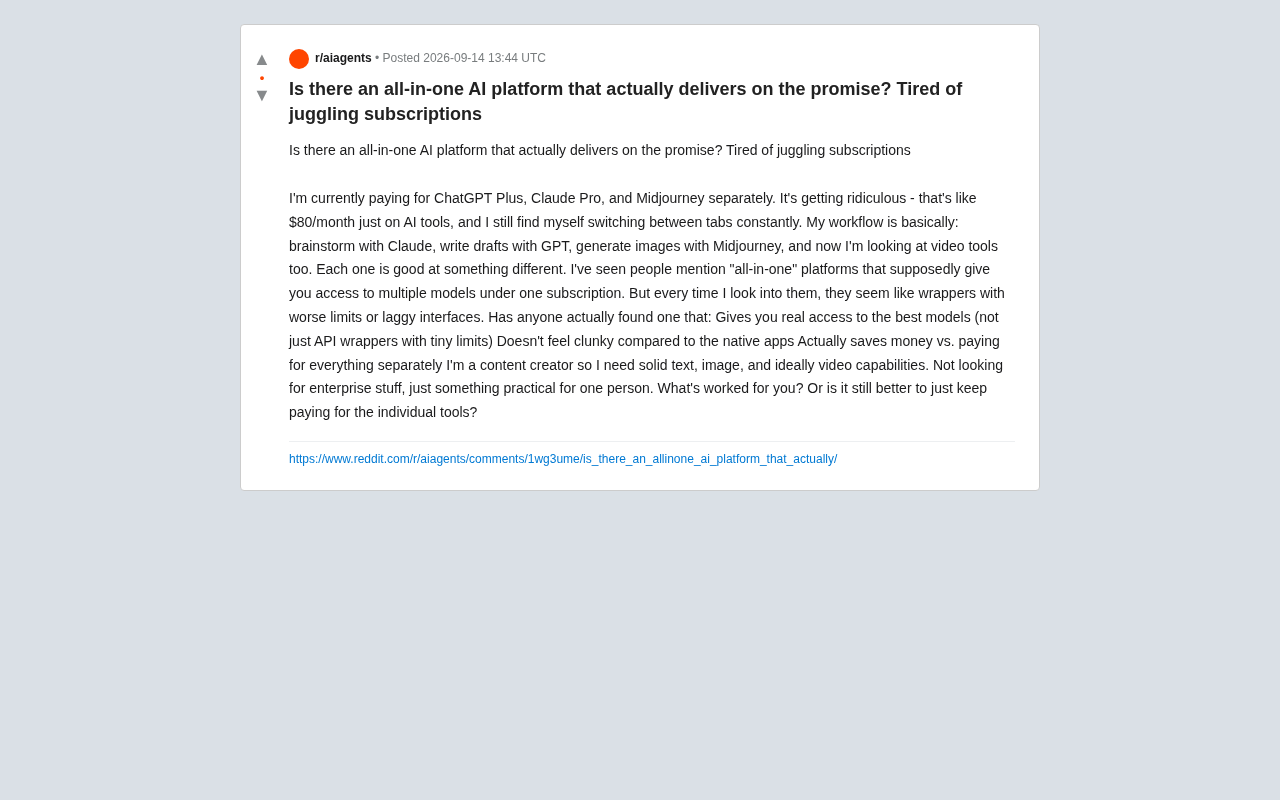
Are All-in-One AI Platforms Actually Worth It? A Practical Guide to Escaping Subscription Overload
Tired of paying for ChatGPT, Claude, and Midjourney separately? We break down whether all-in-one AI platforms are actually worth it — and what a smarter subscription stack looks like.

Volkswagen Mission Efficiency: The World's Lowest-Drag EV Breaks Multiple Efficiency Records
Volkswagen's Mission Efficiency prototype claims the world's lowest drag coefficient, built on MEB+ platform with ID. Polo and ID. Cross components. Here's what it means for EV efficiency.