Sahm Rule Inventor: Low Hiring, Low Layoffs—Why a Stable Labor Market Feels So Anxious

The Sahm Rule inventor argues today's low-hiring, low-layoff labor market reflects structural change, not the eve of a recession.
Economist Claudia Sahm—inventor of the Sahm Rule—points out on a podcast that the U.S. labor market's coexistence of low layoffs and low hiring has persisted for over three years, a rare post-war anomaly. It's not the eve of a recession but the result of structural forces beneath the surface: stagnant labor force growth, slower immigration, aging, and AI's impact on entry-level jobs. The 3.4% hiring rate is below 2019's 3.9%, and the 4.4% vs. 3.6% wage gap between job-switchers and stayers shows mobility is blocked. Sahm advises workers to use "is my job still teaching me" as a signal, to ask for help through career lows, and stresses that luck is something you make yourself.
Sahm Rule Inventor: Low Hiring, Low Layoffs—Why a Stable Labor Market Feels So Anxious
The U.S. labor market is in a rare state: layoffs are extremely low, and hiring is equally sluggish. What the Federal Reserve calls "stable" feels, to individuals, like an inexplicable sense of suffocation. Economist Claudia Sahm—the inventor of the Sahm Rule—offers her diagnosis on the podcast Best of Luck with Kyla Scanlon: this isn't the eve of a recession, but a structural shift happening beneath the surface.
The Sahm Rule: Birth of a "Smoke Alarm"
The Sahm Rule is widely regarded as one of the most respected recession-detection tools in macroeconomics. Its logic is simple: when the three-month moving average of the unemployment rate rises half a percentage point above its low point over the past year, the alarm should sound.
The tool didn't start from academic ambition. During the 2008 financial crisis, the government issued stimulus checks, and one of Sahm's early tasks at the Federal Reserve was to study how people would spend the money—consumption, savings, or paying off credit cards. She studied it for years and by 2019 had a proposal: once a recession begins, don't wait for Congress to argue—automatically send money to people. The question then arose: who determines that a recession has begun? So she built that "smoke alarm."
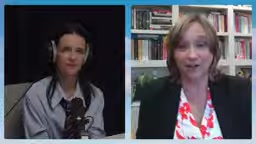
According to Sahm, she didn't name the rule herself. At a book launch event, attendees suddenly began calling it the "Sahm Rule." She was sitting in the audience preparing to go on stage, thinking, "Oh, no." But she admits the indicator "probably did need a name."
A more important clarification: Sahm herself doesn't want it to be just a detector. She wants it to also trigger the "sprinkler system"—to actually put out the fire. "If the Sahm Rule triggers, it really is a recession, and then nothing happens—that would be the saddest thing."
How the Sahm Rule is calculated: Take the average unemployment rate over the past three months, then subtract the lowest point of that three-month average over the preceding 12 months. If the difference reaches or exceeds 0.50 percentage points, a recession signal is triggered. For example, if the lowest three-month moving average over the past year was 3.5% and the current three-month moving average rises to 4.0% or above, the rule triggers. The rule is widely adopted because it rests on a simple yet robust empirical regularity: once the unemployment rate begins to rise noticeably from a cyclical low, it often means the economy has entered an early recessionary phase. Since the 1960s, the Sahm Rule has successfully triggered in multiple recessions with almost no false positives, making it one of the most reliable real-time recession indicators in macroeconomics.
"No Layoffs, No Hiring": An Abnormal Combination Lasting Over Three Years
Sahm's assessment of the current labor market is clear: she is not in "recession watch" mode, but dramatic structural changes are happening beneath the surface.
The core anomaly is the coexistence of low hiring and low layoffs. "It's great that people aren't being laid off, but seeing this combination is very unusual. Normally, if we're not laying people off, we're hiring." And this pattern has persisted for over three years—it's not a temporary phenomenon.
According to data cited on the show: the layoff rate is about 1% of workers per month, at a low level; the hiring rate was 3.4% in September, compared with about 3.9% in 2019. That half-percentage-point gap is the chasm between "people changing jobs" and "people waiting in place."
For most Americans, changing jobs is the career ladder itself—real wage gains often come from job-hopping. The Atlanta Fed's wage tracker in July showed that job-switchers received 4.4% pay raises, while those who stayed put got 3.6%. Sahm also mentioned an update: the quits rate rose to 2.1% in September, the first time above 2% since June 2025—a rare bit of loosening.
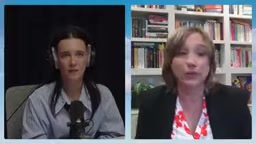
The word "stable" is neutral, even potentially negative. Sahm's breakdown: if you have a job you like, this is a good market; but for young people who can't find an entry point, or mid-career workers stuck in the middle and unable to climb, this market ranges from "not great" to "very bad."
Statistical definitions of hiring and layoff rates: The U.S. Bureau of Labor Statistics (BLS) monthly Job Openings and Labor Turnover Survey (JOLTS) is the core data source for measuring labor market dynamics. The hiring rate refers to the proportion of new hires in total employment during the month; the layoff rate refers to the proportion of separations (including layoffs and involuntary separations) in total employment during the month; the quits rate covers voluntary resignations. Unlike the unemployment rate, these indicators reflect the "flows" rather than the "stock" of the labor market. The coexistence of low hiring and low layoff rates means the market is neither creating new jobs nor destroying old ones, and labor mobility is stagnating. This "low-flow" state hinders resource reallocation, slows productivity growth, and exacerbates opportunity inequality across groups.
Structural Forces: Stagnant Labor Force Growth, Reduced Immigration, and AI
Sahm believes it's insufficient to attribute the current situation entirely to cyclical factors. She lists several overlapping structural forces: the labor force is barely growing—it's hard to find a period in post-war U.S. history when labor force growth was this slow; immigration has slowed sharply alongside population aging; and AI's impact on the labor market, which she judges is currently mainly visible at "the entry point into the labor market."
Another layer of uncertainty: Middle East wars, terrorism, political turmoil. "Businesses aren't going all-in on hiring," Sahm says—hardly surprising.
She doesn't believe "we'll all be automated out of jobs immediately," but AI is already changing the shape of work and people's expectations of the "social contract" around work. In American culture, work is deeply tied to personal identity, and redefining work means asking people to rewrite their own identities—"I'm not surprised by the backlash."
Structural backdrop of stagnant U.S. labor force growth: U.S. labor force growth relies mainly on two sources: natural population growth and net immigration. The post-WWII baby boom brought rapid labor force expansion, but since the 2000s, as fertility rates have remained below replacement level (about 2.1), native labor force growth has slowed significantly. According to Congressional Budget Office (CBO) projections, the labor force will grow at an average annual rate of only about 0.2% over the next decade, far below historical averages. Meanwhile, immigration has been a key channel for filling labor gaps, but in recent years, due to tighter policies and post-pandemic aftereffects, net immigration inflows have declined markedly. Population aging further exacerbates the problem: baby boomers are retiring en masse, taking experienced workers out of the market, while the supply of young workers is insufficient to fill the gap. This structural supply constraint means that even if demand recovers, the labor market will struggle to return to its pre-pandemic vibrancy.
Is It the Environment or You? Sahm's Answer: Both
The show repeatedly returns to one question: when job hunting keeps failing, is it the market's problem or yours? Sahm's answer: in good years and bad, the answer is "both."
The economic backdrop matters enormously. Research shows that graduating into a recession not only affects starting salaries but drags down career trajectories for years; graduating into an expansion gives you a bit of tailwind. But the backdrop doesn't determine outcomes. "In today's low-hiring environment, you may need to send twice as many résumés as a friend who graduated four years ago. That's not your fault, but ultimately it's on you to get through it."
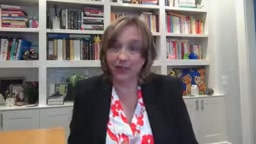
She specifically cautions about the conditions under which "going to grad school" makes sense: if the factor disrupting the market is temporary and you have the financial means, grad school can make sense; if the disruption is structural, you'll face the same question again two years later.
Sahm's own career path is a nonlinear footnote. The Sahm Rule brought prestige, but also the decision to leave the Fed, followed by a poor work environment and a low point during the pandemic without health insurance. "My best luck and my worst luck were almost the same thing." Her coping strategy was extensive conversations, letting acquaintances know she was job hunting, and asking people to help revise her résumé—turning a heavily academic CV into one page. "You have to open up to others: I need help."
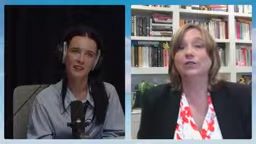
Advice for Different Stages: Let Work Keep Teaching You
On the show, Sahm offers advice by age group, with "learning" as the central thread.
Considering a PhD in your twenties: A PhD is the first transition from consumer of knowledge to producer of knowledge. She suggests first working somewhere you can observe "knowledge production" in action—such as a research assistant position—to confirm whether you really want that life. An economics PhD is now a five-to-six-year commitment.
In your thirties, feeling your job no longer teaches you: This may be a signal to move. She cites the practice of her Fed colleague Raven Molloy: with each forecasting round, set yourself something you want to learn, even if it's just a small question. If the job itself can't provide learning space, then it's just a paycheck—acceptable, but supplement it outside work: coding classes, writing, AI skills. "Don't fall off that cliff—it's hard to climb back."
In your forties, facing AI: Sahm thinks this age group may enjoy the current version of AI the most, because they have enough experience to spot its errors and know how to ask good questions. She writes all her own first drafts by hand but uses AI for grammar, speed, and exploring ideas she wouldn't otherwise start.
She also shares advice from an early boss, Andrew Friedman: first do things that everyone knows how to value—and do them excellently; this satisfies the team and earns you room to experiment.
Luck, Health, and "the Active Part"
The show closes with a discussion of luck. Sahm's definition: luck is something you make with your own hands; opportunities need to be seized. She mentions that when designing a survey on household economic decisions at the Fed, researchers found they couldn't use the word "luck" in questions, because some people don't accept that framing and prefer to talk about "blessings."
Asked about a time she thought she wouldn't get through but later found wasn't so serious, she talks about a diagnosis she received in 2011, during her hardest period of forecasting work at the Fed: bipolar disorder. At the time she felt "I'm done for." "Health is a great equalizer. It feels like it's going to upend everything, but it didn't. It requires constant attention, occasionally flares up, but it's manageable."
As for what luck she needs now, Sahm says she's in a good place professionally, just unsure of direction—"I don't know what the Sahm Rule's encore is. I feel I still have something to give, but I don't yet know what."
Host Kyla Scanlon's closing summary: if things have been dragging on, it's the market that changed beneath your feet, not that you got worse; but the hard part is that you still have to walk through it yourself, and that isn't fair. Sahm's way through was to let people help and to ask for it. "If you need it, ask; if someone asks you, help."
One-line Summary
Related articles

Snapchat Opens AI Assistant Lens Building: Supports Claude Code and Cursor
Snapchat lets Lens creators describe AR filters in natural language, with AI assistants like Claude Code and Cursor handling the full build process, greatly lowering the AR creation barrier.
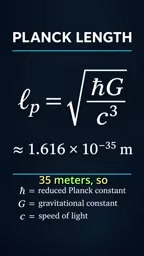
Is the Planck Length the Smallest Distance? Why Physicists Are Skeptical
The Planck length is often called the smallest distance in the universe, but science videos point out this claim has never been experimentally confirmed. This article explains the origins of the Planck length, the obstacles of microscope thought experiments, and what it really tells us—the scale at which quantum gravity becomes unavoidable, not spacetime pixels.

AI Agents Drive Spend Management: Payhawk Raises $280M
Payhawk raises $280M at a $2B valuation. The 2018-founded enterprise finance platform uses AI agents to track and manage expenses and procurement. This article analyzes its product evolution, valuation signals, and impact on the spend management space.