Sam Altman Says Local Inference Wastes Resources—Why Isn't the Open Source Community Buying It?

Altman says local inference wastes scarce resources, sparking a developer debate over cloud versus local positions.
OpenAI CEO Sam Altman called “local inference a terrible allocation of scarce resources,” arguing personal hardware sits idle at a high rate while centralized cloud scheduling achieves higher utilization when DRAM supplies are tight. This triggered strong backlash on Reddit, with developers noting that after quantization, distillation, and miniaturization, local inference has genuine engineering value for privacy, offline, and low-latency scenarios, and that the “5% utilization” framing ignores these hidden benefits. The article argues the controversy is not about technical correctness but about the speaker's interest position as a cloud-side beneficiary. The real takeaway is a hybrid model: local and cloud each have their boundaries, and developers need to understand both cost models rather than pick sides.
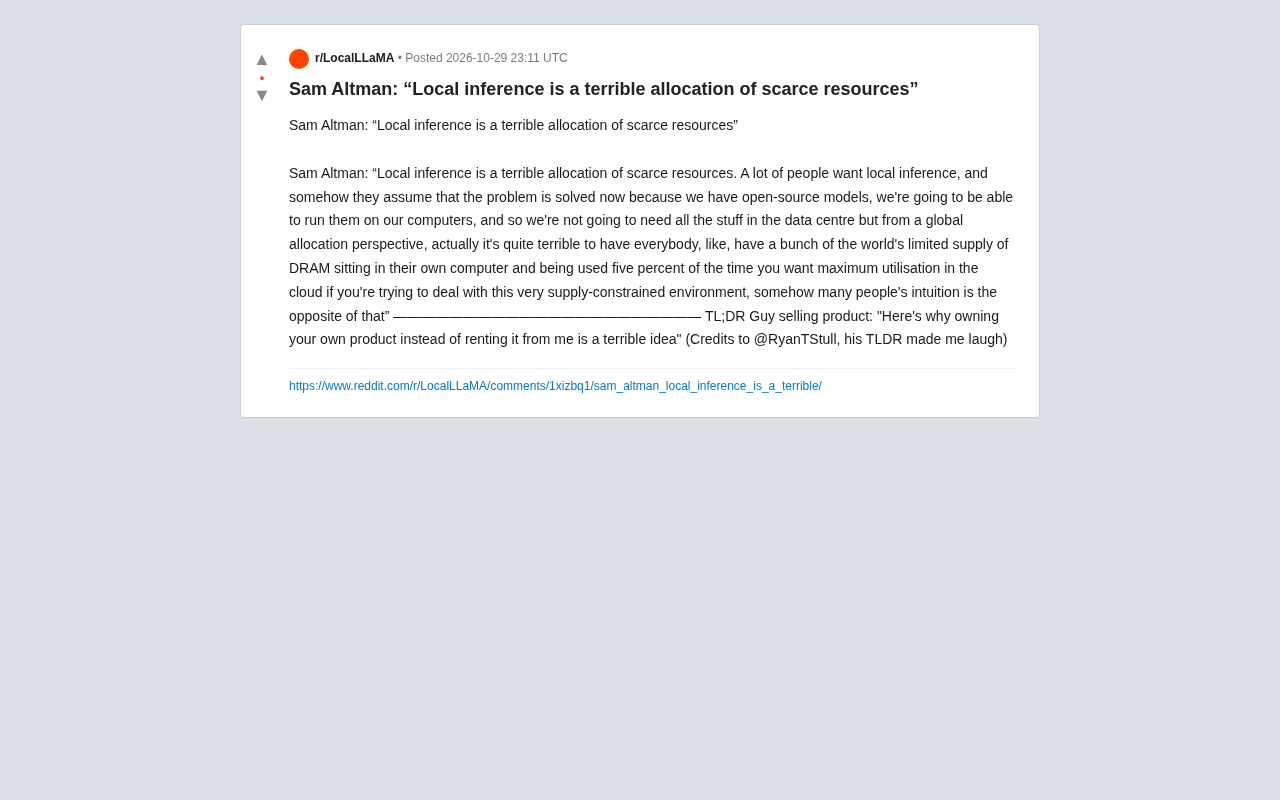
A Controversy Ignited by One Sentence
A recent remark from OpenAI CEO Sam Altman set the developer community ablaze. He bluntly stated: “Local inference is a terrible allocation of scarce resources.” In his view, many people assume the local inference problem is solved because of the emergence of open source models—believing they can run models on their own computers and no longer need data center infrastructure. But from a global resource allocation perspective, having everyone hoard the world's limited DRAM supply on their own computers while using it only 5% of the time is a rather poor choice. In a supply-constrained environment, the cloud's maximum utilisation is the right answer—yet many people's intuition suggests the opposite.
This statement quickly sparked discussion on Reddit and other platforms, with one netizen bluntly summarizing: “The person selling the product says: why is owning your own product, rather than renting from me, a bad idea.”
Altman's Logic: The Efficiency Calculus of Centralized Utilization
Setting aside positions, Altman's argument has a clear economic core: resource utilization.
Today's AI compute bottleneck lies not only in GPUs but also in core components like memory (DRAM). If every user runs models locally, it means large amounts of memory are held in a dispersed manner and sit idle most of the time. By contrast, centralized scheduling in the cloud allows the same batch of hardware to serve more requests, amortizing unit costs. During a phase of tight supply and surging demand, this “shared pool” model is indeed more efficient at a macro level.
This logic is not without merit. Large-scale procurement, unified operations, and elastic scheduling in data centers are advantages that cloud computing has proven over the past decade. Altman frames the issue as “allocation efficiency from a global perspective” rather than “whether it's convenient for individuals,” which makes his statement economically defensible.
DRAM (Dynamic Random Access Memory) is one of the key bottlenecks of contemporary AI systems and the hardware premise for understanding this debate. During large model inference, both model weights and the KV Cache need to reside in memory, so VRAM/memory capacity and bandwidth directly determine how large a model can run and how much concurrency it can serve. In recent years, HBM (High Bandwidth Memory) has been in short supply due to surging AI demand, with production capacity heavily locked up by GPU manufacturers, further squeezing the supply of general-purpose DRAM. When Altman speaks of “hoarding limited DRAM in personal computers,” he is pointing precisely at this supply-demand landscape: memory held by consumer devices sits idle most of the time, while the cloud can pool the same batch of memory to serve more requests. However, it's worth distinguishing that the unified memory architecture commonly used for local inference (such as Apple Silicon) and data center HBM are not the same market—their degrees of scarcity and substitution relationships are not entirely equivalent, which is why some developers believe the argument has been overgeneralized.
The Reality of Open Source: Local Inference Is Becoming Feasible
But the developer backlash also has a solid foundation. Over the past year, the capabilities and efficiency of open source models have improved rapidly, with techniques like quantization, distillation, and miniaturization enabling consumer-grade hardware to achieve usable results. For many scenarios—privacy-sensitive data processing, offline environments, low-latency fixed tasks—local inference is not just “sentiment” but a genuine engineering requirement.
More importantly, the cost structure of local inference is changing. When models are small enough and hardware is widespread enough, the “waste” of idle resources may be far less than the overhead of transmitting data to the cloud and paying API fees. Altman uses 5% utilization to summarize the usage of local hardware, but many developers point out that this figure ignores the hidden benefits of local inference in terms of privacy, controllability, and long-term costs.
Quantization is one of the core technologies that makes local inference feasible. The basic idea is to compress model weights from high-precision formats like FP16/BF16 to INT8, INT4, or even lower bit widths, thereby reducing memory usage several-fold while maintaining output quality as much as possible. Common methods include post-training quantization (PTQ, such as GPTQ, AWQ) and quantization-aware training (QAT), which, combined with formats like GGUF, enable the same model to run on consumer-grade GPUs or even CPUs. Alongside quantization are knowledge distillation (using large models to guide the training of small models) and model miniaturization (such as MoE sparse architectures and parameter pruning), which together compress usable models into a size that personal hardware can accommodate. These technologies explain why “running models locally” has gone from unrealistic a few years ago to an engineering option today in privacy, offline, and low-latency scenarios—and they are also the technical reality behind the optimistic expectation that Altman's phrase “the emergence of open source equals local inference being solved” targets.
The Identity Problem of the “Shovel Seller”
The core of the controversy is actually not about technology, but about the speaker's position.
Altman is one of the biggest beneficiaries of cloud-side AI infrastructure. When he says “local inference is a terrible allocation of resources,” no matter how rigorous the argument, it's hard to escape suspicions of conflict of interest. The quip on Reddit—“the person selling the product tells you not to own the product”—precisely captures this trust tension.
This is not to say his view is necessarily wrong, but to remind readers: judgments about “how resources should be allocated” often depend on where you stand in the industry chain. Cloud providers see global utilization; individual developers see autonomy and marginal costs. The two may not be measurable by a single standard.
The “shovel seller” phrase originates from the gold rush era: those who reliably made money were often not the gold miners but those who sold shovels, jeans, and supplies to the miners. In the AI industry chain, this metaphor typically refers to vendors providing compute, model APIs, and cloud infrastructure—regardless of whether downstream applications succeed or fail, they charge by call volume or compute hours. OpenAI under Altman's leadership is both a model provider and deeply tied to Microsoft Azure's compute ecosystem, making it a typical cloud-side beneficiary. This identity does not automatically negate the technical validity of his argument, but it constitutes a conflict of interest: when the conclusion happens to point toward “you should rent more from the cloud,” listeners have reason to demand stronger evidence rather than just a macro utilization figure. Understanding this allusion helps grasp what the original text means by “the core of the controversy is not about technology, but about the speaker's position.”
This Is Not an Either-Or Choice
Viewing this debate as a “local vs. cloud” camp choice may miss the real signal.
Reality is more likely a hybrid model: for scenarios that are latency-sensitive, have high privacy requirements, or involve fixed tasks, local inference has irreplaceable value; for scenarios requiring frontier capabilities, elastic scaling, and large-scale concurrency, the cloud remains the more economical choice. Altman's “terrible allocation” argument holds under the assumption of extreme centralization, but real-world resource allocation is never single-dimensional.
For developers, the value of this debate is not in picking sides but in understanding the respective boundaries of the two cost models. For the industry, it exposes a deeper question: when compute becomes a scarce commodity, who defines “efficient utilization,” and who bears the cost of “inefficiency”?
The open source community's response has already given a partial answer—they don't intend to wait for others to allocate resources on their behalf.
One-line Summary
Altman says local inference wastes scarce resources, sparking a debate among developers over cloud versus local positions.
Paragraph Summary
OpenAI CEO Sam Altman called “local inference a terrible allocation of scarce resources,” arguing that personal hardware sits idle at a high rate while centralized cloud scheduling can achieve higher utilization when DRAM and other supplies are tight. This view triggered strong backlash on Reddit and other communities, with developers pointing out that after quantization, distillation, and miniaturization, open source models have genuine engineering value for local inference in privacy, offline, and low-latency scenarios, and that the “5% utilization” framing ignores these hidden benefits. The article argues that the essence of the controversy is not about technical correctness but about the speaker's interest position as a cloud-side beneficiary. The real takeaway is a hybrid model: local and cloud each have their applicable boundaries, and developers need to understand the boundaries of both cost models rather than simply picking sides.
Related articles
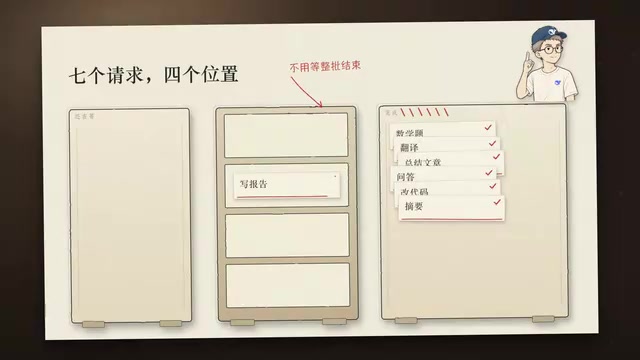
DeepSeek Open-Sources DeepInfer: What Is an Inference Framework Actually For?
DeepSeek open-sources its inference framework DeepInfer under Apache 2.0, supporting DeepSeek V4.1 Flash offline inference. This article explains its request scheduling, FlashMLA/DeepGEMM compute optimization, DSPark speculative verification acceleration, and what it means for developers and ordinary users.
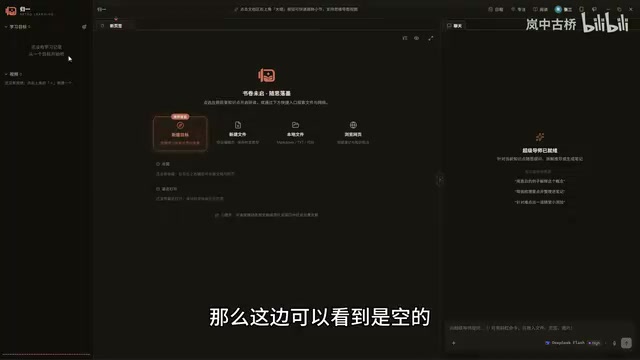
Open-Source AI Learning Agent: A Full Workflow Experience from Topology Graphs to Exam Generation
Explore an open-source AI learning agent: built on DeepSeek API, it constructs knowledge systems via topology graphs, with automatic document generation, notes, super documents, and exams. Learn about its Agent workflow and design highlights.

DeepSeek Whale Girl Open-Source MV Meme: AI Industry Coded Slang About Pivoting to Closed Source
Bilibili's DeepSeek Whale Girl rap MV uses fictional memes to tease the AI open-source vs. closed-source debate, with lyrics full of industry slang. This article explains the meme culture, the Whale Girl symbol, and the open/closed tension.