SAP Launches Enterprise AI Gateway: A New Phase in Agent Interconnectivity

SAP launches Agent Gateway and Enterprise AI Gateway to address agent interconnectivity and governance in layers.
At SAP TechEd 2026, SAP announced the GA of Agent Gateway and launched the new Enterprise AI Gateway. Agent Gateway uses the open A2A protocol for cross-boundary agent connectivity with identity verification and end-to-end traceability, while Enterprise AI Gateway, built on Integration Suite, centralizes rate limiting, routing, protocol conversion, and observability. Together they form a layered 'trusted connectivity + governance' architecture that lowers entry barriers and reuses existing integration investments.
At SAP TechEd 2026, SAP announced two major advances related to AI agent interconnectivity: the general availability (GA) of SAP Agent Gateway, and the launch of the new SAP Enterprise AI Gateway. The former makes cross-boundary agent connections an out-of-the-box capability, while the latter consolidates governance, observability, and runtime control into a single unified control plane.
Agent Gateway Now Generally Available: Cross-Boundary Connections No Longer Require Manual Configuration
The GA of SAP Agent Gateway means that any customer can now connect their agents and endpoints across any system boundary. The key underlying protocol is A2A (Agent-to-Agent), an open industry standard. All communication—whether inbound or outbound—passes through Agent Gateway: identities are verified, permissions are enforced, and every action is traceable back to the person behind the request.
The core value of this design is that it turns connection work that previously required extensive manual configuration into a standardized, auditable infrastructure capability.
A Hiring Manager's Everyday Scenario
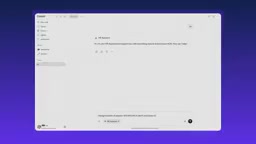
The keynote used a concrete example to show how this mechanism works. Hiring manager Joff needs to update a position: relocating it from Munich to Berlin, along with an adjustment to the salary grade. In the traditional approach, he would have to switch into SAP SuccessFactors and manually modify each field one by one.
In this new workflow, Joff simply opens his everyday Microsoft Copilot and types in the request. Copilot sends the request through SAP Agent Gateway to SAP's HR Operations Assistant. The assistant parses the request, identifies the position and the changes, determines the effective date, and first presents a summary of the changes to Joff for confirmation. After confirmation, the agent updates the position in SuccessFactors and returns the updated record and confirmation information.
The entire process never leaves Copilot, and what was once a tedious manual update is completed in one go.

The A2A (Agent-to-Agent) protocol is an open standard initiated by Google in 2025 and donated to the Linux Foundation, designed to enable AI agents from different vendors and platforms to discover each other, negotiate capabilities, and collaborate on tasks. It defines Agent Cards for describing an agent's own capabilities and endpoints, as well as HTTP-based task lifecycle interfaces. Unlike the MCP protocol, which primarily addresses "how models call tools/data," A2A focuses on "how agents communicate with each other," and the two are complementary. A2A emphasizes enterprise-grade authentication and authorization, supporting mechanisms such as OAuth 2.0—this is precisely the protocol foundation that enables SAP Agent Gateway to perform identity verification and traceability on every call.
Identity Resource Discovery: Letting Agents Find Each Other Automatically
The scenario above shows agents from two companies communicating with each other. But there is a prerequisite question: how does an external agent know where SAP's agents are? Previously this required manual configuration—you had to know the exact URL, technical details, tenant ID, and everything behind each connection. That is hardly an integrated system landscape; it's more like a tedious puzzle that nobody wants to solve.
Identity Resource Discovery changes this. Through a standardized tool, you can look up all the necessary details. With standardized endpoints on Agent Gateway, any agent can discover SAP's agents, understand what they offer, and establish connections automatically. You simply express intent, and the right agent becomes reachable.
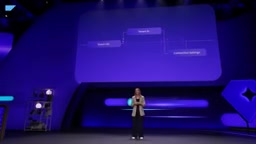
SAP believes this opens up a huge space of opportunity—the potential of breakthrough agents, of which we can currently imagine only a small fraction.
Agent Discovery is a key element of the A2A ecosystem. In the A2A specification, each agent publishes its name, capability description, supported input/output modalities, and authentication requirements through a standardized "Agent Card" endpoint (typically located at /.well-known/agent.json). A client agent only needs to know a base domain to pull the card and use it to determine whether that agent can satisfy the current intent and how it should be invoked. Identity Resource Discovery essentially layers tenant identity and permission context resolution on top of this mechanism, so that the discovery process not only "finds" the agent but also "knows under what identity and what it can do," thereby eliminating the work of configuring URLs, tenant IDs, and other technical details one by one.
Enterprise AI Gateway: A Governance Layer for Enterprise Scenarios
However, enterprise scenarios require something else: rate limiting, routing, mapping, protocol conversion, complex identity and access control, and data transformation. This is exactly the problem SAP Enterprise AI Gateway is designed to solve.

It is built on SAP Integration Suite as a natural overlay on top of the standard SAP Agent Gateway, protecting customers' existing investments. For customers who want a single control plane for all AI interactions across their entire system landscape—MCP, APIs, LLMs, all those acronyms—Enterprise AI Gateway provides exactly that: policy enforcement, enhanced observability, and runtime control, all in one place.
The live demo showed how it can quickly turn an existing managed API into a fully governed MCP server: creating a new MCP server for a custom billing agent and applying rate-limiting protection to the third-party backend system behind it.
MCP (Model Context Protocol) is an open protocol introduced by Anthropic in late 2024 to let LLM applications connect to external tools, data sources, and services in a standardized way, often likened to a "USB-C port for AI applications." Once enterprises wrap internal APIs as MCP servers, agents can invoke them in a unified manner. But MCP itself only addresses "how to invoke"; it does not specify enterprise governance requirements such as rate limiting, auditing, or access control. The Enterprise AI Gateway demo's "turning an existing managed API into a governed MCP server" is precisely about applying Integration Suite's quota, authentication, logging, and other policies to MCP endpoints, filling in the governance capabilities missing at the protocol layer.
What the Division of Labor Between the Two Gateway Layers Means
From an architectural perspective, SAP has effectively split agent interconnectivity into two layers. Agent Gateway handles "connectivity" and "trust"—based on the open A2A protocol, it addresses identity verification, permission enforcement, and end-to-end traceability. Enterprise AI Gateway handles "governance" and "control"—layering rate limiting, routing, protocol conversion, and observability on top of connectivity.
The practical significance of this layering for enterprises is that the foundational connectivity capability is available out of the box, lowering the barrier to entry, while governance capabilities reuse existing Integration Suite investments, so there is no need to build a separate infrastructure stack for AI scenarios. For teams that are integrating agents into business processes, this is a path worth watching—first get the agents connected, then let them run under control.
SAP Integration Suite is SAP's cloud integration platform (iPaaS), including Cloud Integration (process orchestration and protocol conversion), API Management (API exposure, rate limiting, and policies), Event Mesh, and other capabilities, long used to connect SAP and non-SAP systems. Building Enterprise AI Gateway on top of it means enterprises can reuse existing API management policies, certificate systems, and monitoring and alerting for AI traffic without introducing a new infrastructure stack. This also explains the meaning of "protecting existing investments": AI governance is not about building a separate system, but about bringing AI interactions into the integration and API governance system that the enterprise has already operated for years, reducing operational complexity and learning costs.
One-line Summary
SAP launches Agent Gateway and Enterprise AI Gateway to address agent interconnectivity and governance in layers.
Paragraph Summary
At SAP TechEd 2026, SAP announced the general availability of Agent Gateway and launched the new Enterprise AI Gateway. Agent Gateway, based on the open A2A protocol, lets customers connect agents across any system boundary, with all inbound and outbound communication undergoing identity verification, permission enforcement, and end-to-end traceability, turning previously manual connection work into standardized infrastructure. The accompanying Identity Resource Discovery lets external agents automatically discover SAP agents through standard endpoints and establish connections. Enterprise AI Gateway, built on Integration Suite, serves as an overlay on Agent Gateway, centrally providing rate limiting, routing, protocol conversion, observability, and runtime control. Together they form a layered architecture of "trusted connectivity" and "governance and control," lowering the barrier to entry while reusing enterprises' existing integration investments.
Related articles

LangChain Retry Middleware Configuration: Practices and Selection Guide
Based on Reddit community discussion, this article analyzes LangChain ModelRetryMiddleware retry parameter configuration practices, covering the selection logic and alternatives for key options like max_retries, backoff_factor, and jitter.

Texas Senate Race in Trouble: Why Are Republicans Nervous?
Texas Senate race stirs Republican anxiety. Based on street interviews, this article analyzes the Democratic offensive in funding, organization, and running everywhere, and how Republicans are defending "Texas, Texas" amid the political pendulum effect.

Gemini Chat Now Generates and Edits Google Docs Directly, a New Breakthrough in Office Productivity
Google Gemini's chat interface now generates and edits PDF, Google Docs, Sheets, Slides, Markdown, TXT, and code files. Available to all users; web supports all formats, mobile only PDF for now.