Seedance Integrated into Computer: A New AI Weapon for Marketing and Brand Teams

Seedance's integration into Computer lets marketing teams complete the full creative-to-video pipeline in one environment.
A single tweet reveals a key direction in AI product evolution: tools like Seedance are being embedded into integrated agentic platforms ("Computer") to directly serve marketing and brand teams. Marketing content demands are high-volume, fast-iterating, and cost-sensitive — pain points that AI tools are well-positioned to address. The real value of integration lies in closing the workflow loop, from copy and asset generation to publishing, all within a single environment. The article also stays grounded: the tweet is just an immediate user reaction, and teams evaluating adoption still need to verify content quality consistency, brand control, and commercial copyright compliance.
The Signal Behind a Tweet
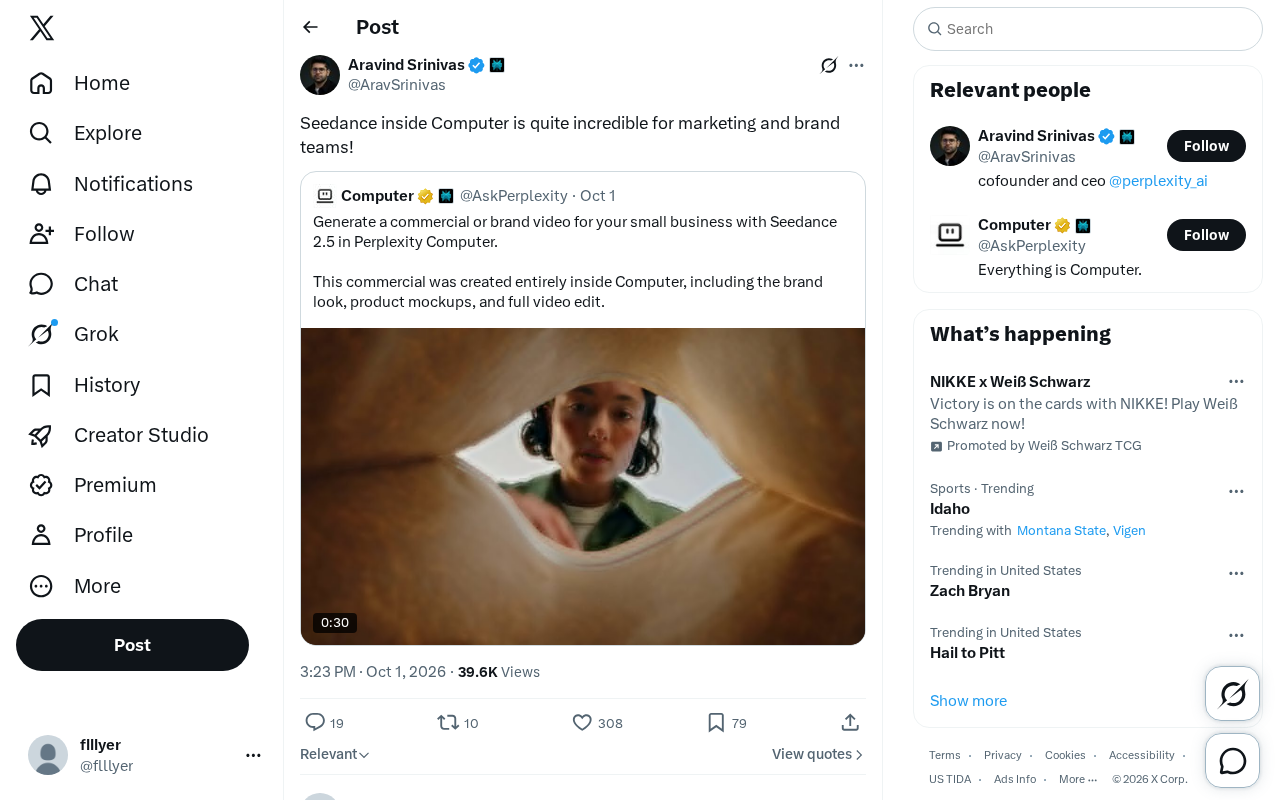
A brief tweet on social media caught the attention of the marketing world: "Seedance inside Computer is quite incredible for marketing and brand teams!" While the original post was minimal in detail, it points to an accelerating trend — AI video generation tools are being integrated into more comprehensive workflow platforms, directly serving enterprise marketing and brand needs.
What Is Seedance
Seedance is an AI tool designed for video content generation. For marketing and brand teams, the core value of tools like this lies in compressing what once required a professional production and editing team into something a small group — or even a single person — can accomplish quickly. When embedded into a larger "Computer" (think of it as an integrated AI work environment or agentic platform), the idea is that the entire pipeline — from creative concept to asset generation to final output — can be completed within a single environment.
It's worth noting that the original source material is just a single evaluative tweet. Specific details about Seedance's integration with Computer, its features, and performance were not elaborated upon. The analysis below is based on the general application logic of such tools in marketing contexts.
AI video generation tools typically follow one of two technical approaches: text-to-video, where users enter descriptive prompts to generate corresponding visuals; or image/video-to-video, which performs style transfer or content expansion based on existing visual assets. For marketing teams, the latter often aligns more closely with real-world needs — brands typically already have product images, VI guidelines, and existing assets, and what they need is to quickly transform those assets into dynamic content rather than generating unfamiliar visuals from scratch.
The concept of an "Agentic Platform" or "Computer" represents a further architectural evolution: not just a single generation tool, but an integrated environment capable of understanding task objectives, calling on multiple capability modules (generation, editing, retrieval, publishing), and autonomously completing multi-step tasks — essentially giving marketing teams an AI collaborator that can execute operations independently.
Why Marketing and Brand Teams Are Excited
Marketing teams have three defining characteristics when it comes to content production: high volume, rapid iteration, and cost sensitivity. Traditional video production cycles are long and outsourcing is expensive — neither is well-suited to the content update frequency demanded by the social media era.
AI video generation tools address these pain points directly:
- Rapid multi-variant output: A single product talking point can be used to generate multiple short videos in different styles for A/B testing audience responses.
- Lower production barriers: Brand teams no longer need to mobilize production resources every time, freeing up more energy for creative strategy.
- Workflow integration: When generation capabilities are embedded in a unified platform, the handoff from copy to visuals to publishing becomes smoother, reducing the friction of switching between tools.
Why Integration Matters
The key phrase in the tweet is "inside Computer" — the integrated form of the tool. This reflects an evolutionary direction for AI products: standalone capabilities are being consolidated into more comprehensive agentic work environments.
For enterprise users, AI tools scattered across different platforms create management and collaboration overhead. An integrated platform that can handle video generation, copywriting, asset management, and more — allowing marketing teams to complete most of their work within a single interface — is likely the underlying source of the "incredible" assessment in that tweet.
The fragmentation problem in today's MarTech Stack is widespread: a mid-sized brand team might simultaneously use a design tool, a copy generator, an asset management system, a social scheduling platform, and a data analytics dashboard, with massive amounts of manual work required to bridge the data silos and workflow gaps between them.
The core value of an integrated AI platform lies in connecting these elements through a unified context and memory layer — the video generation module can directly read visual guidelines from the brand asset library, the output from the copy module can feed directly into the video script input, and generated results can be pushed directly to the content distribution queue. This kind of "seamless handoff" relies technically on API interoperability between modules and a unified workflow orchestration layer — which is also one of the core competitive battlegrounds among major AI platform vendors today.
A Rational Take: Information Is Still Limited
This tweet reads more like an immediate reaction to a user experience than a systematic evaluation. When assessing tools like this, marketing teams still need to pay attention to several practical considerations: the consistency of generated content quality, the degree of control over brand visual consistency, commercial copyright compliance, and compatibility with existing MarTech stacks.
AI video tools are improving rapidly, but actually integrating them into brand production workflows requires validating their reliability on real projects. For teams interested in exploring these tools, it's advisable to pilot them on smaller-scale projects first, assess their actual impact on existing workflows, and then decide whether to adopt them more broadly.
Related articles

"Black October": Did AI Uncover 3% of All Critical Vulnerabilities Ever?
A Reddit post claims 3% of all critical software vulnerabilities ever were found in the past month, dubbed 'Black October.' We break down the statistical issues, how AI-assisted code auditing accelerates discovery, and how developers should respond.

Microsoft Project Gecko: Using AI to Bridge Language Gaps for African Farmers
Microsoft's Project Gecko launches PharmaChat, letting African farmers ask questions in their native language and get precise video clips and farming book chapters via AI. The project also releases three interactive manuals to advance inclusive AI.

Musk's Space Dominance: How Starlink Throttling Undermines Ukraine's Defense
SpaceX's Starshield throttling disabled Ukraine's high-speed interceptor drones, exposing how Musk's private control over low Earth orbit communications affects battlefield dynamics and national security, and highlighting the risks of commercial space militarization and space governance dilemmas.