Senator Slotkin: AI Regulation, Democratic Party Renewal, and a New Generation of Leadership

Slotkin urges Democrats to refocus on wallet issues and reframe AI regulation with accountability.
Michigan Senator Elissa Slotkin discussed the Democratic Party's direction, AI regulation, and political violence at the University of Chicago. She blames the 2024 loss on failing to focus on voters' wallets, proposes housing, health care, and clean politics as pillars, criticizes AI industry jargon, pushes human-in-the-loop legislation and creator accountability, calls for a data center pause, discloses political violence against her, and confirms she's considering 2028.
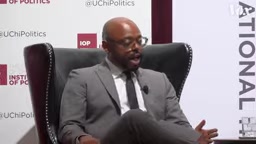
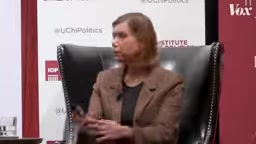
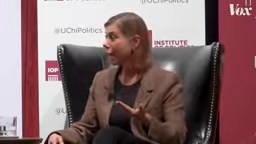
With the midterm elections fast approaching, U.S. Senator Elissa Slotkin of Michigan laid out her views on artificial intelligence regulation, the Democratic Party's course correction, and political violence in America during a live conversation at the University of Chicago Institute of Politics. The former CIA officer and possible 2028 presidential candidate offered a remarkably candid critique of her party's communication failures and proposed a policy framework built on the pillars of "housing, health care, and clean politics."

The Democratic Diagnosis: Losing Focus on "Wallet Issues"
Slotkin said plainly that the Democrats' 2024 defeat stemmed from one fundamental mistake: failing to focus "ruthlessly on people's wallets" the way Americans do. She cited door-knocking in Macomb County, Michigan, where a voter told her: "I don't really like Trump, but I'm betting he'll put more money in my pocket."
In her view, the core problem isn't ideological labels but a loss of priorities. "Democrats support everything, and as a result people can't tell what our priorities are." She also criticized Biden for delaying his withdrawal, arguing there should have been a healthy primary. "He should have been a one-term president. We should have had a primary to clarify our direction and find a candidate with a sharper message and a longer runway."
This diagnosis echoes the warning she issued on a podcast in 2023, when she was fiercely criticized within the party for publicly questioning the feasibility of Biden's reelection bid. "I took a lot of heat for that," she recalled. "But in hindsight, most people feel we should have had a healthy primary."
"Fight versus Flight": Redrawing the Party's Divides
Slotkin rejects the traditional "moderate versus progressive" framing. She argues that in the Trump era, the real dividing line is "fight versus flight"—whether one believes power and oversight must be exercised differently, or whether one hopes the political cycle will simply swing back on its own.
"I may be a moderate, but I'm on the fight team," she said. The framework's anchor is class rather than identity: she believes America's existential threat is not abroad but the collapse of the middle class and the American Dream. "When the middle class has no lobbyists, every other interest group does. Democrats should be the lobbyists for the middle class."
Her three policy pillars—housing, health care, and clean politics—all point toward the same goal. On housing, she advocates declaring a "housing emergency," given America's shortage of 4 million homes. On health care, she supports some form of public insurance option: "You can call it Medicare for All, you can call it the public option, call it whatever you want—it's health care." On clean politics, she calls for banning corporate PACs, imposing term limits and age limits on the Supreme Court, and prohibiting members of Congress and their spouses from trading stocks and prediction markets.
AI Regulation: "Accountability" Instead of "Misalignment Incidents"
Slotkin's criticism of the AI industry was especially sharp. She recounted a conversation with an executive at a prominent AI company who repeatedly used the term "misalignment incidents." She cut him off: "You mean you screwed up? You mean mistakes, errors, call it whatever you want."
"We know what you're talking about. Your creation is committing felonies," she said. "If you just said 'This shouldn't have happened, it was an accident, and we're working to make sure it never happens again,' you'd have far more credibility."
On the legislative front, she revealed that her team drafted the first bill requiring that "humans stay in the loop for life-and-death decisions." She explicitly supports holding creators accountable for the behavior of AI outputs: "I personally believe that if you create something, you're responsible for what it does. That's a radical concept, but it's urgently necessary for AI."
She was strongly critical, however, of the current White House's AI policy. She accused the president of claiming he would beat China in the AI race while exporting the most advanced AI chips to China that had previously been banned: "If you hear the president say he's beating China in the race, that's bullshit. He handed the keys to the Chinese."
Human-in-the-Loop is a core principle in AI governance: human judgment and final authorization must be preserved at critical decision points in automated systems. In high-risk settings such as health care, justice, and the military, the principle requires that algorithmic outputs serve only as recommendations, subject to review by qualified human operators before execution. Critics argue that human-in-the-loop can become a "rubber stamp"—operators formally confirm under time pressure or out of overtrust in the system, actually obscuring accountability. Slotkin's legislation focuses this principle on "life-and-death decisions," attempting to draw a baseline between technical efficiency and public accountability.
Data Centers and Public Consent: The Need for a "Pause"
Asked how the U.S. can win the AI race when 70% of the public opposes data centers in their communities, Slotkin acknowledged the problem is one of procedural justice. "No community should be forced to accept a data center." She described the situation in her state: communities bullied into signing agreements under nondisclosure agreements (NDAs), with no clarity about who is responsible if the company goes bankrupt.
She believes a temporary pause is needed so communities can assess the real impact of data centers on water, power, and jobs. "If a community wants to invite them in—Ohio has a lot—then go do your thing." But she also noted that public fear partly stems from how AI company leaders communicate: "The people leading AI companies are weird. They talk in strange ways, they talk about the apocalypse. If you have to pause and think after being asked 'Should humanity continue to exist?'—you're already disconnected from normal people."
As for Michigan Governor Whitmer's earlier welcoming stance toward data centers, Slotkin said diplomatically: "Everyone has to live with their decisions. These data centers bring a lot of money, and they're genuinely attractive to Midwestern states. But what I'd say is, this isn't what the people want."
The water and power footprint of data centers is key context for understanding community resistance. Large AI training and inference clusters require continuous cooling; a single hyperscale data center can consume millions of liters of water per day, with power demand often measured in hundreds of megawatts—equivalent to the electricity use of tens of thousands of homes. In the Midwest, the strain data centers place on local grids can drive up residential electricity rates and intensify water scarcity. At the same time, the tax revenue and handful of jobs data centers bring are often exaggerated, while responsibility for environmental remediation after a company goes bankrupt or relocates remains unclear. This is precisely the logic behind Slotkin's emphasis on "assessing real impact" and a "pause."
Political Violence and Accountability: Signature Cases Beat All-Out War
Slotkin rarely discloses details of the political violence she has faced: bomb threats called in to her farm, suspicious packages delivered to her home, her father swatted in the middle of the night, police cars stationed outside her siblings' homes. She also mentioned that the Justice Department had opened an investigation into her, that her legal fees reached $40,000 a month, and that she was told she would need to turn herself in to the Justice Department if criminally charged.
"I'm someone trained by the CIA, who has worked alongside the military and law enforcement my whole life, and now I'm being accused of being a traitor. That changes your entire view of what's happening in this country," she said. "It also made it clear to me that this person is running the standard playbook of authoritarianism."
On the path to accountability, she advocates "effectiveness first": if Democrats win the House, they should pick two or three signature cases and pursue them fully, rather than making accountability their entire political identity. "People can feel the corruption in the East Wing of the White House—that's more concrete than some unnamed program at the Pentagon." She also stressed the importance of holding accountable those around Trump who "do his bidding," since they don't enjoy the same immunity as the president. "I want young people to graduate thinking: 'Work for the Trump administration? That could buy me a world of trouble.' That's deterrence."
Swatting is a violent tactic that exploits the law enforcement system to harass: perpetrators fabricate emergency reports (such as shootings or hostage situations) to lure SWAT teams to raid a target's home, potentially causing injury or even death. In recent years, multiple swatting incidents in the U.S. have targeted public officials, journalists, and minorities, and the FBI has classified it as a growing threat. The tactic's insidiousness lies in the fact that perpetrators often operate across state or even national borders, while victims bear the psychological trauma and security risks of the raid alone. Slotkin's disclosure that her family was swatted is meant to show that political violence has escalated from verbal threats to systematic intrusions into private life.
A New Generation of Leadership and 2028
Slotkin confirmed she is "considering" a 2028 run but stressed that the candidate doesn't have to be her. "I just need someone who understands the mission. If that person emerges from a big process, I'll be the first to join their team."
She believes the American public is looking for generational change, and that the Democratic Party's fear about the "electability" of female candidates is a "depressing misreading." She was blunt about the gulf between the donor class and ordinary voters: "The donors who are ready to write checks are still stuck in old thinking—they want a Christian, white, straight, middle-aged man. Can you build us one in a test tube?"
"I say bullshit to that view. The data supports my judgment."
Foreign Policy and Party Unity
On foreign policy, Slotkin explicitly opposes U.S. military action against Iran. Drawing on her three tours in Iraq, she stressed the cost of war: "War means people die, people are maimed. It's serious business." She argued that Iran now has a veto at the Strait of Hormuz, that American service members and partner countries face greater risk than before the war, and that "by any measure, we are less safe."
On divisions within the party over Israel policy, she acknowledged a real shift but refused to make it an absolute red line. Citing the Michigan Senate primary, she described how she campaigned alongside candidates with different positions: "We're rock solid that Trump is a threat to democracy and that housing affordability is an existential issue. We differ in style, and sometimes on foreign policy. But you can disagree as long as you're not a jerk."
She offered a blunt political assessment: "I'm tired of Democrats shooting at each other. No one benefits more from that than Donald Trump. He thrives on it. I'm done. I think that's part of why Trump came back—we couldn't get our own act together."
Editor's Commentary
Slotkin's argument attempts to offer the Democratic Party a de-ideologized path to reorganization: class and economic anxiety in place of identity labels, a "fight" posture in place of proceduralism, and concrete accountability in place of all-out confrontation. Her AI regulation proposals—human-in-the-loop, creator accountability, a data center pause—are workable at the Senate level, but the tension between "pause" and "race" remains unresolved. Her openness to 2028 and her public criticism of the donor class also reflect deep generational and class fractures stirring within the Democratic Party.
One-line Summary
Slotkin urges Democrats to return to wallet issues and reframe AI regulation and accountability with a fighting posture.
Paragraph Summary
In a conversation at the University of Chicago Institute of Politics, Michigan Senator Elissa Slotkin laid out her views on the Democratic Party's direction, AI regulation, and political violence. She attributes the Democrats' 2024 defeat to a failure to focus on voters' wallets and advocates three pillars—housing, health care, and clean politics—to become the lobbyist for the middle class. On AI regulation, she criticizes the industry for using terms like "misalignment incidents" to dodge the issue, pushes for human-in-the-loop legislation and creator accountability for AI behavior, and calls for public consent and a temporary pause on data centers. She also disclosed details of the political violence she has faced, advocates effective accountability through signature cases, and confirmed she is considering a 2028 run.
Related articles

uGAP: An AI Platform Unifying 100+ African Geospatial Datasets
uGAP is an African geospatial AI platform by a University of Cape Town team, unifying 120+ African datasets with a Python SDK for discovery, processing, and model training, already used in cyclone flood mapping.

Cursor Can Now Control Your Computer: AI Agents Can Drive Desktop Apps for Testing
Cursor adds desktop control: AI agents can drive desktop apps like the iOS Simulator to test their own features. We analyze the impact on dev workflows, possible technical approaches, and reliability concerns.

Vibecoding a Custom Inference Engine: High Hopes, Harsh Reality
A Reddit developer shares the real experience of vibecoding a custom inference engine: running GGUF Q4 models in the browser with WebGL2 and GLSL, only to fall into tokenizer debugging hell. This article analyzes the engineering challenges of browser-side LLM inference and why cloning llama.cpp is the more rational choice.