Sephora's AI Shopping Assistant in Practice: A Complete Methodology for a 5%+ Conversion Lift

How Sephora's OpenAI-powered AI shopping assistant delivered a 5%+ conversion lift and reusable retail AI lessons.
Sephora partnered with OpenAI to bring its in-store beauty advisor experience online via an AI shopping assistant, achieving a conversion lift of over 5%—roughly 5x traditional personalization. This article breaks down its conversational commerce design, RAG architecture, ChatGPT integration, and four key implementation lessons for retail AI transformation.
In the strategic landscape of beauty retail giant Sephora, AI and technology are no longer just nice-to-have tools—they've become a driving force deeply embedded in the core of the business. Recently, at a tech-sharing session, Sephora detailed the AI shopping experience it built in partnership with OpenAI and disclosed highly compelling conversion data. This article distills its core practices and reusable lessons learned.
Sephora's Scale and AI Strategic Positioning
To understand the logic behind Sephora's investment in AI, you first need to understand its scale. According to the presenter, Sephora has 80 million active members, with its website and app receiving up to 2.5 billion visits per year, and operations spanning 37 countries and over 3,000 stores.
At this scale, any tiny experience optimization gets amplified into significant business value. This logic has solid economic foundations: when the user base reaches tens of millions, even a 0.1% conversion lift can translate into hundreds of millions of dollars in additional annual revenue. This is precisely the fundamental driver behind large retail platforms' heavy investment in AI infrastructure—marginal costs remain nearly unchanged, while marginal returns scale linearly with size.
Sephora positions AI as a core capability serving three groups:
- For customers: delivering a more personalized, smoother omnichannel shopping experience;
- For brand partners: using data insights to help brands understand their business performance on the Sephora platform;
- For employees: ensuring teams have the tools and skills to use AI.
Notably, Sephora weaves AI throughout its entire value chain—from the digital team's website personalization and the marketing team's generative content creation, to the supply chain team's sales forecasting, and the media team's Mixed Marketing Modeling (MMM) to optimize ad spend.
Background: Mixed Marketing Modeling (MMM) is a statistical analysis method used to quantify the contribution of different marketing channels (such as TV ads, social media, and search bidding) to sales performance, helping businesses optimize ad budget allocation. Traditional MMM relies on linear regression of historical data, but modern AI-driven MMM introduces Bayesian inference and machine learning to more precisely capture nonlinear effects and cross-channel synergies. Against the backdrop of tightening privacy policies and the gradual demise of third-party cookies, MMM is regaining prominence as a core attribution tool for large retailers—it doesn't rely on individual-level tracking data but infers channel contributions through statistical modeling of aggregate data, naturally aligning with the privacy compliance requirements of the post-cookie era.
Viewed through the lens of value-chain-wide AI deployment, Sephora's practice represents a fairly advanced stage of AI maturity in retail. McKinsey categorizes enterprise AI maturity into four levels: Pilot, Scale, Integration, and AI-Native. Sephora's deployment has clearly entered the third stage—AI is no longer a standalone business unit but is embedded across all core processes including supply chain, marketing, customer service, and content, forming a systematic, mutually reinforcing capability.
This full-chain perspective is a hallmark approach for retail enterprises scaling AI adoption.

Core Practice One: The AI Beauty Assistant on the Website
Sephora's most representative AI application is bringing the in-store service experience online. The presenter noted that one of Sephora's biggest competitive advantages is its in-store "Beauty Advisors"—customers walk into stores precisely to get personalized advice on skin type, complexion, and product usage. And this service experience is exactly what online shopping has long lacked.
This pain point is especially acute in the beauty category. Compared to more standardized categories like electronics or books, beauty purchase decisions depend heavily on subjective variables such as individual skin type, complexion, and usage habits, and with fast product iteration and complex ingredients, ordinary consumers struggle to filter effectively on their own. This makes beauty one of the retail verticals most naturally suited to conversational AI—"expert advisor-style recommendations" happen to be exactly where LLMs excel: handling complex constraint conditions across multi-turn conversations.
A Conversational Loop from Search to Checkout
They recreate this experience through the AI Beauty Shopping Assistant embedded in the website. The assistant's technical foundation combines large language models (LLMs) with a Retrieval-Augmented Generation (RAG) architecture.
RAG Architecture Explained: Retrieval-Augmented Generation is an AI architectural paradigm that dynamically combines large language models with external knowledge bases. Its core idea is: before the model generates an answer, it first uses vector search to find the most relevant document fragments from an external database, then injects these fragments as context into the model's prompt to guide it in generating answers based on the latest, most accurate information. This solves two major pain points of pure LLMs—outdated information caused by the training cutoff, and factual errors caused by model "hallucination." For a beauty retailer like Sephora with a massive number of SKUs and highly specialized ingredient information, RAG is especially critical: it ensures the AI assistant can query the latest ingredient lists, inventory status, and user reviews for tens of thousands of products in real time, rather than relying on static knowledge from training—achieving a level of expertise and accuracy close to that of a human beauty advisor.
At the engineering implementation level of RAG, the beauty vertical faces unique challenges. Sephora's product database contains tens of thousands of SKUs, each associated with multi-dimensional structured and unstructured information such as ingredient lists, skin-type compatibility tags, user reviews, and dermatological certifications. Only by uniformly embedding these heterogeneous data into high-dimensional vectors and storing them in a vector database (such as Pinecone, Weaviate, or pgvector), combined with semantic similarity retrieval, can the system return precise results in millisecond-level latency when a user poses a compound-condition query like "an alcohol-free moisturizer suitable for sensitive skin." This engineering complexity is one reason why building a RAG system has a far higher barrier than simply calling an LLM API.
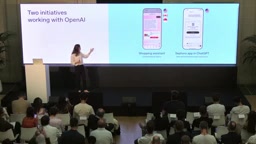
In the demo, after a user searches for "mascara" and enters the product page, they can open the "AI Beauty" entry point to launch a series of conversational interactions:
- Asking "What ingredients does this mascara contain?"—the assistant lists them one by one;
- Following up with "Is it waterproof?"—the assistant gives an accurate answer;
- The user can directly add the product to cart and complete checkout.
The entire flow seamlessly links information inquiry, product recommendation, and purchase behavior, forming a complete conversation-driven conversion loop.
A Conversion Lift of Over 5%
The most compelling part is the data. The presenter revealed that this AI assistant delivered a conversion lift of over 5%. She emphasized that for a business of Sephora's size, 5% is "quite enormous"—conventional personalization optimizations typically only yield around 1% growth. In other words, the AI assistant's effect is roughly 5 times that of traditional personalization methods.
To understand the significance of this figure, one needs to restore the industry benchmark for e-commerce conversion rates. According to research from Statista and the Baymard Institute, the average e-commerce conversion rate for the beauty and personal care category is around 2%–4%, higher than the overall industry average (about 1.5%–3%), but still limited by the complex purchase decision path. Achieving a 5% relative lift on top of this baseline means the AI assistant has effectively compressed the informational friction in the "browse–consider–decide" chain—users no longer need to leave the page to visit search engines or forums for secondary verification, as the conversational interface compresses "consultation" and "purchase" into a single session.

Core Practice Two: Embedding the Sephora App into ChatGPT
The second initiative in partnership with OpenAI is integrating the Sephora app directly into ChatGPT. The strategic intent is clear: rather than waiting for customers to come to its own platform, Sephora proactively appears in the channels customers already use daily.
The Technical Principle and Strategic Value of GPT Actions: OpenAI's GPT Actions (formerly the Plugin system) is a developer framework that allows third-party services to deeply integrate with ChatGPT through standardized APIs. Brands only need to provide an interface description file conforming to the OpenAPI specification, and ChatGPT can understand when to call the interface, how to pass parameters, and how to naturally weave the returned results into the conversation. This mechanism essentially upgrades ChatGPT from a mere Q&A tool into an "AI operating system" capable of orchestrating external services. In terms of the traffic landscape, ChatGPT's global monthly active users have surpassed 200 million, and queries within it often carry clear purchase intent, with traffic quality far exceeding generic social media exposure. Sephora's early entry is analogous to brands rushing to establish a presence in Google Shopping results in the early 2000s—early movers not only gain early traffic dividends but also accumulate conversation data, optimize recommendation models, and form a data flywheel effect, making it increasingly difficult for latecomers to catch up.
From a more macro traffic migration trend, this move is forward-looking. The traditional search engine paradigm of "keyword → link list → click-through" is being replaced by conversational AI's paradigm of "intent expression → direct results." According to research from BrightEdge, users in some categories have already begun bypassing search engines to obtain information directly within AI assistants. The retail industry's "Zero-Click Search" problem is evolving into "Zero-Navigation Purchase" in the AI era—users complete the entire flow from expressing a need to placing an order within a conversation, greatly compressing the value of intermediate pages. Brands that establish deep integration in ChatGPT early are betting on the arrival of this paradigm shift.
For retailers, this is analogous to the strategic logic of the previous internet generation's "joining Taobao" or "deploying on Google Shopping"—being the first to occupy the mindshare and interfaces of emerging high-traffic platforms often allows reaching a large number of potential users at extremely low acquisition cost, forming a first-mover advantage.
As ChatGPT becomes an increasingly frequent entry point for more and more users, establishing a "presence" within it means brands can capture needs, provide recommendations, and drive purchases within users' natural conversational flow. This represents a new "channel-forward" mindset for retail brands—AI conversation platforms are becoming the next-generation major gateway for traffic and transactions, following search engines and social media.
Implementation Lessons: Four Key Takeaways for Building an AI Assistant
Beyond the impressive results, the presenter candidly shared hands-on experience from building the AI Beauty Assistant, offering direct reference value for any team looking to deploy conversational AI.
1. Guided Experiences Outperform Open-Ended Input
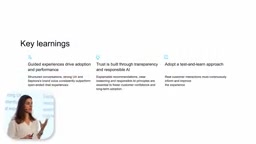
The most core lesson: the more "guided" the experience, the higher the user interaction rate. Rather than presenting users with a blank input box to ask their own questions, it's better to preset a batch of guided options, such as "gifts under €50" or "summer-appropriate products."
This finding aligns closely with the "Paradox of Choice" in cognitive psychology. In his book, psychologist Barry Schwartz systematically argued a counterintuitive finding: above a certain threshold, increasing the number of options does not improve user satisfaction but instead intensifies "decision paralysis"—users tend to abandon choosing altogether out of fear of making a suboptimal choice.
The UX Design Principle of Conversational AI: Compared to traditional graphical user interfaces (GUIs), conversational interfaces have almost unlimited interaction possibilities, but this openness demands high cognitive capacity—users must first "imagine" what the system can do, then translate their needs into language. The design of suggested prompts is essentially about "visualizing capability boundaries": it tells users "this AI is good at answering these kinds of questions," while shifting the user's cognitive burden from "what should I ask" to "which do I pick," transforming an open-ended task into a closed-ended choice and significantly lowering the psychological threshold for first-time interaction. This is also the core design logic behind why major AI products (including ChatGPT and Claude) provide example prompts on their first screens.
From a deeper product design perspective, guided design also solves the AI system's "cold start" problem. For users interacting with an AI assistant for the first time, a blank input box means they neither know what they can ask nor are sure what quality of answer they'll get. Preset options, by showcasing high-quality "demonstration conversations," help users quickly calibrate expectations and build confidence in the system's capabilities, thereby greatly increasing the completion rate of the first session—this is the key conversion node from "exposure" to "activation."
The presenter put it bluntly: "Users are a bit lazy and don't much like typing." Providing ready-made question filters can significantly lower the interaction threshold and boost participation. Additionally, smooth UX design and maintaining Sephora's consistent brand voice are equally crucial—users should feel like they're receiving expert advice in-store, not interacting with a cold, robotic bot.
2. Recommendations Must Be Transparent to Earn User Trust
When giving product recommendations, Sephora proactively explains "why this product rather than another"—the reasons may come from known information such as the user's purchase history and brand preferences. This is a typical business-scenario practice of Explainable AI (XAI).
The Dual Commercial and Compliance Value of XAI: Explainable AI aims to make an AI system's decision-making process understandable and auditable by humans. In recommendation systems, XAI implementations include rule-based explanations ("because you purchased brand X, we recommend product Y from the same brand"), feature importance visualization (SHAP values), and contrastive explanations ("compared to product A, product B is more suitable for you because..."). On the commercial side, research shows consumers have an inherent distrust of "algorithmic recommendations," while transparent rationale explanations can effectively activate users' "cognitive endorsement," turning passive acceptance into active choice, and lifting recommendation click-through and purchase conversion rates by an average of 15%–20%. On the compliance side, the EU AI Act brings recommendation systems under regulatory scope, requiring high-risk AI systems to provide understandable decision rationales; GDPR Article 22 also explicitly grants users the right to obtain explanations for automated decisions. Sephora's transparent recommendation practice therefore satisfies both commercial conversion and legal compliance requirements simultaneously.
It's worth adding that transparent recommendations carry special trust-building significance in the beauty category. Improper use of beauty products can trigger negative reactions such as skin allergies or irritation, so consumers demand significantly higher credibility from recommendation sources than in other categories. When the AI assistant can clearly explain "we recommend this hyaluronic acid serum because your browsing history shows you care about moisturizing efficacy, and your skin profile is marked as dry," the recommendation shifts from an "algorithmic black box" to a "professional advisor's judgment," greatly enhancing the user's sense of psychological safety.
3. Drive Continuous Iteration with Test & Learn
The team observes customers' real usage behavior through extensive A/B testing, and uses this to rapidly iterate and continuously improve the experience. Notably, A/B testing in AI conversation systems faces unique challenges: the randomness of LLM output (controlled by the Temperature parameter) makes results less reproducible, and evaluation metrics for conversational interactions are far more complex than click-through rates, requiring simultaneous measurement of multiple dimensions such as conversation turns, Intent Fulfillment Rate, and final conversion.
In building the evaluation framework, the industry is forming a dedicated metrics framework for conversational AI, often called "Conversational Quality Metrics." Beyond traditional e-commerce conversion rate and average order value, it must also introduce: conversation completion rate (whether users exit mid-way before getting an answer), intent recognition accuracy (whether the AI correctly understood the user's real need), hallucination rate (the proportion of times the AI gives incorrect product information), and sentiment score (user satisfaction with the conversation process). Together, these metrics form a multi-dimensional quantification system for the AI assistant's business value, and they are also the core dashboard for Sephora's ongoing internal iteration.
With its massive user base of 80 million active members, Sephora mitigates the small-sample problem to some extent, making test conclusions more statistically reliable—this itself is one of the structural advantages large-scale platforms hold over small and medium-sized enterprises.
The "test–learn–optimize" cycle is the foundational methodology for staying competitive in the rapidly changing AI field, and the key mechanism for converting experimental results into stable business value.
4. Beyond Technology, Organizational Learning Ability Is the Real Moat
In her closing remarks, the presenter offered an insight that transcends technology itself: even though Sephora is already quite advanced in certain areas, AI remains a "brand-new and rapidly changing" field. The real competitive barrier isn't just having a partner like OpenAI or advanced algorithms, but the entire organization's ability to continuously learn and evolve together—only this way can it create experiences for customers that are both sustainable and genuinely aligned with their needs.
This insight aligns closely with the theory of "Dynamic Capabilities" in management studies: in an environment of rapid technological iteration, an enterprise's core competitiveness lies not in the resources or technology it possesses at any given moment, but in the organizational capability to sense change, integrate resources, and continuously transform. This theory, proposed by UC Berkeley professor David Teece in the 1990s and originally used to explain the sources of competitive advantage for Silicon Valley tech companies, has gained new interpretive dimensions in the AI era.
When it comes to building organizational capabilities for AI transformation, leading enterprises' practices typically span three levels: the tool level (employees can skillfully use AI-assisted tools to complete daily work), the process level (business processes are redesigned to fully unleash AI's effectiveness, rather than simply layering AI onto existing processes), and the culture level (the organization forms an experimental culture, tolerating AI trial-and-error costs and treating failure as a learning asset). By elevating organizational learning ability to a status as important as technical capability, Sephora's presenter recognizes that: as AI capabilities rapidly commoditize, "having AI or not" will no longer be a source of differentiation, while "how to continuously use AI well" is the truly scarce capability.
Conclusion
Sephora's case provides a mature, results-oriented template for AI implementation: it didn't stop at the surface narrative of "we integrated a large model," but rather tightly leveraged its own core strength (beauty advisor service), transformed it into an online AI experience, ensured recommendation accuracy through the RAG architecture, proved commercial value with a quantifiable conversion lift (+5%), and summarized reusable methodologies such as guided design, transparent recommendations, and continuous iteration.
From a more macro industry perspective, Sephora's practice also marks a new mature stage for AI applications in retail—shifting from early "AI concept marketing" (using AI as a selling point to attract media attention) to "AI value delivery" (proving the ROI of AI investment with verifiable business metrics). This shift requires enterprises to mature simultaneously in technology selection, product design, evaluation systems, and organizational capabilities—none of which can be missing.
For all retail and e-commerce enterprises, Sephora's practice points to a single conclusion—the value of AI lies not in the dazzle of the technology itself, but in whether it can faithfully reproduce and continuously amplify the one thing the brand does best.
Key Takeaways
Related articles

Automate Job Search with AI Agents and Residential Proxies for Precise Matching
Build an AI Agent with MCP and residential proxies to bypass recruitment site anti-scraping and geo-restrictions, scrape thousands of DevOps jobs, then have Claude score and rank each against your resume. Includes proxy comparison experiments, project structure, and cost analysis—filtering only, no auto-submission.

The AI Task Assistant That Knows When to Back Off: A Cure for Activation Struggles
One Small Step is an AI assistant for task initiation struggles, using agentic decisions for guilt-free reminders, timely retreat, and cross-platform task management. The developer shares real test results on 13 tasks and architectural trade-offs.

FastAPI: A High-Performance Python Framework and a Production-Ready API Development Powerhouse
FastAPI is a high-performance web framework based on Python type hints, supporting async and automatic OpenAPI docs. With over 100k GitHub stars, this article analyzes its core strengths, production readiness, and selection advice.