Sequential Editing Without Catastrophic Forgetting: Batch-Equivalent Method Enables Stable LLM Knowledge Updates
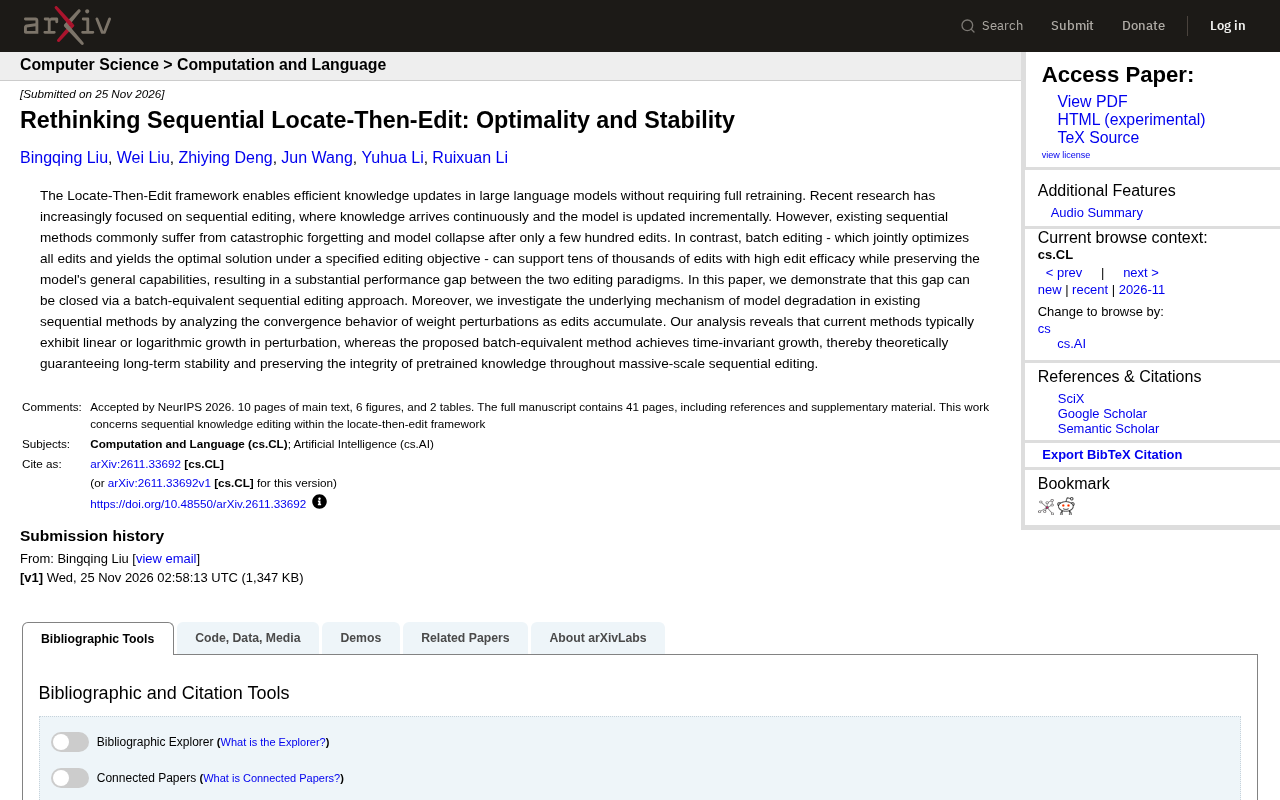
Paper shows sequential knowledge editing collapse stems from accumulated weight perturbations; proposes batch-equivalent method for stable long-term editing.
LLM knowledge updates face a dilemma: costly full retraining versus sequential editing prone to catastrophic forgetting. The paper analyzes why sequential editing collapses after hundreds of edits—linear or logarithmic weight perturbation growth damages pretrained knowledge—and proposes a batch-equivalent method achieving time-invariant perturbation growth and long-term stability.
Large language model knowledge updates have long faced a dilemma: full retraining is prohibitively expensive, while incremental sequential editing easily leads to catastrophic forgetting and model collapse. A recent paper, Rethinking Sequential Locate-Then-Edit: Optimality and Stability, takes a deep look at the root of this problem and proposes a batch-equivalent sequential editing method that preserves the efficiency of sequential editing while achieving stability and editing performance comparable to batch editing.
The Predicament of Sequential Editing: Catastrophic Forgetting and Model Collapse
The Locate-Then-Edit framework enables efficient updates of knowledge in large language models without full retraining. As knowledge arrives continuously, researchers are increasingly focused on sequential editing—where the model must incrementally absorb new knowledge. However, existing sequential methods typically support only a few hundred edits before catastrophic forgetting and model collapse set in.
In contrast, batch editing jointly optimizes all edits and, under a given editing objective, can attain the optimal solution, thus supporting tens of thousands of edits while maintaining high editing efficacy and without harming the model's general capabilities. There is a significant performance gap between the two paradigms.
The paper argues that this gap is not insurmountable. The authors prove that a batch-equivalent sequential editing method can bridge the divide between sequential and batch editing.
Catastrophic Forgetting is a classic problem in continual learning for neural networks: when a model is trained on new tasks or new data, parameter updates overwrite or distort previously learned representations, causing a sharp decline in performance on old knowledge. In the context of LLM knowledge editing, this problem is particularly acute because each edit involves only a few facts yet may affect widely distributed parameters. Model collapse refers to the phenomenon where, after edits accumulate to a certain point, the model's outputs become incoherent, repetitive, or entirely lose instruction-following ability—sometimes even exhibiting language degeneration. In sequential editing, each edit locates and modifies based on the current model parameters, so errors accumulate gradually and eventually deviate from the pretraining distribution. Understanding these two concepts helps clarify why batch editing can constrain overall drift through joint optimization, whereas one-at-a-time editing struggles to maintain long-term stability.
Weight Perturbation Growth Mechanism Reveals the Cause of Collapse
To understand why existing sequential methods degrade after accumulating edits, the paper analyzes the convergence behavior of weight perturbations. The analysis shows that current methods typically exhibit linear or logarithmic perturbation growth; as the number of edits increases, perturbations accumulate and ultimately damage pretrained knowledge.
In contrast, the proposed batch-equivalent method achieves time-invariant perturbation growth, theoretically guaranteeing long-term stability and preserving the integrity of pretrained knowledge during large-scale sequential editing. This finding provides a theoretical basis for designing stable sequential editing algorithms.
Weight perturbation refers to the magnitude of change that a knowledge editing algorithm applies to model parameters relative to the original parameters. In the locate-then-edit framework, the algorithm first locates the key layers or neurons associated with the target fact, then applies low-rank or sparse updates to the corresponding weights. Ideally, each edit should modify only the necessary parameters and keep the perturbation bounded. However, in sequential editing, the localization and updates of subsequent edits are superimposed on prior modifications; if perturbations grow linearly or logarithmically with the number of edits, the model parameters will gradually drift away from the pretraining optimum, undermining general capabilities. Time-invariant perturbation means that no matter how many edits have been performed, the perturbation introduced by a single edit remains stable in magnitude, thereby avoiding cumulative drift. This perspective transforms the problem of editing stability into an analysis of perturbation growth order, providing a quantifiable theoretical criterion for algorithm design.
Batch Equivalence: The Key to Bridging the Performance Gap
Batch editing is powerful because it jointly optimizes all edits, achieving optimality under a given objective. Sequential editing processes edits one by one and is prone to local optima and accumulated error. The core idea of the batch-equivalent method is to make the sequential update process simulate the effect of the batch solution, thereby obtaining the stability and high editing efficacy of batch editing while preserving the low overhead of sequential editing.
The paper validates the effectiveness of the method through theoretical analysis and experiments. Although the abstract does not disclose specific experimental data, the authors claim that the method can support large-scale sequential editing with editing performance comparable to batch editing.
Batch Editing treats a batch of knowledge updates as a joint optimization problem, solving for the parameter modifications corresponding to all edits simultaneously; thus, under a given objective function, it can reach a global or local optimum, with edits constraining each other and avoiding conflicts. Sequential Editing, by contrast, processes edits one by one in temporal order, optimizing only for the current edit each time, and is prone to local optima and accumulated error. Batch equivalence is not simply about accumulating sequential edits into a batch and then processing them; rather, it requires the sequential update process to mathematically simulate the final effect of the batch solution, so that edits arriving online can still converge to a parameter state close to that of joint optimization. The key lies in designing update rules that allow later edits to "correct" rather than "overwrite" the effects of earlier edits, thereby achieving batch-level stability and edit success rates while maintaining low overhead.
Implications for the Knowledge Editing Field
This study re-examines the optimality and stability of the sequential locate-then-edit framework and identifies a fundamental flaw in existing methods regarding weight perturbation growth. The proposal of the batch-equivalent method not only offers a new approach to addressing catastrophic forgetting but also underscores the importance of theoretical analysis in algorithm design.
For LLM applications that require continuous knowledge updates (such as real-time information injection and domain adaptation), this method is expected to significantly improve the reliability and durability of editing. In the future, how to extend this method to more editing objectives and model architectures remains a direction worth exploring.
One-line Summary
The paper reveals that sequential knowledge editing collapse stems from accumulated weight perturbations and proposes a batch-equivalent method for long-term stable editing.
Paragraph Summary
LLM knowledge updates face the dilemma of costly full retraining versus sequential editing prone to catastrophic forgetting. The paper Rethinking Sequential Locate-Then-Edit: Optimality and Stability analyzes why existing sequential editing methods collapse after a few hundred edits: weight perturbations grow linearly or logarithmically, cumulatively damaging pretrained knowledge. In contrast, batch editing jointly optimizes all edits and can support tens of thousands of edits while preserving model capabilities. The authors propose a batch-equivalent sequential editing method that makes sequential updates simulate the effect of the batch solution, achieving time-invariant perturbation growth, theoretically guaranteeing long-term stability, and attaining editing performance comparable to batch editing while maintaining the low overhead of sequential editing—offering a new approach for large-scale continual knowledge updates.
Related articles

S2S: Sparse-to-Sparse Feature Learning Enables Cross-Layer Analysis and Steering
S2S proposes sparse-to-sparse feature learning with layer-by-layer prediction and output-distribution anchoring, achieving stronger adjacent-layer correspondence across eight language models and separating steering effects from reconstruction effects.
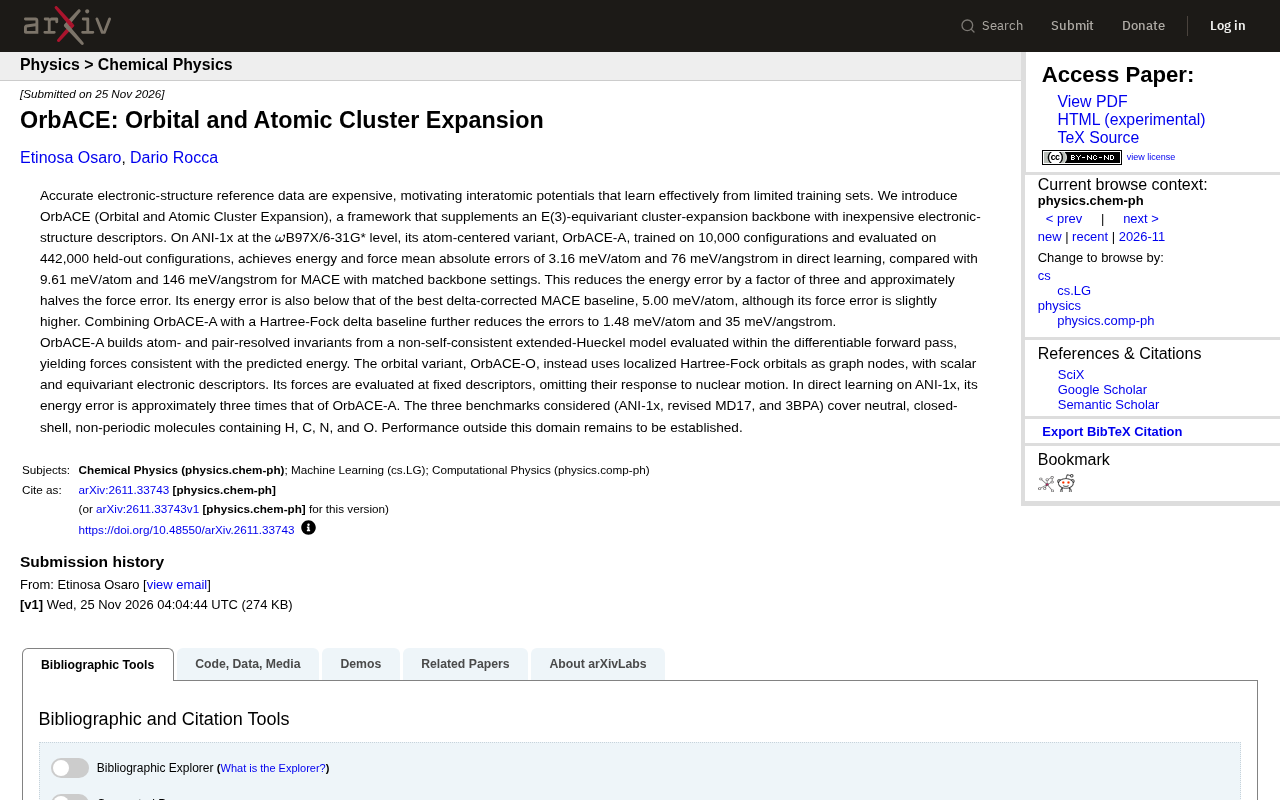
OrbACE Framework: Integrating Electronic Structure Descriptors to Improve Machine Learning Potential Accuracy
OrbACE combines E(3)-equivariant cluster expansion with cheap electronic structure descriptors, achieving one-third the energy error of MACE and half the force error on ANI-1x, offering a high-accuracy MLIP solution for data-scarce scenarios.
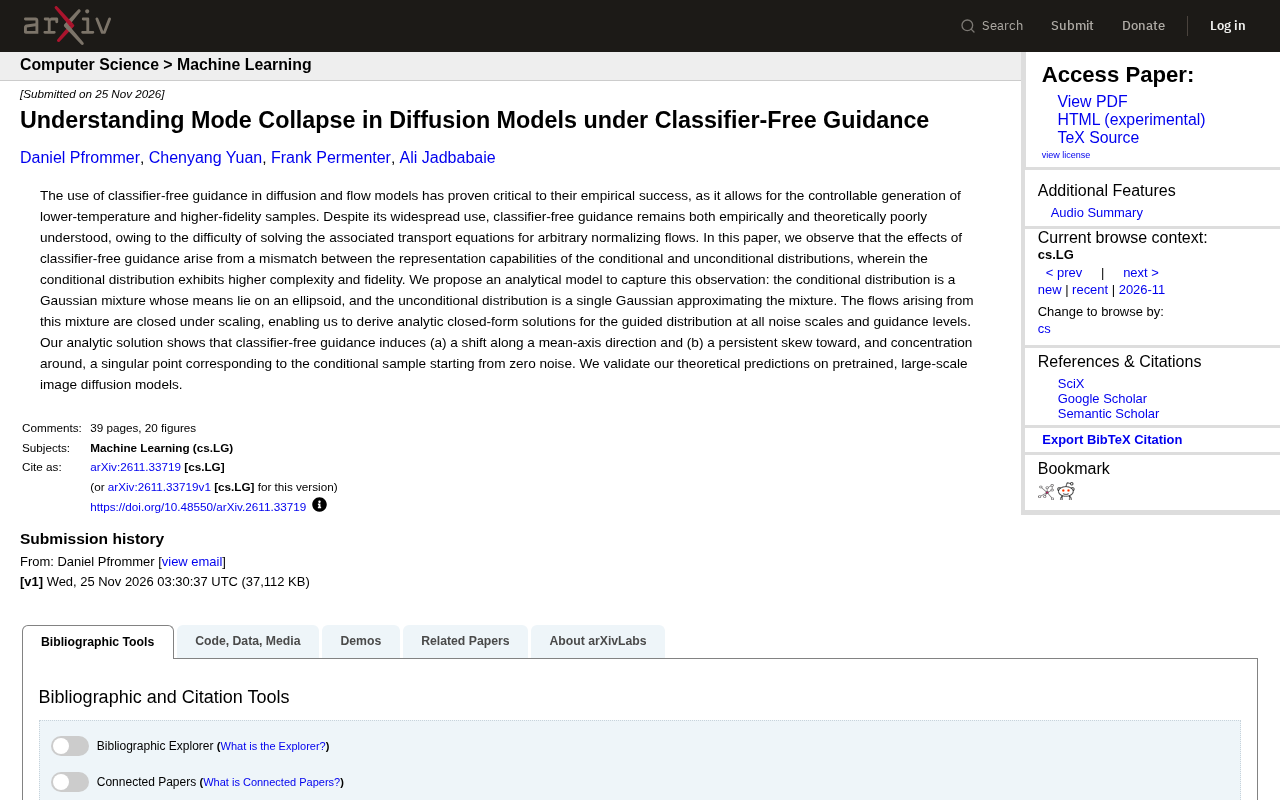
A New Explanation for Diffusion Model Mode Collapse: Representation Mismatch Under Classifier-Free Guidance
A new paper proposes an analytical model revealing the mechanism of mode collapse in diffusion models under classifier-free guidance: representation mismatch between conditional and unconditional distributions causes mean shifts and singular point clustering, verified on large-scale image models.