Short Video Factory: An Open-Source Desktop Tool for AI-Powered Batch Short Video Generation
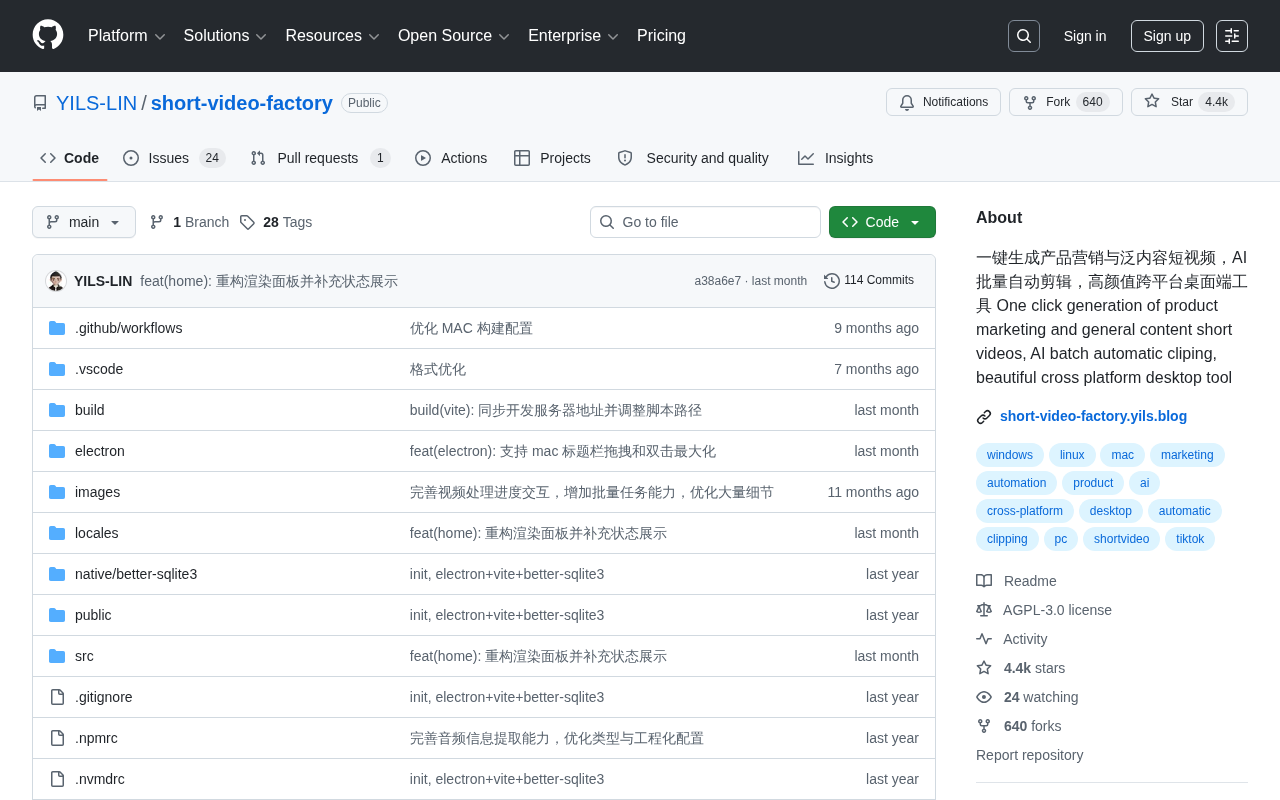
short-video-factory is an open-source AI desktop app for one-click batch short video production at scale.
short-video-factory is an open-source, cross-platform desktop application built with TypeScript, approaching 4,000 GitHub Stars, designed for product marketers and content matrix operators. It integrates script generation, AI voiceover, automatic editing, and subtitle creation into a single one-click workflow, with batch AI clipping as its core capability — significantly reducing the labor cost of multi-platform content distribution. Its GUI-based desktop design lowers the barrier for non-technical users compared to command-line alternatives. However, batch-generated content has creative limitations, and users should remain mindful of compliance risks around asset licensing, AI content disclosure requirements, and platform anti-spam mechanisms.
Short-form video has become the primary battleground for brand marketing and content distribution, yet producing high-quality videos at scale remains a time-consuming, labor-intensive challenge. The open-source project short-video-factory aims to solve this pain point through AI automation — packaging scriptwriting, voiceover, editing, and subtitle generation into a single desktop application centered on "one-click generation" and bulk output. The project has already earned 3,913 Stars and 578 Forks on GitHub, reflecting strong community interest.
What Problem Does This Tool Solve
short-video-factory has a clear positioning: it targets product marketers and general content creators, offering end-to-end automation from raw content to finished video. Traditional short video production involves writing copy, sourcing assets, recording voiceover, editing footage, and adding subtitles — every step requires manual intervention. For marketing teams or content matrix operators who need to publish at high volume, the labor cost is enormous.
The tool's core selling point is AI batch automatic clipping — it doesn't stop at generating a single video, but emphasizes scaled production. For teams that need to distribute content simultaneously across multiple platforms (Douyin, WeChat Channels, YouTube Shorts, etc.), batch capability translates directly into maintaining higher publishing frequency with fewer people.
Tech Stack and Cross-Platform Design
The project uses TypeScript as its primary language, which in a desktop context typically indicates it's built on Electron or a similar cross-platform framework. The author explicitly highlights it as a "beautiful cross-platform desktop tool," meaning this is a fully polished GUI application — not a command-line script.

The cross-platform design covers Windows, macOS, and Linux users, lowering the barrier for non-technical marketers. Compared to open-source scripts that require setting up a Python environment and manually wiring together various APIs, a ready-to-run desktop app is far more practical for content operations teams.
About Electron: Electron is one of the most widely adopted cross-platform desktop frameworks today. Developed and open-sourced by GitHub, it bundles the Chromium rendering engine with the Node.js runtime, allowing developers to build native desktop applications for Windows, macOS, and Linux using web technologies (HTML/CSS/TypeScript, etc.). Notable software built on Electron includes VS Code and the Slack desktop client. Electron's strengths lie in leveraging the existing frontend ecosystem and minimizing cross-platform adaptation costs — the tradeoffs being larger bundle sizes (typically 100MB+) and higher memory usage. For a tool like short-video-factory that calls multiple AI services and needs access to the local file system, Electron provides both a capable GUI layer and convenient access to OS-level functionality (such as FFmpeg for video processing), making it a natural choice for open-source desktop tools in this category.
Who It's For — and Who It Isn't
Based on the project's positioning, this tool is best suited for:
- E-commerce and product marketing teams: Scenarios requiring rapid generation of marketing videos for large numbers of SKUs
- Content matrix operators: Teams managing multiple accounts that need a steady stream of general-purpose content
- Independent creators: Individuals without professional editing skills who want to increase their publishing output
That said, it's worth being realistic: AI-generated videos produced in bulk have a natural ceiling when it comes to personalization and creative depth. For premium content that depends on distinctive creative concepts or strong brand voice, fully automated tools are better suited as a supplement rather than a replacement. Batch production excels at volume; premium content competes on quality — knowing which scenario you're in matters.
Open-Source Value and Caveats
As an open-source project, short-video-factory's transparency is a key advantage — users can audit the code, self-host it, and customize it to their needs, avoiding the subscription costs and data privacy concerns that come with commercial SaaS tools. The nearly 4,000 Stars also signal genuine market demand for this kind of automation.
A few things to keep in mind when using tools like this: First, AI-generated content can raise copyright concerns around source materials — when producing at scale, pay close attention to the licensing of images, music, and fonts used. Second, major platforms are continuously tightening their policies around AI-generated content labeling and moderation; bulk publishing must comply with platform rules to avoid triggering throttling. Third, the maintenance activity and documentation quality of an open-source project directly affect the onboarding experience — it's worth running small-scale tests before committing to production use.
On platform content moderation: Enforcement of AI-generated content policies is accelerating across major platforms. TikTok, YouTube, and others have introduced requirements for creators to disclose AI-synthesized content, with stricter rules applying to certain categories such as news and financial advice. Bulk publishing behavior itself can also trigger anti-spam systems — highly uniform content structures, similar thumbnail templates, or matching audio fingerprints may all be flagged as machine-generated uploads, resulting in demotion or rate limiting. Additionally, when using AI text-to-speech, always verify the commercial licensing terms of your chosen TTS service — some free-tier APIs explicitly prohibit use in commercially distributed content. Before scaling up, test a small batch of content first to evaluate platform indexing and traffic performance, then expand gradually.
Conclusion
short-video-factory represents one direction in the evolution of short video production tooling — toward automation and scale. It consolidates the tedious steps of scripting, voiceover, editing, and subtitles into a single cross-platform desktop application, targeting efficiency-first marketing and content distribution scenarios. For teams prioritizing publishing output, it offers a compelling open-source option worth exploring. But when it comes to creative quality and compliant usage, users still need to exercise clear-headed judgment.
Related articles
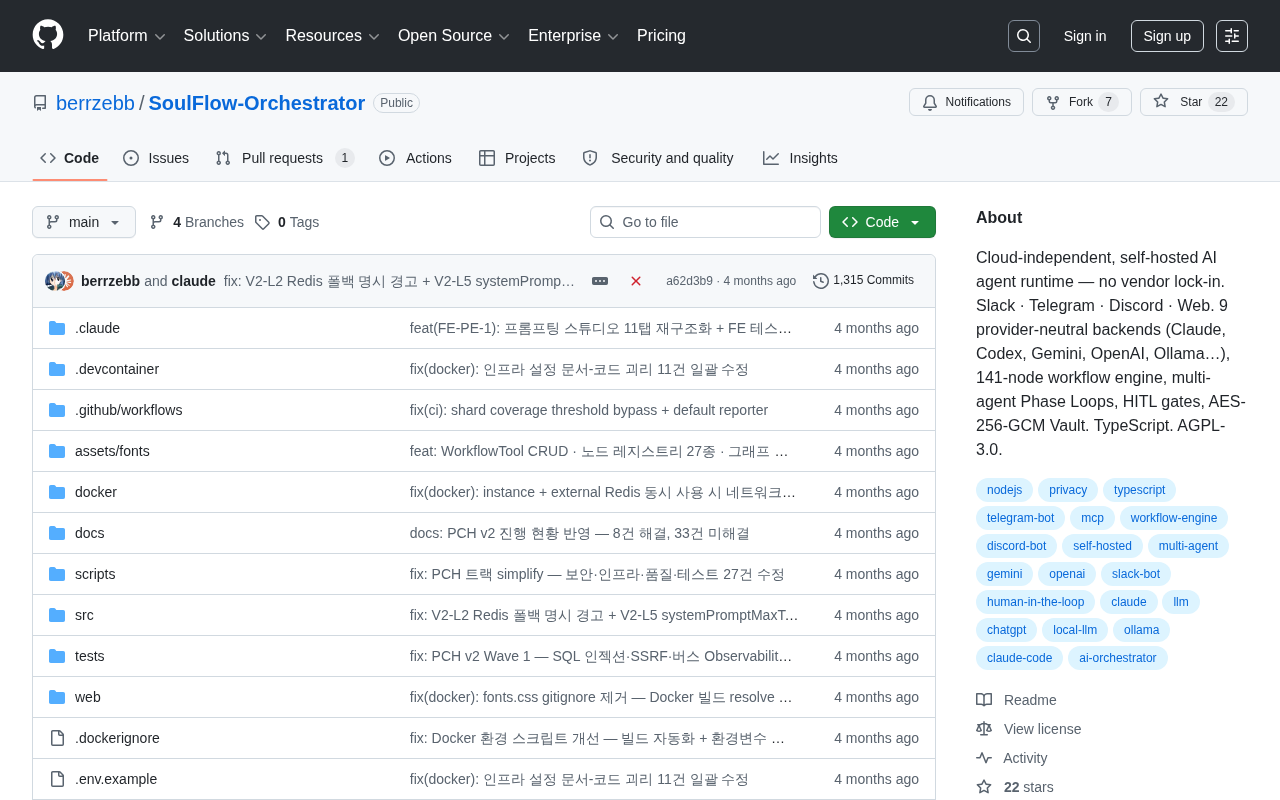
SoulFlow-Orchestrator: A Self-Hosted, Vendor-Lock-In-Free AI Agent Runtime
SoulFlow-Orchestrator is an open-source, self-hosted AI agent runtime with no vendor lock-in. Supports 9 neutral backends (Claude, OpenAI, Ollama), 141-node workflow engine, multi-agent loops, and HITL gates.
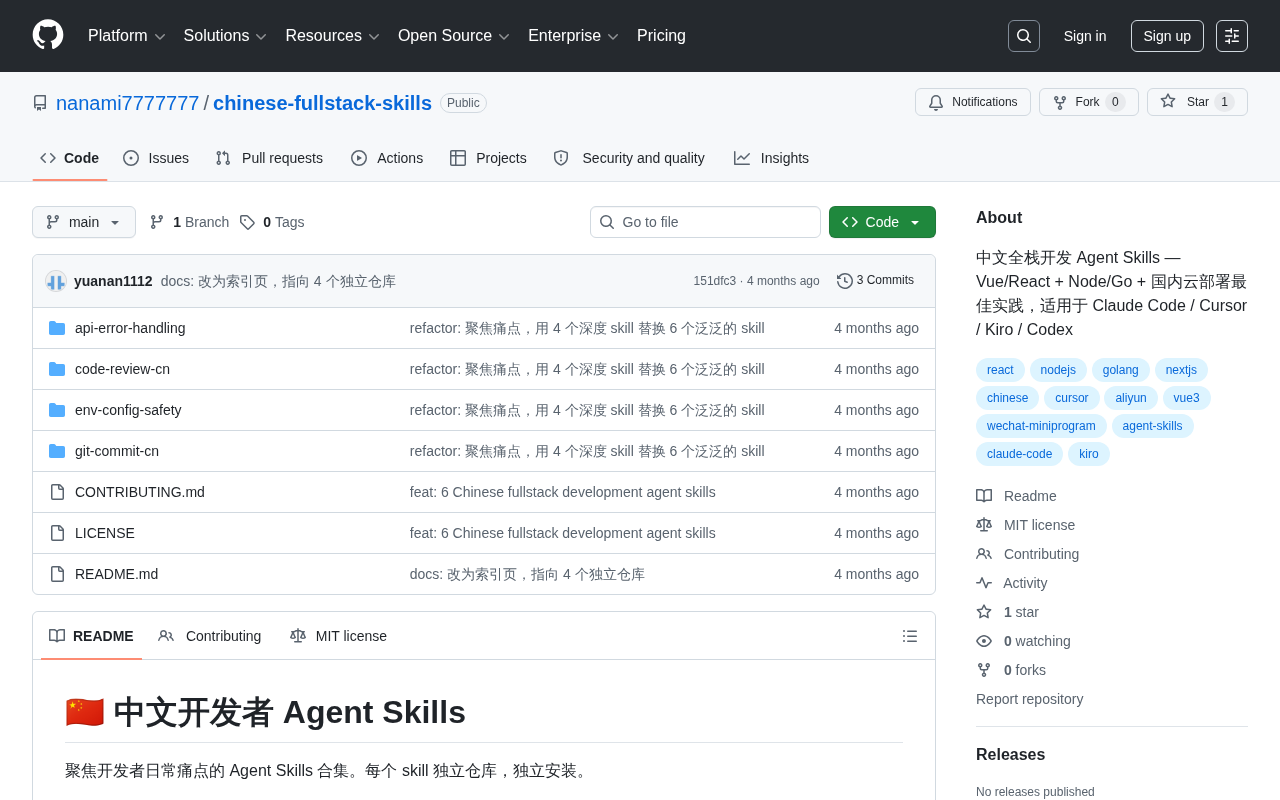
Chinese Full-Stack Agent Skills: A Skill Library Tailored for Domestic AI-Assisted Development
chinese-fullstack-skills is an Agent Skills library for Chinese full-stack development, covering Vue/React, Node/Go, and domestic cloud deployment best practices. Compatible with Claude Code, Cursor, Kiro, and Codex.
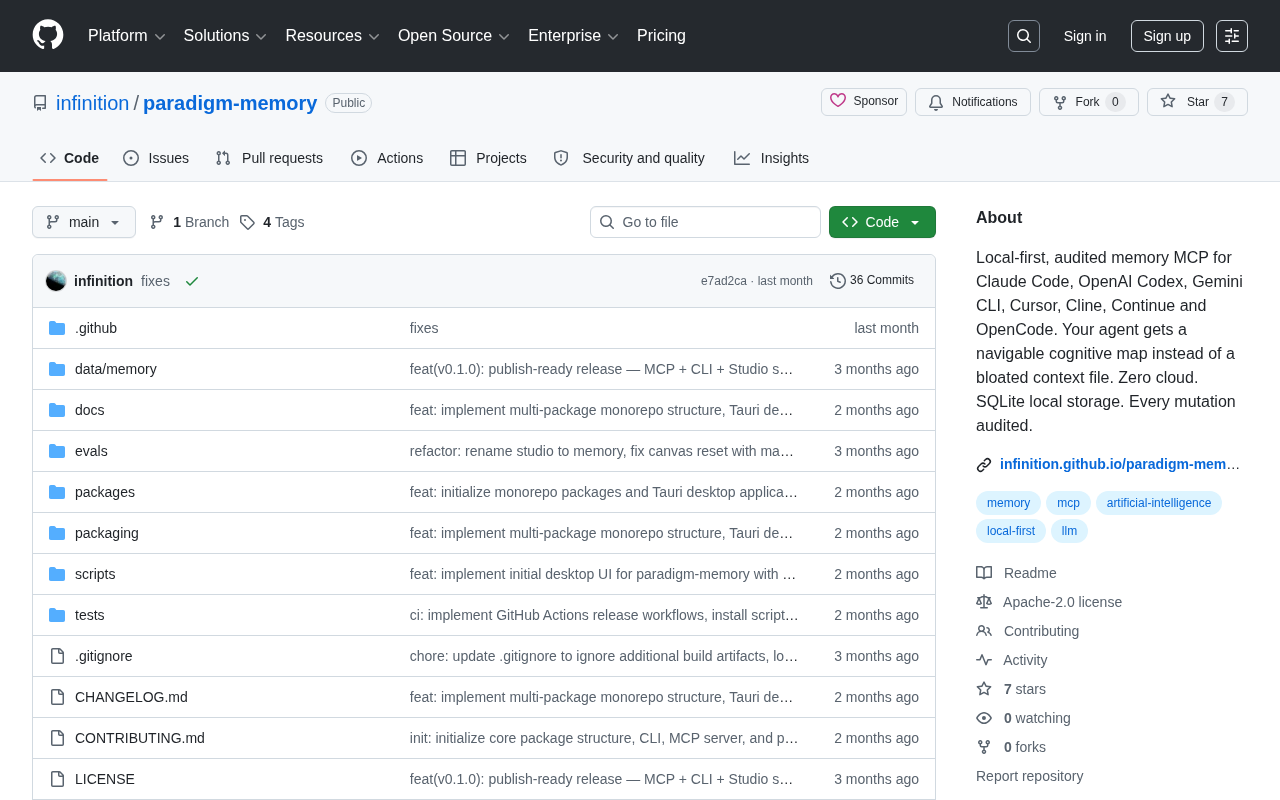
Paradigm Memory: A Local-First Memory System for AI Coding Assistants
paradigm-memory is a local MCP memory tool for Claude Code, Cursor, and Cline. It uses SQLite local storage, zero cloud, full audit trails, and a navigable cognitive map instead of bloated context files.