Should AI Agents Connect to the Open Internet? A CTO's View Sparks Debate
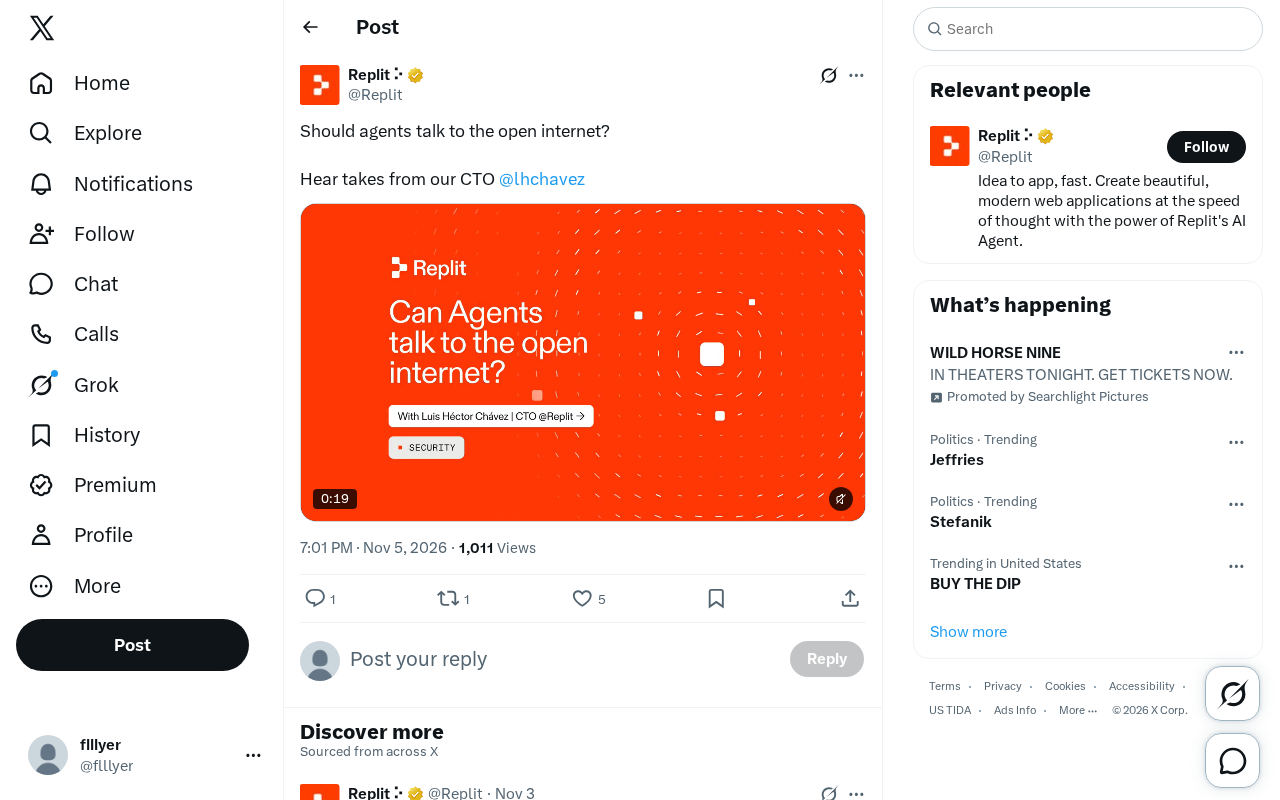
Whether AI agents should directly access the open internet is shifting from a default assumption into a security decision requiring explicit design.
The article discusses whether AI agents should directly access the open internet, prompted by a CTO's social media question. The core conflict: open access greatly expands an agent's information gathering and action capabilities but brings uncontrollable inputs, prompt injection attacks, and hard-to-audit behavior chains. The CTO favors caution, arguing connectivity should be a layered, auditable high-risk capability rather than default-on, using least privilege and zero trust via whitelists, human confirmation, log auditing, and rollback. The community splits between closed controllability and open practicality—a trade-off between flexibility and predictability. The discussion's value lies in making agent connectivity an explicit design decision.
AI Agents and the Open Internet: A Design Decision That Needs Clarification
When an AI agent needs to complete a task, should it be allowed to access the open internet directly? This question seems like a technical detail, but in reality it hinges on a fundamental balance between security, controllability, and practicality. A brief question posted by a CTO on social media quickly sparked discussion in the developer community about the boundaries of agent internet access.
According to the view publicly shared by this CTO, the core conflict is this: the open internet can greatly expand an agent's ability to acquire information and take action, but it also means uncontrollable inputs, unpredictable interactions, and behavior chains that are difficult to audit. In an open environment, agents may encounter malicious content, misleading information, or even targeted prompt injection attacks, and each decision may carry cascading consequences.
The Appeal of Connectivity: A Leap in Capability and Real-World Needs
The most direct benefit of letting agents converse directly with the open internet is the expansion of capability boundaries. Agents can retrieve information in real time, call external services, and complete a closed loop from query to execution in real environments. For scenarios that require handling dynamic tasks, offline or closed sandboxes often cannot provide sufficiently fresh context.
But capability gains come with risk exposure. Inputs from the open internet cannot be fully trusted, and every web page visit and every API call by an agent may become an attack surface. The CTO's position leans toward caution: internet access is not a black-and-white choice, but should be regarded as a high-risk capability that requires layered control.
Prompt Injection is one of the most representative security threats in agent internet-access scenarios. Its principle is that an attacker hides malicious instructions in external content that the agent will read—such as webpage text, documents, or API return results—causing the agent to mistakenly treat them as legitimate instructions when parsing that content. Unlike traditional injection attacks, prompt injection exploits the inherent difficulty large language models have in distinguishing "data" from "instructions." Attackers can make agents leak sensitive information, perform unauthorized actions, or even hijack their subsequent behavior chains. Because content on the open internet cannot be reviewed in advance, prompt injection is almost impossible to completely defend against through simple input filtering and must be addressed with defense in depth combining permission isolation, output review, and behavior monitoring.
Controllable Connectivity: Layered Authorization and Least Privilege
A pragmatic path emerged in the discussion—agents can connect to the internet, but only within a clear permission framework. For example, restrict the domains or services an agent can access to a whitelist, require human confirmation for sensitive operations, and filter and audit inputs and outputs. This "least privilege" approach treats the open internet as an external environment that needs isolation and monitoring, rather than a trusted-by-default execution space.
The CTO pointed out that agent design should assume by default that the external environment is untrusted, treat internet access as a capability that must be explicitly enabled, and provide supporting logs, rate limits, and rollback mechanisms. This is consistent with the current "zero trust" practice in security engineering, except that the subject has expanded from users to AI agents.
Zero Trust is a security architecture concept whose core principle is "never trust, always verify"—do not assume a request is trustworthy because it comes from the internal network or a known source, but instead perform identity verification and permission checks on every access. Applying zero trust to AI agent internet access means that when an agent accesses any external service, it should go through explicit authorization, and its behavior should be continuously verified and recorded, rather than relying on network boundaries to define trust zones. This contrasts with traditional "castle and moat" perimeter defense and is especially suitable for dynamic-acting entities with uncontrollable inputs such as agents. Zero trust implementation typically includes practices such as fine-grained identity management, least-privilege granting, continuous monitoring, and minimizing the attack surface.
The Principle of Least Privilege requires that system components be granted only the minimum permissions necessary to complete their tasks—no more, no less. In agent internet-access design, this means agents should not by default have the ability to access the entire internet, but should instead be dynamically granted limited domain whitelists, API scopes, or operation types based on specific tasks. The value of least privilege lies in reducing the attack surface: even if an agent is hijacked by prompt injection, the damage it can cause is limited to the authorized scope. Implementation usually combines permission tiering, temporary credentials, operation approval, and automatic revocation mechanisms so that permissions scale dynamically with the task lifecycle.
Industry Divergence: Closed and Controllable vs. Open and Practical
There is clear disagreement in the community around the boundaries of agent internet access. One camp argues that agents should run in strict sandboxes and interact with the outside world only through controlled interfaces, sacrificing some flexibility for predictability; the other camp believes excessive restrictions will strip agents of practical value and advocates allowing more open internet behavior under the premise of observability.
The CTO's view is closer to the former: the open internet is a high-risk input source for agents, and internet access capability should be designed as an optional, limitable, and auditable module rather than a channel enabled by default. This position is more likely to gain acceptance in security-sensitive scenarios, but it faces challenges in product directions that pursue generality and autonomy.
The value of this discussion is not in providing a single answer, but in turning "whether agents should connect to the internet" from a default assumption into an explicit design decision. As agent capabilities continue to strengthen, the choice of internet-access boundaries will directly affect their credibility and scope of deployment.
(Note: The original text only contains the CTO's viewpoint as a starting point and does not provide specific implementation plans or data support. This article develops its analysis based on the direction of that viewpoint.)
Sandbox is an isolated runtime environment that restricts a program to only explicitly allowed resources, thereby preventing unintended impact on the host system or external network. In agent scenarios, a sandbox can take the form of a restricted file system, controlled network egress, isolated process space, and so on. The advantage of a sandbox is that it provides strong isolation and predictability, but the cost is reduced flexibility—the agent cannot freely access dynamic resources in the real environment. The opposite approach is open internet access under observability, which emphasizes managing risk through logs, tracing, and behavior auditing rather than physical isolation. The two paths reflect different trade-offs in security engineering between "prevention first" and "detection and response first."
One-line Summary
Whether AI agents should directly access the open internet is shifting from a default assumption to a security decision that requires explicit design.
Paragraph Summary
The article discusses whether AI agents should directly access the open internet, prompted by a CTO's question on social media. The core conflict is that open internet access can greatly expand an agent's ability to acquire information and take action, but it also brings uncontrollable inputs, prompt injection attacks, and behavior chains that are difficult to audit. The CTO leans toward a cautious position, arguing that internet access should be a layered, auditable, high-risk capability rather than enabled by default, and drawing on least privilege and zero trust ideas to achieve controllable connectivity through whitelists, human confirmation, log auditing, and rollback mechanisms. The community is divided between closed-and-controllable and open-and-practical camps, essentially a trade-off between flexibility and predictability. The value of the discussion lies in turning agent internet access from a default assumption into an explicit design decision.
Related articles

Agent Clan: Command Multiple AI Coding Assistants Simultaneously with Mid-Air Gestures
Agent Clan turns Claude Code and Codex agents into a 3D team on screen, supporting fist summoning, pinch selection, drag-to-approve permissions, and local gesture and voice processing, free on Mac and Windows.

Inkling 2 Small: A 594B MoE Model That Can "See" and Revise
Thinking Machines Lab releases Inkling 2 Small, a 594B-parameter MoE model activating only 17B, focused on long-horizon coding and visual tasks where it can see and refine its own output, with inference and fine-tuning via the Tinker platform.

Deduplication: How Tech 'Steals' Everyday Words
Deduplication uses Wikipedia pageview data to quantify 719 words redefined by tech across 14 domains, revealing which meaning wins. Free and open by HackerNoon.