Should Perplexity Build an Obsidian-Style Note System?

Why Perplexity should build an AI-native note system to bridge the gap between search and knowledge management.
A Reddit user's request for Obsidian/Notion-style notes inside Perplexity reveals a critical gap in AI search tools: they excel at information retrieval but fail at knowledge crystallization. This article analyzes the limitations of Perplexity's Projects feature, compares Obsidian's networked linking with Notion's structured database approach, and explores how AI-native note systems using RAG architecture could create a unified "personal research workbench."
A Real Request from the Community
Recently, a Perplexity user posted an idea on Reddit that struck a chord with many: Why doesn't Perplexity build a knowledge management tool similar to Obsidian or Notion right into the product?
Perplexity AI was founded in 2022 by former OpenAI researcher Aravind Srinivas. Its core positioning is as an "Answer Engine" — unlike traditional search engines that return a list of links, Perplexity delivers comprehensive answers with cited sources. As of 2024, Perplexity's valuation has exceeded $9 billion, with daily search volume surpassing 15 million queries. Its technical architecture combines large language models (LLMs) with real-time web indexing, annotating information sources while generating responses. This "verifiable AI" philosophy has made it widely popular among researchers and knowledge workers.
The user's original words hit the nail on the head: "Projects are nice, but if there were a truly well-organized notebook that could save the notes that really matter from conversations, that would be a massive plus."
This seemingly simple feature suggestion actually reflects a widespread shortcoming of current AI search and Q&A tools when it comes to knowledge crystallization. Knowledge Crystallization is a concept from knowledge management that refers to the process of transforming scattered information fragments into structured, reusable knowledge assets. Japanese scholar Ikujiro Nonaka's SECI model describes the dynamic spiral process of knowledge creation, while in the personal knowledge management domain, Tiago Forte's theory of "Progressive Summarization" emphasizes that information must undergo multiple layers of distillation and compression before it can truly become actionable knowledge. The problem with current AI conversation tools is that they only complete the knowledge acquisition phase while lacking systematic mechanisms to support knowledge encoding and retrieval. After users engage in dozens of high-quality conversations with AI, those valuable answers often end up scattered across lengthy chat histories, making them difficult to systematically retrieve, organize, and reuse.
Why AI Conversation Tools Need a "Notebook"
Conversation ≠ Knowledge
Perplexity's core value lies in providing real-time answers with cited sources, which makes it far superior to traditional chatbots in information retrieval scenarios. However, information retrieval and knowledge management are two entirely different stages.
During a deep research session, a user might ask dozens of questions and receive a wealth of high-quality, cited answers. But once the research ends and the session closes, these gems get buried in the chat history. The next time they're needed, users can only rely on memory to dig them up, or simply ask the same questions again — a massive waste of efficiency.
The Limitations of Projects
Perplexity has already launched its Projects (Spaces) feature, which allows users to group related conversations together and set custom instructions. This does solve the "categorization" problem, but as the original poster pointed out, it doesn't solve the problem of "distillation and crystallization."
Projects are more like a "folder," while what users truly desire is a "second brain" — a knowledge base that can actively extract key conclusions from conversation flows, build connections between notes, and support tags and bidirectional links. The "Second Brain" concept was systematically articulated by personal knowledge management expert Tiago Forte in his book Building a Second Brain. Its core philosophy is to free the human brain from the burden of "storage" so it can focus on "thinking" and "creating," letting external systems handle the responsibilities of information memory and organization. This is precisely the domain where Obsidian and Notion excel.
Lessons from Obsidian and Notion: Two Knowledge Management Philosophies
Networked Links vs. Structured Databases
The user mentioned both Obsidian and Notion because they represent two mainstream approaches to knowledge management:
-
Obsidian: Built around local Markdown files, emphasizing bidirectional links and knowledge graphs. It's ideal for building a networked, organically growing personal knowledge system. Its killer feature is "linked thinking" — every note can establish connections with other notes, generating emergent insights. Bidirectional Linking differs from traditional one-way hyperlinks in that when Note A links to Note B, Note B automatically displays a backlink showing it's referenced by Note A. This design draws inspiration from Vannevar Bush's 1945 Memex concept and Ted Nelson's Xanadu project. The knowledge graph Obsidian builds on this foundation is essentially a node-edge network structure that simulates the synaptic connections between neurons in the human brain, helping discover hidden relationships between seemingly unrelated knowledge points.
-
Notion: Built around databases and Blocks, emphasizing structure and multi-view management. It's suited for team collaboration and project documentation. Notion's technical architecture is based on the "everything is a Block" design philosophy — every content unit (text paragraph, image, table, embedded content, etc.) is an independent Block object with a unique ID and property set. Blocks can be nested, referenced, and moved across pages. This atomized content management approach allows information to be flexibly recombined. Its database functionality is essentially a collection of Blocks with a structured Schema, supporting multiple view types including tables, kanban boards, calendars, and galleries — the same dataset can be presented differently depending on the use case. Its strengths lie in flexible information organization and rich presentation formats.
If Perplexity were to build a note system internally, the key question would be: Should it follow Obsidian's networked linking approach, or Notion's structured database approach?
The Possibilities of AI-Native Notes
Taking it further, as an AI-native product, Perplexity's note-taking feature shouldn't simply replicate existing tools. Instead, it should fully leverage AI capabilities:
- Automatic Summarization: AI can automatically extract key points after a conversation ends, generating structured note drafts that users only need to fine-tune before saving.
- Intelligent Linking: Based on semantic understanding, AI can automatically recommend related historical notes for new entries, building an intelligent knowledge graph.
- Proactive Retrieval: When users ask new questions, the system can prioritize drawing from their personal note library, enabling truly personalized Q&A. The technical foundation for this is RAG (Retrieval-Augmented Generation) architecture — first converting users' note content into high-dimensional vectors via Embedding models and storing them in a vector database; when users pose new questions, the system first retrieves the most relevant note fragments through semantic similarity search, then injects these fragments as context into the large model's prompt to generate answers that incorporate personal knowledge. This approach allows general-purpose AI models to "see" users' private knowledge without requiring model fine-tuning, while ensuring answer traceability.
This deep integration of "AI + knowledge base" is a unique value that neither pure note-taking tools (like Obsidian) nor pure AI search tools (like current Perplexity) can provide on their own.
Industry Trend: AI Tools Are Moving Toward "All-in-One"
This user request isn't an isolated case — it's a microcosm of a major trend across the entire AI application landscape. We can observe:
-
Notion has fully integrated AI, giving traditional note-taking tools intelligent Q&A capabilities. After launching Notion AI in 2023, Notion embedded GPT capabilities at the Block level, implementing a product paradigm of "invoking AI within writing scenarios" — users can ask AI to summarize, continue writing, translate, or brainstorm at any point.
-
ChatGPT has launched Canvas and Memory features, attempting to make conversation content more persistent and editable. Canvas essentially opens a persistent editing space alongside the conversation interface, allowing users to collaboratively write and iterate on long documents with AI, breaking through the "read-and-forget" limitations of traditional conversational interaction. The Memory feature enables the system to automatically extract user preferences and important facts across multiple conversations, storing them in a persistent memory layer for proactive use in subsequent conversations. Technically, the Memory feature involves challenges including information extraction, conflict resolution (strategies for handling contradictions between new information and old memories), and privacy protection.
-
Various AI Notebook tools (like Google NotebookLM) are emerging, focused on "AI Q&A based on personal materials." Google NotebookLM represents a "Source-Grounded AI" paradigm — requiring users to first upload personal materials (PDFs, Google Docs, web pages, etc.), after which all AI responses are strictly generated based on these uploaded materials, with each answer citing specific paragraphs from the original documents. This design fundamentally mitigates the "hallucination" problem of large models, as the model's knowledge boundaries are explicitly limited to the corpus provided by the user.
All these developments point in the same direction: Users are no longer satisfied with isolated features — they expect an all-in-one platform that connects the entire workflow of "acquiring information → organizing knowledge → applying knowledge."
For Perplexity, if it can fill in the knowledge management piece of the puzzle, it has the opportunity to evolve from a "better search engine" into a "personal research workbench," dramatically increasing user stickiness and its competitive moat.
Conclusion: A Big Opportunity Behind a Small Suggestion
An ordinary user's "Am I the only one who thinks this?" on Reddit actually identifies a critical direction in AI product evolution.
Information retrieval is just the starting point; knowledge crystallization is where the long-term value lies. Whoever can first bridge the last mile between "AI Q&A" and "personal knowledge base" may gain the upper hand in the next round of AI application competition.
For Perplexity, building an Obsidian/Notion-style intelligent note system might not just be a "nice-to-have" — it could be the key move that determines the ceiling of its future product.
Related articles

Gaussian Process Bandit Optimization: Exploration Strategies and Inference Regret Guarantees
Cumulative regret guarantees in Bayesian optimization fail to reflect final recommendation quality. This article examines a new study that provides inference regret guarantees for Gaussian process bandit optimization through exploration query strategies and fill distance analysis, validated on hyperparameter optimization and control tasks.
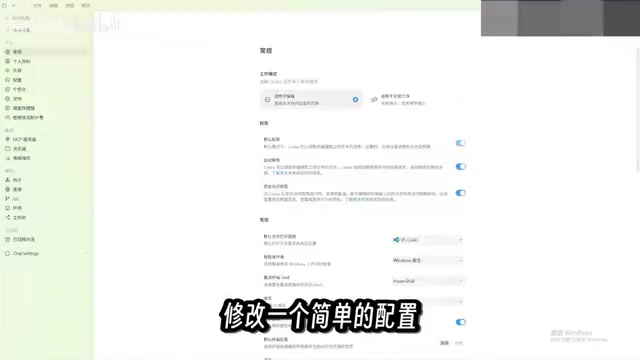
The Most Detailed Codex Guide on Bilibili: From Installation to Real-World Practice
The most detailed Codex guide on Bilibili: from app store installation to daily work mode configuration, with a real coffee shop project demonstrating file organization, data extraction, dashboard creation, and other practical tasks. Learn to use Plan Mode and desktop pets to leverage Codex efficiently.

Appearance Compensation in Volume Rendering: Why RGB Accuracy Cannot Guarantee Density Correctness
Volume rendering research reveals that volumetric data perfectly reproducing external RGB views may still contain density errors: appearance compensation can double central density and keep external rays unchanged even when L2 error exceeds 14.52%. Density recovery depends on appearance capacity, spatial resolution, and measurement design.