Sidekick: One MCP Server Connects Alexa, AI Agents, and Voice Games

Sidekick uses a single MCP server to support multi-frontend voice interaction with full-chain auditability via Control Room.
Sidekick is a voice companion project from the Amazon Developer Hackathon built around "build once, interact everywhere": one MCP server powers an Alexa-style simulator, a browser visual app, and voice games. Its Control Room logs every voice request and result, turning the agent into a replayable pipeline for debugging and auditing. Chess relies on a rule engine to reject illegal moves, and Movie Buddy grounds answers in subtitle cues to reduce fabrication.
Sidekick: One MCP Server Connects Alexa, AI Agents, and Voice Games
The biggest problem with voice assistants has never been "whether it can understand you," but "whether you can see what happened after it's done." At the Amazon Developer Hackathon, developer Runal Amkar presented the Sidekick project, which attempts to answer this question with a single MCP server architecture—the same voice companion can run in an Alexa-style simulator, in a browser-based visual app, or be used to play chess, play 2048, and chat about movies.
One Experience, Three Entry Points
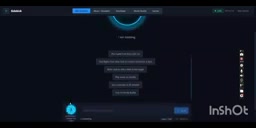
Sidekick's core design philosophy is "build once, interact everywhere." Users can make voice requests in an Alexa-style simulator or switch to the browser app for tasks that need more visual feedback. In the demo, Amkar emphasized that a voice interface is only valuable when users can see what happened after the request—a statement that essentially pinpoints the common flaw of current voice assistant products: opaque closed loops.
From an engineering perspective, this multi-entry design relies on the unified handling capability of an MCP (Model Context Protocol) server. Voice, browser, and games—three frontends—share the same set of tool invocation and state management logic, avoiding the need to reinvent the wheel for each channel. For developers who want to cover both the Alexa ecosystem and self-built AI agents, this approach offers a useful reference.
MCP (Model Context Protocol) is a protocol proposed and open-sourced by Anthropic to standardize how AI models connect to external tools and data sources. It uses a client-server architecture: MCP servers encapsulate "capabilities" as discoverable tools, resources, and prompt templates, and AI agents act as clients to invoke these capabilities through a unified interface, eliminating the need to write separate adapter code for each model or each frontend. Analogously, MCP is to AI tool invocation what LSP (Language Server Protocol) is to editors and programming languages—it reduces the N×M adaptation problem to N+M. Sidekick converges the tool invocation and state management of three frontends—voice, browser, and games—onto a single MCP server, precisely leveraging this protocol's reuse characteristics.
Control Room: Turning the Black Box into an Inspectable Pipeline
Sidekick's most noteworthy feature is the Control Room. Every voice request and its execution results are logged, allowing developers to review the entire invocation chain rather than treating the voice assistant as a black box that "takes a question and outputs an answer."
This design directly addresses a pain point in deploying AI agents. When an agent starts calling external tools and chaining multiple actions, errors often occur in the intermediate steps rather than in the final answer. Explicitly logging requests and results is equivalent to equipping the agent with a replayable debugger. For enterprise-grade voice applications, this auditability is even more important than recognition accuracy.
Voice Games: Combining Rule Engines with Natural Language Commands
Sidekick includes several interactive games. Chess uses a rule engine to reject illegal moves; in the demo, the system explicitly states "castling kingside is not legal in this position." Tic-tac-toe and 2048 support both voice-like commands and conventional controls.
The design trade-off here is interesting: board games retain strict rule validation, meaning voice commands must undergo semantic parsing before being handed to the rule engine for adjudication, rather than letting the model improvise. This layering—where the model handles understanding and the rule engine handles adjudication—is a prerequisite for making voice games playable.

A rule engine is a type of software component that extracts business rules from application code, expresses them declaratively, and executes them centrally. In board games, legal moves, castling conditions, check detection, and so on can all be encoded as rules, which the engine validates on each move and provides structured feedback (e.g., "That move is illegal because the kingside castling conditions are not met"). Compared with letting a large model directly determine moves, the rule engine's output is deterministic, reproducible, and testable, and will not drift due to changes in prompts or model versions. This division of labor—where the model handles semantic understanding and the rule engine handles legality adjudication—is also often called a neuro-symbolic hybrid architecture.
Movie Buddy: Grounding the Model with Subtitle Cues
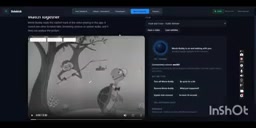
Movie Buddy is the module in Sidekick that comes closest to a traditional voice assistant. When users ask what happened in a movie, the system retrieves currently available subtitle cues as evidence to answer. According to Amkar, this grounding keeps answers close to the actual content of the film rather than confidently fabricating details.
This is a lightweight application of the RAG approach in real-time voice scenarios: instead of relying on pretrained memory, it injects the current context (subtitles) as the source of truth. For media-oriented voice assistants, this approach is low-cost and quick to show results.
What It Means for Developers
The Sidekick demo isn't particularly dense in information, but it presents a clear architectural direction: an MCP server serves as the capability foundation, supporting upward a variety of interaction forms such as Alexa-style voice, browser visualization, and games; the Control Room provides full-chain observability; and specific scenarios (board games, movie Q&A) ensure output reliability through domain constraints.
For developers working on AI agents or voice applications, this project offers three takeaways: a unified tool layer avoids duplicate development across multiple frontends; request-level logging makes agent behavior auditable; and domain rules share responsibilities with the model rather than letting the model do everything. Amkar's demo also leaves many questions to be verified—how to synchronize state across multiple frontends, how to design the log granularity of the Control Room, and where the boundary lies between game rule engines and MCP tools—all of which are worth watching in future iterations.
Background Notes
Grounding refers to anchoring a language model's answers in verifiable external sources of fact, rather than generating content solely from memory stored in pretrained parameters. Common methods include retrieval-augmented generation (RAG), quoting original passages, and using tools to query real-time data. The key metric for measuring grounding effectiveness is "faithfulness"—whether the answer can be supported by the provided evidence. In the Movie Buddy scenario, subtitles are the grounding source: the model is constrained to answer based on currently available subtitles, thereby reducing the risk of fabrication in areas like film details where models are prone to "hallucination." The cost of this approach is that coverage is limited to the subtitles themselves; when subtitles are missing, the system needs to honestly say so rather than forcing an answer.
One-line Summary
Sidekick uses a single MCP server to support multi-frontend voice interaction and achieves full-chain auditability with the Control Room.
Paragraph Summary
Sidekick is a voice companion project presented at the Amazon Developer Hackathon, with the core philosophy of "build once, interact everywhere": the same MCP server simultaneously supports three entry points—an Alexa-style simulator, a browser-based visual app, and voice games—avoiding duplicate development for each channel. Its most notable feature is the Control Room, which logs every voice request and execution result, turning the voice agent from a black box into a replayable pipeline for debugging and auditing. In specific scenarios, board games like chess use a rule engine to adjudicate illegal moves while the model only handles semantic understanding; Movie Buddy retrieves real-time subtitle cues to ground its answers, reducing the risk of fabricating details. The article notes that the project offers three reference directions for AI agent developers: a unified tool layer, request-level logging, and a division of labor between domain rules and the model.
Related articles

T3 Code: The Open-Source AI Coding Assistant's Comeback Story
T3 Code is an open-source AI coding assistant that unifies subscriptions like Codex and Claude, with powerful remote control and parallel task management.

Never Elected, Yet Ruled New York for 30 Years: The Ultimate Case Study in the Mechanics of Power
Robert Caro's biographies reveal how unelected Robert Moses ruled New York for 30 years through legal drafting and public authorities, and how Lyndon Johnson built leverage as a "powerless" Senate Majority Leader. Unpacking the underlying logic of accumulating and sustaining power.

The CPython 3.10 Recursion Trap and Synthetic Recovery in TokenGuard, an LLM Circuit Breaker
TokenGuard's author recounts a recursion crash caused by OrderedDict.pop in CPython 3.10 and introduces v0.3.0's Loop Nudge synthetic recovery, inline DLP scanning, and other new LLM agent circuit-breaker capabilities.