Single Is Not Failure: Rethinking Love and Wholeness Through Faith Traditions

Using Catholic celibate tradition to dismantle the default "complete life" narrative and offer single people a reframing discourse.
A Vox video starts from holiday interrogation of single people, noting society's default life roadmap of "education—work—marriage—children" leaves nearly one-third of single American adults implicitly seen as "falling behind." Interviewing a Catholic priest and nun, it distills two insights: humans are destined to love but partnership isn't the only channel—community, family, and service are equally real; and being loved is a gift of existence, not an achievement to earn. The article suggests redirecting "are you dating?" toward a bigger question—I have no partner, but I am deeply loved—rejecting the premise that "single means deficient."
As the holidays approach, single people often face a round of interrogation about their love lives: "Are you seeing anyone?" "Have you met the right person yet?" These questions are ostensibly out of concern, but they often carry a hint of scrutiny, making people feel like they've fallen behind on some important project. Vox discussed this phenomenon in a video and tried to find an alternative narrative in religious tradition.
The Default Life Roadmap
The video points out that we're raised on an "expected path": get an education, find a job, fall in love, get married, buy a house, have kids—and if you check all these boxes, you'll live happily ever after. Rationally, we all know things aren't that simple, but the gravitational pull of this mythic expectation is nearly impossible to resist. According to data cited in the video, nearly one-third of American adults are single, yet mainstream culture offers almost no clear alternative path for this group.
The reason the holiday-table interrogation stings is that it implies a judgment: a life without a partner is incomplete. This implication doesn't require malice, yet it's enough to make someone feel scrutinized in the moment they're passing the cranberry sauce.

Two Insights from a Catholic Priest and a Nun
To find alternative answers, Vox interviewed a Catholic priest and a nun to learn how they experience celibate life. These two interviewees offered two core insights.

Humans Are Made for Love, but There's More Than One Channel for It
The first insight is that everyone is destined to love. Giving and receiving love takes many forms—romantic partnership, community, family, service to others. In their tradition, what matters isn't which channel love flows through, but that we are indeed loving. This opens up an important dimension for single life: not having a romantic partner doesn't mean being cut off from love. Mutual support in a community, caring for family, and serving strangers are all real loving relationships.
The sociological concept of "relationality" can supplement this discussion. It argues that the self is not a collection of isolated individuals but is constituted through continuous interaction with others. This means the core problem of being single isn't "missing a person" but whether society provides enough alternative relational networks—friends, neighbors, communities, intergenerational care. Researchers often point out that modern urban life has over-compressed emotional support into the single container of romantic partnership, forcing it to bear all the functions that no single relationship should have to carry. Once that container is empty, people feel a comprehensive lack—when the real problem may lie in the homogenization of relational structures, not in the individual's state.
Being Loved Is a Gift of Existence, Not an Achievement to Earn
The second insight is more fundamental: simply by existing, a person is already loved by God. Under this understanding, giving love to others isn't an achievement to be created from scratch but a response to a primordial gift. The role of faith is to help people remember every day that they are already held within this love.

The secular value of this perspective is equally clear: if you tie self-worth to "whether someone has chosen you," being single becomes a constant source of failure; but if you accept that being loved is an innate premise, intimate relationships shift from "proving yourself" to "sharing what you already have."
Catholic celibacy is not simply "not getting married" but an institutionalized way of life devoted to a purpose. The celibate vows of priests and nuns are theologically viewed as a witness to the kingdom of heaven; their logic isn't to deny intimate relationships but to declare that ultimate belonging does not depend on marriage. This tradition provides an interesting contrast for the article: in secular contexts, celibacy is often tacitly assumed to be an "unfinished" transitional state, whereas in monastic tradition it is a lifelong identity recognized by the community and possessing complete meaning. Understanding this is essential to grasp that when the interviewees talk about "channels of love," they aren't offering psychological comfort but stating a form of life supported by a thousand-year institution.
In theological context, this view corresponds to the concept of "grace": grace refers to a gift that is not earned by human effort but freely given. It stands in contrast to the logic of "merit," which holds that value must be exchanged through performance. Translated into secular psychology, this distinction roughly corresponds to the difference between "conditional self-worth" and "unconditional self-acceptance." A large body of mental health research shows that tying self-worth to external validation (including whether a partner has chosen you) is significantly correlated with anxiety and low self-esteem. Thus the article's second insight is not purely a religious proposition—it offers an actionable psychological framework for "not defining yourself by your relationship status."
When Facing Interrogation, You Can Answer the Bigger Question
The video's advice is quite practical. When someone at the holiday table asks, "Are you dating?" you can respond to the bigger question they're really asking. You can say: No, I don't have a partner, but I am deeply loved.
This isn't self-comfort—it's pulling the conversation from a "progress check" back to "the relationship itself." It acknowledges the reality of being single while refusing to accept the implicit premise that "single equals deficient." For those who feel pressured during the holidays, this reframing may be more powerful than any coping script.
From a content creation perspective, the value of this video is that it doesn't stop at the slogan level of "being single is fine too" but uses a specific faith tradition to dismantle the cultural assumptions behind the concept of a "complete life." For readers in tech and AI, this is also a reminder about narrative frameworks: the reason default paths are so powerful is often not that they're correct, but that few people ever question whether they're the only option.
One-line Summary
Drawing on Catholic celibate tradition to dismantle the default narrative of a "complete life" and offer single people a reframing discourse.
Paragraph Summary
A Vox video takes the holiday interrogation of single people as its starting point, pointing out that society defaults to a life roadmap of "education—work—marriage—children," leaving nearly one-third of single American adults implicitly seen as "falling behind." The video interviews a Catholic priest and a nun, distilling two insights: humans are destined to love, but partnership isn't the only channel—community, family, and service are equally real loving relationships; and being loved is a gift that comes with existence, not an achievement to be earned. From this, the article suggests redirecting the "are you dating" question toward a bigger one—I don't have a partner, but I am deeply loved—thereby rejecting the implicit premise that "single means deficient."
Related articles
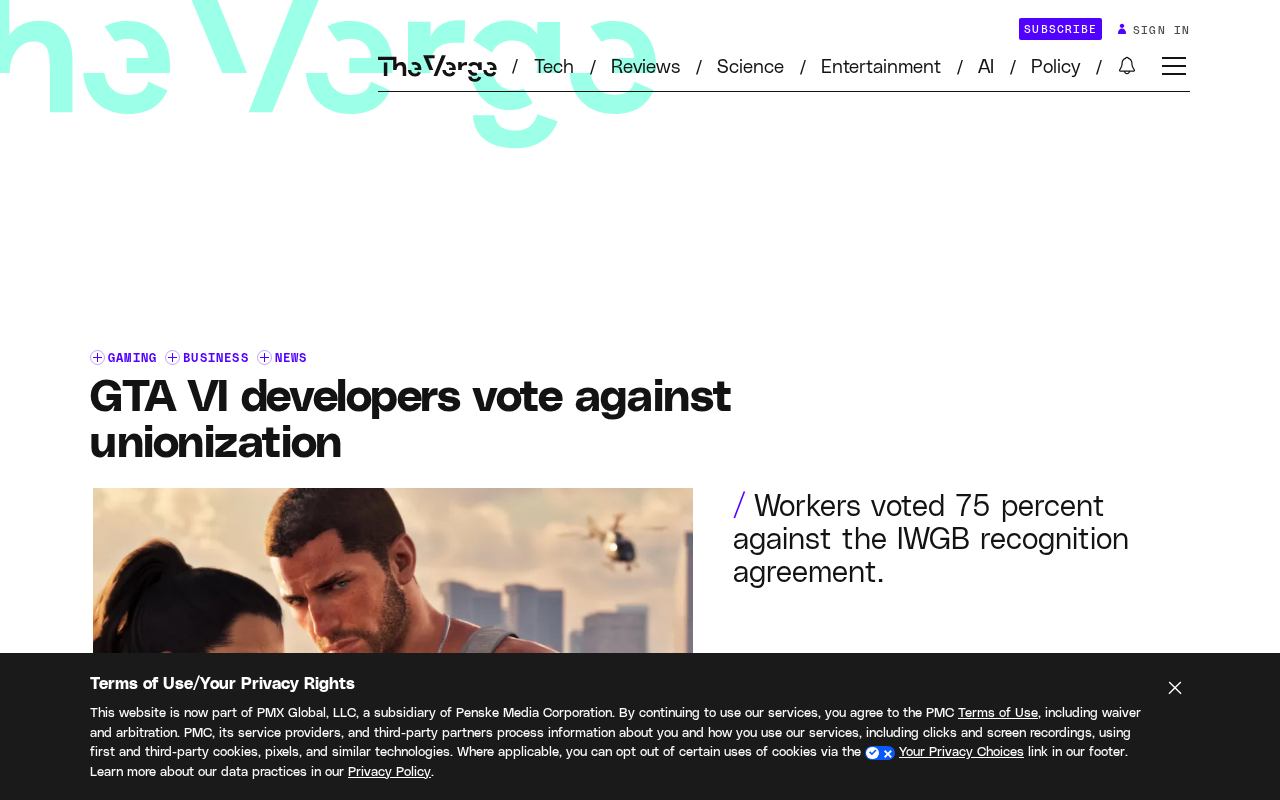
GTA VI Developer's Union Vote Falls Short: The Industry Undercurrent Behind a Mere 25% Support Rate
Rockstar Games, developer of GTA VI, acknowledges its union recognition vote failed, with only 25% of employees supporting unionization. IWGB says union members will continue organizing. This article analyzes the significance of the vote result for labor relations in the gaming industry.
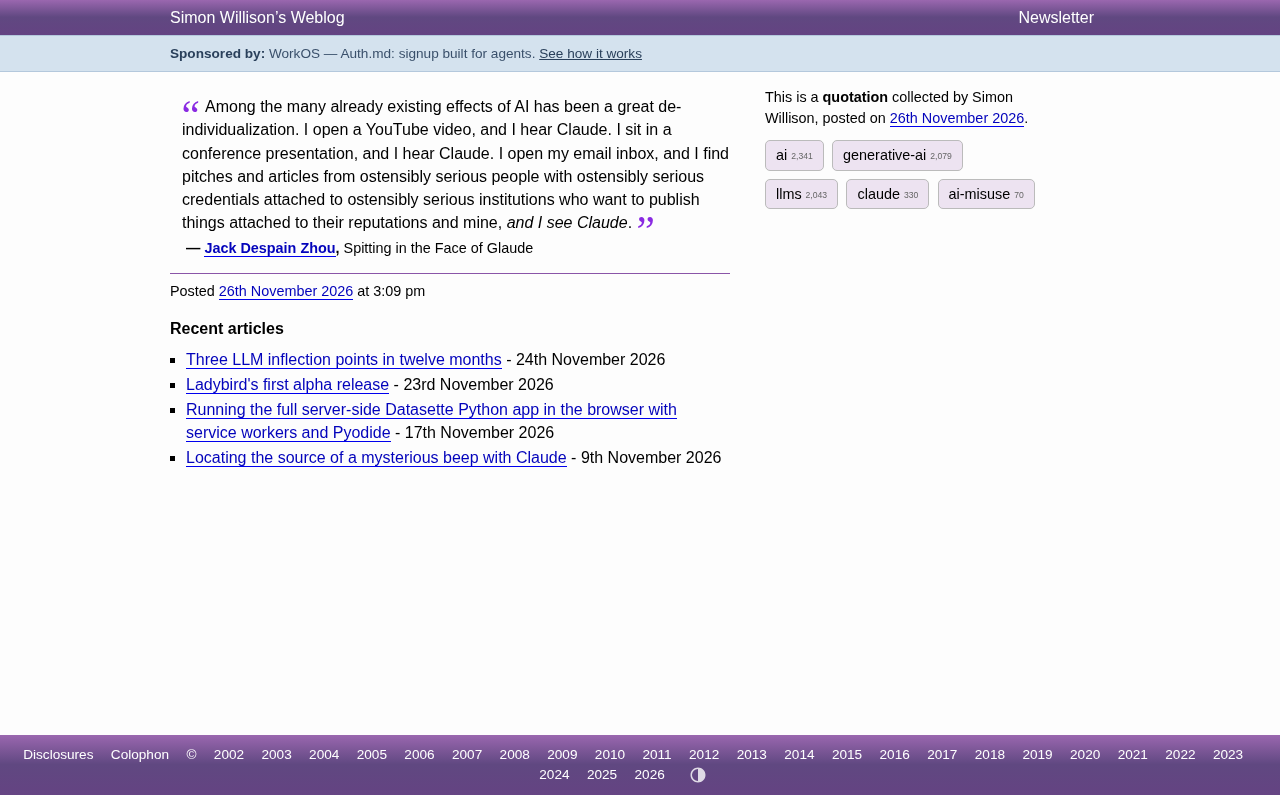
AI Makes Everyone Sound Like Claude: A Quiet De-individualization
Jack Despain Zhou notes that AI is causing a de-individualization of expression: Claude's voice echoes through YouTube videos, conference talks, and email submissions. This article analyzes the causes of this homogenization, its impact on reputation and trust structures, and how to balance efficiency with individual voice.

Black Friday Streaming Deals: Disney+, Hulu, HBO Max Discounts Over 50%
Black Friday streaming deals are here: Disney+, Hulu, HBO Max and more offer over 50% off. Here's an overview of the discounts and tips on choosing.