Skillsync: Enabling AI Chat Sessions to Migrate Freely Between Agents
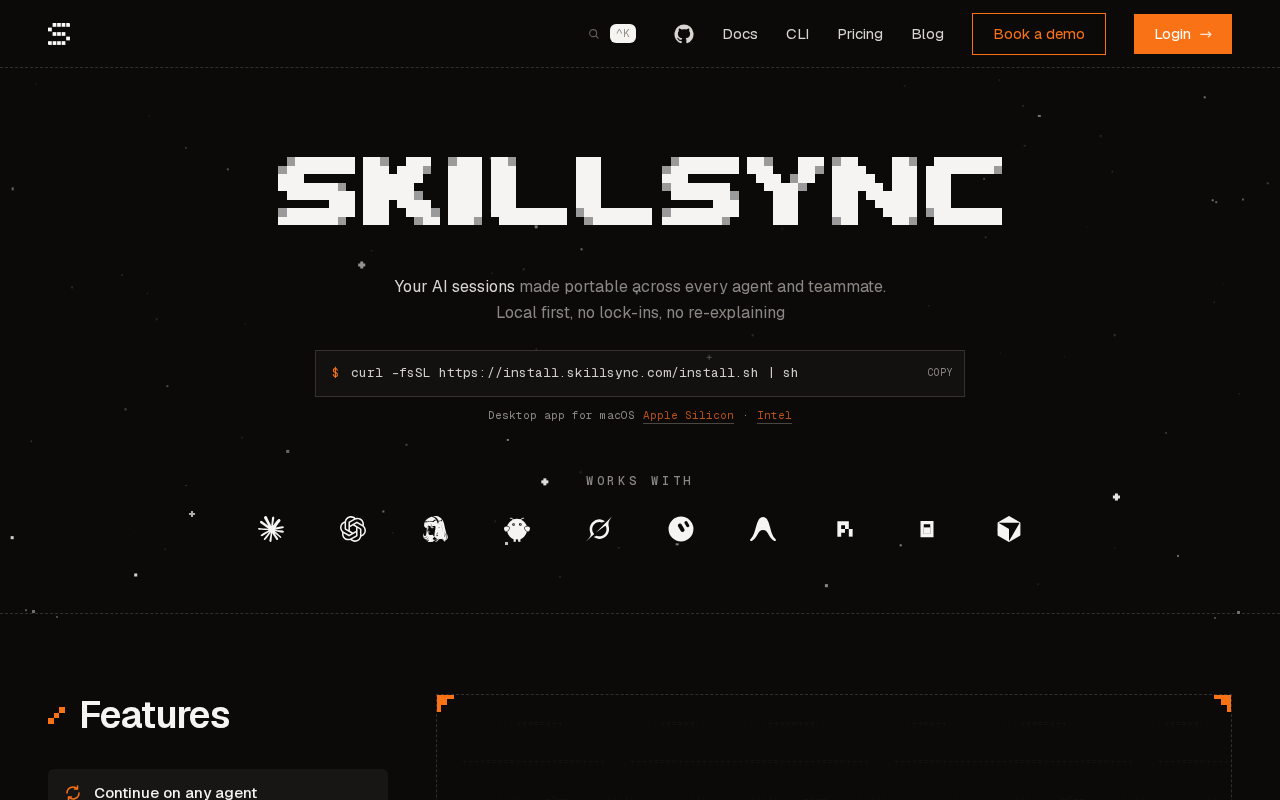
YC W26 startup Skillsync lets AI chat sessions migrate freely across platforms and agents, breaking context silos.
Skillsync is an early-stage YC W26 startup building cross-agent portability for AI chat sessions. As users juggle multiple AI tools like ChatGPT, Claude, and Gemini, fragmented context and vendor lock-in have become common frustrations — preferences and background built on one platform can't move to another. Skillsync aims to standardize the export and restoration of session context, letting users switch models freely without sacrificing productivity. Key technical challenges include the lack of unified context formats across platforms and uncertain platform cooperation. The project is still in its earliest stages, but AI interoperability is widely seen as a real and growing industry need.
What Problem Is Skillsync Solving?
Skillsync is a startup accepted into the YC W26 batch, with a core mission to make AI chat sessions portable across different AI agents.
As AI tools have proliferated, users increasingly work with multiple AI assistants simultaneously — ChatGPT, Claude, Gemini, along with various coding assistants and domain-specific agents. But a persistent pain point remains: conversation contexts are siloed from one another. The chat history, preferences, and accumulated context you build on one platform can't easily travel with you to another. Skillsync aims to break down these barriers.
The Value of Session Portability
"Session portability" refers to exporting your interaction history and context state with one AI agent in a standardized format, then restoring and using it in a different agent. This reflects a structural issue in today's AI ecosystem: users are locked into their respective platform silos.
Why This Matters
For heavy AI users, context is productivity. When you've spent significant time explaining background information to a model and building out workflows, switching to a different model means starting from scratch. If sessions could migrate across agents, users would be able to:
- Freely choose the most suitable model for a given task without worrying about losing context
- Avoid lock-in to a single vendor while retaining data sovereignty
- Share and hand off AI conversation context within team collaborations
This aligns with the "data portability" principle long championed by the open-source community — Skillsync simply focuses it on the specific context of AI conversations.
"Vendor lock-in" has a particular character in the AI space. Unlike traditional SaaS platforms where lock-in primarily manifests as data format differences or migration costs, AI conversation lock-in adds a layer of cognitive cost: users must repeatedly "teach" new models their background, stylistic preferences, and task context — an invisible investment that compounds sharply over time.
The EU's Data Act (which came into full effect in 2025) and the earlier GDPR both include provisions on the right to data portability, requiring service providers to allow users to export their personal data. However, whether AI conversation context legally constitutes "personal data," and whether platforms are obligated to provide exports in machine-readable formats, remains open to interpretation. This means Skillsync's space isn't purely a technical challenge — regulatory tailwinds could unexpectedly work in its favor.
Technical and Ecosystem Challenges
Achieving seamless session migration across agents is no small feat. Different AI platforms use different representations of context, memory mechanisms, and data formats, with no unified standard in place. To deliver true portability, Skillsync needs to establish some form of universal intermediate layer or translation protocol between heterogeneous systems.
The success of tools like this depends heavily on the breadth of ecosystem support — the more agents supported, the greater the user value. But this also runs up against the practical reality of whether major platforms will open their interfaces and cooperate. Given that AI vendors generally have a commercial interest in keeping users within their own ecosystems, third-party portability tools must find a balance between technical feasibility and platform relationships.
From a technical implementation standpoint, the industry currently has several possible approaches.
The first is a standardized protocol-based middleware layer, analogous to OAuth's role in identity authentication — defining a universal session data structure (containing fields for message history, user preferences, task state, etc.) that each platform interfaces with via adapters.
The second is LLM-based semantic translation: even when raw formats differ, a model can "translate" the context from one platform into a form another platform can understand — at the cost of additional inference overhead and the risk of semantic drift.
The third is a browser extension or local proxy approach, intercepting and caching session data on the client side to work around platform API restrictions — though this risks being blocked by platforms and raises privacy compliance concerns.
A relevant precedent worth noting is MCP (Model Context Protocol), proposed by Anthropic in late 2024, which aims to define a unified interface for interactions between AI models and external tools/data sources. What Skillsync needs to solve for cross-agent session migration is fundamentally similar but more complex: not just standardizing tool calls, but also standardizing conversational state and memory.
Observations on an Early-Stage Project
Based on available information, Skillsync is still in a very early launch phase. At the time the Launch HN post was published, it had relatively few upvotes and comments, with limited product details, demos, or user feedback made public.
As a new YC W26 project, the "AI interoperability" space it's targeting does represent a genuine and increasingly prominent need. But assessing its real-world execution, the breadth of agents it supports, and its compatibility with existing platforms will require waiting for more product details to emerge. For practitioners tracking the AI toolchain and data portability space, this is a direction well worth watching.
Related articles
Using Claude Code for Free in China: A Complete Guide to Connecting Free Domestic Models
A step-by-step guide for China-based users to run Claude Code for free by connecting Meituan's open-source LongCat model API — no paid subscription needed.
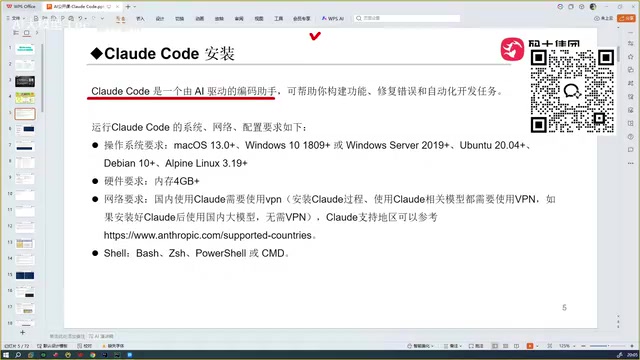
Getting Started with Claude Code: A Beginner's Guide to AI-Powered Coding
Claude Code is a locally-run AI coding agent that reads your entire project and auto-debugs code. Compare it with Copilot, Cursor, TRAE, and Codex to see why it leads the pack.

14K Stars Open-Source Desktop App cc-haha: 5 AI Agents That Divide and Conquer on Their Own
cc-haha, the open-source Claude Code desktop app with 14K Stars, adds Agent Teams: 5 AI agents autonomously divide tasks, with a 99% cache hit rate on 40M tokens.