Skydive Review: Building Cross-Tool Cloud AI Agents Without Code
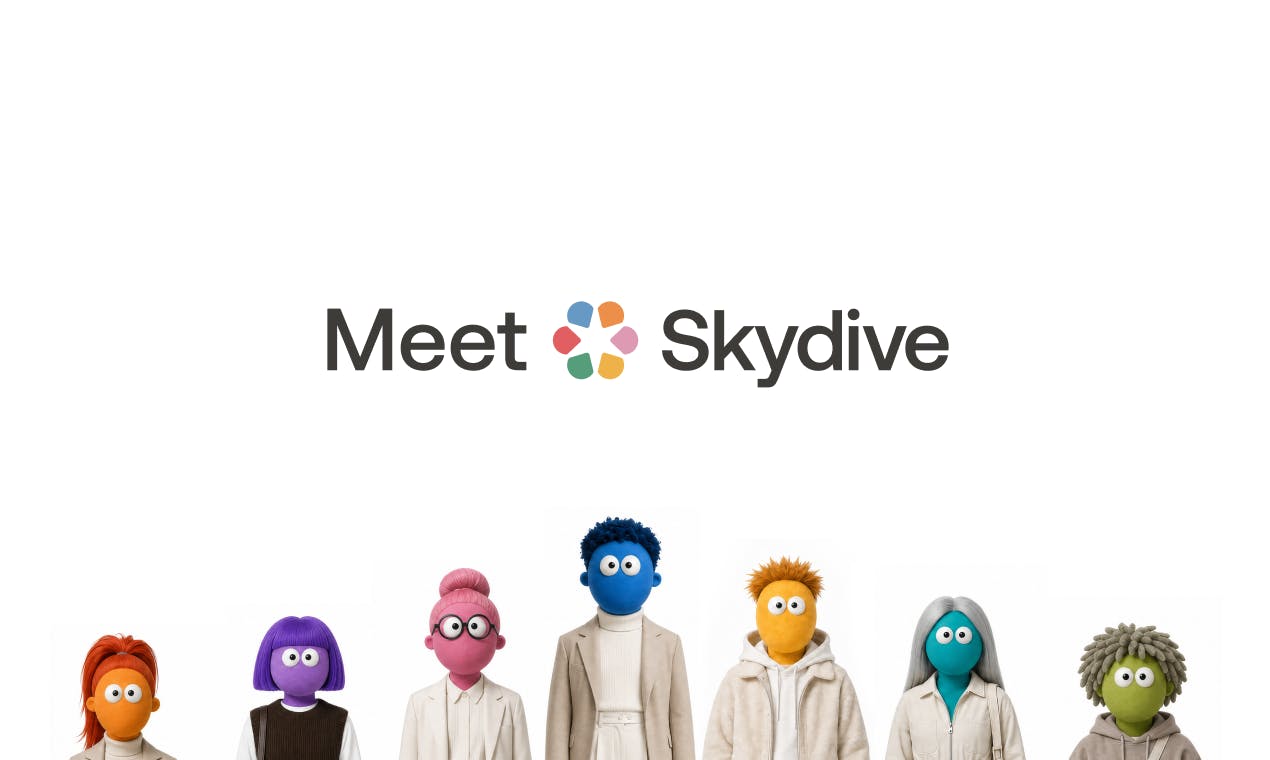
Skydive offers no-code cross-tool AI Agents as cloud coworkers, topping Product Hunt's daily chart.
Skydive topped Product Hunt with 383 votes by promising zero-code, zero-prompt-engineering AI Agents that work across existing tool stacks as "cloud coworkers." While its autonomous planning approach marks a clear evolution beyond traditional automation tools like Zapier and Make, enterprise adoption hinges on solving reliability, security, and controllability challenges in real-world deployments.
From "Prompt Engineering" to "Describing Outcomes"
Skydive, which topped the Product Hunt daily chart with 383 votes, represents a notable shift in AI Agent product design philosophy. Its core proposition is straightforward: build "cloud AI coworkers" that can complete real, multi-step tasks across your existing tool stack.
Product Hunt is one of the world's most influential platforms for discovering new products, founded in 2013, where community members vote daily to highlight the most compelling new launches. Earning #1 Product of the Day on this platform typically signals strong validation from the early adopter community. Many well-known tech companies—including Notion, Loom, and Figma—gained early user and investor attention through their Product Hunt debuts. Skydive's 383 votes combined with 92 comments of engagement indicate it didn't just attract attention—it sparked substantive discussion.
Unlike the many Agent platforms on the market that require complex configuration, Skydive has pushed the barrier to entry extremely low—you simply describe the outcome you want in natural language, and the platform generates a working Agent within minutes. The company explicitly emphasizes: "No code, no prompt engineering, no workflow wiring required."
This tagline actually reveals a shifting industry consensus. Prompt Engineering refers to the practice of carefully crafting text instructions fed to large language models to guide them toward more accurate, expected outputs. Since ChatGPT kicked off the generative AI wave in 2022, prompt engineering rapidly became a prominent discipline, even spawning dedicated job titles—"Prompt Engineer"—with some positions commanding salaries of hundreds of thousands of dollars per year. However, as large models have continued to improve in comprehension and Agent architectures have matured, the industry has gradually come to realize that requiring users to learn how to "coax" AI into producing correct results is essentially a transitional compromise. Over the past two years, significant learning costs have accumulated around "writing good prompts" and "orchestrating workflows," and Skydive is attempting to fully encapsulate this complexity so that ordinary business users can directly produce usable automation capabilities.
Unpacking Skydive's "Cloud Coworker" Positioning
Skydive positions its Agents as "cloud agent coworkers"—a deliberate choice of words worth examining. Rather than describing the product as a "tool" or "assistant," it emphasizes the ability to "take on real, multi-step work."
This is underpinned by the rapid evolution of AI Agent technology. An AI Agent is an AI system capable of autonomously perceiving its environment, formulating plans, and executing actions—distinct from the single-turn Q&A pattern of traditional chatbots. A typical Agent architecture comprises several key components: a large language model serving as the "brain" for reasoning and planning, a tool use/function calling layer for interacting with external systems, a memory module for maintaining context and historical information, and a feedback loop mechanism for evaluating execution results and self-correcting. Since 2024, leading AI companies including OpenAI, Anthropic, and Google have significantly enhanced their models' Agent capabilities, making the "plan-execute-feedback" loop increasingly reliable. Skydive is built on this technological foundation, packaging the Agent architecture into a product experience that's transparent to end users.
Three Key Characteristics of Skydive Agents
Based on official descriptions, Skydive's AI Agents have three core characteristics:
- Live in your stack: Agents don't operate in isolation—they connect to the tools you already use daily, executing tasks within your real business environment.
- Execute repeatable work: The positioning is clearly aimed at process-driven, standardizable repetitive tasks—precisely where automation delivers the highest value.
- Get sharper over time: This implies some form of feedback learning or continuous optimization mechanism, with Agents improving through use.
The target customer for this combination is clear: teams bogged down by high volumes of repetitive cross-tool operations. Think operations and sales roles that need to shuttle information back and forth between CRM, email, documents, and project management tools.
Why "Cross-Tool Collaboration" Is Skydive's Core Value Proposition
The phrase "work across your tools" in Skydive's headline is the fulcrum of the entire product's value.
In practice, enterprise pain points rarely stem from efficiency problems within a single tool—they arise in the "gaps" between tools: data silos, manual copy-pasting, and lost context. Data silos are among the most stubborn pain points in enterprise digital transformation. According to a MuleSoft industry survey, the average enterprise uses over 900 different applications, but only about 29% are effectively integrated. This means vast amounts of business data are scattered across isolated systems like CRMs (Salesforce, HubSpot), project management tools (Jira, Asana), communication platforms (Slack, Teams), and document tools (Google Docs, Notion). Employees are forced to manually shuttle data and sync statuses between these systems. McKinsey estimates that knowledge workers spend nearly 20% of their working time searching for and consolidating information.
Traditional automation tools (like Zapier and Make) can connect tools but require users to manually configure triggers and action chains—fundamentally, they're still "workflow building." Zapier, founded in 2011, supports connections across over 6,000 apps, with users creating automated workflows (called Zaps) through "if X happens, then do Y" trigger-action patterns. Make (formerly Integromat) is known for its visual workflow editor, supporting more complex branching logic. However, both types of tools share a fundamental limitation: they are "declarative"—users must explicitly define every step and conditional branch. When facing ambiguous tasks that require judgment (such as "find important client emails from the past week that haven't been replied to and draft follow-up plans"), traditional automation tools are helpless, because these tasks involve too many steps requiring "understanding" and "judgment."
Skydive's differentiation lies in letting the AI Agent itself understand the goal and decide which operations to perform in which tools. This evolves from "users building workflows" to "users describing goals while Agents plan autonomously." Autonomous Planning is a cutting-edge research topic in current AI, with the core challenge being Task Decomposition—breaking a high-level goal into specific, executable step sequences. This requires the Agent to not only understand user intent but also know each tool's capability boundaries, API calling methods, and dependencies between steps. Current mainstream implementation approaches include the ReAct (Reasoning + Acting) framework, Plan-and-Execute architectures, and tree-search-based multi-path planning. If this autonomous planning capability proves sufficiently reliable, it will dramatically reduce the implementation cost of cross-system automation.
What the Strong Team Roster Signals
You might not have noticed, but Skydive's Makers list is quite extensive, including Zaria Zinn, Dylan, Leo Acevedo, Dhruv Amin, and over a dozen other members. For a Product Hunt launch, this team size is uncommon and typically indicates a startup that has already secured capital backing and entered a formal product development phase, rather than an early-stage personal project.
The 92 comments and #1 daily ranking also demonstrate strong demand in the developer and early adopter community for this kind of "zero-barrier Agent building" approach.
Enterprise Deployment Challenges: Reliability, Security, and Control
Despite the appealing concept, promises like "describe an outcome and get a working Agent in minutes" typically face several real-world challenges in actual deployment:
- Reliability issues: Multi-step, cross-tool tasks have extremely low error tolerance. If the Agent misjudges at any point, it can trigger a cascade of incorrect operations. Enterprise scenarios require stable predictability, not occasional brilliance. While frameworks like ReAct perform well in controlled experiments, reliability in real enterprise environments' "long-tail scenarios"—non-standardized tasks with frequent edge cases—remains an unsolved challenge.
- Permissions and security: For an Agent to "live in your stack" and execute real operations, it needs access to extensive sensitive system permissions, making data security and operational auditing hard requirements for enterprise adoption. This involves at least three layers: first, identity and permission management—Agents must follow the Principle of Least Privilege, obtaining only the minimum system access needed for specific tasks; second, Audit Trails—enterprises need complete records of every Agent operation—what data it read, what content it modified, which systems it interacted with—to meet SOC 2, GDPR, and other compliance requirements; third, Human-in-the-Loop boundaries—whether high-risk operations involving fund transfers or customer data modifications require human confirmation before execution. Solutions to these issues will directly determine the willingness and speed of enterprise customer adoption.
- Controllability and debugging: When "no workflow building required" becomes a selling point, users also lose explicit control over processes. How to debug and correct Agent behavior when it doesn't meet expectations is a problem that these "black-box" products must solve. Directions being explored in the industry include: explainability logs (letting users see the Agent's reasoning chain and decision basis), step-by-step confirmation mechanisms (pausing at critical nodes for human review), and rollback capabilities (undoing executed steps when operations go wrong).
Conclusion: Can Skydive Deliver on the "AI Coworker" Promise?
Skydive represents a clear trend in AI Agent products: moving from "orchestratable tools" designed for engineers toward "out-of-the-box digital coworkers" designed for business users. It hides complexity inside the product, replacing "writing workflows" with "describing goals"—an approach that conceptually brings us closer to the ultimate form of AI automation.
The real test lies in execution reliability—whether it can consistently complete multi-step work in real, messy enterprise tool environments. If it can deliver on this promise, "cloud AI coworkers" might truly become an indispensable role on teams; if it can't, it may be just another Agent product with impressive demos but inconsistent real-world results. Either way, its #1 finish on Product Hunt has already proven the market's strong appetite for this direction.
Related articles

Getting Started with Machine Learning at 16: A Complete Learning Path from Zero to Hands-On Practice
How can a 16-year-old UK A-Level student get started with machine learning from scratch? A clear learning path covering Python basics, math connections, resources, and hands-on project ideas.

Building a GitHub Action Text Replacement Tool with JavaScript: From Principles to Practice
Learn how to build a GitHub Action for text replacement with JavaScript, covering implementation principles, use cases, and key technical details for CI/CD automation.

Coze Beginner's Guide: A Complete Cognitive Guide to Building AI Agents from Scratch
Learn what ByteDance's Coze platform is, key differences between domestic and international versions, how to use GPT-4 for free, and how to build AI Bots with zero coding experience.