Smart #2 from ¥99,900: How a Small Car Makes the Most of Limited Space
Smart #2 starts at ¥99,900, using electrification to make up for shortcomings, exceeding its class in safety and space, with pricing as a brand filter.
Smart #2 launched with a limited-time price of ¥99,900, offering only one trim; the 999-unit Flow Gold limited edition is sold out. A Bilibili creator's real-car review shows that this two-door short-wheelbase small car uses an electrified platform to solve the physical shortcomings of the combustion engine era such as three-cylinder vibration and AMT jerkiness: an 11-in-1 electric drive achieves rear-wheel drive, and a front MacPherson rear true five-link suspension brings agility with a turning radius of just over three meters. A 35.8 kWh CATL battery provides 410 km CLTC range, with over 300 km actual range being no problem. In safety, the ECA architecture's three-layer collision path plus subframe detachment, 78% high-strength steel, and 39,000 Nm torsional rigidity reach the level of a five-meter-class SUV. The split tailgate is retained for over 300 liters of storage, and the top speed is 140 km/h. The host believes the pricing is a brand filter—those who agree with Smart's proposition will naturally buy it.
Smart #2 launched with a limited-time starting price of ¥99,900, sparking considerable discussion. This two-door, short-wheelbase small car carries the original soul of the Smart brand and attempts to use electrification technology to solve the physical shortcomings left over from the combustion engine era. A real-car review by Bilibili creator "BOI Car Workshop" provides a technical perspective on this small car.
From Combustion Engine Shortcomings to Electric Drive Reconstruction
Smart's first model was a two-door, short-wheelbase small car—this is the brand's most core DNA. But in the combustion engine era, a body under three meters and an even shorter wheelbase brought physical limits: the engine could only be rear-mounted and rear-wheel drive, made as a three-cylinder with noticeable vibration; the automatic transmission could only be matched with an AMT gearbox, with less-than-ideal smoothness and comfort.
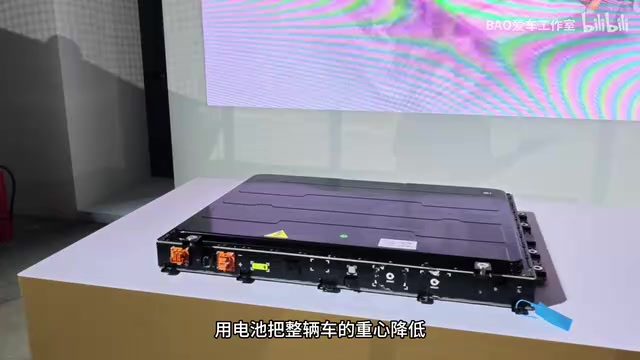
Smart's original vision was to make an electric car, but battery technology was not yet mature at the time. Now the #2 uses the battery to lower the vehicle's center of gravity and adopts an 11-in-1 electric drive to achieve a rear-wheel-drive layout. For the chassis, the front MacPherson and rear five-link structure—the UP host specifically emphasized that this is a true five-link, not a three-link or torsion beam. This gives the small car good performance in comfort, center-of-gravity control, and steering agility, with a turning radius of just over three meters making it very nimble in the city.
11-in-1 electric drive refers to an electric drive system that integrates 11 core components—including the drive motor, motor controller, reducer, DC-DC converter, on-board charger, high-voltage distribution box, vehicle control unit, and battery management system—into a single unit. This deeply integrated solution significantly reduces the number of parts and wiring harness length, lowers weight and occupied space, and improves system efficiency and power density. For short-body small cars like the Smart #2, the highly integrated electric drive assembly makes a rear-mounted rear-wheel-drive layout possible within a limited engine bay, and also leaves more crumple space in the front compartment.
Five-link rear suspension is a type of independent suspension where the left and right wheels are connected to the subframe through five links, allowing precise control of wheel alignment parameters and balancing comfort with handling stability. In contrast, the three-link (commonly nicknamed "chopstick suspension") has a simple structure and low cost, but weaker alignment control precision and lateral stiffness; the torsion beam is a non-independent suspension where the left and right wheels interfere with each other. True five-link suspensions usually appear on mid-to-high-end models and are extremely rare on A0-class small cars—this is why the UP host specifically emphasized "true five-link."
Range and Safety: Two Major Tests for a Small Body
In terms of range, the #2 is equipped with a 35.8 kWh CATL battery, with a CLTC range of 410 kilometers. The UP host stated outright that the actual CLTC range will certainly be somewhat less, but as such a small car, a range of over 300 kilometers is absolutely no problem. CATL's lithium iron phosphate battery also has certified safety and consistency guarantees.
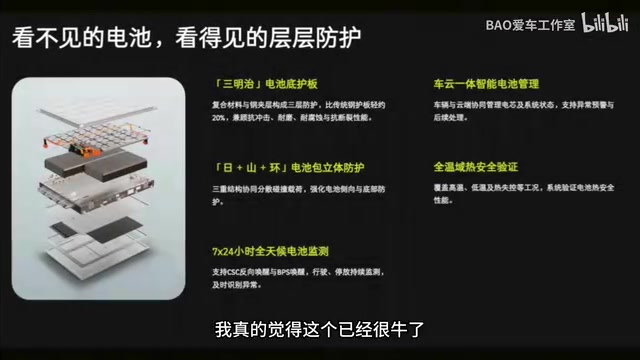
Safety is an even trickier challenge for short-wheelbase small cars. A short front compartment means a small crumple zone. Smart's solution is based on the ECA architecture, layering the collision path in three layers at the front—from the top, middle, and subframe all participating in force distribution. If the collision is extremely violent, the subframe will detach directly, dissipating energy through detachment and channeling the force outward.
Side protection also received attention. Cross beams and diagonal beams are arranged inside the door panels, forming four force transmission paths. High-strength steel accounts for 78%, with maximum steel strength of 1,800 MPa, and the vehicle's torsional rigidity reaches 39,000 Nm. The UP host compared it with a five-meter-class SUV he had just test-driven, which also had a torsional rigidity of 39,000—achieving this level in a car just over two meters long is truly not easy.
CLTC (China Light Vehicle Test Cycle) is China's current range testing standard, simulating urban, suburban, and highway conditions, but the test conditions are relatively mild (lower average speed, small air-conditioning load), so actual range is usually lower than the rated value. Low winter temperatures, highway driving, and air-conditioning use are the main loss factors, typically reducing range by 20-30%. A 35.8 kWh battery corresponding to 410 km CLTC means energy consumption of about 8.7 kWh per 100 km, which is an excellent level in its class; the actual usable range of over 300 kilometers basically covers a week of urban commuting.
Crumple zone and subframe detachment are two key concepts in collision safety design. The crumple zone refers to the deformation energy-absorbing structure preset at the front of the body, which absorbs collision kinetic energy through orderly crushing, reducing the impact transmitted to the passenger compartment. Short front-compartment models naturally have insufficient crumple zones, so multi-layer paths are needed to distribute force flow. The subframe detachment design is a passive safety strategy where, in an extremely violent collision, the subframe connection points actively break, allowing the subframe and powertrain to drop downward rather than intrude into the passenger compartment—a "sacrifice the pawn to save the king" approach common in some European models.
Space Ingenuity and Performance Margin
The classic split tailgate of the two-door version has been retained, providing over 300 liters of storage space without folding the seats. The UP host believes this is very practical for scenarios such as urban commuting and picking up children.
In terms of performance, this car can reach a top speed of 140 km/h, while ordinary small cars top out at just over 100 km/h on the highway. The UP host also mentioned an unconfirmed rumor: a Brabus version is said to be coming next year, possibly with power up to 90 kW, but he emphasized that this is only a heard version and accuracy is not guaranteed.
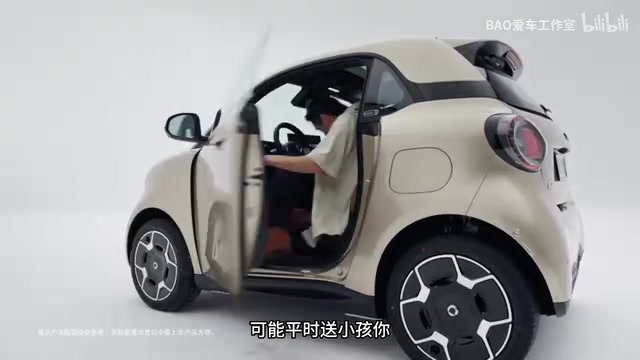
Split tailgate is the iconic tailgate design inherited from the combustion engine era in Smart's two-door version: the upper part is an independently openable glass window ("sky"), and the lower part is a downward-folding tailgate ("earth"). When the lower door is folded flat, it can serve as a temporary seat or loading platform, and it is also more flexible for loading and unloading items in narrow parking spaces. This design has almost disappeared among electric cars in the same class; retaining it is both a tribute to the brand's DNA and a substantial improvement in the small car's loading convenience.
BRABUS is a famous German tuning brand and a long-term official partner of Smart, having historically launched performance-enhanced versions of Smart. In the electric era, a Brabus version usually means stronger motor power, more sporty chassis tuning, and exclusive interior and exterior styling. If the 90 kW version mentioned by the UP host is true, it would be a significant power increase over the standard version, but this information has not been officially confirmed and should be treated as a rumor.
Pricing Logic: A Filter, Not Cost-Effectiveness
Apart from the sold-out 999-unit Flow Gold limited edition, the #2 comes in only one trim, with a limited-time starting price of ¥99,900. The UP host believes this price is about as expected—Smart will not price it particularly low because the brand positioning is there. It is more like a filter: those who like it will definitely buy it, and those who don't will go talk about cost-effectiveness—that is not what this brand advocates.
For a two-door small car, the #2 uses an electrified platform to make up for the shortcomings of the combustion engine era, and has done homework on safety and space that exceeds its size. Whether the starting price of ¥99,900 is worth it depends on whether you agree with Smart's brand proposition and whether your car usage scenarios are really concentrated on short urban trips.
One-line Summary
Smart #2 starts at ¥99,900, using electrification to make up for shortcomings, exceeding its class in safety and space, with pricing as a brand filter.
Paragraph Summary
Smart #2 launched with a limited-time price of ¥99,900, offering only one trim; the 999-unit Flow Gold limited edition is sold out. A real-car review by Bilibili creator "BOI Car Workshop" shows that this two-door short-wheelbase small car uses an electrified platform to solve the physical shortcomings of the combustion engine era such as three-cylinder vibration and AMT jerkiness: an 11-in-1 electric drive achieves rear-wheel drive, and the front MacPherson rear true five-link suspension brings agility with a turning radius of just over three meters. A 35.8 kWh CATL battery provides 410 km CLTC range, with over 300 km actual range being no problem. In terms of safety, the ECA architecture's three-layer collision path plus subframe detachment energy dissipation, 78% high-strength steel, and 39,000 Nm torsional rigidity reach the level of a five-meter-class SUV. The retained split tailgate brings over 300 liters of storage space, and the top speed is 140 km/h. The UP host believes the pricing is a brand filter—those who agree with Smart's proposition will naturally buy it, rather than pursuing cost-effectiveness.
Related articles

Anthropic Goes Public: AI Bubble or Buying Opportunity?
Anthropic lists on Nasdaq, opening about a third above its IPO price. We break down the $81.3B raise, $1.5T offering valuation, and $2T market valuation, plus Claude's growth and $567M quarterly operating loss.
Why the FBI's AI Hacker Warning Hinges on a Single Word from Microsoft
FBI says AI tool Artex attacked 2,250+ organizations, but the citation trail leads to Microsoft's wording of "attempted sign-ins." The gap between attempts and breaches reveals the attack's true scale.

Fable 5.2 Powers the Creation of Getsumen Express: A Browser-Based Lunar and Martian Exploration Game
A developer used Fable 5.2 to build Getsumen Express, a browser game where players explore the Moon and Mars, scan real landmarks, shoot aliens, and ride an interstellar train. Built on Three.js and WebGPU for about $730, it showcases AI-assisted development.