smart #2 from ¥99,900: Nostalgia or a Trap of Its Own Making?
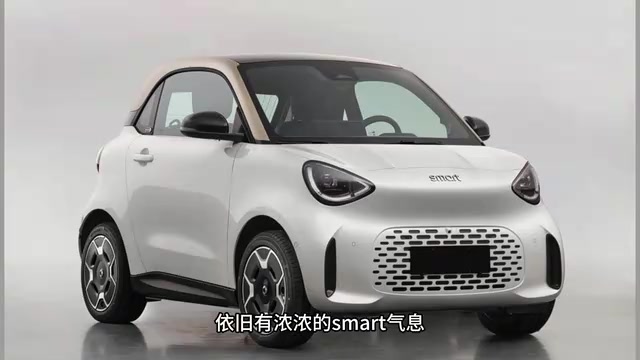
Starting at ¥99,900, the smart #2 holds the premium small-car line with above-class chassis and a two-seat layout.
The smart #2 enters the A00 segment from ¥99,900, near compact-car pricing. It features Mercedes-designed styling with four-corner packaging and capsule lights, 185/205 tires, premium audio and ambient lighting, 78% space efficiency from a 2,751 mm body, a two-seat layout, MacPherson front/five-link rear suspension, a 35.8 kWh CATL battery with 410 km CLTC range, and rear-drive 82 hp with 3.8 s 0–50 km/h. It sells premium feel and big-toy character, not value for money.
The smart #2 has charged into the A00 segment with a starting price of ¥99,900—a figure that already brushes against the threshold of compact cars. According to an analysis by a Bilibili creator, whether this little car represents a return of Mercedes-Benz nostalgia or a pit smart has dug for itself needs to be examined across design, space, configuration, and performance.
Exterior Design: Mercedes Team at the Helm, Smart DNA Intact
The new car's exterior is still crafted by the Mercedes-Benz team, featuring the four-wheels-at-the-corners layout plus capsule-shaped light clusters. Even with the badge covered, you can tell at a glance that it's a Smart. This design language preserves brand recognition—a plus for users drawn to its "big toy" character.
On tires, this little car surprisingly runs 185-width fronts and 205-width rears. According to the UP host's real-world testing, grip off the line and through corners is strong—specs that punch above its class among microcars. That said, while the split tailgate is practical, the rope detail on the lower gate feels a bit cheap—a minor regret.
"Four wheels at the corners" is a classic layout strategy in automotive design: pushing all four wheels as close to the body's corners as possible to shorten front and rear overhangs. The benefits: maximizing wheelbase within a limited body size to free up more longitudinal room for the cabin, while reducing pitch inertia for sharper handling response. For A00-class microcars, four-corner packaging is almost the only path to combining "small body, big space"—and it's been part of Smart's design DNA since the brand's birth.
Interior and Space: Premium Small Car Positioning, Two-Seat Layout Involves Trade-offs
The interior is a tier above its predecessor, the Falto (as originally stated). The addition of a Sanhesaier audio system and 256-color ambient lighting locks in the "premium small car" tone—not just stacking features, but pushing toward a sense of quality.

Space is where the #2 is most split in personality. At 2,751 mm long, headroom and legroom are unusually generous, with a space-efficiency rate as high as 78%. The two-seat layout is relaxed for two-person urban commuting, but once more people need to ride, it's stuck. The design intent is clear: it's not trying to please family users—it's aimed at solo or two-person urban commuting scenarios.
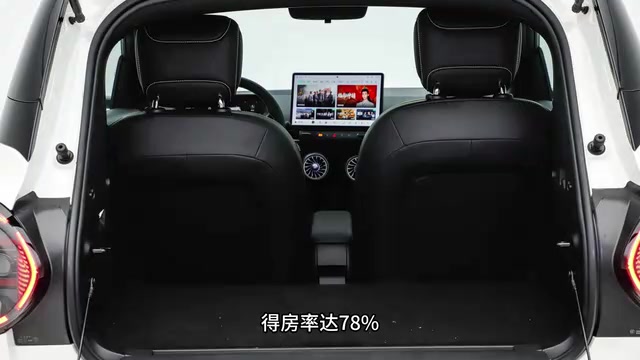
"Space-efficiency rate" (得房率) is originally a real-estate term referring to the ratio of usable interior floor area to gross floor area. Borrowed in car reviews, it usually means the ratio of effective cabin space to exterior body dimensions—a measure of how well a car extracts space from a given length. A high rate means mechanical intrusion (engine bay, mounts, wheel arches, etc.) is compressed more thoroughly, leaving more usable headroom and legroom. For the #2 at just 2,751 mm long, a 78% rate indicates space utilization at the higher end of its class.
Powertrain and Chassis: Above-Class Specs, No Slouch Off the Line
The powertrain and chassis hardware are seriously robust. The MacPherson front and five-link rear suspension setup outclasses a host of microcars. A 35.8 kWh CATL lithium iron phosphate battery delivers 410 km CLTC range—genuinely above-class specs for the A00 segment.
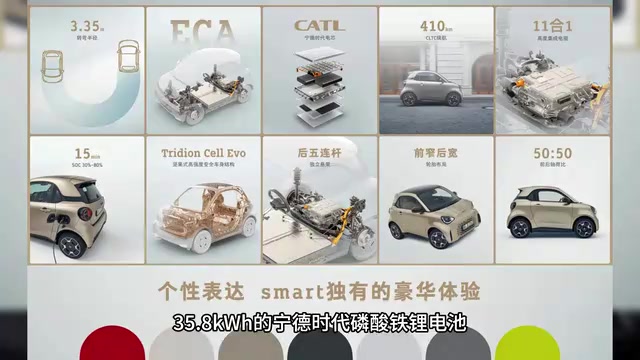
With a rear-motor, rear-wheel-drive layout, maximum output of 82 hp, and 0–50 km/h acceleration in just 3.8 seconds, the UP host describes it as "absolutely no slouch off the line." This powertrain gives the #2 genuine driving fun in urban conditions, and the rear-drive layout is relatively rare in its class.
MacPherson front and five-link rear is a suspension combination. The MacPherson strut is simple and space-efficient, commonly used up front; the five-link setup uses five links to precisely control wheel motion, better balancing comfort and handling stability—often found in the rear of mid- to high-end models. Constrained by cost and packaging, A00 microcars mostly use non-independent rear structures like torsion beams. So the #2's five-link rear is indeed above-class in spec and a key source of its driving quality.
Rear-motor, rear-wheel drive means the motor sits on the rear axle and drives the rear wheels. Compared with front-wheel drive, rear drive shifts weight rearward under acceleration, increasing rear traction and reducing front-wheel slip for more direct response; it also balances front/rear axle load and separates steering from drive, making the nose more agile in corners. In the A00 market, rear drive is quite rare—most competitors are front-drive—which is the technical basis for the #2's emphasis on driving fun.
Worth It? You're Not Buying Value for Money
Spending ¥100k on a smart #2 was never about value for money—it's about Mercedes-Benz premium feel and "big toy" character. The question the UP host raises in the video—paying compact-car money for an A00-class car—really depends on user needs: if you want a two-person urban commuter with brand character and above-class driving quality, the #2 makes sense; if you prioritize practicality and carrying more people, there are more traditional choices at this price.
According to the Bilibili creator's view, the #2 is more like smart holding its ground in the premium small car lane. Call it a nostalgia comeback or a self-dug pit—at least it has grounded the word "premium" in its configuration and chassis.
One-line Summary
Starting at ¥99,900, the smart #2 holds the premium small-car line with above-class chassis hardware and a two-seat layout.
Paragraph Summary
Priced from ¥99,900, the smart #2 enters the A00 segment at a price close to compact-car territory. The article analyzes its positioning across design, space, configuration, and performance: Mercedes-designed exterior with four-corner packaging and capsule lights preserves brand identity; 185/205 tires deliver above-class grip; audio and ambient lighting reinforce premium character; 2,751 mm length yields 78% space efficiency, though the two-seat layout limits group travel; MacPherson front/five-link rear suspension, 35.8 kWh CATL battery, 410 km CLTC range, rear-drive 82 hp, and 3.8 s 0–50 km/h are all above-class. The conclusion: it sells not value for money but Mercedes premium feel and big-toy character, suited to two-person urban commuters.
Related articles

Anthropic Goes Public: AI Bubble or Buying Opportunity?
Anthropic lists on Nasdaq, opening about a third above its IPO price. We break down the $81.3B raise, $1.5T offering valuation, and $2T market valuation, plus Claude's growth and $567M quarterly operating loss.
Why the FBI's AI Hacker Warning Hinges on a Single Word from Microsoft
FBI says AI tool Artex attacked 2,250+ organizations, but the citation trail leads to Microsoft's wording of "attempted sign-ins." The gap between attempts and breaches reveals the attack's true scale.

Fable 5.2 Powers the Creation of Getsumen Express: A Browser-Based Lunar and Martian Exploration Game
A developer used Fable 5.2 to build Getsumen Express, a browser game where players explore the Moon and Mars, scan real landmarks, shoot aliens, and ride an interstellar train. Built on Three.js and WebGPU for about $730, it showcases AI-assisted development.