Smart 453 Super Mario Theme Build: A Custom Car Project Completed in Six Days
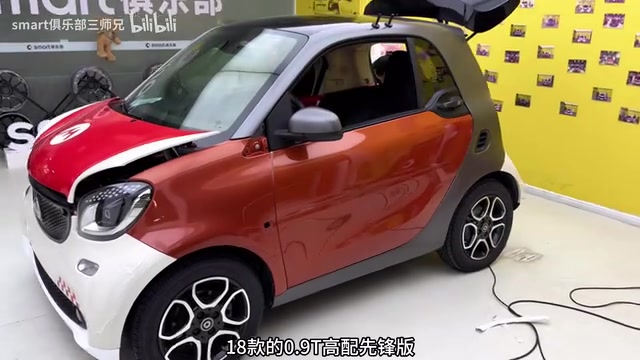
A 2018 Smart 453 customized with a Super Mario theme demonstrates the complete logic of small car modification.
The article breaks down a Super Mario-themed modification completed in six days by a Smart owner on Bilibili. The base car is a 2018 0.9T Pioneer Edition Smart 453, with the core being a redesigned Magno full-body custom wrap; the waistline decals were revised three times to avoid clutter. Exterior additions include Brabus front and rear lips, Longding Imolanta light strips, small fog lights, and automatic headlights, while the roof uses a YAKIMA rack paired with an owner-DIY cargo box, changing the car's proportions. The interior retains 90% new factory leather seats with heating, and the odometer reads 51,000 km. The owner concludes with pragmatic advice: choose the Smart #2 for electric preference, or stick with the 453 for combustion. The article emphasizes that the value of small car modification lies in thematic consistency rather than piling on parts.
A Smart 453 Redefined by "Super Mario"
A Smart owner on Bilibili showcased a build completed in just six days: the base car is a 2018 0.9T high-spec Pioneer Edition Smart 453, originally in an orange-gray color scheme, which was transformed into a Nintendo-inspired "little toy" after a full custom wrap and exterior kit upgrades. This case is worth breaking down not just because the result is cute, but because it demonstrates a complete custom modification logic—the balance between theme, proportion, and layered detail.
The Smart 453 is the third-generation model launched by Smart in 2014. Compared to the extreme compactness of the first two generations, the 453 has a longer wheelbase, increased width, and for the first time offers a five-door version (forfour) and a dual-clutch transmission, with the chassis developed with assistance from the Renault-Nissan Alliance. The 0.9T mentioned refers to the 0.9-liter three-cylinder turbocharged engine supplied by Renault, producing approximately 90 horsepower, mated to a 6-speed dual-clutch—one of the stronger powertrain configurations among 453 combustion versions. The 2018 model belongs to the mid-cycle facelift of this generation and was sold in China as an import. After Geely and Daimler formed a joint venture in 2019, the Smart brand shifted to pure electric, and the 453 combustion version was discontinued, making it a "last combustion Smart" that still has heat in collector and modification circles.
Exterior Modifications: Making the Pattern "Cute but Not Cluttered"
Design Trade-offs of the Magno Custom Wrap
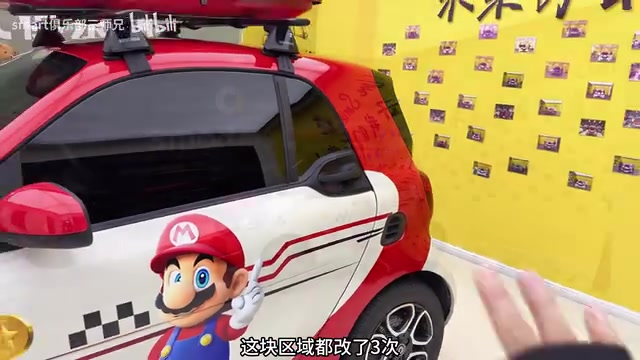
The core of this build is a full-body Magno custom wrap, with the pattern, style, and layout all redesigned. In the video, the owner mentions a key judgment: the decal lines on the body must not appear too cluttered, because cuteness and refinement need to coexist. To achieve this, the door frame waistline area was revised three times before finalizing. This cost of repeated revision is often an underestimated part of the modification process—the pattern isn't just applied; it needs to find its visual center of gravity on the curved surfaces of the body.
Kit and Lighting Integration
To make the body visually more substantial, the build adds Brabus front and rear lips, which, together with the roof box, create a volume echo from top to bottom. The front fascia features a Longding Imolanta light strip, paired with a pair of later-added small fog lights and automatic headlights, bringing the overall character closer to a concept car. The roof rack is from YAKIMA, also a frequently chosen option in Smart roof rack modifications.
Brabus is Smart's official tuning house, long providing exterior kits and performance versions for Smart; its front and rear lips, side skirts, and other components are considered "factory-grade" accessories in the Smart modification circle, with high fitment and brand recognition. YAKIMA is a well-known American vehicle carrier system brand, with a product line covering roof racks, bike racks, cargo boxes, etc., and a very comprehensive vehicle fitment database for crossbars and pads, making it frequently chosen for roof rack modifications on niche models. Longding and Imolanta light strips are domestic aftermarket lighting brands; such modified light strips are usually installed as daytime running lights or ambient lights, and extra attention must be paid to wiring and waterproofing, otherwise problems can easily arise during annual inspections or long-term use.
Roof Solution: The DIY Cargo Box Is the Finishing Touch
The roof cargo box was DIYed by the owner himself, and this is the most personal part of the entire build. The combination of roof rack and cargo box is not just decorative; it also changes the height proportion of the small car, giving the originally rounded Smart 453 a bit of a wagon stance.

Interior and Condition: Retaining 90% New Factory Condition
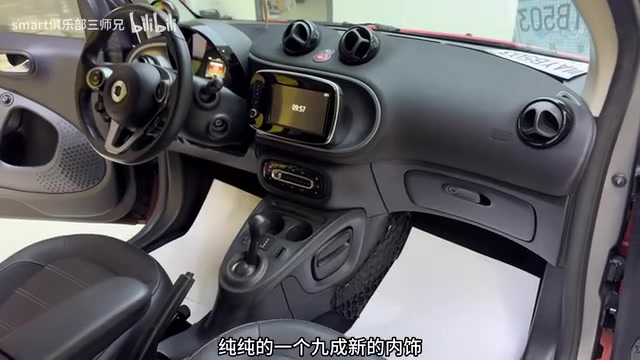
The interior was not heavily modified, retaining 90% new factory interior, with leather seats and seat heating, and an odometer reading of 51,000 kilometers. This strategy of "heavy exterior modification, preserved interior" is relatively common in used small car modifications; it controls the budget and helps preserve factory value for future resale.
Combustion or Electric: Positioning Thoughts on the Smart 453
At the end of the video, the owner offers a pragmatic suggestion: if you prefer electric cars, consider the newly released Smart #2; if you insist on combustion, the Smart 453 remains a good choice. This point highlights the fork in the current small car market—new models continue to iterate on electrification, while older combustion cars retain a group of users thanks to their modification ecosystem and driving feel.
From this Super Mario-themed Smart 453, we can see that the value of small car modification lies not in piling on parts, but in thematic consistency. The wrap, lighting, bumpers, and roof accessories all revolve around the same visual language, and details were revised to a third version before finalizing—this "slow work" is the real reason an eighteen-model-year old car becomes heart-stopping at first glance again.
The "Smart #2" mentioned in the article refers to the smart #2, an entry-level model in the pure electric product series led by Geely after the Geely-Daimler joint venture, with no technical continuity to the 453's combustion platform, only inheriting the "urban small car" mantle in brand and positioning. This also explains why the owner discusses the two together: the 453 represents the old-generation small car experience of rear-engine rear-wheel drive, short wheelbase, and direct mechanical feel, while the Smart # series represents the new logic of electrification and smart cabins. For modification enthusiasts, combustion cars still have advantages in powertrain, exhaust, and mechanical component playability, while electric cars are limited by three-electric warranty and structure, with modification space more concentrated in exterior and interior.
Related articles

Anthropic Goes Public: AI Bubble or Buying Opportunity?
Anthropic lists on Nasdaq, opening about a third above its IPO price. We break down the $81.3B raise, $1.5T offering valuation, and $2T market valuation, plus Claude's growth and $567M quarterly operating loss.
Why the FBI's AI Hacker Warning Hinges on a Single Word from Microsoft
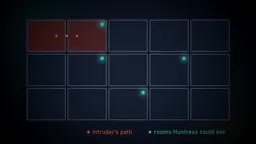
FBI says AI tool Artex attacked 2,250+ organizations, but the citation trail leads to Microsoft's wording of "attempted sign-ins." The gap between attempts and breaches reveals the attack's true scale.
Fable 5.2 Powers the Creation of Getsumen Express: A Browser-Based Lunar and Martian Exploration Game
A developer used Fable 5.2 to build Getsumen Express, a browser game where players explore the Moon and Mars, scan real landmarks, shoot aliens, and ride an interstellar train. Built on Three.js and WebGPU for about $730, it showcases AI-assisted development.