smart Elf #2 Buying Guide: Is 99,900 Yuan Worth It?
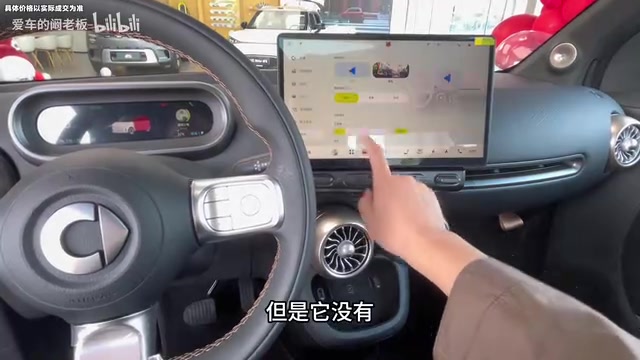
smart Elf #2 launches at 99,900 yuan—a Bilibili creator breaks down pricing, specs, and who it's for.
A Bilibili creator gives a pragmatic take on the smart Elf #2 at 99,900 yuan. Despite the price, the Mercedes pedigree, single high-spec strategy, and premium hardware make it acceptable. On-road cost is about 110,000 yuan, or just over 100,000 with an old-car subsidy. It offers a 35.8 kWh CATL battery, 410 km CLTC range, RWD, 50:50 weight distribution, MacPherson/five-link suspension, L2 assistance, 7 airbags, and a split tailgate. Not for highway use; it competes with the NIO Firefly and suits city commuters who value style and parking ease.
smart Elf #2 has officially launched at a price of 99,900 yuan, and this two-seat all-electric compact car targets a niche audience that values style and brand heritage. A Bilibili creator has put together a fairly pragmatic buying reference covering price, configuration, purchase benefits, and competitor comparisons.
Price Positioning: Whether It's Expensive Depends on the Reference Point
99,900 yuan is not a low figure in the EV market, and the creator candidly says "if you think it's expensive, that's totally normal." But he also points out that this car was never meant for the average wage earner—looking at product positioning, brand strength, and configuration level, and factoring in the Mercedes-Benz pedigree, the price is "still acceptable."
Another notable detail: smart offers only one configuration, with no lower-spec version to lower the entry barrier. The creator believes this actually shows the manufacturer's confidence in the pricing—"from these two dimensions, I think the price is still acceptable."
Purchase Benefits and On-Road Cost
For existing owners, smart offers fairly generous benefits: additional purchases get a discount, and trade-ins get even better terms. Seven exterior colors are available, with white, black, and silver being free while the rest cost extra; there are three interior options.
On the on-road price, the creator did the math: including taxes and insurance, it comes to about 110,000 yuan. If you have an old car registered under your name, some provinces offer a provincial subsidy of roughly 8% of the invoice price, bringing the on-road cost down to just over 100,000 yuan after the subsidy.
Product Breakdown: A Small Car with Serious Hardware
Size and Space
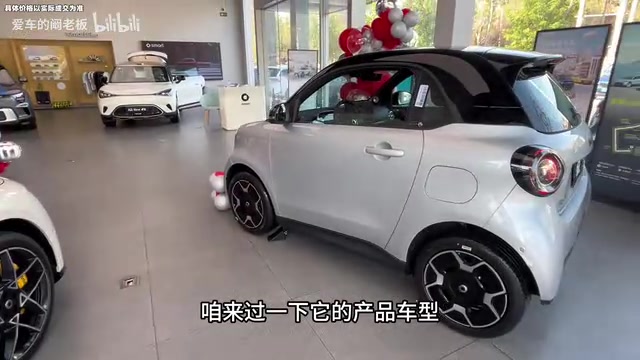
The car is about 2.7 meters long and 1.6 meters wide—the creator offers a very intuitive framing: "One parking space can fit two smart Elf #2s." The two-seat layout means it's naturally suited for solo commuting or two-person trips, not as a family's primary car.
Powertrain and Chassis
The car features a 35.8 kWh CATL battery cell, 410 km CLTC range, a rear-mounted rear-wheel-drive layout, MacPherson struts up front and a five-link rear suspension, mixed front/rear tire widths, and a golden 50:50 weight distribution. The creator admits these terms may be vague to ordinary consumers, but "these configurations are relatively rare at this price point—usually only luxury cars have them."
The direct benefit of this hardware is a responsive driving experience, with a turning radius of just 3.35 meters—very agile in narrow streets and crowded parking spots.
Rear-Mounted RWD and 50:50 Weight Distribution: Rear-mounted RWD means the motor is placed on the rear axle and drives the rear wheels. This layout is common in handling-focused models, reducing the steering burden on the front wheels and giving the rear wheels better grip during launches and corner exits. The golden 50:50 weight distribution means the front and rear axle loads are nearly equal, balancing grip across all four wheels and making the car's front and rear dynamics more predictable during cornering. Together, these are the hardware foundation for what the creator calls a "responsive driving experience."
MacPherson Front and Five-Link Rear Suspension: The MacPherson design is simple and space-efficient, commonly used for front suspension; the five-link setup allows more precise control of rear wheel alignment parameters, balancing comfort and handling. Finding a five-link rear on a sub-100,000-yuan compact car typically means the chassis costs more than the torsion-beam rear suspension common at this price—which is why the original text says it's "usually only found on luxury cars."
CLTC Range: CLTC stands for China Light-Duty Vehicle Test Cycle. The test conditions are relatively mild with lower average speeds, so the rated figure is often higher than real-world highway range. For this city-commuting-focused compact car, the 410 km CLTC figure should be understood as a reference upper limit under urban conditions.
Practical Features and Safety
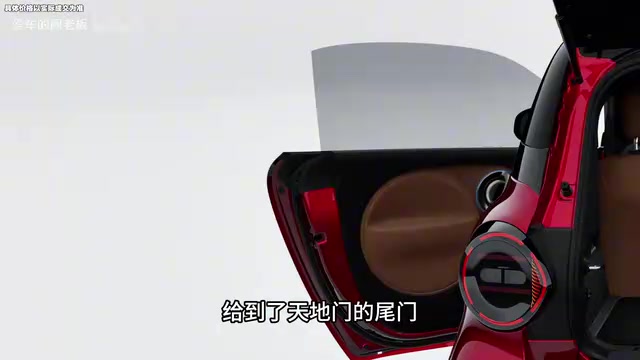
The car features wireless doors and a split tailgate—when the trunk is open, the lower section can be used as a seat, which the creator specifically highlights as a standout feature. On safety, it comes standard with L2-level driver assistance and 7 airbags, providing solid protection for daily city commuting.
The creator also sets clear usage boundaries: a car of this size should "never be taken on the highway—the experience is terrible, and I'd discourage anyone from trying." Its home turf is the narrow streets and parking-challenged old neighborhoods of first-tier cities.
L2-Level Driver Assistance: L2 is partial automation—the system can control both steering and acceleration/deceleration simultaneously, but the driver must monitor at all times and be ready to take over. Common features include adaptive cruise control, lane centering, and automatic emergency braking. It's important to note that L2 is not autonomous driving; in narrow old neighborhoods or complex road conditions, its reliability is limited and it cannot replace the driver's judgment.
Split Tailgate: This refers to a tailgate that opens in two sections—the upper part lifts up and the lower part folds down flat. The lower section can bear weight and serve as a seat, handy for camping, temporary rest, or loading/unloading items from the trunk—which is the origin of the original text's mention that "the lower section can seat people." This design is common on SUVs and crossovers; having it on a two-seat compact car is a segment-above feature.
Competitor Comparison: The Uniqueness of the Two-Seat Market
When it comes to lifestyle-oriented competitors, the creator first thinks of the NIO Firefly, but a closer comparison reveals a clear difference—one is a five-seater, the other a two-seater. If consumers value ultimate "easy to drive, easy to park" and brand heritage alongside style, then the smart Elf #2 at this price point "truly is one of a kind."

The creator also cautions a certain type of potential buyer: if you're choosing a compact car because you're worried about your driving skills, "I think that's really unnecessary"—the implication being that a small car doesn't equal easy driving, and driving skills still need to be taken seriously.
The Two-Seat EV Compact Car Market: Most domestic EV compact cars have four- or five-seat layouts, while two-seat models have long been concentrated in the low-price commuter segment with limited configuration and brand premium. The smart Elf #2, with its Mercedes-Benz design pedigree, enters the 100,000-yuan two-seat market and effectively fills the gap for "stylish, branded, well-equipped" options—which is why the original text calls it "one of a kind" at this price. When compared with five-seat models, the seat count difference directly changes the target user—the two are not direct competitors in the same segment.
Who Should Buy This Car
Based on the creator's analysis, the suitable audience for the smart Elf #2 is quite clear: users with a budget of just over 100,000 yuan who value brand style and design, whose daily activities are concentrated in the city, and who have a hard requirement for parking convenience. It works well as a family's second car or as the primary commuter for singles or couples.
The unsuitable audience is equally clear: those who frequently drive on highways, those with multi-person family travel needs, and novices who simply want a small car to make driving easier.
Whether 99,900 yuan for a two-seat EV compact car with Mercedes-Benz DNA is worth it ultimately depends on whether your use case matches its positioning.
One-line Summary
smart Elf #2, a two-seat EV compact car, launches at 99,900 yuan—a Bilibili creator breaks down its price, configuration, and target audience.
Paragraph Summary
A Bilibili creator offers a pragmatic take on the smart Elf #2, launched at 99,900 yuan. The article argues that while not cheap, the price is acceptable given the Mercedes-Benz pedigree, single high-spec strategy, and segment-above hardware. Purchase benefits favor existing owners, and the on-road price with taxes and insurance comes to about 110,000 yuan, dropping to just over 100,000 with an old-car provincial subsidy. On the product side, the car is 2.7 meters long and 1.6 meters wide—one parking space fits two—with a 3.35-meter turning radius; it packs a 35.8 kWh CATL battery, 410 km CLTC range, rear-mounted RWD, 50:50 weight distribution, MacPherson front and five-link rear suspension, standard L2 driver assistance, and 7 airbags, plus a split tailgate whose lower section can seat people. The creator makes clear it's not suited for highway driving, and it competes with the NIO Firefly on a two-seat-versus-five-seat basis—ideal for city commuters who value style and parking convenience.
Related articles
Why the FBI's AI Hacker Warning Hinges on a Single Word from Microsoft
FBI says AI tool Artex attacked 2,250+ organizations, but the citation trail leads to Microsoft's wording of "attempted sign-ins." The gap between attempts and breaches reveals the attack's true scale.

Fable 5.2 Powers the Creation of Getsumen Express: A Browser-Based Lunar and Martian Exploration Game
A developer used Fable 5.2 to build Getsumen Express, a browser game where players explore the Moon and Mars, scan real landmarks, shoot aliens, and ride an interstellar train. Built on Three.js and WebGPU for about $730, it showcases AI-assisted development.
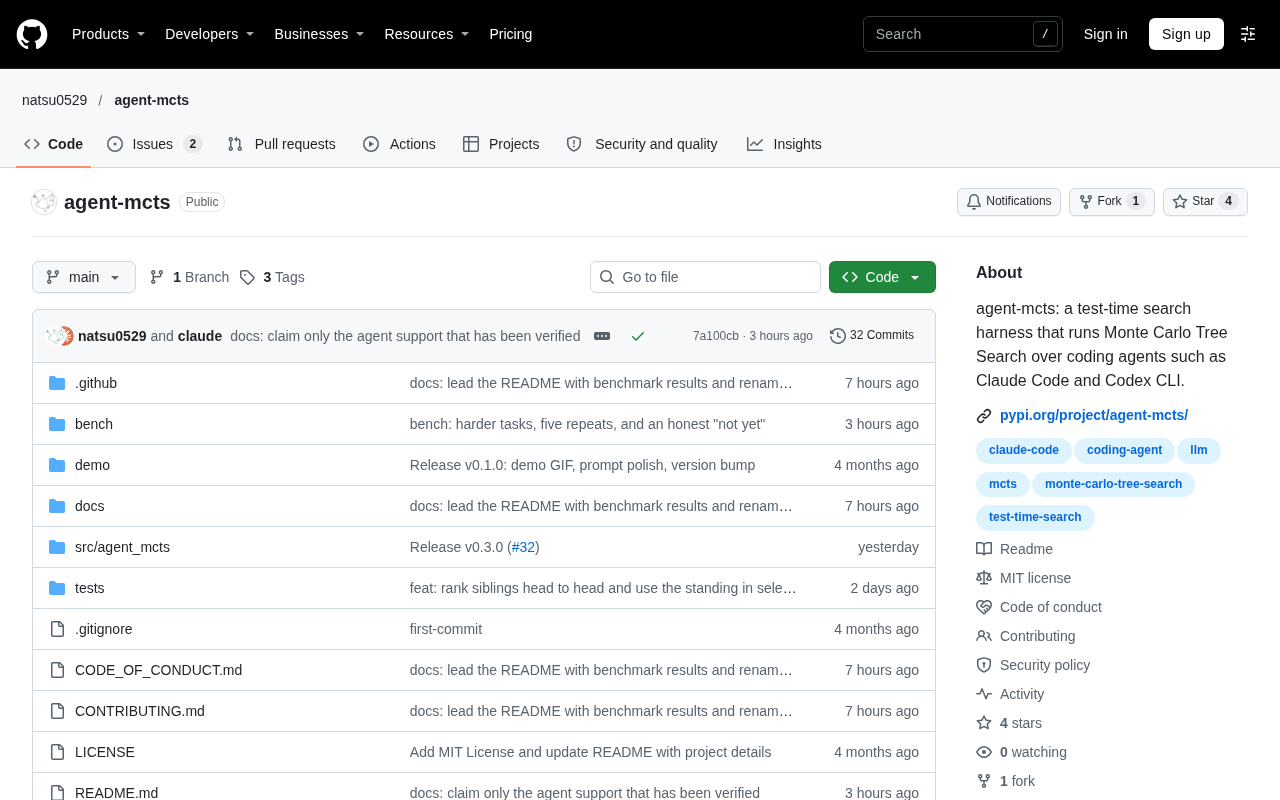
agent-mcts: Adding Monte Carlo Tree Search to Claude Code
agent-mcts is a Show HN open-source project that layers Monte Carlo Tree Search on top of Claude Code. This article analyzes its technical approach, the significance of MCTS for coding agent decision-making, and the cost and engineering challenges facing search-enhanced agents.