Snap Launches Specs Intelligence: A Cross-Platform AI Assistant Coming to iOS and Mac
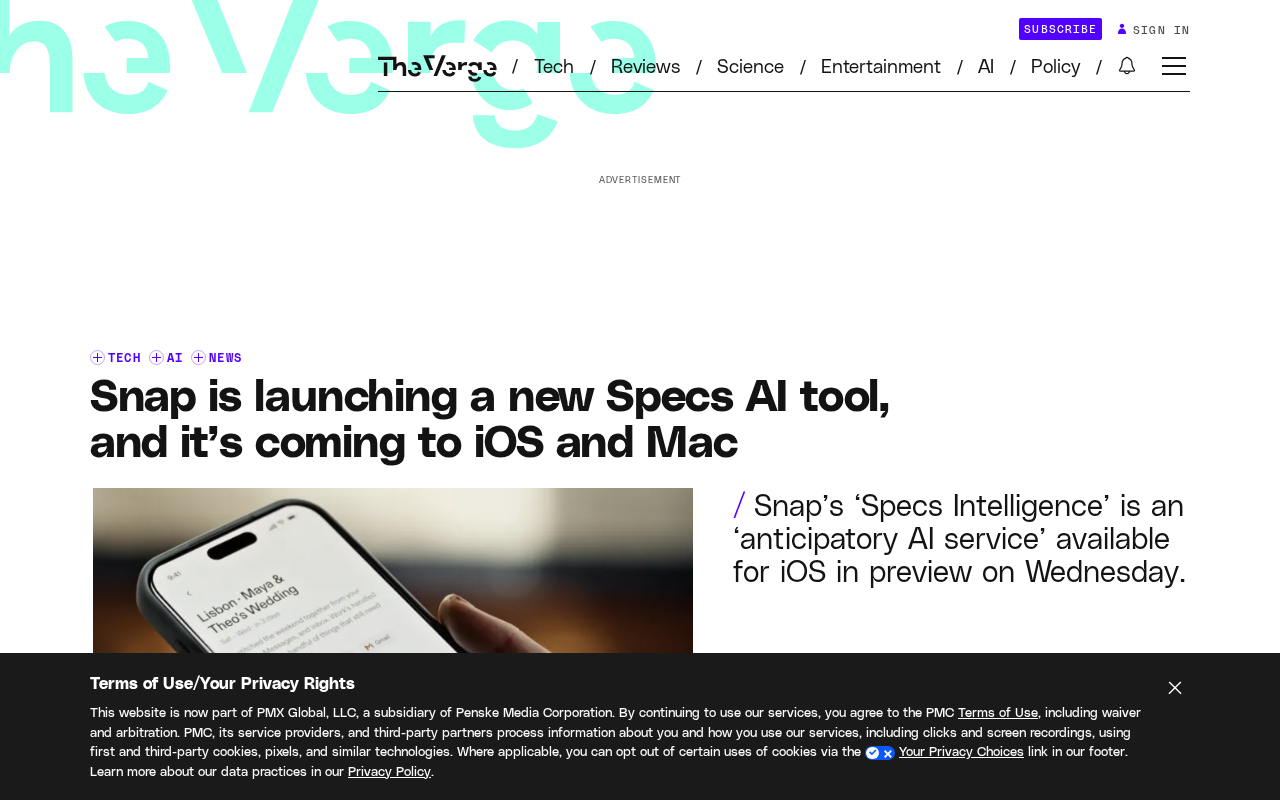
Snap's new Specs Intelligence is an anticipatory AI assistant launching on iOS and Mac with cross-account integration.
Snap has officially launched Specs Intelligence, an AI assistant built around the concept of "anticipatory AI" — proactively surfacing information and completing task prep before users even ask, by connecting to their digital accounts like calendars, flights, and work tools. Compared to Meta Muse and Gemini Spark, Snap's key differentiator is this proactive, context-aware approach. The product is coming to iOS and Mac, extending the AI capabilities originally tied to its AR glasses, Spectacles, to a much wider audience. However, the extensive personal data access required for multi-account integration makes privacy boundaries and prediction accuracy the defining challenges for winning user trust.
Snap has officially introduced a new AI assistant called "Specs Intelligence," making its move in the increasingly crowded smart assistant market. Unlike most AI assistants available today, Snap positions this as an "anticipatory AI service" — one that proactively helps users rather than waiting passively for commands.
What Is Specs Intelligence
At its core, Specs Intelligence connects to a user's other digital accounts, providing assistance with work tasks, travel tracking, and more. This "account integration" approach means it's not just an isolated chat tool — it spans multiple services users rely on daily, pulling fragmented information together into a unified experience.
This positioning echoes products like Meta's Muse and Gemini's Spark, all of which are evolving beyond simple Q&A tools toward becoming an intelligent layer woven throughout users' digital lives. What sets Snap apart, however, is its emphasis on "anticipation" — the AI surfaces relevant information or suggestions before the user even thinks to ask.
The Differentiation of "Anticipatory AI"
The term "anticipatory AI service" is Snap's key pitch for standing out from competitors. Traditional AI assistants largely depend on user-initiated commands, while an anticipatory service aims to understand the user's context and proactively push information or prep tasks accordingly.
For example, when a user is about to travel, the assistant could automatically compile flight, hotel, and itinerary details. For work tasks, it could pull up relevant account data in advance. If this kind of proactivity truly delivers, it would significantly reduce friction for users and push AI assistants closer to the role of a genuine personal assistant.
Of course, the success of an anticipatory experience hinges on accuracy and the boundaries of privacy. Connecting to multiple accounts means the assistant needs access to a large volume of personal data — raising the bar for Snap when it comes to data transparency and building user trust.
From Specs Glasses to a Cross-Device Ecosystem
Notably, Specs Intelligence is coming to iOS and Mac platforms. This signals that Snap is expanding the intelligent capabilities associated with its AR glasses — "Spectacles" — beyond wearables and into mainstream mobile and desktop ecosystems.
For Snap, this is both an opportunity to reach a broader audience and an attempt to monetize its accumulated AR and AI capabilities. By offering an assistant on iOS and Mac, Snap can validate product-market fit across Apple's massive user base without depending entirely on the adoption of its own hardware.
Snap's AR glasses, Spectacles (often abbreviated as Specs), have gone through multiple generations, with the latest releasing in 2024, featuring waveguide displays, gesture recognition, and spatial audio — Snap's core hardware bet. Unlike the Meta Quest or Apple Vision Pro, Spectacles are positioned as an exploratory tool for developers and creators rather than a mass-market consumer product. As a result, their user base remains quite limited. Extending AI capabilities to iOS and Mac is essentially a "software-first" market strategy — letting more people experience Snap's AI without needing to buy hardware, while using that accumulated user data and brand awareness to support the hardware ecosystem down the road.
Competitive Landscape and Outlook
The AI assistant space has reached a fever pitch, with giants like Google, Meta, and OpenAI all staking their claims. Snap's roots in social media give it a unique edge with younger users and creative tools, but competing against resource-rich rivals in the assistant market will require sustained investment in model capabilities, ecosystem integration, and privacy protection.
Whether Specs Intelligence can break through on the strength of its "anticipatory" positioning depends on whether the actual experience is smart and reliable enough. For users, an assistant that genuinely understands context and proactively handles routine tasks is undeniably appealing — but how Snap balances convenience with privacy will be the central question it must answer.
It's worth noting that Meta Muse and Gemini Spark, both mentioned in this context, are in conceptual or early testing phases — experimental products from their respective companies competing for the AI assistant "life layer." Meta Muse focuses primarily on creative content generation and social interaction; Google's Gemini Spark is characterized by deep integration with Google Workspace and search. Compared to these, Snap has invested relatively little in developing its own foundation models, relying more heavily on third-party LLM APIs. This means Snap's differentiation must come from product design and ecosystem integration rather than any underlying model superiority — which is precisely why the concept of "anticipation" matters so much to Snap. When it's difficult to meaningfully outperform rivals at the model level, context-aware proactive service becomes the most realistic path to a breakthrough.
Related articles
LLM Selection Strategy for Multi-Agent SOC Applications: Rule-Based Routing vs. LLM-Driven Decisions
Should multi-agent SOC apps on LangGraph use rule-based routing or LLM-driven model selection? This article analyzes both approaches and recommends a hybrid strategy for security operations.
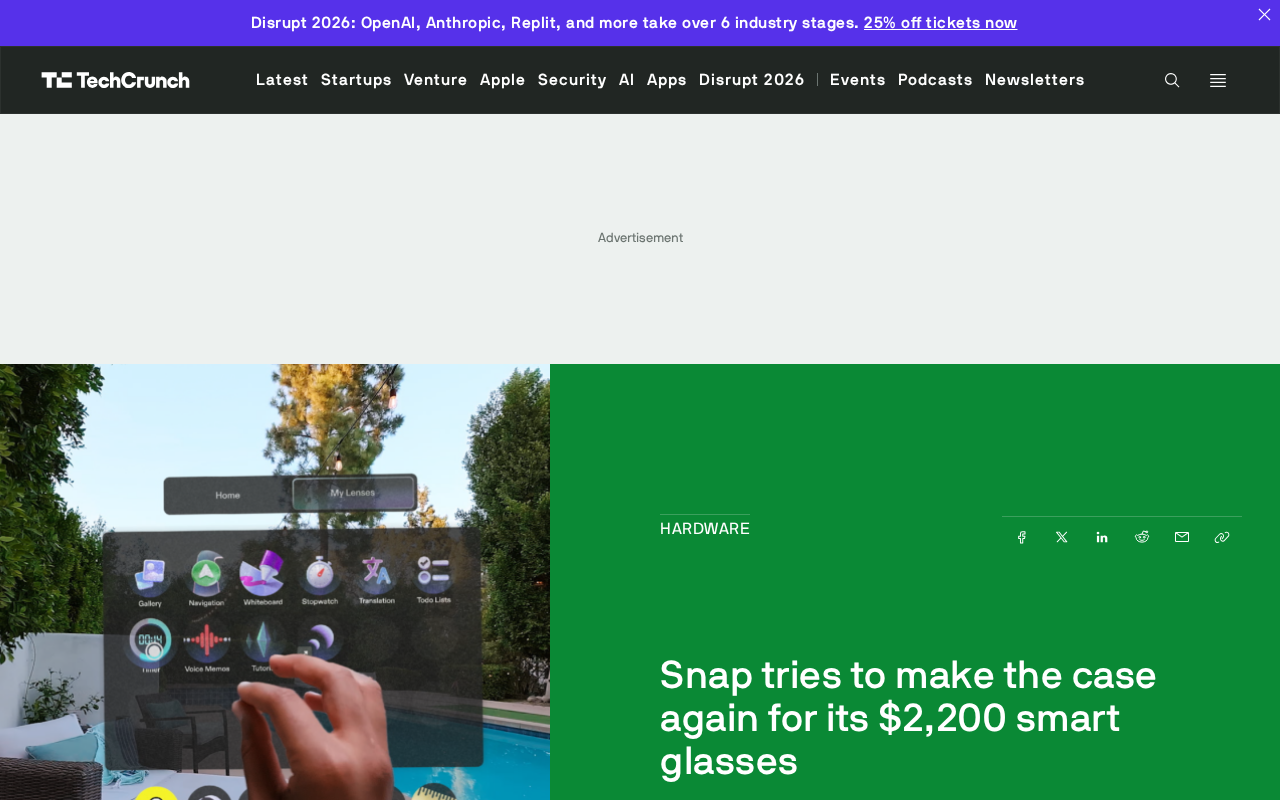
Snap Pushes Its $2,200 Smart Glasses Again — Can It Convince the Market?
Snap launched new features for its $2,200 smart glasses, doubling down on AR. We break down the pricing dilemma, its rivalry with Meta Ray-Ban, and what it means for the AR glasses race.

Vercel AI SDK Update: Multi-Turn Reasoning Preservation for Alibaba Models
Vercel AI SDK releases @ai-sdk/alibaba@1.0.55, enabling reasoning preservation by default in multi-turn requests for supported Alibaba models like Qwen.